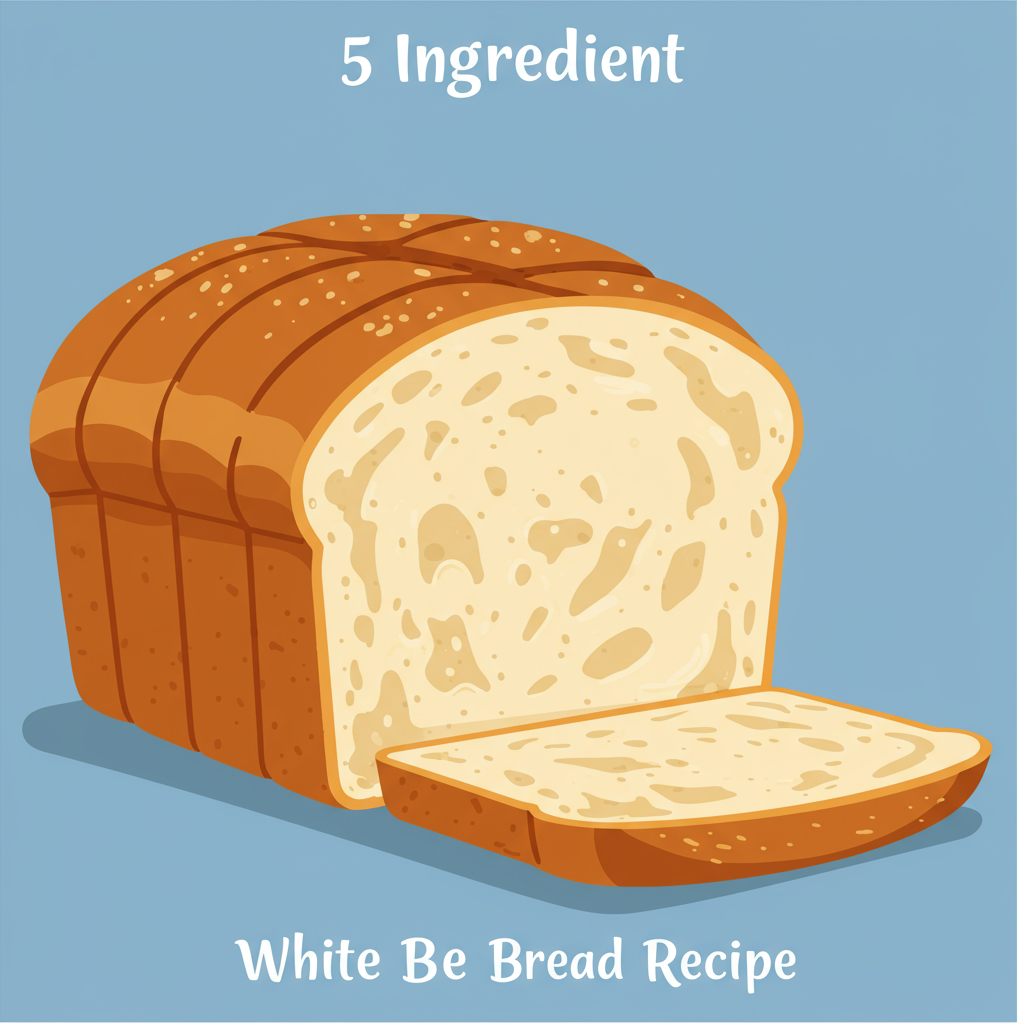
Ever dreamed of pulling a warm, fragrant loaf of bread straight from your own oven? Imagine the incredible aroma filling your kitchen and the satisfaction of knowing you made it yourself. For many, baking bread seems like a daunting task, but I’m here to tell you it doesn’t have to be! This 5 Ingredient White Bread Recipe is specifically designed to be incredibly simple, making it one of the most easy baking recipes you’ll ever try.

Whether you’re a complete novice or just looking for a straightforward, reliable bread recipe, this guide is packed with essential baking tips for beginners to ensure your success. Get ready to impress yourself and your loved ones with a perfectly soft, fluffy, and utterly delicious homemade white bread that requires minimal effort and basic ingredients.
What You’ll Need: The Simple 5 Ingredients
You truly only need five basic pantry staples to create this amazing bread. No fancy flours or hard-to-find ingredients here!
| Ingredient | Quantity | Notes |
|---|---|---|
| All-Purpose Flour | 3 cups | Standard white flour, unbleached preferred. |
| Warm Water | 1 cup | Between 105-115°F (40-46°C) – crucial for yeast activation! |
| Active Dry Yeast | 2 ¼ teaspoons | One standard packet. Make sure it’s fresh! |
| Granulated Sugar | 2 tablespoons | Feeds the yeast and adds a hint of sweetness. |
| Salt | 1 teaspoon | Essential for flavor and dough structure. |
| Olive Oil (Optional) | 1 tablespoon | For greasing the bowl during the first rise. |
Step-by-Step Instructions: Your Beginner-Friendly Guide to Perfect Bread
Follow these detailed steps carefully, and you’ll be enjoying your homemade bread in no time. Don’t worry, I’ll walk you through every important detail!
Step 1: Activate Your Yeast (The Magic Begins!)
- Grab a large mixing bowl. Pour in the 1 cup of warm water. This water should feel like a warm bath – not too hot to kill the yeast, and not too cold to keep it dormant. A temperature between 105-115°F (40-46°C) is ideal. If you have a kitchen thermometer, now’s the time to use it!
- Sprinkle the 2 ¼ teaspoons of active dry yeast evenly over the warm water.
- Add the 2 tablespoons of granulated sugar to the water and yeast mixture. The sugar acts as food for the yeast, helping it to wake up and become active.
- Gently stir everything together with a spoon or whisk until the sugar mostly dissolves.
- Let this mixture sit undisturbed for 5-10 minutes. During this time, you should see a foamy, bubbly layer form on the surface. This is a good sign! It means your yeast is active and ready to make your bread rise. Beginner Tip: If your yeast doesn’t foam, it might be dead (too old, or water was too hot/cold). You’ll need to start this step over with fresh yeast and correct water temperature.
Step 2: Combine Wet and Dry Ingredients
- Once your yeast is active and bubbly, it’s time to add the dry ingredients. Add 1 teaspoon of salt directly to the yeast mixture in the bowl.
- Gradually add the 3 cups of all-purpose flour, about a cup at a time, to the wet ingredients. As you add the flour, stir with a sturdy spoon or a dough whisk until a shaggy, sticky dough forms.
- Beginner Tip: Avoid adding all the flour at once. Sometimes you might need slightly more or less depending on humidity and how packed your flour is. The dough should be sticky but starting to come together.
Step 3: Mix and Knead the Dough (The Workout!)
- Once the dough is too stiff to stir, turn it out onto a lightly floured clean surface (like your kitchen counter).
- Now, it’s time to knead the dough. This is where you develop the gluten, which gives your bread its structure and chewiness.
- How to Knead: Push the dough away from you with the heels of your hands, then fold it back towards you. Give it a quarter turn and repeat.
- Common Mistake: Not kneading enough! The dough will feel sticky at first, but resist the urge to add too much extra flour. A little stickiness is good. As you knead, it will become smoother and more elastic.
- Continue kneading for about 8-10 minutes.
- How to Tell When It’s Ready: The dough should be smooth, elastic, and spring back when you gently poke it with your finger. It should also pass the “windowpane test” – if you can stretch a small piece of dough thinly enough to see light through it without tearing, it’s perfectly kneaded!
- Alternative: Stand Mixer Method: If you have a stand mixer with a dough hook attachment, you can use it! Mix on low speed for 2 minutes to combine, then increase to medium-low speed and knead for 6-8 minutes, or until the dough is smooth and elastic.
Step 4: First Rise (Bulk Fermentation)
- Lightly grease a large, clean mixing bowl with about 1 tablespoon of olive oil (or any neutral oil).
- Place your kneaded dough into the greased bowl, turning it once to coat the entire surface with oil. This prevents the dough from drying out.
- Cover the bowl tightly with plastic wrap or a clean kitchen towel.
- Place the bowl in a warm, draft-free spot in your kitchen. An ideal spot might be inside a slightly warm (but turned off) oven, or near a sunny window.
- Let the dough rise for 1 to 1.5 hours, or until it has roughly doubled in size. The exact time will depend on the warmth of your kitchen. Beginner Tip: Patience is key here! Don’t rush this step. If your kitchen is cool, it might take longer.
Step 5: Punch Down and Shape the Loaf
- Once the dough has doubled, gently “punch it down” in the center with your fist. This deflates the dough and releases the gases that have built up during the rise. Don’t worry, this isn’t as violent as it sounds – it helps create a more even texture in your final loaf.
- Lightly flour your work surface again. Turn the dough out onto the floured surface.
- Shape the Loaf:
- Gently flatten the dough into a rectangle, roughly the width of your loaf pan.
- Fold the top third of the dough down towards the center.
- Fold the bottom third up over the top, like folding a letter.
- Now, starting from one of the short ends, roll the dough tightly into a log. Pinch the seam closed at the bottom to create a smooth top.
- Grease a standard 9×5 inch loaf pan with butter, shortening, or non-stick cooking spray.
- Carefully place the shaped dough into the prepared loaf pan, seam-side down.
Step 6: Second Rise (Proofing)
- Cover the loaf pan loosely with plastic wrap or a clean kitchen towel.
- Return the loaf pan to your warm, draft-free spot for its second rise.
- Let it rise for another 30-45 minutes, or until the dough has again nearly doubled in size and looks puffy, extending about an inch or so above the rim of the pan. Beginner Tip: You can do the “poke test” – gently poke the dough with a floured finger. If the indentation slowly springs back halfway, it’s ready to bake. If it springs back completely, it needs more time. If it collapses, it’s over-proofed.
Step 7: Bake Your Masterpiece!
- About 15 minutes before the second rise is complete, preheat your oven to 375°F (190°C).
- Once the oven is preheated and the dough has finished its second rise, carefully remove the cover from the loaf pan.
- Place the loaf pan in the center of the preheated oven.
- Bake for 30-35 minutes. The top should be a beautiful golden brown.
- How to Tell if It’s Done: The easiest way to check for doneness is to use an instant-read thermometer. Insert it into the center of the loaf; it should read 200-210°F (93-99°C). If you don’t have a thermometer, tap the bottom of the loaf – it should sound hollow.
Step 8: Cool (The Hardest Part!)
- Once baked, immediately remove the bread from the oven.
- Carefully invert the loaf onto a wire cooling rack. If it sticks, run a knife around the edges of the pan.
- Let the bread cool completely on the wire rack before slicing. This is crucial! Slicing hot bread can result in a gummy texture inside. Cooling allows the internal structure to set and the moisture to redistribute. This usually takes at least 1 hour, but longer is better.
- Once cooled, slice and enjoy your incredible homemade 5-ingredient white bread!
Tips & Tricks for Baking Success (Especially for Beginners!)
Baking bread is a science and an art, but these simple tips will help you master this recipe and build your confidence:
- Yeast is Alive: Treat your yeast with care! Always check the expiration date. Store opened yeast in an airtight container in the fridge or freezer to prolong its life. If your yeast doesn’t foam in Step 1, it’s dead, and your bread won’t rise.
- Measure Flour Correctly: Don’t scoop flour directly from the bag with your measuring cup. This compacts it, leading to too much flour. Instead, spoon flour into your measuring cup and then level it off with a straight edge (like the back of a knife). This is called the “spoon and level” method.
- Embrace the Knead: Kneading develops gluten, which is essential for a good bread texture. Don’t be afraid to get your hands dirty! If you have a stand mixer, it’s a great tool, but hand kneading is incredibly satisfying and effective.
- Patience is a Virtue: The rising times are estimates. Your kitchen’s temperature and humidity will affect how quickly your dough rises. Look for the visual cues (doubled in size, puffy) rather than strictly adhering to the clock.
- Don’t Peek Too Soon: Resist the urge to open your oven door frequently during baking. This can cause temperature fluctuations that interfere with the bread’s final rise and crust development.
- Cool Completely: Seriously, this is a tough one for many because the aroma is so enticing! But slicing into hot bread can make it gummy and dense. Let it cool for at least an hour, or even longer, for the best texture.
- Storing Your Loaf: Once completely cooled, store your bread at room temperature in an airtight bag or container for 3-4 days. For longer storage, slice and freeze the bread; it toasts beautifully from frozen.
Essential Baking Tools for Your Bread Journey
You don’t need a professional kitchen to bake amazing bread, but having these basic tools will make your experience much smoother:
- Large Mixing Bowl
- Whisk (or sturdy spoon)
- 9×5 inch Loaf Pan
- Measuring Cups
- Measuring Spoons
- Rubber Spatula (or bowl scraper)
- Kitchen thermometer (optional, but helpful for water temperature)
- Wire cooling rack
Nutrition Information (Per Slice, approx. 12 slices per loaf)
While homemade bread is a treat, it’s good to know what’s in it!
| Nutrient | Amount |
|---|---|
| Calories | ~122 kcal |
| Carbohydrates | ~26g |
| Protein | ~4g |
| Fat | ~0.3g |
| Fiber | ~1g |
| Sugar | ~2g |
*Nutritional values are approximate and may vary based on specific ingredients and preparation methods.
Frequently Asked Questions (FAQs) for Beginner Bakers
Q1: My yeast didn’t get foamy in Step 1. What went wrong?
A: This is usually due to the water temperature being too hot or too cold, or your yeast being old/inactive. Water that’s too hot will kill the yeast, while water that’s too cold won’t activate it. Ensure your water is between 105-115°F (40-46°C) and always check the expiration date on your yeast packet. If it doesn’t foam, discard and start over with fresh yeast and correctly tempered water.
Q2: My dough isn’t rising. What should I do?
A: Several factors could be at play: inactive yeast (see Q1), a kitchen that’s too cold, or not enough kneading. Make sure your rising spot is warm and draft-free. If your yeast was active and you kneaded sufficiently, giving it more time in a warm spot usually helps. For a very cold kitchen, you can try placing the covered bowl in a turned-off oven with just the oven light on (the light generates a little warmth).
Q3: How do I know if I’ve kneaded the dough enough?
A: The dough should transform from sticky and shaggy to smooth, elastic, and less sticky. It should spring back when gently poked. The “windowpane test” is the best indicator: take a small piece of dough, gently stretch it with your fingers. If you can stretch it thin enough to see light through it without it tearing, it’s perfectly kneaded.
Q4: Can I use different types of flour for this recipe?
A: For this specific beginner-friendly recipe, all-purpose flour is recommended as it provides a consistent and reliable result. While you can experiment with bread flour (which has higher protein and can yield a chewier loaf) or whole wheat flour (which will require more water and result in a denser loaf), it’s best to master this basic white bread first before venturing into other flour types.
Q5: How should I store my homemade bread to keep it fresh?
A: Once your bread is completely cooled (this is critical!), store it in an airtight container, a bread box, or a sealed plastic bag at room temperature. It will typically stay fresh for 3-4 days. Avoid storing it in the refrigerator, as this can actually make bread go stale faster. For longer storage, slice the cooled loaf and freeze the slices in an airtight bag; you can toast them straight from the freezer.
Your Journey to Homemade Bread Starts Now!
Congratulations, you’re now equipped with everything you need to bake your very first (or fiftieth!) loaf of incredible homemade white bread. This 5 Ingredient White Bread Recipe is truly a gateway to the wonderful world of baking.
There’s nothing quite like the smell and taste of fresh bread, and the pride you’ll feel in creating it yourself is immense. Don’t be afraid to get your hands a little floury, embrace the process, and most importantly, enjoy the delicious results. Happy baking, and get ready to fill your home with the most comforting aroma imaginable!