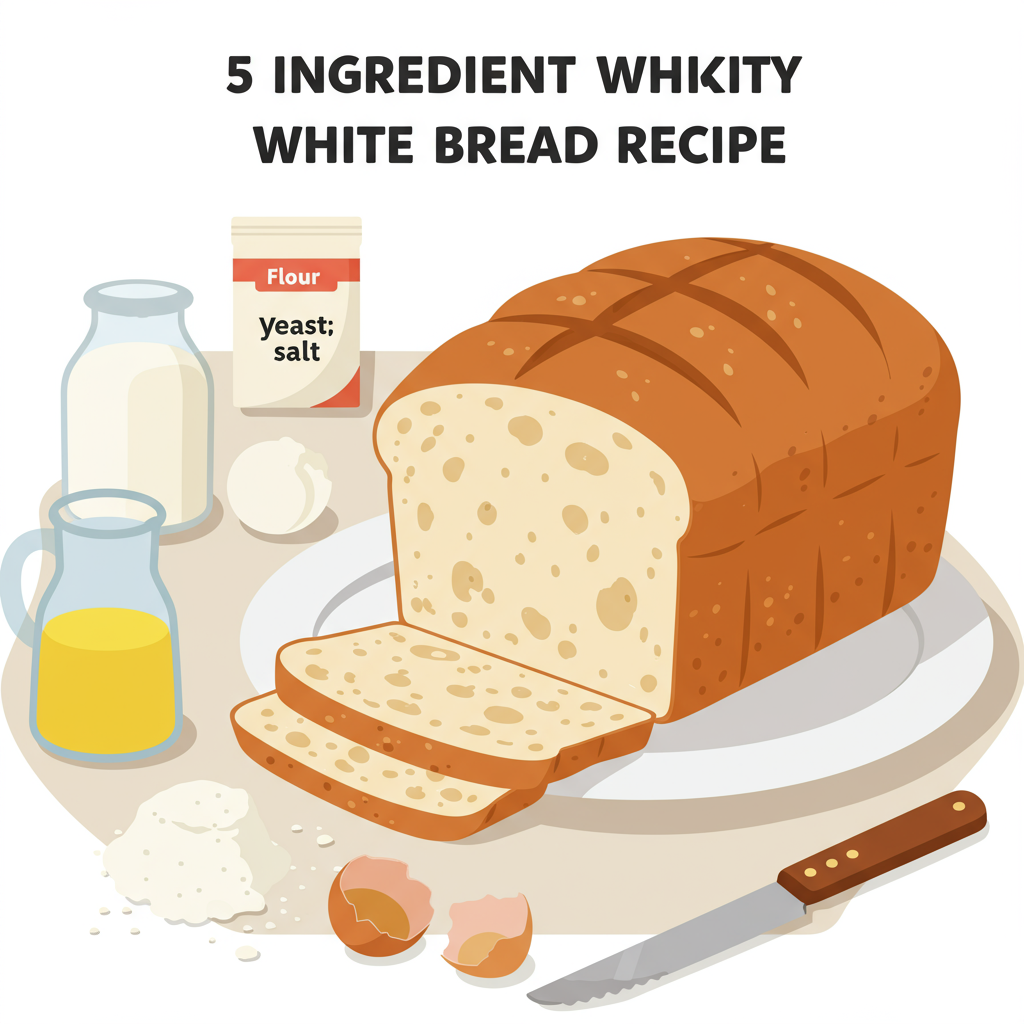
Unlock the Magic of Homemade Bread with Our 5-Ingredient White Bread Recipe!
There’s nothing quite like the aroma of freshly baked bread wafting through your home. It’s a smell that evokes comfort, warmth, and pure joy. For many, baking bread can seem like a daunting task, filled with complex steps and intimidating techniques. But what if we told you that creating a beautiful, golden-crusted loaf of white bread could be incredibly simple? Welcome to our **5 Ingredient White Bread Recipe**, designed specifically for the absolute beginner!
This recipe strips away the complexity, focusing on fundamental **baking tips for beginners** to ensure your first foray into bread making is a resounding success. Forget long ingredient lists or complicated processes; with just five basic items and a little patience, you’ll be pulling a perfect loaf from your oven in no time. Get ready to impress yourself and your loved ones with this incredibly **easy baking recipes** that will quickly become a staple in your kitchen!
Ingredients You’ll Need
Gather your simple pantry staples! For this incredible bread, you only need five core ingredients:
| Ingredient | Quantity | Unit |
|---|---|---|
| All-Purpose Flour | 3 | cups |
| Warm Water | 1 | cup |
| Active Dry Yeast | 2 ¼ | teaspoons (1 packet) |
| Granulated Sugar | 2 | tablespoons |
| Salt | 1 | teaspoon |
Pro-Tip for Beginners: Accurate measuring is key in baking! Use a liquid measuring cup for water and dry measuring cups for flour, leveling off the flour with the back of a knife.
Step-by-Step Instructions: Your Guide to Perfect Bread
Follow these detailed steps carefully, and you’ll be a bread-baking pro in no time!
Step 1: Activate the Yeast (The Bubbling Magic!)
In a large mixing bowl, combine the warm water (ideally between 105-115°F or 40-46°C – warmer than lukewarm but not hot to the touch), the granulated sugar, and the active dry yeast. Stir gently. The sugar acts as food for the yeast, helping it activate. Let this mixture sit for 5-10 minutes. You should see a foamy layer form on top, indicating your yeast is alive and ready to work! If it doesn’t foam, your water might have been too hot (killing the yeast) or too cold (preventing activation), or your yeast might be old. Start again with fresh yeast and correct water temperature.
Step 2: Combine Dry Ingredients
While your yeast is activating, in a separate, smaller bowl, whisk together the all-purpose flour and salt. Whisking ensures the salt is evenly distributed throughout the flour, which is important for flavor and yeast activity.
Step 3: Mix the Dough
Once your yeast mixture is bubbly, pour the dry ingredients into the large bowl with the yeast mixture. Using a wooden spoon or a sturdy spatula, mix until a shaggy dough forms and most of the flour is incorporated. Don’t worry if it looks a bit messy at this stage; we’re just getting started!
Step 4: Kneading for Structure (The Workout!)
Lightly flour a clean work surface (your kitchen counter is perfect!). Turn the shaggy dough out onto the floured surface. Now for the fun part: kneading! This develops the gluten in the flour, which gives bread its chewiness and structure. To knead, push the dough away from you with the heels of your hands, fold it back over itself, give it a quarter turn, and repeat. Continue kneading for 8-10 minutes. The dough will start sticky, but as you knead, it will become smooth, elastic, and less sticky. It should spring back when gently poked.
Beginner Tip: If your dough is too sticky, add a tiny bit more flour (about a teaspoon at a time) to your work surface. If it’s too dry, wet your hands slightly and continue kneading. Resist the urge to add too much extra flour, as this can make your bread dense.
Step 5: First Rise (Bulk Fermentation)
Lightly grease a clean large bowl with a tiny bit of vegetable oil or cooking spray. Place your kneaded dough into the bowl, turning it once to coat the top with oil (this prevents it from drying out). Cover the bowl tightly with plastic wrap or a clean kitchen towel. Place it in a warm, draft-free spot. A slightly warm oven (turned off, or just warmed by the pilot light) or a sunny spot on your counter works well. Let the dough rise for 1 to 1.5 hours, or until it has **doubled in size**. This is called the “first rise” or “bulk fermentation.”
Step 6: Punch Down and Shape the Loaf
Once the dough has doubled, gently “punch it down” to release the air. This isn’t aggressive; just a gentle deflate with your fist. Turn the dough out onto a lightly floured surface. Gently shape it into a rectangular loaf that will fit snugly into your loaf pan (a standard 9×5 inch pan is ideal). Try to create a smooth top surface by pulling the edges underneath. Place the shaped dough seam-side down into a lightly greased loaf pan.
Step 7: Second Rise (Proofing)
Cover the loaf pan loosely with plastic wrap or a clean kitchen towel. Place it back in that warm, draft-free spot for another 30-45 minutes, or until the dough has risen significantly and is about 1 inch above the rim of the pan. This is called “proofing” and gives your bread its final lift before baking. About 15 minutes before the end of the second rise, preheat your oven to 375°F (190°C).
Step 8: Bake Your Masterpiece!
Carefully place the loaf pan into the preheated oven. Bake for 30-35 minutes, or until the crust is golden brown and the internal temperature of the bread reaches 200-210°F (93-99°C) when measured with an instant-read thermometer. If you don’t have a thermometer, tap the bottom of the loaf; it should sound hollow. If the top is browning too quickly, you can loosely tent it with aluminum foil for the last 10-15 minutes.
Step 9: Cool Completely (The Hardest Part!)
Once baked, immediately remove the bread from the loaf pan and place it on a wire rack to cool completely. This step is crucial! Cooling on a rack prevents the bottom from becoming soggy, and it allows the internal structure of the bread to set properly. Resist the urge to slice into it right away – it will continue to cook slightly as it cools and will have a much better texture if you wait at least an hour. Enjoy your incredible homemade bread!
Tips & Tricks for Baking Success
Baking bread is an art and a science, but these simple tips will help ensure your success every time:
- Mind the Water Temperature: This is perhaps the most critical factor for yeast activation. Too hot, and you kill the yeast; too cold, and it won’t activate. Aim for the “baby bath” temperature – warm but not scalding. An instant-read thermometer is a great investment for accuracy.
- Don’t Rush the Rise: Patience is a virtue in bread making. If your kitchen is cool, your dough might take longer to rise. Don’t force it; just let it take its time. A properly risen dough is key to a light and airy loaf.
- Learn the “Windowpane Test”: During kneading, you can test for gluten development. Pinch off a small piece of dough and gently stretch it. If you can stretch it thin enough to see light through it without tearing, your gluten is well-developed!
- Prevent Sticking: Always lightly flour your work surface and hands, and lightly grease your rising bowl and loaf pan. This makes handling the dough much easier and prevents frustration.
- Cool Completely: We can’t stress this enough! Slicing into hot bread can result in a gummy texture. The internal structure needs time to stabilize as it cools, leading to a perfect crumb.
- Storage: Once completely cool, store your homemade bread in an airtight container or bread bag at room temperature for 3-4 days. For longer storage, slice and freeze it; it toasts beautifully from frozen!
Essential Baking Tools
You don’t need a lot of fancy equipment to bake bread, but these basic tools will make your experience much smoother:
- Mixing Bowl
- Whisk
- Baking Pan (9×5 inch loaf pan)
- Measuring Cups & Spoons
- Spatula / Wooden Spoon
- Optional: Instant-read thermometer for water and bread
Nutrition Information (Estimated per Slice)
Here’s an estimated nutritional breakdown for one slice (approximately 1/12th of the loaf) of this delicious 5-Ingredient White Bread. Please note that these are estimates and can vary based on exact ingredient measurements and brands.
| Nutrient | Amount |
|---|---|
| Calories | ~90-100 kcal |
| Carbohydrates | ~18-20 g |
| Protein | ~3-4 g |
| Fat | ~0.5-1 g |
| Fiber | ~0.5-1 g |
| Sugar | ~1-2 g |
Disclaimer: Nutritional information is an estimate based on standard ingredient values. Actual values may vary.
Frequently Asked Questions (FAQs)
Q1: My yeast didn’t foam. What went wrong?
A: The most common reasons are water temperature being too hot (killing the yeast) or too cold (not activating it), or your yeast being old/inactive. Ensure your water is between 105-115°F (40-46°C) and check the expiry date on your yeast packet.
Q2: My dough is too sticky/dry. How do I fix it?
A: If it’s too sticky, add a tiny bit more flour (½ to 1 teaspoon at a time) to your work surface while kneading. If it’s too dry and crumbly, wet your hands slightly or add a tiny bit more water (½ to 1 teaspoon) and continue kneading. Adjust gradually until it reaches a smooth, elastic consistency.
Q3: Why didn’t my bread rise?
A: This could be due to inactive yeast (see Q1), an overly cold rising environment, or insufficient kneading (which is crucial for gluten development to trap gases). Ensure your rising spot is warm and draft-free, and give your dough enough time to rise.
Q4: How do I know when my bread is fully baked?
A: The crust should be golden brown, and if you tap the bottom of the loaf, it should sound hollow. The most accurate way is to use an instant-read thermometer; the internal temperature should be between 200-210°F (93-99°C).
Q5: Can I use different types of flour?
A: While this recipe is optimized for all-purpose flour, you can experiment. Using bread flour might require slightly more water due to its higher protein content. Whole wheat flour will result in a denser loaf and likely require more liquid; it’s best to start with all-purpose for your first few loaves.
Q6: How should I store homemade bread?
A: Once completely cooled, store your bread in an airtight container, a bread box, or a sealed plastic bag at room temperature for 3-4 days. For longer storage, slice the loaf and freeze the slices in a freezer-safe bag for up to 3 months. You can toast them directly from frozen!
Your Journey to Homemade Bread Starts Now!
Congratulations, you’re now equipped with everything you need to bake your very own loaf of delicious, homemade white bread! This **5 Ingredient White Bread Recipe** is more than just a recipe; it’s an invitation to experience the simple, profound joy of creating something wonderful with your own hands. Don’t be afraid to get a little messy, to learn from any small mishaps, and most importantly, to savor every moment of the process.
The satisfaction of pulling a warm, fragrant loaf from your oven, slicing into its soft interior, and tasting that incredible fresh flavor is truly unmatched. We promise, once you try this easy recipe, you’ll wonder why you ever bought bread from the store! So grab your ingredients, set aside some time, and embark on your exciting journey into the world of bread baking. We can’t wait to hear about your successful loaves!
“`