
Welcome, aspiring home cooks and seasoned foodies alike! If you’ve ever dreamt of elevating your homemade crab cakes from good to absolutely unforgettable, then you’ve landed in the right place. Today, we’re diving deep into crafting the most luscious, creamy, and flavorful Aioli Recipe For Crab Cakes right in your own kitchen. Forget those store-bought versions; once you taste the difference of fresh, homemade aioli, there’s no going back.
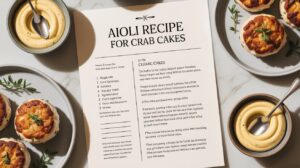
Gather Your Essentials: Ingredients List for Our Stellar Aioli
Creating a truly exceptional aioli starts with fresh, quality ingredients. Here’s what you’ll need to whip up a batch that perfectly complements your crab cakes.
| Ingredient | Quantity | Unit |
|---|---|---|
| Large Egg Yolk | 1 | |
| Garlic Cloves, minced | 2-3 | |
| Fresh Lemon Juice | 1 | tablespoon |
| Dijon Mustard | 1/2 | teaspoon |
| Neutral Oil (e.g., grapeseed, canola, light olive oil) | 1/2 – 3/4 | cup |
| Salt | 1/4 | teaspoon (or to taste) |
| Freshly Ground Black Pepper | Pinch | (or to taste) |
| Hot Water (optional, for thinning) | 1-2 | teaspoons |
Step-by-Step Perfection: Crafting Your Beginner-Friendly Aioli
Making aioli might seem intimidating at first, but with these detailed, easy-to-follow steps, you’ll be a pro in no time! The key is patience and a steady hand.
Step 1: Prep Your Ingredients for Success
First things first, ensure all your ingredients, especially the egg yolk, are at **room temperature**. This is a crucial **baking tip for beginners** that applies equally well here! Cold ingredients are much harder to emulsify, leading to a higher risk of your aioli breaking or separating. Separate your egg yolk carefully, making sure no egg white gets in. Mince your garlic very finely – you want the flavor, not chunky bits. Have your lemon juice, Dijon mustard, salt, and pepper measured out and ready to go. This mise en place (everything in its place) approach makes the process smooth and enjoyable.
Step 2: Combine the Base Flavors
In a medium-sized bowl, combine the single egg yolk, minced garlic, fresh lemon juice, and Dijon mustard. Give it a good whisk for about 30 seconds until everything is well combined and slightly frothy. The Dijon mustard acts as a natural emulsifier, helping to stabilize your aioli, which is a fantastic little secret for **easy baking recipes** and sauces alike!
Step 3: The Slow Drizzle – The Heart of Aioli Making
Now for the most critical step: adding the oil. This is where patience truly pays off. While continuously whisking vigorously with one hand, slowly, almost drop by drop initially, drizzle in the neutral oil with your other hand. Think of it as a very thin, steady stream, not a pour. For beginners, it’s safer to go slower than faster. If you add the oil too quickly, the emulsion won’t form, and your aioli will separate or “break.”
Common Mistake & Fix: If your aioli looks thin, oily, or like it’s separating, it’s likely you added the oil too fast. Don’t panic! You can often fix a broken aioli. In a clean bowl, whisk another fresh egg yolk. Then, very slowly, add your broken aioli mixture to the new egg yolk, whisking constantly as if it were oil. This often rescues it!
Step 4: Whisk Until Thick and Creamy
As you continue to add the oil slowly and whisk, you’ll notice a magical transformation. The mixture will start to thicken, becoming pale yellow, creamy, and glossy. It should resemble a thick mayonnaise. Keep whisking until all the oil is incorporated and the aioli reaches your desired consistency. This usually takes about 5-10 minutes of continuous whisking by hand, depending on your speed and the stability of your emulsion. For an easier method, an immersion blender can do this in minutes (see Tips & Tricks!).
Step 5: Season and Adjust
Once your aioli is thick and beautiful, it’s time to season it to perfection. Stir in the salt and freshly ground black pepper. Taste a small amount and adjust the seasoning as needed. You might want a little more lemon juice for tang, more garlic for punch, or more salt. This is your aioli, so make it perfect for your palate!
Alternative: For a roasted garlic aioli, roast whole garlic cloves (toss with olive oil, wrap in foil, bake at 400°F for 30-40 minutes) until soft and sweet. Squeeze out the pulp and mash it into a paste before adding it to your egg yolk mixture. This adds a depth of flavor that’s simply incredible!
Step 6: Achieve Desired Consistency (Optional)
If your aioli is too thick for your liking, you can thin it out slightly. Whisk in a teaspoon or two of hot water, a few drops at a time, until it reaches your preferred consistency. This also helps to lighten the texture slightly. Serve immediately with your delicious crab cakes or store for later!
Expert Aioli Tips & Tricks for Beginners
Making aioli, like many **easy baking recipes**, benefits greatly from a few insider tips. These pointers will help you achieve perfect results every time and even encourage you to experiment!
- Room Temperature is Key: We can’t stress this enough! Cold ingredients, especially the egg yolk, are prone to breaking the emulsion. Plan ahead and take your egg out of the fridge at least 30 minutes before you start.
- Slow and Steady Wins the Race: When adding the oil, think of it as a trickle, not a pour. Especially in the beginning, adding it drop by drop ensures a stable emulsion. Once it starts to thicken, you can slightly increase the stream, but never rush it.
- Immersion Blender Magic: While whisking by hand is traditional and satisfying, an immersion blender makes aioli incredibly easy and fast. Combine all ingredients (except the majority of the oil) in a tall, narrow jar. Pour all the oil on top. Place the immersion blender blade at the very bottom, turn it on, and slowly pull it upwards as the aioli emulsifies. It’s almost foolproof!
- Customize Your Flavor: Don’t be afraid to experiment! Add a pinch of smoked paprika for a smoky aioli, a dash of cayenne for a kick, or fresh herbs like chopped chives or parsley for a vibrant twist. A touch of zest from the lemon can also brighten the flavor.
- Storage Savvy: Store homemade aioli in an airtight container in the refrigerator. Due to the raw egg yolk, it’s best consumed within 3-5 days. Always trust your nose and eyes; if it smells off or looks separated, it’s best to discard it.
- Oil Choice Matters: While a neutral oil is recommended for a classic aioli, feel free to experiment with different oils. A light olive oil can add a pleasant fruity note, but avoid extra virgin olive oil as its strong flavor can be overpowering and sometimes bitter in a raw emulsion.
Essential Kitchen Tools for Aioli Making
While this isn’t a “baking” recipe in the traditional sense, many of the tools you’d use for **easy baking recipes** are also perfect for whipping up this delightful aioli. Having the right equipment makes the process smoother and more enjoyable for **baking tips for beginners** and sauce-making alike!
- Mixing Bowl: A sturdy, medium-sized bowl is essential for whisking.
- Whisk: A good quality balloon whisk is your best friend for emulsifying by hand.
- Baking Pan: (While not directly used for aioli, a baking pan is a common kitchen tool for roasting garlic if you opt for a roasted garlic aioli.)
- Measuring Cups: For precise measurement of ingredients like oil and lemon juice.
- Spatula: Great for scraping down the sides of the bowl and transferring your finished aioli.
- Immersion Blender (Optional but highly recommended for beginners!): Not on the provided list, but a game-changer for speed and ease.
Nutrition Information (Estimated per serving, about 2 tablespoons)
Please note: This is an estimated nutritional breakdown and can vary based on specific ingredients and portion sizes.
| Nutrient | Amount |
|---|---|
| Calories | 180-220 kcal |
| Carbohydrates | 0-1 g |
| Protein | 0-1 g |
| Fat | 20-25 g |
| Fiber | 0 g |
| Sugar | 0 g |
Frequently Asked Questions About Aioli
We know you might have some questions, especially if this is your first time making aioli. Here are answers to some common beginner queries!
Q1: Can I make aioli without raw egg?
A: Yes! If you’re concerned about raw eggs, you can use pasteurized egg yolks (available in some grocery stores) or try a “vegan” aioli using aquafaba (the liquid from a can of chickpeas) as an emulsifier. The texture will be slightly different but still delicious.
Q2: Why did my aioli separate or “break”?
A: The most common reasons are adding the oil too quickly, or using ingredients that are too cold. An emulsion is delicate, and a sudden influx of oil or temperature shock can prevent the fat and water molecules from binding properly. Refer to our “Common Mistake & Fix” in Step 3 for how to rescue it!
Q3: How long does homemade aioli last in the fridge?
A: Due to the raw egg yolk, homemade aioli should be stored in an airtight container in the refrigerator and consumed within 3-5 days. Always err on the side of caution and discard if it shows any signs of spoilage.
Q4: What’s the best type of oil to use for aioli?
A: A neutral-flavored oil like grapeseed, canola, or a very light olive oil (not extra virgin) is generally recommended. These oils allow the garlic and lemon flavors to shine without overpowering them. Stronger oils can sometimes make the aioli taste bitter.
Q5: Can I use a food processor or blender instead of whisking by hand or an immersion blender?
A: Yes, a food processor or regular blender can work. Add the egg yolk, garlic, lemon juice, and Dijon to the processor. With the motor running, slowly drizzle in the oil through the feed tube until the aioli emulsifies and thickens. Ensure you have a small enough opening for a very slow drizzle. An immersion blender is often easier for smaller batches.
Your Aioli Adventure Awaits!
There you have it! A comprehensive, beginner-friendly guide to making the most exquisite aioli for your crab cakes. You’ve just mastered a classic sauce that will elevate not only your crab cakes but also sandwiches, roasted vegetables, and so much more. Don’t be intimidated by the process; embrace the whisk, savor the aroma, and enjoy the incredible satisfaction of creating something truly delicious from scratch.
We hope this Aioli Recipe For Crab Cakes has given you the confidence and the baking tips for beginners (even for non-baked items!) to dive into the wonderful world of homemade sauces. Go ahead, give it a try, and prepare to be amazed by your own culinary skills. Happy cooking!