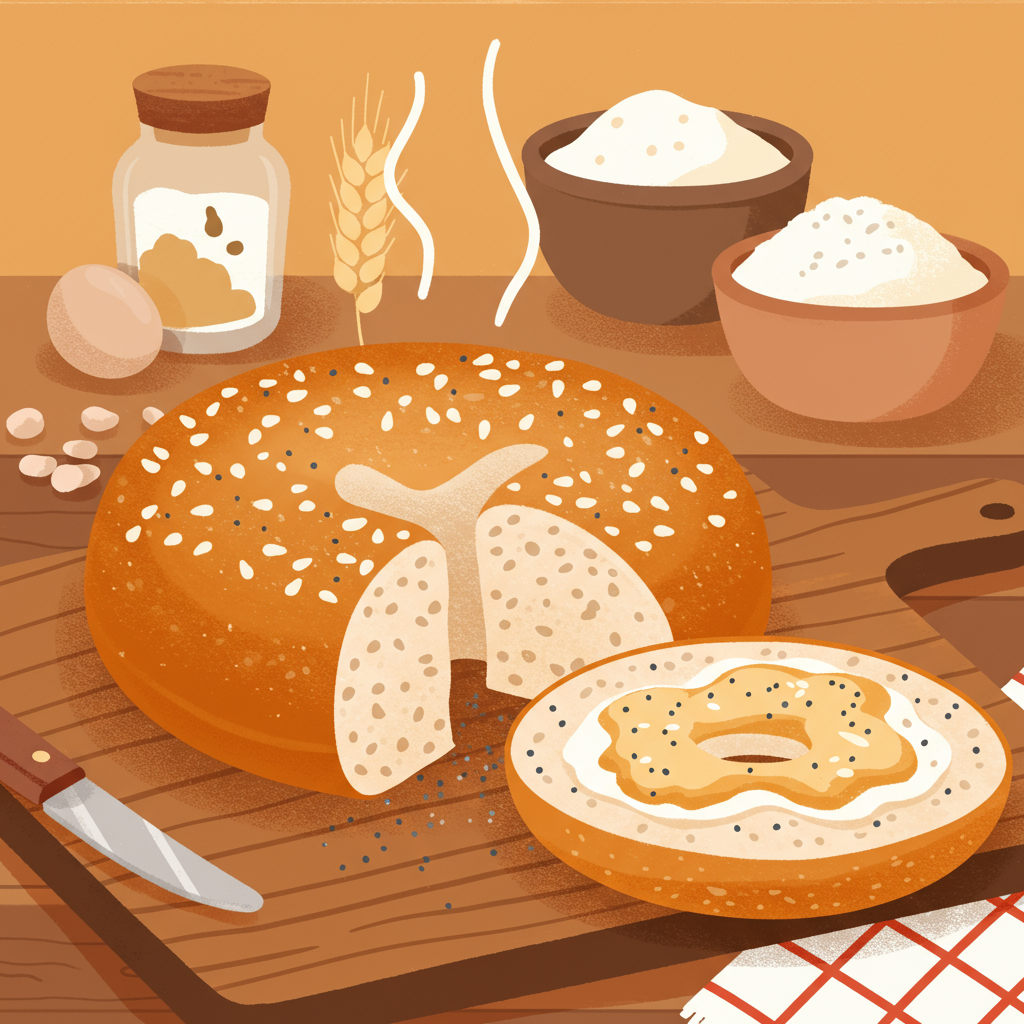
Welcome, fellow baking enthusiasts! If you’ve ever dreamed of waking up to the irresistible aroma of freshly baked bread, but felt intimidated by complex recipes, you’ve come to the right place. Today, we’re diving into our incredibly simple and satisfying Bagel Bread Recipe – a perfect entry point into the wonderful world of baking.

This recipe is specifically designed to be one of the easiest easy baking recipes you’ll ever try, yielding a deliciously chewy, golden-brown loaf with that signature bagel-like crust and soft interior, all without the fuss of traditional bagel boiling and shaping. Get ready to impress yourself and your loved ones with this foolproof method. We’ll walk you through every step, sharing invaluable baking tips for beginners to ensure your success!
Why You’ll Love This Bagel Bread Recipe
- Beginner-Friendly: No complicated techniques, just straightforward mixing, rising, and baking.
- Deliciously Unique: Combines the best of a chewy bagel with the convenience of a loaf.
- Versatile: Perfect for sandwiches, toast, or alongside your favorite soup.
- Rewarding: The smell of homemade bread is pure bliss!
Ingredients List
Gather your ingredients! Precision is key in baking, so make sure to measure everything accurately.
| Ingredient | Quantity |
|---|---|
| All-Purpose Flour | 3 cups (360g) |
| Warm Water (105-115°F / 40-46°C) | 1 cup (240ml) |
| Instant Yeast | 2 ¼ teaspoons (1 standard packet) |
| Granulated Sugar | 1 tablespoon |
| Salt | 1 teaspoon |
| Olive Oil (or other neutral oil) | 1 tablespoon + extra for greasing |
| Egg (for egg wash, optional) | 1 large |
| Sesame Seeds, Poppy Seeds, Everything Bagel Seasoning (for topping, optional) | 2 tablespoons |
Step-by-Step Instructions: Bake Your First Bagel Bread Loaf!
Step 1: Activate the Yeast (The Magic Begins!)
In a large mixing bowl, combine the warm water (make sure it’s not too hot, or it will kill the yeast, nor too cold, or it won’t activate it) with the granulated sugar and instant yeast. Give it a gentle stir. Let it sit for about 5-10 minutes. You’ll know your yeast is active and happy when it becomes foamy and bubbly on top. This is a crucial step for beginner bakers – if your yeast doesn’t foam, it might be old, or your water temperature was off. Don’t proceed until you see those bubbles!
Step 2: Mix the Dough
Once your yeast is frothy, add the olive oil, salt, and about half of the all-purpose flour to the bowl. Stir with a wooden spoon or a sturdy spatula until just combined. Gradually add the remaining flour, a little at a time, mixing until a shaggy dough forms. It will look a bit rough and sticky at this stage, which is perfectly normal.
Beginner Tip: Resist the urge to add too much flour too quickly! The dough will come together. If it’s too sticky to handle later, you can add a tiny bit more flour, but too much flour makes for dry bread.
Step 3: Knead the Dough
Turn the dough out onto a lightly floured surface. Now comes the kneading! Kneading develops the gluten, which gives your bread its structure and chewiness. Knead for 8-10 minutes. If you have a stand mixer with a dough hook, you can use it on medium-low speed for 6-8 minutes.
How to Knead by Hand: Push the dough away from you with the heels of your hands, fold it back over, rotate it a quarter turn, and repeat. It might feel sticky at first, but as you knead, it will become smoother and more elastic. It should pass the “windowpane test” – you should be able to stretch a small piece of dough thin enough to see light through it without tearing.
Common Mistake: Not kneading enough! Under-kneaded dough will result in a dense, crumbly bread. Over-kneading is less common by hand but can make the dough tough.
Step 4: First Rise (Proofing)
Lightly grease your mixing bowl with a little olive oil. Place the kneaded dough into the bowl, turning it once to coat the top with oil. Cover the bowl tightly with plastic wrap or a clean kitchen towel. Place it in a warm, draft-free spot for 1 to 1.5 hours, or until the dough has doubled in size. A slightly warm oven (turned off, with just the light on) or a sunny spot on your counter works well.
Beginner Tip: Proofing is crucial! If your kitchen is cold, it might take longer. Don’t rush it. The dough doubling in size is your visual cue.
Step 5: Shape the Loaf
Once the dough has doubled, gently punch it down to release the air. Turn it out onto a lightly floured surface. Shape it into a loaf. For a classic shape, flatten the dough into a rectangle, then roll it tightly into a log, pinching the seam closed at the bottom. Tuck the ends under slightly to create a neat loaf.
Alternative Shaping: You can also shape it into a round loaf (boule) by gently folding the edges under to create tension on the top surface.
Step 6: Second Rise (Final Proof)
Lightly grease a standard 9×5 inch loaf pan. Place your shaped dough seam-side down into the prepared pan. Cover it again with plastic wrap or a kitchen towel and let it rise in a warm place for another 30-45 minutes, or until it has almost doubled in size and looks puffy. Towards the end of this rise, preheat your oven to 375°F (190°C).
Step 7: Egg Wash and Toppings (Optional, but Recommended!)
In a small bowl, whisk the large egg with a tablespoon of water to create an egg wash. Gently brush the top of the risen dough with the egg wash. This will give your bread a beautiful golden crust and help your toppings stick. Sprinkle generously with your chosen toppings – sesame seeds, poppy seeds, or everything bagel seasoning are fantastic choices!
Step 8: Bake Your Bagel Bread
Carefully place the loaf pan into your preheated oven. Bake for 30-35 minutes, or until the crust is deeply golden brown and the internal temperature reaches 200-210°F (93-99°C) when measured with an instant-read thermometer. If the top starts to brown too quickly, you can loosely tent it with aluminum foil.
Step 9: Cool and Enjoy!
Once baked, remove the loaf pan from the oven and let it cool in the pan for about 5-10 minutes. Then, carefully turn the bread out onto a wire rack to cool completely before slicing. This cooling step is crucial! Slicing hot bread can make it gummy inside. Patience is a virtue here!
Once cool, slice and savor your homemade Bagel Bread! It’s fantastic toasted, with cream cheese, or as a hearty sandwich base.
Tips & Tricks for Beginner Bakers
Baking bread is a journey, and these tips will help you along the way:
- Accurate Measuring: Use a kitchen scale for flour (grams are most accurate) if possible. If using measuring cups, spoon the flour into the cup and level it off with a straight edge; don’t scoop directly, as this compacts the flour.
- Yeast Temperature is Key: Always check your water temperature with a thermometer. Too hot kills the yeast, too cold won’t activate it. 105-115°F (40-46°C) is perfect.
- Warm Proofing Environment: A warm, draft-free spot is essential for proper rising. If your kitchen is chilly, try the oven with just the light on, or place the bowl in a larger bowl of warm (not hot) water.
- Don’t Rush the Rise: Dough will take as long as it takes to double in size. Be patient! Under-proofed dough results in dense bread.
- Customize Your Toppings: Don’t limit yourself to sesame seeds! Experiment with poppy seeds, dried minced garlic, dried minced onion, caraway seeds, or even a sprinkle of coarse sea salt.
- Storage: Store your Bagel Bread in an airtight container at room temperature for up to 3-4 days. For longer storage, slice and freeze individual portions; toast directly from frozen.
- Listen to Your Dough: Baking isn’t always exact science. Learn to feel the dough, look for visual cues, and adjust slightly as needed. It’s part of the fun!
Essential Baking Tools
Having the right tools makes all the difference! Here are some basics you’ll want:
- Mixing Bowl
- Whisk
- Loaf Pan (9×5 inch)
- Measuring Cups & Spoons
- Spatula (or Wooden Spoon)
- Instant-Read Thermometer (for water temperature and bread doneness)
- Wire Cooling Rack
Nutrition Information (Estimated per serving, 1/12 of loaf)
Here’s an approximate breakdown of the nutrition per serving:
| Nutrient | Amount |
|---|---|
| Calories | 200-220 kcal |
| Carbohydrates | 40-45g |
| Protein | 7-8g |
| Fat | 2-3g |
| Fiber | 2-3g |
| Sugar | 2-3g |
*Note: Nutritional values are estimates and can vary based on specific ingredient brands and preparation methods.
Frequently Asked Questions (FAQs)
Q: Can I use active dry yeast instead of instant yeast?
A: Yes, you can! If using active dry yeast, you’ll need to “proof” it first. Combine the warm water, sugar, and active dry yeast in the bowl and let it sit for 5-10 minutes until foamy before adding other ingredients. The quantity usually remains the same (2 ¼ teaspoons).
Q: Why didn’t my dough rise?
A: The most common reasons are inactive yeast (either too old, or killed by too hot water), or the proofing environment was too cold. Always check your yeast for foaminess in Step 1. If it doesn’t foam, start over with fresh yeast and correct water temperature.
Q: How do I store Bagel Bread?
A: Once completely cooled, store your Bagel Bread in an airtight container or a large zip-top bag at room temperature for up to 3-4 days. For longer storage, slice the bread and freeze it in a freezer-safe bag for up to 2-3 months. You can toast slices directly from frozen.
Q: Can I add different flavors or mix-ins to the dough?
A: Absolutely! Get creative. You can add ½ cup of shredded cheese, finely chopped dried onions, or even a tablespoon of garlic powder to the dough during the mixing stage for different flavor profiles. Just be mindful that additions might slightly alter the dough’s texture or rise time.
Q: My bread crust is too hard, what went wrong?
A: A hard crust can be due to overbaking or not enough moisture in the dough. Ensure you’re not baking for too long, and consider placing a shallow pan of water on the bottom rack of your oven during the bake to create steam, which helps with a softer crust.
Conclusion
Congratulations, you’ve just unlocked the secret to amazing homemade bread! This Bagel Bread Recipe is truly a game-changer for anyone looking to dip their toes into baking. From the first glorious aroma filling your kitchen to that satisfying first bite, you’ll find immense joy and pride in creating something so delicious from scratch. Don’t be afraid to experiment, learn from each bake, and most importantly, have fun!

We can’t wait to see your beautiful Bagel Bread creations. Share your results and any questions in the comments below. Happy baking!