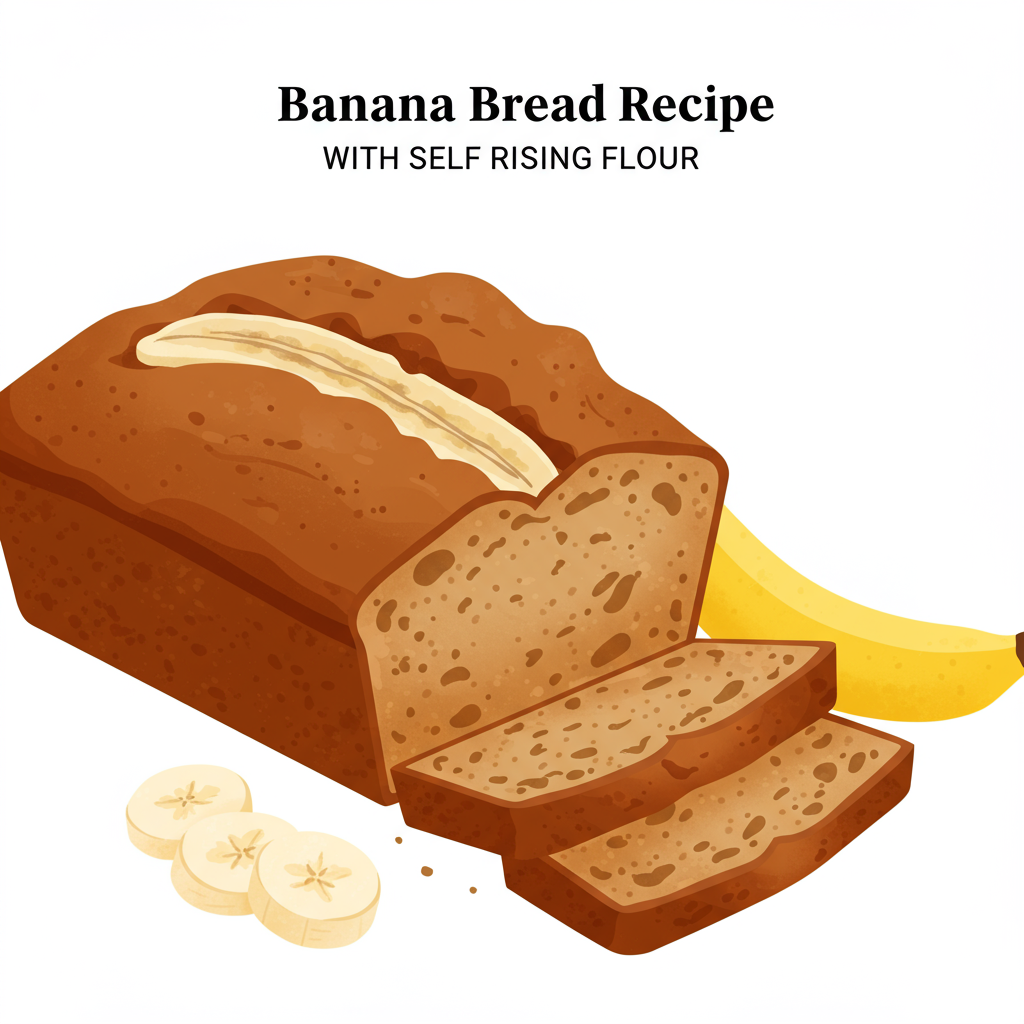
The Easiest Banana Bread Recipe With Self-Rising Flour (Beginner-Friendly!)
Introduction: Your New Go-To Banana Bread!
Welcome, aspiring bakers! Are you looking for an incredibly simple yet utterly delicious way to use up those overripe bananas sitting on your counter? You’ve come to the right place! This Banana Bread Recipe With Self Rising Flour is designed specifically for you. Forget complicated steps and long lists of ingredients – we’re stripping it back to basics, making this one of the most easy baking recipes you’ll ever try. If you’re new to baking, consider this your perfect starting point. We’ll walk you through every single step, providing all the crucial baking tips for beginners to ensure your first (or fiftieth!) loaf of banana bread is a resounding success. Get ready to fill your home with the irresistible aroma of warm, homemade banana bread!
Ingredients You’ll Need
Gather your ingredients! The beauty of this recipe lies in its simplicity. Make sure your bananas are good and spotty – that’s where all the flavor comes from!
| Ingredient | Quantity |
|---|---|
| Very Ripe Bananas, mashed | 3-4 large (about 1 ½ cups) |
| Self-Rising Flour | 1 ½ cups |
| Granulated Sugar | ½ cup (for a less sweet loaf) to ¾ cup (for a sweeter loaf) |
| Large Egg | 1 |
| Unsalted Butter, melted | ½ cup (1 stick) |
| Vanilla Extract | 1 teaspoon |
| Optional: Chocolate Chips or Chopped Nuts | ½ cup |
Step-by-Step Instructions: Bake Your Best Banana Bread!
Follow these detailed steps, and you’ll be enjoying warm, moist banana bread in no time. We’ve added extra tips just for beginners!
-
Preheat and Prepare Your Pan
Start by preheating your oven to 350°F (175°C). This ensures the oven is at the correct temperature when your batter is ready to go in, which is crucial for even baking. Next, take a 9×5 inch loaf pan. Lightly grease it with butter or cooking spray. You can also line it with parchment paper, leaving an overhang on the long sides – this creates “handles” that make it super easy to lift the baked loaf out of the pan later. Beginner Tip: Don’t skip greasing or lining! It prevents your bread from sticking and makes cleanup much easier.
-
Mash Those Bananas!
In a medium mixing bowl, place your very ripe bananas. Use a fork, a potato masher, or even the back of a spoon to mash them until they are mostly smooth with a few small lumps. Some lumps are perfectly fine and add texture to your bread! Beginner Tip: The riper the bananas (with lots of brown spots!), the easier they are to mash and the more flavor your bread will have. If your bananas aren’t quite ripe enough, you can quick-ripen them by baking them unpeeled on a baking sheet at 300°F (150°C) for 15-30 minutes until their skins are black. Let them cool before mashing.
-
Combine the Wet Ingredients
To your mashed bananas, add the melted butter, granulated sugar, large egg, and vanilla extract. Whisk everything together until it’s well combined and looks like a uniform mixture. It doesn’t need to be perfectly smooth, but make sure the egg is fully incorporated. Beginner Tip: Ensure your melted butter isn’t piping hot when you add it, as this can cook the egg slightly. Let it cool for a minute or two after melting.
-
Gently Mix in the Self-Rising Flour
Now, add the self-rising flour to the wet ingredients. Using a spatula or wooden spoon, gently fold the flour into the mixture until just combined. It’s okay if there are a few streaks of flour visible; you do not want to overmix! Overmixing develops the gluten in the flour too much, leading to a tough, dense banana bread instead of a light, moist one. This is one of the most important baking tips for beginners! Alternative: If you don’t have self-rising flour, you can make your own! For every cup of all-purpose flour, add 1 ½ teaspoons of baking powder and ¼ teaspoon of salt. So for this recipe, you’d use 1 ½ cups all-purpose flour, 2 ¼ teaspoons baking powder, and ⅜ teaspoon salt.
-
Add Your Optional Mix-Ins (If Using)
If you’re adding chocolate chips, chopped nuts, or even a sprinkle of cinnamon, gently fold them into the batter now. Don’t stir too vigorously. Beginner Tip: To prevent chocolate chips or nuts from sinking to the bottom of your loaf, lightly toss them with a tablespoon of the self-rising flour before adding them to the batter. The flour coating helps them suspend evenly.
-
Pour into the Pan and Bake
Pour the banana bread batter evenly into your prepared loaf pan. You can use your spatula to smooth out the top. Place the loaf pan in the preheated oven. Bake for 55-70 minutes. Beginner Tip: Baking times can vary depending on your oven. Start checking around 50-55 minutes. To test for doneness, insert a wooden skewer or toothpick into the center of the loaf. If it comes out clean or with a few moist crumbs (but no wet batter), your banana bread is ready!
-
Cool Before Slicing
Once baked, remove the loaf pan from the oven and let it cool in the pan on a wire rack for about 10-15 minutes. This allows the bread to set and firm up. After this initial cooling, use your parchment paper “handles” or a knife around the edges to carefully remove the loaf from the pan and place it directly onto the wire rack to cool completely. Beginner Tip: Resist the urge to slice into it immediately! Slicing hot banana bread can make it crumbly and difficult to cut neatly. Cooling completely (or at least until warm, not hot) ensures a perfect slice and better texture.
Tips & Tricks for Perfect Banana Bread Every Time
- Embrace the Brown Spots: Seriously, the browner and spottier your bananas are, the sweeter and more flavorful your bread will be. Don’t use yellow or green bananas unless you want a less intense banana flavor.
- Do NOT Overmix: We can’t stress this enough! Overmixing is the number one cause of tough, rubbery banana bread. Mix until just combined, even if there are a few streaks of flour.
- Room Temperature Ingredients (Mostly): While melted butter is specified here, using a room-temperature egg helps it incorporate more smoothly into the batter, leading to a more uniform texture.
- Prevent a Burnt Top: If your banana bread starts browning too quickly on top before the center is cooked, loosely tent the loaf pan with aluminum foil for the last 15-20 minutes of baking.
- Customize Your Loaf: Feel free to add a teaspoon of cinnamon, a pinch of nutmeg, or other spices for extra warmth. Walnuts, pecans, or even white chocolate chips are fantastic additions.
- Storage is Key: Once completely cooled, store your banana bread in an airtight container at room temperature for up to 3-4 days. For longer storage, wrap individual slices or the whole loaf tightly in plastic wrap, then aluminum foil, and freeze for up to 3 months. Thaw at room temperature.
Essential Baking Tools
Having the right tools makes all the difference, especially when you’re starting out. Here are a few essentials:
- Mixing Bowl
- Whisk
- Baking Pan (a 9×5 inch loaf pan is ideal)
- Measuring Cups
- Spatula
- Wire cooling rack (optional, but highly recommended for even cooling)
Nutrition Information (Estimated per slice)
(Based on 12 slices per loaf, without optional mix-ins. Values are approximate and can vary based on exact ingredients and portion size.)
| Nutrient | Amount |
|---|---|
| Calories | 280-320 kcal |
| Total Carbohydrates | 45-55g |
| Protein | 4-6g |
| Total Fat | 10-14g |
| Dietary Fiber | 1-2g |
| Sugars | 25-35g |
Frequently Asked Questions (FAQs)
- Q: What if I don’t have self-rising flour? Can I still make this recipe?
- A: Absolutely! For every cup of all-purpose flour, add 1 ½ teaspoons of baking powder and ¼ teaspoon of salt. So, for this recipe, you would use 1 ½ cups all-purpose flour, 2 ¼ teaspoons baking powder, and ⅜ teaspoon salt.
- Q: How ripe should my bananas really be?
- A: The riper, the better! Look for bananas with lots of brown and black spots on their skins. They’ll be softer, sweeter, and easier to mash, imparting the best flavor and moisture to your banana bread. Green or yellow bananas won’t give you the same results.
- Q: My banana bread came out dry/tough. What went wrong?
- A: The most common culprit is overmixing the batter. Once you add the flour, mix only until just combined. Another reason could be overbaking; make sure to use the toothpick test and remove it from the oven as soon as it’s done.
- Q: Can I add other ingredients to this banana bread?
- A: Yes, definitely! This recipe is a great base. Feel free to add ½ cup of chopped walnuts, pecans, chocolate chips, dried cranberries, or even a sprinkle of cinnamon or nutmeg for extra flavor. Just gently fold them in with the flour.
- Q: How do I store leftover banana bread?
- A: Once completely cooled, store your banana bread in an airtight container at room temperature for up to 3-4 days. For longer storage, wrap individual slices or the whole loaf tightly in plastic wrap, then aluminum foil, and freeze for up to 3 months. Thaw at room temperature or gently warm in the microwave.
Conclusion: Your Banana Bread Journey Begins!
And there you have it – a simple, reliable, and utterly delicious Banana Bread Recipe With Self Rising Flour that’s perfect for anyone, especially those just starting their baking adventures! This recipe proves that baking doesn’t have to be intimidating. With a few basic ingredients and these easy-to-follow steps, you can create a comforting, homemade treat that will impress everyone (including yourself!). So go ahead, grab those spotty bananas, and get baking. We can’t wait to hear how your first loaf turns out! Happy baking!
“`