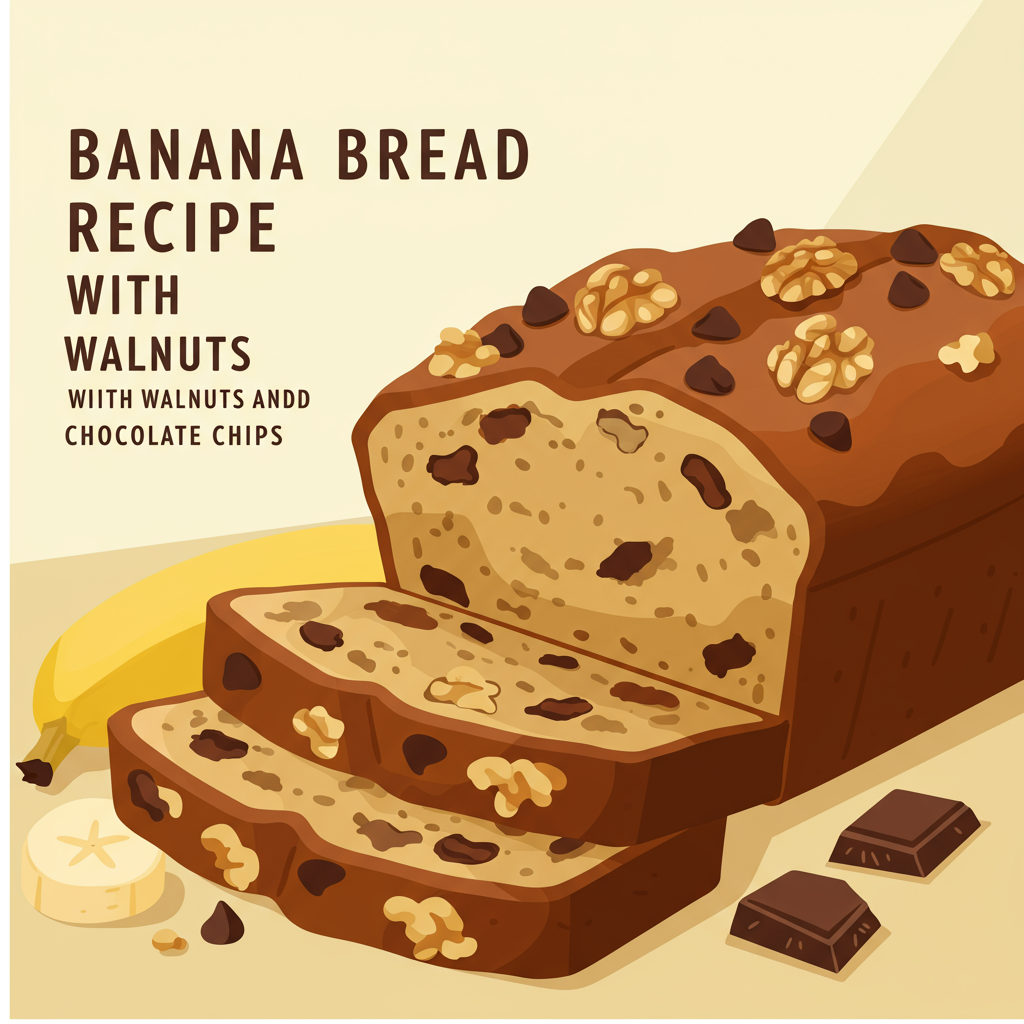
Bake the Best Banana Bread Recipe With Walnuts And Chocolate Chips (Beginner-Friendly!)
Welcome, budding bakers and seasoned pros alike! If you’re looking for an incredibly comforting, wonderfully fragrant, and undeniably delicious treat, you’ve landed in the perfect spot. Today, we’re diving into what I believe is the ultimate Banana Bread Recipe With Walnuts And Chocolate Chips. This isn’t just any banana bread; it’s a moist, flavorful masterpiece studded with crunchy walnuts and gooey chocolate chips, making every bite an absolute dream. And guess what? It’s one of the most forgiving and easy baking recipes out there, perfect for anyone just starting their baking journey.
Don’t let the thought of baking intimidate you. I’ve designed this guide to be super detailed and packed with practical baking tips for beginners, ensuring your first (or fiftieth!) loaf turns out perfectly. We’ll walk through each step together, clarifying common questions and helping you avoid typical pitfalls. So, grab those overripe bananas, preheat your oven, and get ready to fill your home with the irresistible aroma of freshly baked banana bread!
Ingredients List
Gathering your ingredients before you start is a key step in any successful baking adventure. This is called “mise en place” (everything in its place) and it helps ensure you don’t miss anything!
| Ingredient | Quantity | Unit |
|---|---|---|
| All-purpose flour | 2 | cups |
| Granulated sugar | 3/4 | cup |
| Baking soda | 1 | teaspoon |
| Salt | 1/2 | teaspoon |
| Very ripe bananas, mashed | 3-4 (medium) | |
| Unsalted butter, melted | 1/2 | cup |
| Large eggs, at room temperature | 2 | |
| Vanilla extract | 1 | teaspoon |
| Chopped walnuts | 1/2 | cup |
| Semi-sweet chocolate chips | 1/2 | cup |
Step-by-Step Instructions: Your Guide to Perfect Banana Bread
Follow these detailed steps carefully, and you’ll be enjoying a slice of homemade banana bread in no time!
Step 1: Prepare Your Oven and Pan
First things first, let’s get your oven ready. Preheat your oven to 350°F (175°C). While it’s heating up, prepare your loaf pan. You’ll need a 9×5 inch (23×13 cm) loaf pan. To prevent sticking, generously grease the inside of the pan with butter or non-stick cooking spray. For an extra layer of non-stick insurance, you can then lightly flour the greased pan, tapping out any excess. Another great beginner tip: line the pan with parchment paper, leaving an overhang on the long sides. This creates “handles” making it super easy to lift the baked loaf out later!
Step 2: Mash Your Ripe Bananas
This is where the magic truly begins! Grab those very ripe bananas – the ones with lots of brown spots and even some black patches are ideal. The riper they are, the sweeter and more flavorful your bread will be. Peel them and place them in a large mixing bowl. Using a fork, a potato masher, or even the back of a spoon, mash the bananas until they are mostly smooth with a few small lumps remaining. Don’t worry about getting them perfectly smooth; a few lumps add lovely texture to the finished bread. Aim for about 1 ½ cups of mashed banana.
Step 3: Combine the Wet Ingredients
In the bowl with your mashed bananas, add the melted unsalted butter. Make sure the butter isn’t piping hot, just warm, so it doesn’t cook your eggs prematurely. Next, crack your two large eggs into the bowl. Using room temperature eggs is a fantastic beginner tip! They incorporate more evenly into the batter, leading to a smoother texture and a better rise. Finally, stir in the vanilla extract. Use a whisk or a spatula to mix these wet ingredients together until they are well combined. It’s okay if it looks a little lumpy from the bananas; that’s normal.
Step 4: Whisk Together the Dry Ingredients
In a separate, medium-sized bowl, combine all your dry ingredients: the all-purpose flour, granulated sugar, baking soda, and salt. It’s crucial to measure your flour correctly! Don’t just scoop it directly from the bag, as this can pack it down and result in too much flour, leading to dry bread. Instead, spoon the flour into your measuring cup and then level it off with the back of a knife. Use a whisk to gently mix these dry ingredients together for about 30 seconds. This step ensures that the baking soda and salt are evenly distributed, which helps the bread rise properly and taste balanced.
Step 5: Gently Combine Wet and Dry Mixtures
Now, pour the dry ingredients mixture directly into the bowl with your wet ingredients (the mashed bananas, butter, eggs, and vanilla). Using a spatula or a wooden spoon, mix until just combined. This is one of the most important baking tips for beginners: DO NOT OVERMIX! Overmixing develops the gluten in the flour too much, which will result in a tough, dense, and chewy banana bread rather than a tender, moist one. Mix only until you no longer see streaks of dry flour, usually about 10-15 gentle stirs.
Step 6: Fold in Walnuts and Chocolate Chips
Once your batter is just combined, it’s time for the delicious add-ins! Gently fold in the chopped walnuts and semi-sweet chocolate chips. Stir just enough to evenly distribute them throughout the batter. If you prefer, you can skip one or both of these, or substitute with other add-ins like pecans, white chocolate chips, or even a sprinkle of cinnamon.
Step 7: Bake Your Banana Bread
Pour the finished batter into your prepared loaf pan, spreading it evenly with your spatula. Place the loaf pan into your preheated oven. Bake for 55-65 minutes. Baking times can vary slightly depending on your oven, so keep an eye on it. The banana bread is done when the top is golden brown and a wooden skewer or toothpick inserted into the center comes out clean or with only a few moist crumbs attached (no wet batter!). If the top starts browning too quickly, you can loosely tent it with aluminum foil for the last 15-20 minutes of baking.
Step 8: Cool and Enjoy!
Once baked, carefully remove the loaf pan from the oven. Let the banana bread cool in the pan for about 10-15 minutes. This allows it to set up properly and makes it easier to remove. After this initial cooling, use those parchment paper “handles” or a knife around the edges to carefully lift the loaf out of the pan and transfer it to a wire rack to cool completely. Slicing into hot banana bread can make it crumbly, so patience is key for neat slices. Once fully cooled (or at least warm!), slice and enjoy your magnificent homemade banana bread!
Tips & Tricks for Banana Bread Success
Achieving the perfect banana bread is easy with a few insider secrets. Here are some actionable tips to help you master this delightful recipe:
- Embrace the Brown Bananas: The browner and spottier your bananas are, the sweeter and more intense their flavor will be. Don’t be afraid of very dark bananas; they’re your best friend for banana bread! If your bananas aren’t quite ripe enough, you can bake them on a baking sheet at 300°F (150°C) for 15-30 minutes until their skins turn black – let them cool before mashing.
- Room Temperature Ingredients Matter: For butter and eggs, having them at room temperature ensures they cream together smoothly and emulsify better with other ingredients, leading to a more uniform batter and a lighter, fluffier texture.
- Don’t Overmix the Batter: This is arguably the most crucial tip! Mix the wet and dry ingredients just until combined. Overmixing develops the gluten in the flour, resulting in a tough, dense, and chewy bread instead of a moist and tender one. A few lumps of flour are fine; they’ll disappear during baking.
- Measure Flour Correctly: Always spoon your flour into the measuring cup and level it off with a straight edge (like a knife). Scooping directly from the bag can compact the flour, leading to you adding too much, which makes your bread dry.
- Test for Doneness: The toothpick test is your best friend. Insert a wooden skewer or toothpick into the center of the loaf. If it comes out clean or with a few moist crumbs, it’s done. If it comes out with wet batter, continue baking for 5-10 minute intervals.
- Let it Cool: While it’s tempting to slice into a warm loaf, letting it cool completely on a wire rack allows the internal structure to set, preventing it from crumbling when sliced. Plus, the flavors deepen as it cools.
- Customize Your Add-ins: Feel free to experiment! Swap walnuts for pecans, add dried cranberries, shredded coconut, or a pinch of cinnamon or nutmeg for extra warmth. The possibilities are endless!
Essential Baking Tools
Having the right tools makes baking much easier and more enjoyable, especially for beginners. Here are a few essentials you’ll need for this recipe:
- Mixing Bowl
- Whisk
- Baking Pan (9×5 inch loaf pan)
- Measuring Cups & Measuring Spoons
- Spatula
- Wire Rack (for cooling)
Nutrition Information (Estimated per slice)
Please note that these values are estimates and can vary based on specific ingredients and portion sizes. This is an estimate for approximately 1/12th of the loaf.
| Nutrient | Amount |
|---|---|
| Calories | ~320 kcal |
| Carbohydrates | ~48 g |
| Protein | ~5 g |
| Fat | ~14 g |
| Fiber | ~3 g |
| Sugar | ~28 g |
Frequently Asked Questions (FAQs)
Q1: What if my bananas aren’t ripe enough?
A: If your bananas are still green or firm, you have a few options. You can place them in a paper bag with an apple for a day or two to speed up ripening. For a quicker fix, bake them unpeeled on a baking sheet at 300°F (150°C) for 15-30 minutes until their skins turn black and soft. Let them cool before mashing. They won’t be quite as sweet as naturally ripened bananas, but it works in a pinch!
Q2: Can I use frozen bananas for this recipe?
A: Absolutely! Frozen ripe bananas are excellent for banana bread. Just make sure to thaw them completely before mashing. They will release a lot of liquid, which you should drain off before adding them to your batter to prevent your bread from becoming too wet.
Q3: How do I prevent my banana bread from sinking in the middle?
A: Several factors can cause sinking. The most common are overmixing the batter (which weakens the structure), opening the oven door too early (causing a sudden temperature drop), or underbaking. Ensure you mix just until combined, avoid peeking too often, and always do the toothpick test to confirm doneness.
Q4: How long does homemade banana bread last?
A: At room temperature, stored in an airtight container, your banana bread will stay fresh for 2-3 days. In the refrigerator, it can last up to a week. For longer storage, slice the cooled loaf and freeze individual slices in an airtight freezer bag or container for up to 2-3 months. Thaw at room temperature or warm gently in the microwave.
Q5: Can I make this recipe without walnuts or chocolate chips?
A: Yes, absolutely! This recipe is incredibly versatile. You can simply omit the walnuts and chocolate chips for a classic plain banana bread. Or, you can substitute them with other add-ins like pecans, dried cranberries, shredded coconut, or a different type of chocolate chip.
Q6: Why is my banana bread dry?
A: The most common reasons for dry banana bread are overbaking, using too much flour (often from improper measuring), or not using ripe enough bananas. Make sure to measure your flour correctly (spoon and level!), use very ripe bananas for their moisture, and keep a close eye on your baking time, using the toothpick test to avoid overbaking.
Conclusion: Your Delicious Banana Bread Awaits!
And there you have it! A comprehensive, beginner-friendly guide to making the most irresistible Banana Bread Recipe With Walnuts And Chocolate Chips. This recipe is more than just a treat; it’s a wonderful way to use up those perfectly ripe bananas and fill your home with an aroma that instantly makes everyone feel cozy and happy. Whether you’re a first-time baker or looking to perfect your technique, I’m confident this detailed walkthrough will lead you to a successful and delicious loaf.
Don’t be afraid to get a little messy and enjoy the process. Baking should be fun and rewarding! I hope you love this recipe as much as I do. When you try it, be sure to share your creations and let me know how it turned out in the comments below. Happy baking!
“`