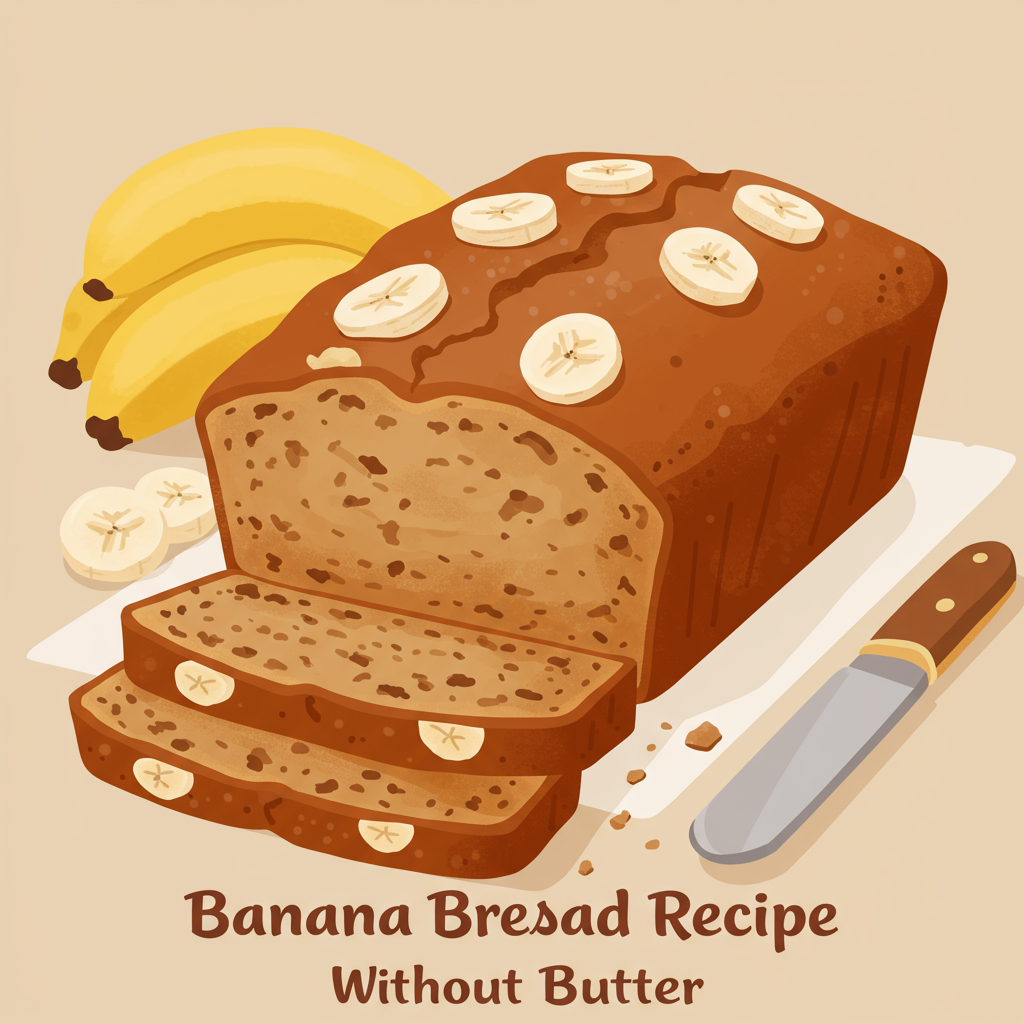
Easy & Delicious: Banana Bread Recipe Without Butter (Beginner-Friendly!)
Welcome to Your New Favorite Banana Bread Recipe!
Hello, fellow baking enthusiasts and welcome to your new favorite kitchen adventure! If you’ve been looking for a simple, moist, and incredibly delicious **Banana Bread Recipe Without Butter**, you’ve come to the right place. This recipe is specifically designed to be super **easy baking recipes** for anyone, even if you’ve never baked anything before. We’re going to walk you through every step, providing all the **baking tips for beginners** you’ll need to create a loaf of banana bread that’s so good, you’ll wonder why you ever bought it from a store. Get ready to fill your home with the most comforting aroma and enjoy a treat that’s perfect for breakfast, a snack, or dessert!
Ingredients
Gathering your ingredients is the first step to success! Make sure to measure everything accurately.
| Quantity | Unit | Ingredient |
|---|---|---|
| 3-4 | medium | Very Ripe Bananas (mashed) |
| ½ | cup | Vegetable Oil (or melted coconut oil) |
| ½ | cup | Granulated Sugar |
| ¼ | cup | Packed Light Brown Sugar |
| 1 | large | Egg |
| 1 | teaspoon | Vanilla Extract |
| 1 ½ | cups | All-Purpose Flour |
| 1 | teaspoon | Baking Soda |
| ½ | teaspoon | Salt |
| ½ | teaspoon | Ground Cinnamon (optional, but recommended!) |
| ½ – 1 | cup | Chocolate Chips or Chopped Nuts (optional mix-in) |
Step-by-Step Instructions for Your Perfect Banana Bread
Follow these detailed steps carefully, and you’ll be a banana bread master in no time!
Preparation is Key!
- Preheat Your Oven: Start by preheating your oven to 350°F (175°C). This is crucial because a properly preheated oven ensures even baking from the moment your batter goes in.
- Prepare Your Loaf Pan: Grease a 9×5 inch loaf pan. You can use a little bit of butter, shortening, or a non-stick cooking spray. For extra easy removal, you can also line the bottom with a strip of parchment paper, leaving an overhang on the sides. This acts like a little sling to lift the bread out once it’s baked.
- Mash Your Bananas: In a medium bowl, mash your very ripe bananas with a fork until mostly smooth. A few small lumps are perfectly fine and add great texture! The riper the bananas (brown spots are your friend!), the sweeter and more flavorful your bread will be.
Mixing the Wet Ingredients
- Combine Wet Ingredients: In a large mixing bowl, pour in your vegetable oil (or melted coconut oil). Add the granulated sugar and brown sugar.
- Whisk Until Smooth: Whisk these ingredients together vigorously for about 1-2 minutes until they are well combined and slightly lighter in color. This step helps dissolve the sugars and creates a good base for your wet ingredients.
- Add Egg and Vanilla: Crack in the large egg and add the vanilla extract. Whisk again until everything is fully incorporated. The mixture should look smooth and creamy.
- Fold in Bananas: Gently fold the mashed bananas into your wet mixture using a spatula. Just mix until they are evenly distributed.
Combining Wet and Dry
- Combine Dry Ingredients: In a separate medium bowl, whisk together the all-purpose flour, baking soda, salt, and cinnamon (if using). Whisking dry ingredients together ensures they are evenly distributed, so you don’t get pockets of baking soda in your final bread.
- Add Dry to Wet: Pour the dry ingredient mixture into the wet ingredient mixture. This is where patience is key for beginners!
- Gently Mix (Don’t Overmix!): Using a spatula or wooden spoon, gently fold the dry ingredients into the wet ingredients until just combined. Stop mixing as soon as you see no more streaks of dry flour. Pro Tip for Beginners: Overmixing develops the gluten in the flour too much, which can lead to tough, dense banana bread. A few small lumps of flour are much better than an overmixed batter!
- Add Optional Mix-ins: If you’re using chocolate chips or chopped nuts, gently fold them into the batter now. Don’t overmix!
Baking to Golden Perfection
- Pour into Pan: Pour the batter evenly into your prepared loaf pan. You can gently tap the pan on the counter a couple of times to release any large air bubbles.
- Bake: Place the loaf pan in your preheated oven. Bake for 50-65 minutes. The baking time can vary depending on your oven, so keep an eye on it.
- Check for Doneness: To check if your banana bread is done, insert a wooden skewer or a toothpick into the center of the loaf. If it comes out clean or with a few moist crumbs attached (no wet batter!), your bread is ready. If it’s still wet, bake for another 5-10 minutes and check again. The top should be a beautiful golden brown.
Cooling and Serving
- Cool in Pan: Once baked, remove the loaf pan from the oven and let it cool in the pan on a wire rack for about 10-15 minutes. This allows the bread to set and makes it easier to remove.
- Remove from Pan: After cooling slightly, carefully run a knife around the edges of the pan (if not using parchment paper) and then invert the pan onto the wire rack to release the banana bread. If you used parchment paper, simply lift it out.
- Fully Cool: Let the banana bread cool completely on the wire rack before slicing. Slicing it too soon can cause it to crumble and become gummy. Patience is a virtue, and it’s worth it for that perfect slice!
- Serve and Enjoy: Once cooled, slice your delicious homemade banana bread and enjoy! It’s fantastic on its own, with a smear of butter, or a drizzle of honey.
Tips & Tricks for Banana Bread Success
- Bananas are Key: Always use very ripe bananas for the best flavor and sweetness. They should have plenty of brown or black spots on the peel. If your bananas aren’t ripe enough, you can speed up the process by baking them on a baking sheet at 300°F (150°C) for 15-30 minutes until their skins turn black.
- Measure Flour Correctly: For accurate measuring, spoon your flour into the measuring cup and then level it off with the back of a knife. Don’t scoop directly from the bag, as this can pack the flour, leading to too much flour and a dry, dense loaf.
- Don’t Overmix: This is the golden rule of quick breads! Overmixing develops gluten, which makes the bread tough. Mix until just combined – a few lumps are perfectly fine.
- Customize Your Loaf: Feel free to add 1/2 to 1 cup of mix-ins like chocolate chips, chopped walnuts, pecans, dried cranberries, or shredded coconut. Add them with the dry ingredients.
- Storage: Store your banana bread at room temperature, tightly wrapped in plastic wrap or in an airtight container, for up to 3-4 days. For longer storage, freeze individual slices or the whole loaf, wrapped well, for up to 3 months. Thaw at room temperature.
- Oven Variations: Every oven is a little different. Get to know your oven’s quirks. If your bread is browning too quickly on top but isn’t cooked through, you can loosely tent it with aluminum foil for the last part of the baking time.
Essential Baking Tools You’ll Need
Having the right tools makes baking much easier and more enjoyable!
- Large Mixing Bowl
- Whisk
- 9×5 Inch Loaf Baking Pan
- Measuring Cups and Spoons
- Rubber Spatula or Wooden Spoon
- Wire Rack for Cooling
- Fork (for mashing bananas)
Nutrition Information (per slice, estimated)
Please note: This is an estimated nutritional breakdown and can vary based on specific ingredients, portion sizes, and optional additions.
| Nutrient | Amount |
|---|---|
| Calories | 250-300 kcal |
| Carbohydrates | 45-55 g |
| Protein | 3-4 g |
| Fat | 8-12 g |
| Fiber | 2-3 g |
| Sugar | 25-35 g |
Frequently Asked Questions
What kind of bananas are best for banana bread?
The best bananas are those that are very ripe, with peels that are heavily spotted brown or even black. These bananas are much sweeter and softer, making them easier to mash and imparting a deeper banana flavor to your bread. Avoid using green or yellow bananas as they won’t provide the same sweetness or moisture.
Can I use less sugar in this recipe?
Yes, you can absolutely reduce the amount of sugar if you prefer a less sweet bread. Since ripe bananas already provide a lot of natural sweetness, you can try reducing the granulated sugar by ¼ cup. However, be aware that sugar also contributes to moisture and browning, so altering it significantly might change the texture slightly.
How do I know when my banana bread is done baking?
The most reliable way to check for doneness is to insert a wooden skewer or toothpick into the very center of the loaf. If it comes out clean or with only a few moist crumbs clinging to it, your bread is done. If it comes out with wet batter, it needs more time. The top should also be golden brown and spring back slightly when gently pressed.
How should I store leftover banana bread?
To keep your banana bread fresh, wrap it tightly in plastic wrap or aluminum foil, or store it in an airtight container at room temperature for up to 3-4 days. For longer storage, you can freeze individual slices or the whole loaf for up to 3 months. Just make sure it’s completely cooled before wrapping and freezing.
Can I add other mix-ins besides chocolate chips or nuts?
Absolutely! Banana bread is incredibly versatile. Feel free to experiment with other additions like shredded coconut, dried cranberries or raisins, a swirl of cream cheese, or even a dash of nutmeg or allspice for different flavor profiles. Just remember to keep the total amount of mix-ins to about ½ to 1 cup so you don’t overwhelm the batter.
Enjoy Your Homemade Banana Bread!
And there you have it! A perfectly moist, flavorful, and incredibly easy **Banana Bread Recipe Without Butter** that even the most novice baker can master. We hope you feel confident and excited to try this recipe. There’s truly nothing quite like the smell of fresh banana bread baking in your oven and the taste of that first warm slice. Don’t be afraid to make it your own with your favorite mix-ins, and remember that practice makes perfect. Happy baking, and enjoy every single bite of your delicious creation!
“`