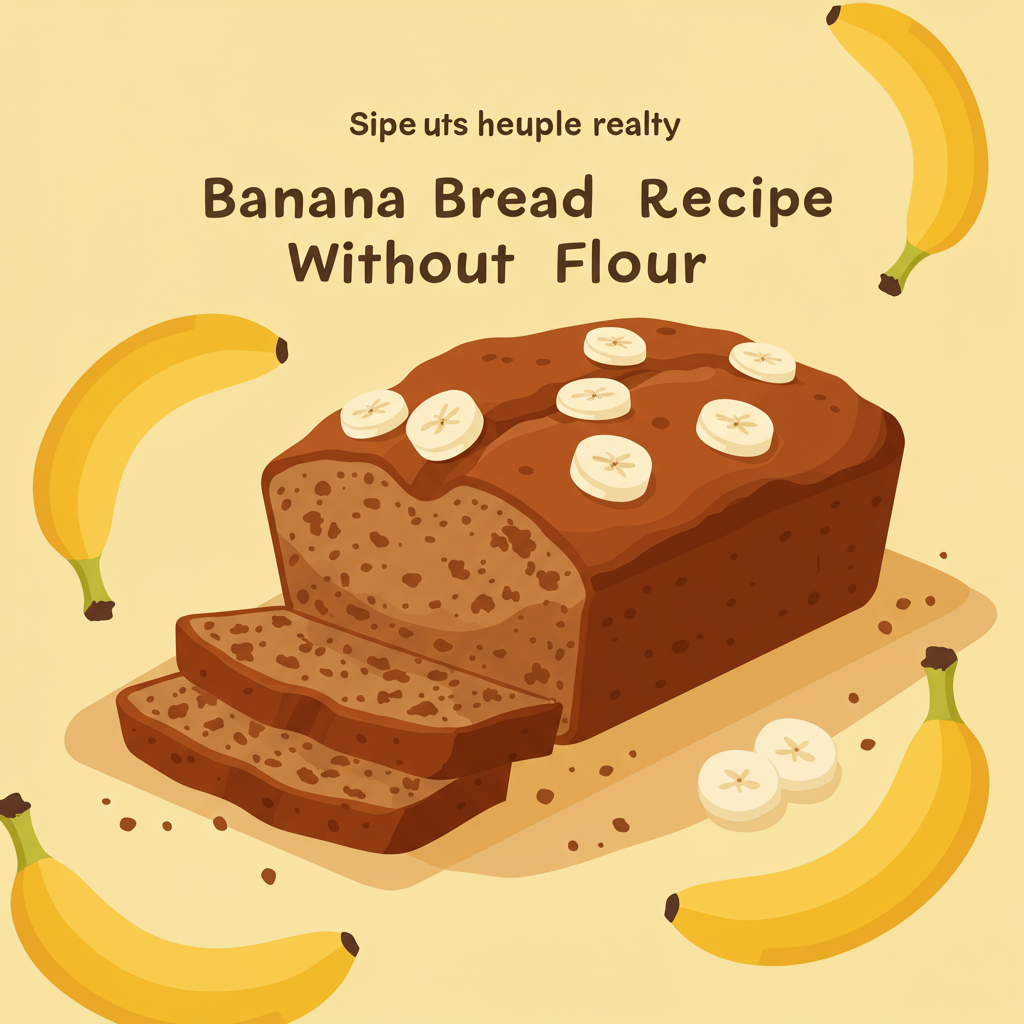
Are you craving the comforting aroma and delicious taste of homemade banana bread but want a lighter, grain-free option? Perhaps you’re looking for **easy baking recipes** that don’t require a pantry full of specialty flours, or you’re just starting your baking journey and need some solid **baking tips for beginners**. Look no further! This **Banana Bread Recipe Without Flour** is your new go-to. It’s incredibly simple to make, uses wholesome ingredients, and delivers a moist, flavorful loaf that everyone will love. Forget complicated techniques; we’re focusing on pure, unadulterated banana bread bliss with minimal fuss. Get ready to impress yourself and your family with this delightful, naturally gluten-free treat!
The Easiest Banana Bread Recipe Without Flour
This recipe is designed with beginners in mind, ensuring success even if it’s your very first time baking. We’ll walk through each step, providing clear instructions and helpful hints to make your baking experience enjoyable and stress-free. Let’s get baking!
Ingredients: What You’ll Need for Your Flourless Banana Bread
Gathering your ingredients before you start is one of the best **baking tips for beginners**. It makes the whole process smoother and prevents those “oops, I forgot something!” moments. For this **Banana Bread Recipe Without Flour**, we’re using simple, wholesome ingredients you likely already have on hand.
| Quantity | Unit | Ingredient |
|---|---|---|
| 3 | large | Very Ripe Bananas (mashed well) |
| 2 | large | Eggs |
| 1/2 | cup | Creamy Almond Butter (or other nut butter like cashew or peanut) |
| 1/4 | cup | Maple Syrup (or honey) |
| 1 | teaspoon | Vanilla Extract |
| 1 | teaspoon | Baking Soda |
| 1/2 | teaspoon | Ground Cinnamon |
| Pinch | Salt | |
| 1/2 | cup | Chocolate Chips or Chopped Nuts (optional, but highly recommended!) |
Step-by-Step Instructions: Your Guide to Perfect Flourless Banana Bread
Follow these detailed steps carefully, and you’ll have a beautifully baked loaf in no time. Don’t rush, enjoy the process!
-
Preheat Your Oven and Prep Your Pan
First things first! Preheat your oven to 350°F (175°C). This ensures your oven is at the correct temperature when your batter is ready to go in, which is crucial for even baking. Next, take a standard 9×5 inch loaf pan. Lightly grease it with butter, coconut oil, or a non-stick cooking spray. For an even easier cleanup and to ensure your bread doesn’t stick, you can also line the bottom and sides with parchment paper, leaving an overhang on the sides to act as “handles” for lifting the bread out later. This is a fantastic trick for beginners!
-
Mash Your Ripe Bananas
In a large mixing bowl, place your three very ripe bananas. The riper they are (think brown spots!), the sweeter and more flavorful your bread will be. Use a fork or a potato masher to mash them thoroughly until they are mostly smooth with a few small lumps remaining. A little texture is fine! Beginner Tip: Ensure there are no large chunks, as they won’t incorporate well into the batter and can make your bread unevenly moist.
-
Whisk the Wet Ingredients
To the mashed bananas, add the 2 large eggs, 1/2 cup creamy almond butter, 1/4 cup maple syrup (or honey), and 1 teaspoon vanilla extract. Using a whisk or a spatula, mix everything together really well. You want a smooth, consistent mixture. Make sure there are no streaks of almond butter or egg white visible. Thorough mixing at this stage ensures a uniform texture in your final bread.
Common Mistake & Alternative: If your almond butter is very thick or hard to mix, you can gently warm it in the microwave for 15-20 seconds to make it more pourable. If you don’t have almond butter, any creamy nut butter (like cashew or peanut butter) will work, but be aware it might slightly alter the flavor profile.
-
Add the Dry Ingredients
Now it’s time to add the leavening and spices. Sprinkle the 1 teaspoon baking soda, 1/2 teaspoon ground cinnamon, and a pinch of salt directly over the wet mixture. Mix again until just combined. Be careful not to overmix once the baking soda is added, as this can sometimes lead to a tougher texture. Just mix until you no longer see any dry streaks.
Why Baking Soda? In this flourless recipe, baking soda reacts with the acids in the bananas and maple syrup to create carbon dioxide bubbles, which helps the bread rise and become light and airy. The salt enhances all the flavors, and cinnamon adds that classic banana bread warmth.
-
Fold in Optional Mix-ins
If you’re using chocolate chips or chopped nuts, gently fold them into the batter now. Add your 1/2 cup chocolate chips or chopped nuts. A spatula works best for this. Don’t overmix; just fold until they are evenly distributed throughout the batter. This step is entirely optional, but chocolate chips melt beautifully into the bread, creating pockets of gooey deliciousness, and nuts add a lovely crunch.
-
Transfer to the Loaf Pan
Pour your prepared batter into the greased and/or parchment-lined loaf pan. Use your spatula to spread it evenly and gently tap the pan on your counter a few times to release any large air bubbles. You can also smooth the top with your spatula for a nice, even surface. For an extra touch, you can sprinkle a few extra chocolate chips or a slice of banana on top before baking.
-
Bake Your Banana Bread
Carefully place the loaf pan into your preheated oven. Bake for approximately 40-50 minutes. Baking times can vary depending on your oven, so it’s always good to keep an eye on it. The banana bread is done when a wooden skewer, toothpick, or thin knife inserted into the center comes out clean or with just a few moist crumbs attached. If the top starts to brown too quickly, you can loosely tent it with aluminum foil for the last 10-15 minutes of baking.
Beginner Tip: Avoid opening the oven door too frequently, especially in the first 30 minutes, as this can cause the bread to sink.
-
Cool and Enjoy!
Once baked, remove the loaf pan from the oven and let the banana bread cool in the pan for about 10-15 minutes. This allows it to set up and makes it easier to remove without breaking. After 10-15 minutes, use the parchment paper overhang (if used) or carefully invert the pan to remove the bread onto a wire rack. Let it cool completely on the wire rack before slicing. While it’s tempting to cut into it immediately, cooling allows the internal structure to firm up, making for cleaner slices and better texture. Enjoy your delicious, homemade **Banana Bread Recipe Without Flour**!
Tips & Tricks for Beginner Bakers
Baking can seem daunting, but with a few simple tips, you’ll be baking like a pro in no time. These pieces of advice are tailored to help you master this **Banana Bread Recipe Without Flour** and build confidence for future baking adventures!
- Use Very Ripe Bananas: This is non-negotiable for the best flavor and sweetness. Green or firm bananas won’t give you the same results. The browner, the better! You can freeze ripe bananas for later use if you have too many.
- Measure Accurately: Baking is a science! Use proper measuring cups and spoons. For liquid ingredients like maple syrup, measure at eye level. For sticky ingredients like nut butter, use a spoon to fill the measuring cup and then level it off.
- Room Temperature Eggs: Eggs at room temperature incorporate more easily and create a smoother, more emulsified batter. If your eggs are cold, place them in a bowl of warm water for 5-10 minutes before using.
- Don’t Overmix: While you want to ensure ingredients are well combined, especially the wet ones, avoid excessive mixing once the baking soda is added. Overmixing can lead to a dense or gummy texture. Mix just until everything is incorporated.
- Test for Doneness: The toothpick test is your best friend. If it comes out clean, your bread is done. If it has wet batter, it needs more time. Every oven is different, so adjust baking time as needed.
- Cool Completely: Patience is a virtue, especially in baking! Letting your banana bread cool completely on a wire rack allows it to set properly, preventing it from crumbling when sliced and improving its overall texture.
- Storage: Store your flourless banana bread in an airtight container at room temperature for up to 3 days, or in the refrigerator for up to a week. For longer storage, slice and freeze individual pieces for up to 3 months.
Essential Baking Tools for Your Kitchen
Having the right tools makes all the difference, especially when you’re just starting out. Here are some basic tools that will make preparing this **Banana Bread Recipe Without Flour** (and many other **easy baking recipes**) a breeze. You can find these easily online:
- Mixing Bowl (a set with different sizes is very useful!)
- Whisk (for combining wet ingredients smoothly)
- Baking Pan (a standard 9×5 inch loaf pan is perfect)
- Measuring Cups (for liquids and dry ingredients)
- Spatula (for scraping bowls and folding in mix-ins)
- Measuring Spoons (for smaller quantities like baking soda and vanilla)
- Parchment Paper (optional, but highly recommended for easy release)
- Wire Cooling Rack (essential for proper cooling)
Nutrition Information (Estimated per serving)
This **Banana Bread Recipe Without Flour** offers a delicious way to enjoy a treat with wholesome ingredients. Please note that these values are estimates and can vary based on specific brands and quantities of ingredients used, especially if you add optional mix-ins like chocolate chips or nuts. These estimates are based on 8 servings without optional add-ins.
| Nutrient | Amount |
|---|---|
| Calories | ~165 kcal |
| Total Carbohydrates | ~19g |
| Protein | ~5g |
| Total Fat | ~9g |
| Dietary Fiber | ~3g |
| Total Sugars | ~13g |
Frequently Asked Questions (FAQs) for Beginner Bakers
Q1: Can I use another type of nut butter?
Absolutely! While almond butter provides a neutral flavor, you can use creamy cashew butter or even peanut butter. Just be aware that peanut butter has a stronger flavor profile that will be more noticeable in the final bread. Ensure it’s creamy, not crunchy, for the best texture.
Q2: My bananas aren’t very ripe. Can I still make this?
You can, but the flavor and sweetness won’t be as intense, and the texture might be slightly different. For quicker ripening, you can bake unpeeled bananas on a baking sheet at 300°F (150°C) for 15-20 minutes until their skins turn black. Let them cool before mashing.
Q3: How do I know if my bread is fully baked?
The best way is to insert a wooden skewer or toothpick into the very center of the loaf. If it comes out clean (no wet batter), your bread is done. If there are wet crumbs, give it a few more minutes and test again. The top should also be golden brown and spring back slightly when gently pressed.
Q4: My banana bread sank in the middle. What happened?
Several factors can cause sinking. Common reasons include opening the oven door too early (which causes a sudden temperature drop), overmixing the batter (especially after adding baking soda), or underbaking the bread. Ensure your oven is preheated properly and avoid opening the door until at least 30-35 minutes into baking.
Q5: Can I make this recipe vegan?
To make this recipe vegan, you would need to replace the eggs. Flax eggs (1 tbsp ground flaxseed mixed with 3 tbsp water per egg, let sit for 5 minutes to thicken) can often work as an egg substitute in quick breads, though the texture might be slightly denser. You’ll also need to ensure your chocolate chips are dairy-free if using.
Q6: How should I store the leftover banana bread?
Once completely cooled, store your banana bread in an airtight container at room temperature for up to 3 days. If you want to keep it longer, store it in the refrigerator for up to a week. For extended storage, individual slices can be wrapped tightly and frozen for up to 3 months. Thaw at room temperature or gently warm in the microwave or toaster oven.
Ready to Bake Your Own Delicious, Flourless Banana Bread?
There you have it! A comprehensive, beginner-friendly guide to making the most delicious **Banana Bread Recipe Without Flour**. We hope this detailed post, packed with **baking tips for beginners**, has given you the confidence to dive into your kitchen and create something truly special. This recipe proves that healthy and easy can go hand-in-hand, delivering a treat that’s perfect for breakfast, a snack, or even a light dessert. Don’t be afraid to experiment with your favorite mix-ins, and most importantly, enjoy the process and the delightful aroma that will fill your home. Happy baking!
“`