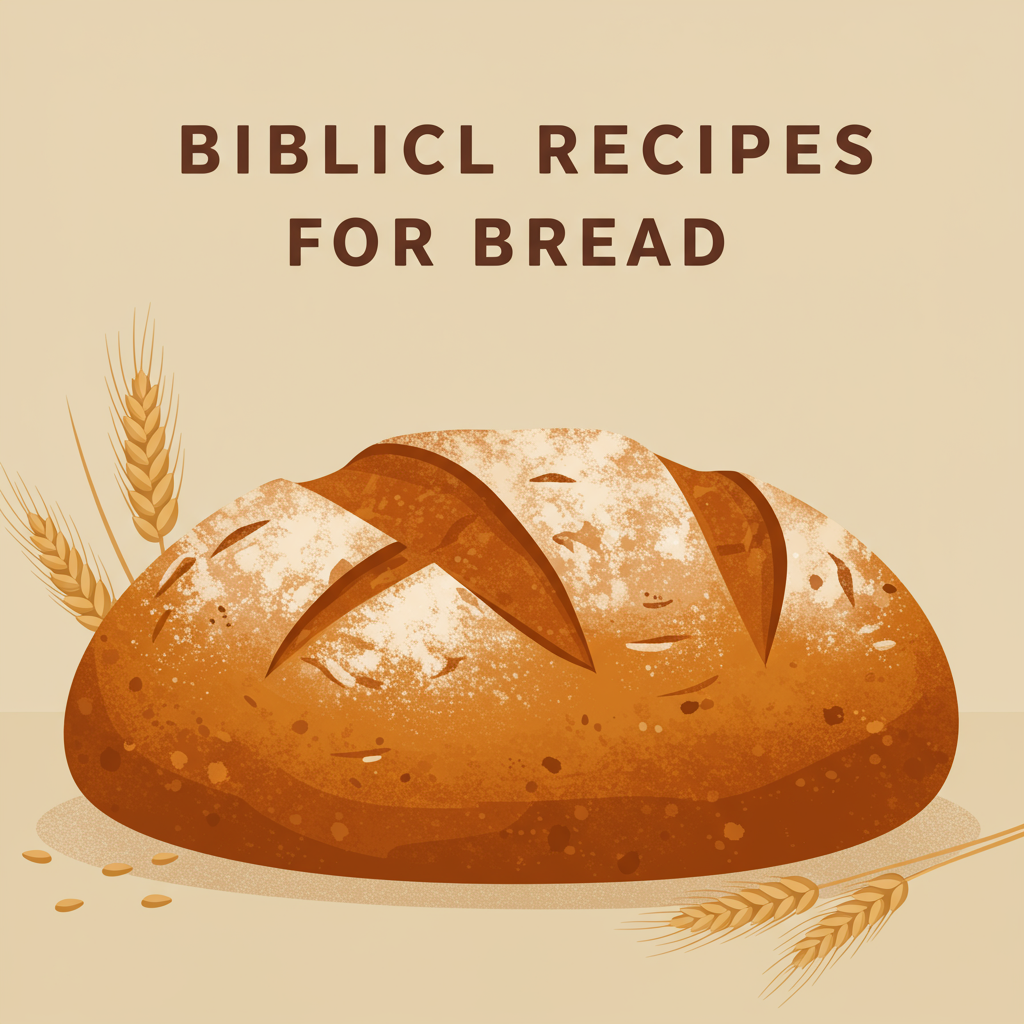
Have you ever dreamed of baking bread that connects you to ancient traditions? Imagine the aroma filling your kitchen, a scent that might have been familiar thousands of years ago. Our journey today takes us back in time with Biblical Recipes For Bread, a surprisingly simple and deeply rewarding experience.

This isn’t just about making food; it’s about connecting with history, learning foundational easy baking recipes, and mastering essential baking tips for beginners. Forget complicated techniques; we’re focusing on pure, wholesome ingredients and straightforward steps that will empower you to create a delicious, rustic loaf from scratch. Get ready to transform flour, water, and a few basic ingredients into a testament to timeless baking!
Ingredients for Your Ancient-Inspired Loaf
Gather these simple ingredients – you likely have most of them in your pantry already!
| Ingredient | Quantity | Unit |
|---|---|---|
| Warm Water (105-115°F / 40-46°C) | 1.5 | cups |
| Active Dry Yeast | 2.25 | teaspoons (1 packet) |
| Honey (or granulated sugar) | 1 | tablespoon |
| All-Purpose Flour | 3 | cups |
| Whole Wheat Flour | 1 | cup |
| Fine Sea Salt | 1.5 | teaspoons |
| Olive Oil (for bowl, optional in dough) | 1-2 | tablespoons |
Step-by-Step Instructions: Baking Your Biblical Bread
Follow these detailed steps carefully, and you’ll be amazed at what you can create!
Step 1: Activate Your Yeast – The Spark of Life
In a large mixing bowl (or the bowl of your stand mixer), combine the warm water (ensure it’s between 105-115°F – it should feel like a warm bath, not hot!), honey (or sugar), and active dry yeast. Stir gently and let it sit for 5-10 minutes. This process is called “proofing” the yeast. You’re looking for a foamy, bubbly layer to form on top. This foam is a sign that your yeast is alive and active, ready to make your bread rise. If it doesn’t foam, your water might have been too hot (killing the yeast) or too cold (slowing it down), or your yeast might be old. If no foam, discard and start again with fresh yeast and correct water temperature.
Step 2: Combine Dry Ingredients
In a separate medium bowl, whisk together the all-purpose flour, whole wheat flour, and salt. It’s important to mix the salt thoroughly into the flour, as direct contact with yeast can sometimes inhibit its activity. Using a whisk ensures an even distribution.
Step 3: Mix the Dough – From Shaggy to Cohesive
Once your yeast is foamy, gradually add the dry flour mixture to the yeast mixture. Start with about half, stir with a wooden spoon or spatula until just combined, then add the remaining flour. If you’re adding olive oil to the dough, this is the time to add 1 tablespoon. Mix until a shaggy, somewhat stiff dough forms. At this stage, it will look a bit rough and uninviting, but don’t worry – it’s supposed to!
Beginner Tip: Resist the urge to add more flour at this stage, even if it seems too sticky. Over-flouring is a common mistake that leads to dry, dense bread. The dough will become less sticky as you knead it.
Step 4: Kneading – Developing the Gluten
Turn the dough out onto a lightly floured surface. Kneading is where the magic happens; it develops the gluten, which gives bread its structure and chewiness. Knead for 8-10 minutes.
How to Knead:
- Traditional Hand Kneading: Push the dough away from you with the heel of your hand, fold it back over, rotate it a quarter turn, and repeat. Continue this motion, adding only a minimal amount of flour to your hands or surface if the dough becomes too sticky to handle.
- Stand Mixer: If using a stand mixer with a dough hook, knead on medium-low speed for 6-8 minutes.
The dough is properly kneaded when it becomes smooth, elastic, and less sticky. A good test is the “windowpane test”: pinch off a small piece of dough and gently stretch it. If you can stretch it thin enough to see light through it without tearing, your gluten is well-developed.
Step 5: First Rise (Bulk Fermentation) – The Patience Game
Lightly grease a large bowl with about 1 tablespoon of olive oil. Place the kneaded dough in the bowl, turning it once to coat the entire surface with oil. This prevents it from drying out. Cover the bowl tightly with plastic wrap or a clean kitchen towel. Place the bowl in a warm, draft-free spot. A good spot could be a slightly warm oven (turned off!), or near a sunny window. Let the dough rise for 1 to 1.5 hours, or until it has doubled in size. The exact time will depend on the warmth of your environment.
Common Mistake: Not letting the dough rise enough. An under-proofed dough will result in a dense loaf. Look for visual cues – it should be significantly larger and feel airy.
Step 6: Punch Down and Shaping – Preparing for the Final Form
Gently “punch down” the risen dough to release the accumulated gases. This isn’t a forceful punch; rather, it’s a gentle deflate. Turn the dough out onto a lightly floured surface. Now it’s time to shape your bread. For a classic loaf, gently pat the dough into a rectangle, then roll it tightly into a log, pinching the seam closed. Place it seam-side down in a lightly greased 9×5-inch loaf pan. For a round loaf, gently tuck the edges underneath to form a smooth ball, then place it on a parchment-lined baking sheet.
Alternative: You can also divide the dough into smaller portions to make rolls or flatbreads at this stage. Just adjust baking times accordingly.
Step 7: Second Rise (Proofing) – The Final Ascent
Cover the shaped dough loosely with plastic wrap or a kitchen towel. Return it to a warm, draft-free spot and let it rise for another 30-45 minutes, or until it has nearly doubled in size again and looks puffy. You can test if it’s ready by gently poking it with a floured finger; if the indentation springs back slowly, it’s ready to bake. If it springs back quickly, it needs more time. If it collapses, it’s over-proofed, but still bakeable (though texture might be slightly different).
Step 8: Preheat Oven and Bake – The Transformation
About 20 minutes before the second rise is complete, preheat your oven to **375°F (190°C)**. If you like a slightly crisper crust, you can place a shallow pan of water on the bottom rack of your oven to create steam during the initial baking.
Once preheated, carefully place your bread in the oven. Bake for 30-40 minutes, or until the crust is golden brown and the internal temperature reaches 190-200°F (88-93°C) when measured with an instant-read thermometer. If the crust is browning too quickly, you can loosely tent it with aluminum foil for the last 10-15 minutes of baking.
Step 9: Cool Completely – The Essential Final Step
This step is crucial for texture and flavor! Once baked, immediately remove the bread from the loaf pan and transfer it to a wire rack to cool completely. This allows steam to escape, preventing a gummy interior and ensuring a proper crust. Resist the temptation to slice into it too soon! Cooling can take 1-2 hours. Enjoy your beautiful, homemade Biblical bread!
Tips & Tricks for Beginner Bread Bakers
Baking bread is a craft, and these simple tips will help you master it:
- Accuracy is Key: For best results, measure your ingredients accurately. A kitchen scale is a fantastic investment for baking, especially for flour, as scooping can pack it down and lead to too much flour.
- Temperature Matters: Yeast is sensitive! Ensure your water is the correct temperature (105-115°F). Too hot will kill it; too cold will make it sluggish.
- Don’t Rush the Rise: Patience is a virtue in bread baking. The rising times are estimates; always go by visual cues (doubled in size, puffy). A slower rise often yields better flavor.
- Knead Properly: Developing gluten through kneading is vital for a good crumb structure. Don’t skimp on this step, but also don’t over-knead (which is harder to do by hand than with a mixer).
- Create a Warm Environment: For rising, a warm, draft-free spot is ideal. This could be a slightly warmed (then turned off) oven, near a sunny window, or on top of a warm appliance.
- Don’t Open the Oven Door: During the first 15-20 minutes of baking, avoid opening the oven door, as this can cause the bread to deflate.
- Cool Completely: Resist the urge to cut into hot bread. It’s still cooking and setting internally as it cools. Slicing too early can result in a gummy texture.
- Experiment with Additions: Once comfortable, try adding herbs (rosemary, thyme), seeds (sesame, flax, sunflower), or dried fruits to your dough for extra flavor and texture!
Essential Baking Tools for Your Kitchen
Having the right tools makes all the difference! Here are some basics you’ll want:
- Mixing Bowl
- Whisk
- Loaf Pan (9×5 inch) or Baking Sheet
- Measuring Cups & Measuring Spoons
- Rubber Spatula or Wooden Spoon
- Instant-Read Thermometer (highly recommended for checking doneness)
- Wire Cooling Rack
Nutrition Information (Per Serving – 1 slice)
This is an approximate nutritional breakdown based on 16 slices per loaf.
| Nutrient | Amount |
|---|---|
| Calories | 120 kcal |
| Carbohydrates | 23 g |
| Protein | 4 g |
| Fat | 2 g |
| Fiber | 1 g |
| Sugar | 1 g |
Frequently Asked Questions (FAQs)
Q1: Why didn’t my yeast foam or activate?
A: The most common reasons are incorrect water temperature (too hot kills the yeast, too cold keeps it dormant) or expired yeast. Always check the expiration date on your yeast packet and ensure your water is between 105-115°F (40-46°C). It should feel pleasantly warm, not hot, to the touch.
Q2: My dough isn’t rising. What went wrong?
A: If your yeast activated properly, the issue might be a cold environment. Yeast thrives in warmth. Ensure your rising spot is draft-free and warm. If your yeast didn’t activate in the first place, that’s your starting point. Sometimes, too much salt directly touching the yeast can also inhibit rising.
Q3: Why is my homemade bread dense and heavy?
A: A dense loaf can be due to several factors: not enough kneading (gluten didn’t develop), too much flour added during mixing or kneading (making the dough stiff), or under-proofing (not letting it rise enough during the first or second rise). Ensure you follow the kneading and rising times, and resist adding excessive flour.
Q4: Can I use different types of flour for this recipe?
A: Absolutely! While this recipe uses a mix of all-purpose and whole wheat for a balanced texture and “biblical” feel, you can experiment. Using 100% whole wheat will result in a denser loaf. Flours like spelt or rye can be incorporated, but they absorb water differently, so you might need to adjust the water content slightly. Start by substituting a portion, rather than all, of the flour.
Q5: How do I store my homemade bread?
A: Store your cooled bread at room temperature in an airtight container, a bread box, or a paper bag (for crust preservation) inside a plastic bag to prevent drying out. It will stay fresh for 2-3 days. For longer storage, slice the cooled loaf and freeze the slices in a freezer-safe bag for up to 3 months. Toast directly from frozen!
Q6: Do I really need to cool the bread completely before slicing?
A: Yes, this step is essential! While tempting to slice into warm bread, it’s still undergoing a crucial process called “carry-over cooking” and cooling. The internal structure is setting, and moisture is redistributing. Slicing too early can result in a gummy texture and crumbly slices. Patience will be rewarded with superior texture and flavor!
Your Journey into Ancient Baking Begins Now!
Congratulations, aspiring baker! You’ve just embarked on a truly fulfilling culinary adventure. There’s something incredibly satisfying about creating nourishing bread with your own hands, especially when it carries the echoes of history. Don’t be discouraged if your first loaf isn’t perfect; every bake is a learning experience. With these easy baking recipes and baking tips for beginners, you’re well on your way to mastering the art of bread-making. So go ahead, bake another loaf, share it with loved ones, and savor the simple, profound joy of Biblical Recipes For Bread.