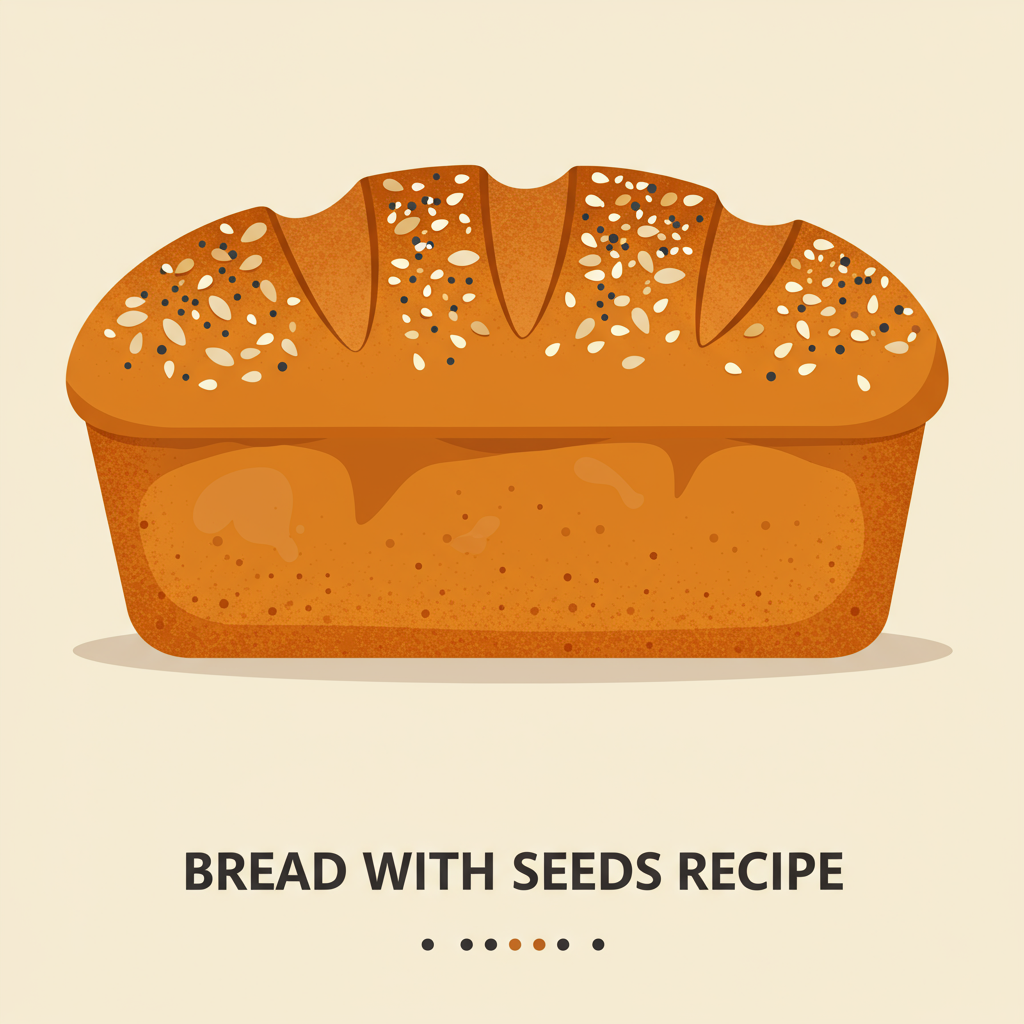
Homemade Bread With Seeds: Your Easy Guide to Bakery-Quality Loaf!
Welcome, aspiring bakers! Are you ready to fill your kitchen with the irresistible aroma of freshly baked bread? If you’ve ever felt intimidated by bread making, you’re in the right place. This **Bread With Seeds Recipe** is specifically designed for beginners, making it one of the most **easy baking recipes** you’ll ever try. We’ll walk you through every step, providing all the **baking tips for beginners** you need to succeed. Forget store-bought loaves; with a few simple ingredients and a little patience, you’ll be pulling a gorgeous, crusty, seed-studded loaf right from your own oven. Let’s get baking and discover the joy of homemade bread!
Ingredients List
Gather these simple ingredients, most of which you likely already have in your pantry, to create your delicious Bread With Seeds.
| Ingredient | Quantity | Unit |
|---|---|---|
| Warm Water (105-115°F / 40-46°C) | 1 | cup |
| Active Dry Yeast | 2 ¼ | teaspoons (or 1 packet) |
| Granulated Sugar (or honey) | 1 | tablespoon |
| All-Purpose Flour (plus extra for dusting) | 3 | cups |
| Salt | 1 | teaspoon |
| Olive Oil (plus extra for greasing) | 2 | tablespoons |
| Mixed Seeds (sesame, poppy, sunflower, flax) | ¼ | cup |
| Egg (for egg wash, optional) | 1 | large |
| Extra Seeds (for topping) | 1-2 | tablespoons |
Step-by-Step Instructions: Baking Your Perfect Loaf
Follow these detailed steps carefully, and you’ll be rewarded with a fantastic loaf of homemade bread!
Step 1: Activate the Yeast
In a large mixing bowl, combine the **warm water** (make sure it’s not too hot or too cold – think bathwater temperature, 105-115°F is ideal), the **granulated sugar**, and the **active dry yeast**. Stir gently and let it sit for about 5-10 minutes. You’ll know your yeast is active and happy when it becomes foamy and bubbly on the surface. This foam is a sign that the yeast is alive and ready to make your bread rise! If it doesn’t foam, your water might have been too hot (killing the yeast) or too cold (keeping it dormant), or your yeast might be old. Start over with fresh yeast and properly tempered water if this happens.
Step 2: Combine Wet and Dry Ingredients
Once your yeast is frothy, add the **olive oil** to the yeast mixture. In a separate bowl, whisk together the **all-purpose flour** and **salt**. Gradually add the dry ingredients to the wet ingredients, mixing with a wooden spoon or a sturdy spatula until a shaggy, sticky dough forms. Don’t add all the flour at once; you might not need all of it, or you might need a tiny bit more depending on humidity.
Step 3: Knead the Dough
Lightly flour a clean work surface. Turn the dough out onto the floured surface. Now comes the fun part: kneading!
- For Hand Kneading: Push the dough away from you with the heels of your hands, then fold it back towards you. Rotate the dough a quarter turn and repeat. Continue kneading for 8-10 minutes. The dough will start out sticky but will become smooth, elastic, and less sticky as you knead. It should spring back when you gently poke it. Avoid adding too much flour during kneading, as this can make your bread tough and dry. A little stickiness is okay!
- For Stand Mixer: If you have a stand mixer with a dough hook attachment, mix on low speed for 2 minutes, then increase to medium speed and knead for 6-8 minutes, until the dough is smooth and elastic.
To test if your dough is kneaded enough, perform the “windowpane test”: pinch off a small piece of dough and gently stretch it. If you can stretch it thin enough to see light through it without tearing, it’s ready!
Step 4: First Rise (Bulk Fermentation)
Lightly grease a large bowl with a little olive oil. Place the kneaded dough into the bowl, turning it once to coat the top with oil. This prevents it from drying out. Cover the bowl tightly with plastic wrap or a clean kitchen towel. Place the bowl in a warm, draft-free spot in your kitchen. This could be a sunny windowsill, near a warm oven, or even inside a turned-off oven with the light on. Let the dough rise for 1 to 1.5 hours, or until it has doubled in size. The exact time will depend on the warmth of your room.
Step 5: Add the Seeds and Shape the Loaf
Once the dough has doubled, gently punch it down to release the air. Turn the dough out onto a lightly floured surface. Flatten it into a rectangle. Sprinkle the ¼ cup of **mixed seeds** evenly over the dough. Fold the dough over itself a few times and knead gently for about 1-2 minutes to incorporate the seeds throughout the dough.
To shape your loaf:
- Flatten the dough into a rough rectangle again.
- Fold the top third of the dough down to the center.
- Fold the bottom third of the dough up over the top.
- Pinch the seam closed.
- Turn the dough over so the seam is underneath, and gently roll it back and forth to create a uniform log shape, about 9 inches long.
Lightly grease a 9×5-inch loaf pan with olive oil or butter. Carefully place the shaped dough seam-side down into the prepared loaf pan.
Step 6: Second Rise (Proofing)
Cover the loaf pan loosely with plastic wrap or a clean kitchen towel. Return it to your warm, draft-free spot. Let the dough rise again for another 30-45 minutes, or until it has almost doubled in size and looks puffy. It should extend slightly above the rim of the loaf pan. To test if it’s ready, gently poke the dough with a floured finger; if the indentation slowly springs back halfway, it’s good to go. If it springs back immediately, it needs more time. If it doesn’t spring back at all, it’s over-proofed.
Step 7: Preheat Oven and Prepare for Baking
While your dough is on its second rise, preheat your oven to **375°F (190°C)**. If you’re using an egg wash, whisk the egg with 1 tablespoon of water in a small bowl. This will give your crust a beautiful golden color and help the seeds stick.
Step 8: Bake Your Bread
Once the oven is preheated and the dough has risen, gently brush the top of the loaf with the egg wash (or a little water/milk if you prefer a less shiny crust). Sprinkle the remaining 1-2 tablespoons of **extra seeds** evenly over the top.
Place the loaf pan in the preheated oven. Bake for **30-35 minutes**, or until the crust is deeply golden brown and sounds hollow when tapped on the bottom. For extra assurance, an instant-read thermometer inserted into the center of the loaf should read **200-210°F (93-99°C)**.
Step 9: Cool Completely
Once baked, carefully remove the loaf from the oven. Immediately turn it out of the loaf pan onto a wire rack to cool completely. This step is crucial! **Resist the urge to slice into your warm bread.** Cooling on a wire rack allows steam to escape, preventing the bottom crust from becoming soggy and ensuring the crumb sets properly. Slicing too early can result in a gummy texture. Let it cool for at least 1 hour, or ideally, 2 hours, before slicing and enjoying.
Tips & Tricks for Beginner Bread Bakers
Here are some additional insights to help you master your bread-making journey:
- Yeast is Key: Always check the expiration date on your yeast. If it’s old, your bread won’t rise. The warm water and sugar step (activation) is your quality control for yeast.
- Measure Accurately: Especially with flour, avoid scooping directly from the bag with your measuring cup, as this compacts it. Instead, spoon flour into your measuring cup and then level it off with a straight edge. This is called the ‘spoon and level’ method.
- Don’t Over-Flour: When kneading, use just enough flour on your surface to prevent sticking. Too much extra flour will make your dough stiff and your bread dry.
- Warmth for Rising: A consistent warm environment is vital for yeast activity. If your kitchen is cold, try placing your covered dough in a turned-off oven with just the light on – the light generates enough warmth.
- Steam for Crust: For an even crispier crust, place a shallow pan of hot water on the bottom rack of your oven during the first 10-15 minutes of baking. The steam helps the crust develop beautifully.
- Patience is a Virtue: Bread making requires patience, especially during the rising and cooling stages. Don’t rush these steps; they are essential for texture and flavor.
- Storage: Once completely cool, store your homemade bread in an airtight container or bread bag at room temperature for up to 3-4 days. For longer storage, slice and freeze.
Essential Baking Tools
Having the right tools makes all the difference in your baking journey. Here are some essentials:
- Mixing Bowl
- Whisk
- Loaf Pan (9×5 inch)
- Measuring Cups and Spoons
- Rubber Spatula
- Wire Rack (for cooling)
- Kitchen Scale (optional, but highly recommended for accuracy)
Nutrition Information (Estimated per slice, 1/12th of loaf)
Here’s an estimated nutritional breakdown for a single slice of your delicious Bread With Seeds:
| Nutrient | Amount |
|---|---|
| Calories | 180 kcal |
| Total Carbohydrates | 32 g |
| Protein | 6 g |
| Total Fat | 4 g |
| Dietary Fiber | 3 g |
| Sugars | 2 g |
*Nutrition facts are estimates and may vary based on specific ingredients and brands used.
Frequently Asked Questions (FAQs)
Q1: My dough didn’t rise. What went wrong?
A: The most common culprits are inactive yeast (either expired or killed by too-hot water) or a too-cold environment. Ensure your water temperature is between 105-115°F and your yeast is fresh. Also, make sure your rising spot is warm and draft-free.
Q2: Can I use whole wheat flour instead of all-purpose flour?
A: Yes, you can! However, whole wheat flour absorbs more liquid and has less gluten development. You might need to add a tablespoon or two more water, and your bread might be denser. A good starting point is to substitute half of the all-purpose flour with whole wheat flour.
Q3: I don’t have a stand mixer. Can I still make this bread?
A: Absolutely! This recipe is written with hand-kneading instructions, which is a wonderful, therapeutic process. Just be prepared for a good arm workout for about 8-10 minutes.
Q4: How do I know if my bread is fully baked?
A: The bread should have a deep golden-brown crust. When you tap the bottom of the loaf, it should sound hollow. For the most accurate reading, an instant-read thermometer inserted into the center of the loaf should register between 200-210°F (93-99°C).
Q5: Can I add different types of seeds or other ingredients?
A: Get creative! You can use any combination of seeds you like (chia, pumpkin, caraway). For other additions, consider dried herbs (rosemary, thyme), a handful of shredded cheese, or even some chopped dried fruit like cranberries or raisins for a sweeter loaf. Just be mindful that wetter ingredients might affect the dough consistency slightly.
Q6: How should I store my homemade bread to keep it fresh?
A: Once completely cooled, store your loaf in an airtight bread bag, a plastic container, or wrapped in foil at room temperature for up to 3-4 days. Avoid refrigerating, as it can dry out the bread quickly. For longer storage, slice the cooled loaf and freeze the slices in a freezer-safe bag for up to 2-3 months. You can then toast slices directly from frozen!
Conclusion
Congratulations, baker! You’ve just created a beautiful, fragrant, and incredibly delicious loaf of **Bread With Seeds** from scratch. There’s truly nothing quite like the satisfaction of pulling a warm, homemade loaf from your oven. This **easy baking recipe** is proof that even as a beginner, you can achieve fantastic results. Don’t be afraid to experiment, and remember that every loaf is a learning experience. Share your creations, enjoy the fruits of your labor, and keep on baking! Your kitchen (and your taste buds) will thank you. Happy baking!
“`