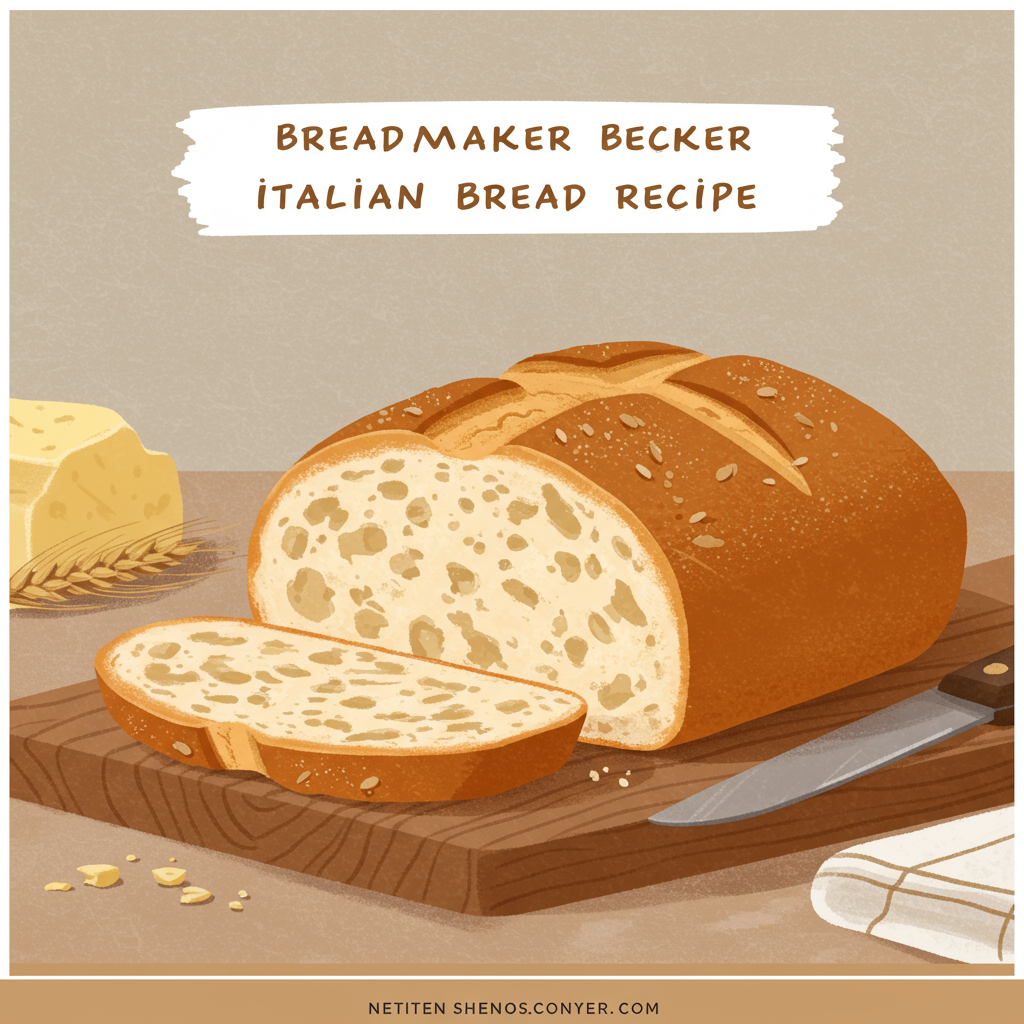
Mastering the Art of Effortless Baking: Your Ultimate Breadmaker Italian Bread Recipe!
There’s nothing quite like the aroma of freshly baked bread wafting through your home. It’s a scent that promises comfort, warmth, and deliciousness. But for many, the idea of baking bread from scratch can feel intimidating. That’s where your trusty breadmaker comes in! This **Breadmaker Italian Bread Recipe** is designed to take all the guesswork out of bread making, making it one of the most **easy baking recipes** you’ll ever try. Whether you’re a seasoned baker or just looking for some practical **baking tips for beginners**, this guide will walk you through every step to create a perfectly golden, crusty, and wonderfully soft Italian loaf. Get ready to impress yourself and your family with minimal effort and maximum flavor!
Ingredients List
Gathering your ingredients beforehand is a key step in any successful baking adventure. For this delicious Italian bread, you’ll need the following:
| Ingredient | Quantity | Unit |
|---|---|---|
| Warm Water (around 105-115°F or 40-46°C) | 1 | cup |
| Olive Oil | 2 | tablespoons |
| Bread Flour | 3 | cups |
| Granulated Sugar | 1 | tablespoon |
| Salt | 1 ½ | teaspoons |
| Active Dry Yeast or Instant Yeast | 2 | teaspoons |
| Optional: Italian Seasoning | 1 | teaspoon |
Beginner Tip: Ensure your water is warm, not hot! Water that’s too hot can kill the yeast, preventing your bread from rising. If you don’t have a thermometer, it should feel comfortably warm to the touch, like bathwater.
Step-by-Step Instructions for Your Perfect Loaf
Let’s turn those simple ingredients into a magnificent loaf of Italian bread. Follow these detailed steps carefully, and you’ll be enjoying homemade bread in no time!
1. Prepare Your Breadmaker
- First, make sure your breadmaker pan is clean and the kneading paddle is securely in place. A clean pan prevents any residue from affecting your bread, and a properly installed paddle ensures even mixing.
- Beginner Tip: Some breadmaker pans have a non-stick coating. Avoid using metal utensils inside the pan to prevent scratches.
2. Add Liquids First
- Pour the warm water into the breadmaker pan.
- Next, add the olive oil. Adding liquids first helps to prevent the flour from sticking to the bottom of the pan and ensures a smooth mixing process.
- Common Mistake & Fix: If your bread turns out dry or dense, check your water measurement. Too little liquid is a common culprit. Conversely, too much liquid can make the dough too sticky and collapse.
3. Add Dry Ingredients (Except Yeast)
- Carefully add the bread flour on top of the liquids. Try to make a mound of flour in the center.
- Sprinkle the granulated sugar and salt over the flour, but keep them separate from each other and away from where the yeast will go. Sugar feeds the yeast, but direct contact with salt can inhibit its activity.
- If you’re using Italian seasoning, sprinkle it over the flour now as well.
- Beginner Tip: Use a flat-edged knife or a straight measuring cup to level off your flour and sugar measurements for accuracy. Don’t pack the flour into the cup; spoon it in and then level.
4. Add the Yeast (The Star of the Show!)
- Create a small indentation (a “well”) in the center of the flour mound using your finger.
- Carefully add the active dry yeast or instant yeast into this well. This keeps the yeast dry and separate from the salt and liquids until the kneading cycle begins, giving it the best chance to activate properly.
- Beginner Tip: Always check the expiration date on your yeast! Old or inactive yeast is the most common reason bread doesn’t rise. You can ‘proof’ yeast by dissolving a teaspoon of sugar in 1/4 cup of warm water, then stirring in 1 teaspoon of yeast. If it foams within 5-10 minutes, it’s active!
5. Select Your Breadmaker Settings
- Place the breadmaker pan back into the machine and close the lid securely.
- Select the “Basic” or “White Bread” cycle on your breadmaker. This is typically a standard cycle that includes kneading, rising, and baking.
- Choose your desired loaf size (usually 1.5 lb or 2 lb, depending on your machine and recipe’s yield) and crust color (light, medium, or dark). For a classic Italian bread crust, “medium” is often a good starting point.
- Press “Start.”
- Alternative: Dough Cycle! If you prefer to shape your bread by hand into a baguette or round loaf, select the “Dough” cycle. Once the cycle finishes, remove the dough, punch it down, shape it, let it rise again on a baking sheet, and then bake it in a preheated oven (e.g., 375°F/190°C for 25-35 minutes, or until golden brown and hollow-sounding when tapped). This gives you more control over the final shape!
6. The Waiting Game & What to Expect
- Your breadmaker will now take over! It will go through several stages: mixing, kneading, rising, and baking.
- During the initial mixing and kneading, keep an eye on the dough consistency. It should form a smooth, elastic ball. If it looks too dry and crumbly, add a teaspoon of water at a time. If it’s too wet and sticky, add a teaspoon of flour at a time until it reaches the right consistency.
- Important: Resist the urge to open the breadmaker lid during the rising and baking cycles. Opening the lid can cause the temperature to drop, impacting the rise and potentially causing your bread to collapse.
7. After Baking
- Once the breadmaker cycle is complete, it will usually beep. Carefully open the lid.
- Using oven mitts, remove the bread pan from the machine.
- Immediately invert the pan onto a wire cooling rack to release the loaf. If the paddle is stuck in the bread, carefully remove it with a utensil once the bread has cooled slightly.
8. Cooling is Crucial!
- Allow the bread to cool completely on the wire rack for at least 1-2 hours before slicing. This is perhaps the most difficult but most important step!
- Why cool? Slicing hot bread can result in a gummy texture and can actually continue the baking process, leading to a dry interior. Cooling allows the internal structure to set, resulting in a perfect crumb and crust.
- Beginner Tip: If you cut into hot bread, you’ll notice steam escaping. That steam is moisture, and you want that moisture to stay in your bread for a soft, delicious texture!
9. Enjoy Your Homemade Italian Bread!
- Once cooled, slice your beautiful **Breadmaker Italian Bread** and serve! It’s fantastic with olive oil and balsamic vinegar, alongside pasta, or simply toasted with butter.
Tips & Tricks for Breadmaker Success
Even though breadmakers simplify the process, a few insider tips can elevate your baking from good to extraordinary:
- Measure Accurately: Baking is a science! Use proper measuring cups and spoons, and level off ingredients precisely. Too much or too little of anything can throw off the delicate balance of bread.
- Check Yeast Freshness: Always ensure your yeast is fresh and active. If your bread isn’t rising, stale yeast is the most common culprit. Store opened yeast in an airtight container in the refrigerator or freezer.
- Water Temperature Matters: As mentioned, warm water (105-115°F) is ideal. Too cold, and the yeast won’t activate; too hot, and it will die.
- Avoid Opening the Lid: During the rising and baking cycles, resist the temptation to peek! Temperature fluctuations can cause the dough to deflate or bake unevenly.
- Cool Completely: This cannot be stressed enough. Cooling bread on a wire rack allows steam to escape, preventing a soggy bottom and ensuring a perfect texture.
- Customize Your Loaf: Feel free to get creative! Add 1/2 teaspoon of garlic powder with the dry ingredients for a garlic Italian bread, or a handful of shredded Parmesan cheese during the mix-in cycle (if your machine has one) for a cheesy twist.
- Store Properly: Once cooled, store your bread in an airtight container, a bread box, or a sealed plastic bag at room temperature for up to 3-4 days. For longer storage, slice and freeze the bread; it toasts beautifully from frozen.
- Listen to Your Dough: During the kneading cycle, the dough should form a smooth, slightly sticky ball that cleans the sides of the pan. If it’s too sticky, add a teaspoon of flour; if it’s too dry, add a teaspoon of water.
Essential Baking Tools
While your breadmaker does most of the heavy lifting, a few basic kitchen tools will make your baking experience even smoother:
- Mixing Bowl (for prep or if you use the dough cycle)
- Whisk (for combining dry ingredients if needed)
- Baking Pan (if shaping manually after the dough cycle)
- Measuring Cups
- Spatula (for scraping down ingredients or removing bread)
- Kitchen Scale (optional, but highly recommended for precise flour measurements)
- Wire Cooling Rack
Nutrition Information (Estimated Per Slice)
This information is an estimate based on a 1.5 lb loaf yielding approximately 16 slices. Actual values may vary based on exact ingredients and loaf size.
| Nutrient | Amount |
|---|---|
| Calories | 110-120 kcal |
| Total Carbohydrates | 22-25g |
| Protein | 4-5g |
| Total Fat | 1.5-2g |
| Dietary Fiber | 1g |
| Sugars | 1-2g |
Frequently Asked Questions (FAQs)
Q1: Why didn’t my bread rise in the breadmaker?
A: This is a common issue for beginners! The most likely culprits are: 1) Inactive yeast: Ensure your yeast is fresh and not expired. 2) Water temperature: Water that’s too hot kills the yeast, while water that’s too cold won’t activate it. Aim for 105-115°F. 3) Too much salt: Salt inhibits yeast activity if in direct contact or if the quantity is excessive. 4) Expired flour: Old flour can sometimes affect the rise.
Q2: Can I use all-purpose flour instead of bread flour?
A: Yes, you can, but there might be a difference in texture. Bread flour has a higher protein content, which develops more gluten and gives bread a chewier texture and better structure. All-purpose flour will still work, but your Italian bread might be slightly less chewy and have a softer crumb. You might also need to adjust the liquid slightly, as all-purpose flour absorbs less water.
Q3: How should I store homemade bread?
A: Once completely cooled, store your bread in an airtight container, a bread box, or a plastic bag at room temperature. It will stay fresh for about 3-4 days. For longer storage, slice the cooled loaf and freeze the slices in a freezer-safe bag. You can toast them directly from frozen!
Q4: My crust is too hard/soft. What can I do?
A: Most breadmakers have a “crust color” setting (light, medium, dark). Experiment with these settings. If your crust is too hard, try a “light” setting. If it’s too soft, try “dark.” Also, ensuring the bread cools completely on a wire rack helps achieve a crispier crust. Humidity in your kitchen can also play a role.
Q5: Can I add other ingredients like cheese or garlic?
A: Absolutely! This recipe is a fantastic base for customization. For garlic bread, add 1-2 teaspoons of garlic powder with the dry ingredients. For cheese bread, add about ½ cup of shredded hard cheese (like Parmesan or Romano) during the breadmaker’s “mix-in” or “add-in” signal (consult your breadmaker manual for this specific timing). Adding these ingredients too early can affect the dough’s texture during kneading.
Q6: What if my dough looks too sticky or too dry during kneading?
A: This is where observing your dough is key! If it looks too sticky and isn’t forming a cohesive ball that cleans the sides of the pan, add flour one teaspoon at a time, waiting a minute or two between additions. If it’s too dry and crumbly, add warm water one teaspoon at a time. Dough consistency can vary slightly due to humidity and flour brands, so minor adjustments are sometimes necessary.
Conclusion: Your Journey to Delicious Homemade Bread Starts Now!
Congratulations! You’ve just unlocked the secret to baking incredible, fresh **Breadmaker Italian Bread** right in your own kitchen. This recipe proves that baking doesn’t have to be complicated or time-consuming, especially with the help of your breadmaker. From the simple joy of mixing the ingredients to the delightful aroma filling your home, every step of this process is rewarding.
Don’t be afraid to experiment, learn from any minor mishaps, and most importantly, enjoy the delicious fruits of your labor. This is one of those **easy baking recipes** that will quickly become a family favorite, offering warmth and comfort with every slice. So go ahead, give it a try, and savor the taste of homemade goodness. Happy baking!
“`