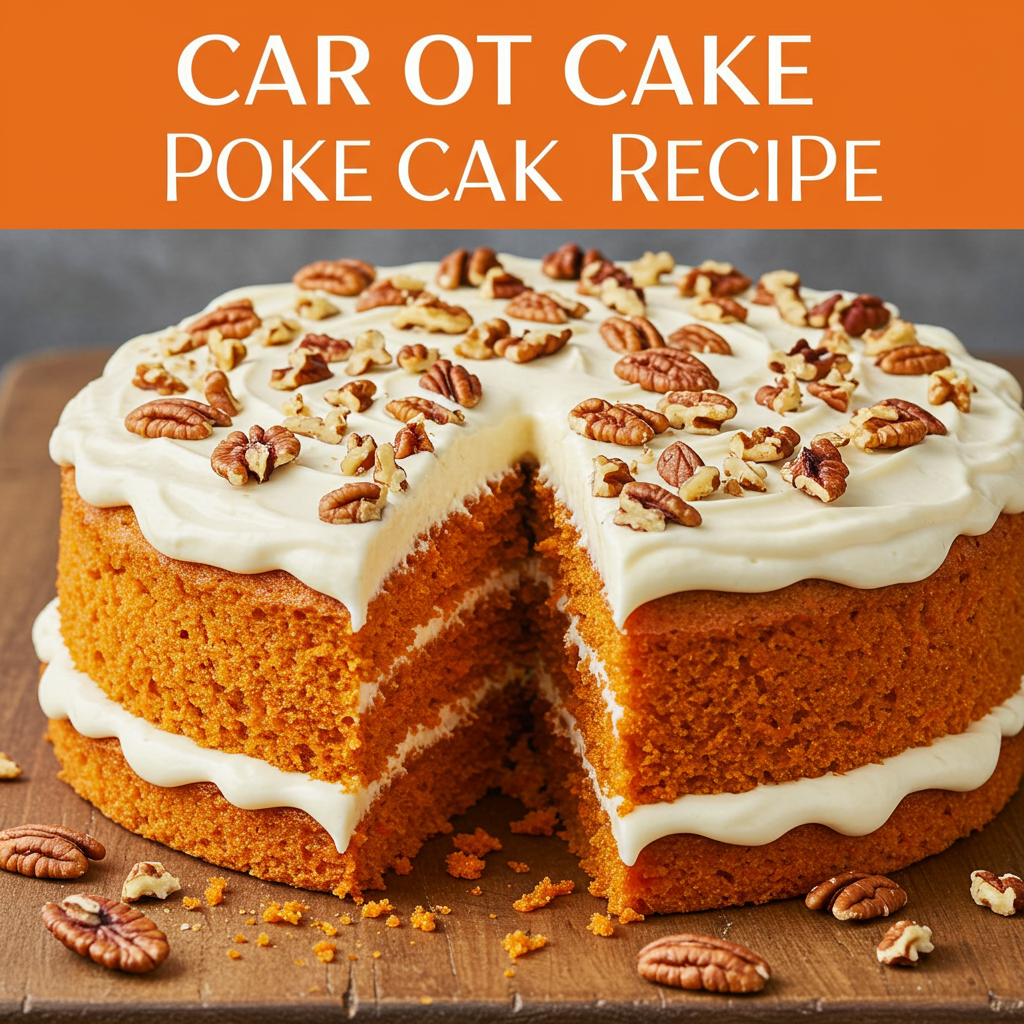
If you’re searching for easy baking recipes that deliver impressive results without the stress, you’ve found your match. This poke cake method is a fantastic way to ensure a tender crumb and infuse extra deliciousness, making it perfect for potlucks, family gatherings, or just a cozy night in. We’ll walk you through every step, providing valuable baking tips for beginners along the way to help you avoid common pitfalls and build your confidence in the kitchen. Get ready to bake something truly special!
Ingredients You’ll Need
Gathering your ingredients beforehand is key to a smooth baking process. Make sure everything is measured out and ready to go!
For the Carrot Cake:
| Quantity | Unit | Ingredient |
|---|---|---|
| 2 | cups | All-Purpose Flour |
| 1 ¾ | cups | Granulated Sugar |
| 1 | cup | Packed Light Brown Sugar |
| 2 | tsp | Baking Soda |
| 1 | tsp | Baking Powder |
| 1 | tsp | Salt |
| 2 | tsp | Ground Cinnamon |
| ½ | tsp | Ground Nutmeg |
| ¼ | tsp | Ground Ginger (optional, but recommended) |
| ⅛ | tsp | Ground Cloves (optional) |
| 4 | large | Eggs, at room temperature |
| 1 ½ | cups | Vegetable Oil (or other neutral oil like canola) |
| 2 | tsp | Vanilla Extract |
| 3 | cups | Finely Grated Carrots (about 4-5 medium carrots) |
| 1 | cup | Chopped Pecans or Walnuts (optional) |
For the Poke Cake Filling:
| Quantity | Unit | Ingredient |
|---|---|---|
| 1 (14 oz) | can | Sweetened Condensed Milk |
For the Cream Cheese Frosting:
| Quantity | Unit | Ingredient |
|---|---|---|
| 8 | oz | Cream Cheese, softened |
| ½ | cup (1 stick) | Unsalted Butter, softened |
| 4 | cups | Powdered Sugar (confectioners’ sugar), sifted |
| 1 | tsp | Vanilla Extract |
| 1-2 | tbsp | Milk or Heavy Cream (if needed for consistency) |
Step-by-Step Instructions: Bake Your Perfect Carrot Cake Poke Cake
Follow these detailed steps carefully, and you’ll be enjoying a slice of heaven in no time!
Step 1: Prepare Your Baking Environment
- Preheat Your Oven: First things first, preheat your oven to 350°F (175°C). This is crucial because a properly preheated oven ensures your cake bakes evenly from the moment it enters. If you put your cake into a cold oven, it will affect the rise and texture.
- Prepare Your Baking Pan: Grease and flour a 9×13 inch baking pan. You can do this by rubbing a thin layer of butter or shortening all over the inside of the pan, then dusting it with a tablespoon or two of flour, tapping out the excess. For an even easier cleanup, you can line the bottom with parchment paper after greasing, then grease and flour the sides. This prevents the cake from sticking and makes for easy removal.
Step 2: Combine the Dry Ingredients
- In a large mixing bowl, whisk together the all-purpose flour, granulated sugar, brown sugar, baking soda, baking powder, salt, ground cinnamon, ground nutmeg, ground ginger (if using), and ground cloves (if using).
- Beginner Tip: Make sure to sift your powdered sugar for the frosting (we’ll get to that later), but for the dry ingredients here, a good whisking will usually suffice to break up any lumps and evenly distribute the leavening agents and spices. This ensures every bite of your cake is flavorful and rises correctly.
Step 3: Mix the Wet Ingredients
- In a separate medium bowl, whisk together the room temperature eggs, vegetable oil, and vanilla extract until well combined.
- Beginner Tip: Using room temperature eggs is super important! They incorporate more easily and evenly into the batter, leading to a smoother mixture and a more tender cake. If your eggs are cold, place them in a bowl of warm (not hot!) water for 5-10 minutes to bring them to temperature.
Step 4: Combine Wet and Dry Mixtures
- Pour the wet ingredient mixture into the dry ingredient mixture.
- Using a spatula or a wooden spoon, mix until just combined.
- Beginner’s Golden Rule: Do NOT overmix! Overmixing develops the gluten in the flour too much, which can result in a tough, dense cake. Mix until no streaks of dry flour remain, but stop as soon as it’s incorporated. A few small lumps are perfectly fine.
Step 5: Add the Carrots and Nuts
- Gently fold in the finely grated carrots and the chopped pecans or walnuts (if using).
- Beginner Tip: “Folding” means using a spatula to cut down through the middle of the batter, then sweep it along the bottom of the bowl and up the side, turning the batter over itself. Rotate the bowl and repeat until the carrots and nuts are evenly distributed. This technique keeps air in the batter and prevents overmixing.
- Carrot Prep: For the best texture, grate your carrots finely. A food processor with a grating attachment makes this quick work, or use the small holes on a box grater.
Step 6: Bake the Cake
- Pour the batter evenly into your prepared 9×13 inch baking pan.
- Bake in the preheated oven for 30-35 minutes, or until a wooden skewer or toothpick inserted into the center of the cake comes out clean or with a few moist crumbs attached (no wet batter).
- Beginner Tip: Ovens can vary! Start checking your cake at the 30-minute mark. If it’s browning too quickly on top, you can loosely tent it with aluminum foil for the last few minutes of baking.
- Once baked, remove the cake from the oven and let it cool in the pan on a wire rack for about 10-15 minutes. This initial cooling helps the cake structure set before you handle it further.
Step 7: Poke and Fill! (The “Poke” Part)
- While the cake is still warm (but not piping hot), use the handle of a wooden spoon, a fork, or even a round dowel to poke holes all over the top of the cake. Aim for holes about ½ inch to 1 inch deep, spaced about an inch apart.
- Beginner Tip: Don’t be shy with the poking! The more holes, the more delicious filling will seep into your cake, making it incredibly moist. Ensure the holes are deep enough to reach a good portion of the cake.
- Pour the entire can of sweetened condensed milk evenly over the poked cake, making sure it seeps into all the holes.
- Allow the cake to cool completely on the wire rack. This is important! The cake needs to be cool before frosting, otherwise, your frosting will melt and slide right off. This can take 1-2 hours.
Step 8: Prepare the Cream Cheese Frosting
- In a large mixing bowl, using an electric mixer (handheld or stand mixer), beat the softened cream cheese and softened unsalted butter together on medium speed until smooth and creamy, about 2-3 minutes.
- Beginner Tip: Both your cream cheese and butter MUST be at room temperature and soft to the touch. If they are cold, your frosting will be lumpy and difficult to spread. Take them out of the fridge at least an hour before you plan to bake.
- Gradually add the sifted powdered sugar, one cup at a time, beating on low speed until incorporated, then increasing to medium speed until smooth.
- Stir in the vanilla extract.
- If the frosting is too thick, add milk or heavy cream, one tablespoon at a time, until you reach your desired spreading consistency. Be careful not to add too much, or your frosting will be too thin.
Step 9: Frost and Chill
- Once the cake is completely cool, spread the cream cheese frosting evenly over the top.
- For an extra touch, you can sprinkle some additional chopped pecans or walnuts on top, or even a dash of cinnamon.
- Chill the cake in the refrigerator for at least 30 minutes before serving. This allows the frosting to set and the flavors to meld beautifully.
Step 10: Serve and Enjoy!
- Cut into generous squares and serve. This cake is best served chilled or at room temperature.
- Store any leftovers in an airtight container in the refrigerator.
Tips & Tricks for Beginner Bakers
Baking can seem daunting, but these simple tips will make your journey smooth and successful:
- Measure Accurately: Baking is a science! Use proper measuring cups and spoons. For flour, spoon it into your measuring cup and then level it off with a straight edge (like the back of a knife) – don’t scoop directly from the bag, as this can compact the flour and lead to using too much.
- Room Temperature Ingredients: We mentioned this, but it bears repeating. Eggs, butter, and cream cheese at room temperature emulsify better, creating a smoother batter and frosting. Plan ahead and take them out of the fridge at least an hour before you start.
- Don’t Overmix: This is probably the most common beginner mistake. Mix only until ingredients are just combined. Overmixing develops gluten, leading to a tough, dry cake.
- Grate Your Carrots Finely: While some recipes call for coarsely grated carrots, for a smooth, moist crumb that melts in your mouth, fine grating is the way to go.
- Cool Completely: Patience is a virtue, especially in baking! Frosting a warm cake is a recipe for disaster, as it will melt and slide off. Make sure your cake is absolutely cool to the touch before applying frosting.
- Sweetened Condensed Milk Alternative: If you don’t have sweetened condensed milk, you could use a simple syrup (equal parts sugar and water, boiled then cooled) or even a warm caramel sauce to pour into the holes for a different flavor profile.
- Make Ahead: This cake is fantastic for making ahead! You can bake the cake and poke it, then pour the condensed milk and chill it overnight. Frost it the next day before serving.
Essential Baking Tools
Having the right tools makes all the difference in your baking experience. Here are a few essentials:
- Mixing Bowl
- Whisk
- Baking Pan (9×13 inch recommended)
- Measuring Cups & Spoons
- Spatula
- Electric Mixer (handheld or stand mixer for frosting)
- Wire Rack (for cooling)
- Box Grater or Food Processor (for carrots)
Nutrition Information (Estimated per serving)
Please note that these are approximate values and can vary based on exact ingredients and portion size (calculated for 1/16th of a 9×13 inch cake).
| Nutrient | Amount |
|---|---|
| Calories | ~480 kcal |
| Carbohydrates | ~65 g |
| Protein | ~5 g |
| Fat | ~25 g |
| Fiber | ~2 g |
| Sugar | ~50 g |
Frequently Asked Questions (FAQs)
Q1: Can I use a store-bought cake mix for this recipe?
A: Absolutely! If you want to make this recipe even quicker and simpler, you can use a store-bought carrot cake mix. Just prepare it according to the package directions, then proceed with Step 7 (Poking and Filling) and Step 8 (Frosting) of our recipe. It’s a great shortcut for beginners!
Q2: How do I store leftover Carrot Cake Poke Cake?
A: Because of the cream cheese frosting and sweetened condensed milk, this cake needs to be stored in the refrigerator. Place any leftovers in an airtight container to keep them fresh and prevent them from drying out. It will stay delicious for 3-4 days.
Q3: Can I make this cake ahead of time?
A: Yes, this cake is an excellent make-ahead dessert! You can bake the cake, poke it, and pour the condensed milk over it a day in advance. Cover it and refrigerate. Prepare and frost the cake on the day you plan to serve it. This allows the flavors to meld beautifully and the cake to become even more moist.
Q4: My cake came out dry. What went wrong?
A: A dry cake is usually due to one of two common issues: overbaking or overmixing the batter. Ensure you check for doneness using the toothpick test at the earliest recommended time. Also, remember to mix the wet and dry ingredients only until just combined to avoid developing too much gluten.
Q5: What if I don’t have all the spices listed?
A: While the full blend of cinnamon, nutmeg, ginger, and cloves gives carrot cake its signature warmth, you can certainly adapt! If you only have cinnamon, that’s perfectly fine. You can also use 2-3 teaspoons of a pre-made “pumpkin pie spice” blend as a convenient substitute for all the individual spices.
Q6: Can I add other mix-ins to the cake batter?
A: Absolutely! Get creative! Besides pecans or walnuts, you could fold in a ½ cup of shredded coconut, golden raisins, or even mini chocolate chips for an extra layer of flavor and texture. Just be mindful not to overfill the batter.
Time to Indulge!
And there you have it – a truly magnificent Carrot Cake Poke Cake Recipe that’s designed for success, even for the most novice baker. We hope these detailed instructions and helpful tips empower you to create a dessert that will impress everyone who tastes it (including yourself!). The combination of moist carrot cake, sweet condensed milk, and tangy cream cheese frosting is simply irresistible.
Don’t be afraid to get your hands a little messy and have fun in the kitchen. Baking is a journey of discovery, and every cake you make teaches you something new. So go ahead, give this recipe a try, and prepare to fall in love with your new favorite carrot cake. Happy baking, and enjoy every single delicious bite!