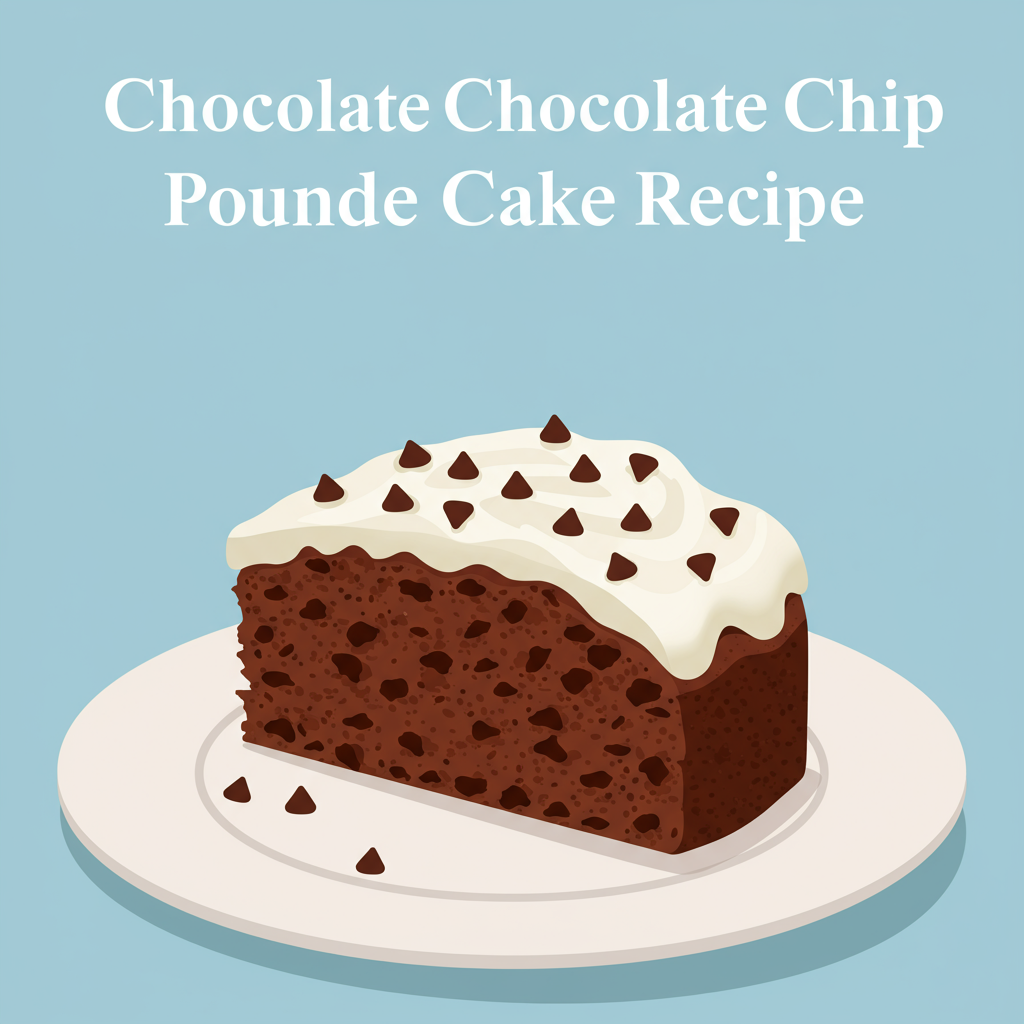
We know that starting out can feel a little daunting, but fear not! This guide is packed with easy baking recipes principles and specific baking tips for beginners to ensure your success. We’ll walk through each step, explaining the ‘why’ behind the ‘how,’ so you can build confidence and create a show-stopping cake that will have everyone asking for seconds. Get ready to bake something truly special!
Ingredients List
Gather your ingredients! Having everything measured and ready before you start (this is called “mise en place”) makes the baking process much smoother.
| Ingredient | Quantity |
|---|---|
| Unsalted Butter, softened | 1 cup (2 sticks or 226g) |
| Granulated Sugar | 2 cups (400g) |
| Large Eggs, at room temperature | 4 |
| All-Purpose Flour | 2 ½ cups (300g) |
| Unsweetened Cocoa Powder | ½ cup (45g) |
| Baking Powder | 1 teaspoon |
| Salt | ½ teaspoon |
| Whole Milk, at room temperature | 1 cup (240ml) |
| Vanilla Extract | 2 teaspoons |
| Semi-Sweet Chocolate Chips | 1 ½ cups (255g) |
Step-by-Step Instructions
Follow these detailed steps carefully, and you’ll be enjoying a delicious chocolate pound cake in no time!
Step 1: Prepare Your Pan and Preheat Oven
- Preheat your oven to 325°F (160°C). A lower temperature is often used for pound cakes to ensure they bake evenly all the way through without burning the outside.
- Grease and flour a 10-12 cup Bundt pan or a 9×13 inch baking pan (for a sheet cake style). This is a crucial step! Use butter or a non-stick baking spray to thoroughly coat every nook and cranny of your pan. Then, sprinkle about 1-2 tablespoons of all-purpose flour into the greased pan. Rotate the pan, tapping it gently, until the flour coats all the greased surfaces. Invert the pan and tap out any excess flour. This creates a non-stick barrier, preventing your cake from sticking.
Step 2: Whisk Dry Ingredients
- In a medium bowl, whisk together the all-purpose flour, unsweetened cocoa powder, baking powder, and salt.
- Beginner Tip: Whisking these dry ingredients together ensures that the leavening (baking powder) and flavor (cocoa) are evenly distributed throughout the flour. This prevents pockets of unmixed ingredients in your final cake. Set this bowl aside.
Step 3: Cream Butter and Sugar
- In a large mixing bowl (or the bowl of a stand mixer fitted with the paddle attachment), beat the softened unsalted butter on medium speed for about 1 minute until creamy.
- Gradually add the granulated sugar to the butter, beating on medium-high speed for 3-5 minutes. You want the mixture to become light in color, fluffy, and significantly increased in volume. This process, called “creaming,” incorporates air into the butter and sugar, which is essential for the pound cake’s texture.
- Beginner Tip: Ensure your butter is truly “softened,” not melted. It should give slightly when pressed, but not be greasy. Cold butter won’t cream properly, and melted butter will result in a dense cake.
Step 4: Add Eggs and Vanilla
- Add the large eggs, one at a time, beating well after each addition. Make sure each egg is fully incorporated before adding the next. If the mixture looks a little curdled, don’t worry, it will come together.
- After all eggs are added, beat in the vanilla extract.
- Beginner Tip: Adding eggs one by one helps to create a stable emulsion with the butter and sugar, preventing the mixture from separating. It also allows for even incorporation, leading to a smoother batter. Scrape down the sides of the bowl with a spatula occasionally to ensure everything is mixed.
Step 5: Alternate Dry and Wet Ingredients
- With the mixer on low speed, add about one-third of the dry ingredient mixture to the wet ingredients and mix until just combined.
- Then, pour in about half of the milk and mix until just combined.
- Repeat this process: add another third of the dry ingredients, mix, then the remaining milk, mix.
- Finally, add the last third of the dry ingredients and mix only until no streaks of flour remain.
- Beginner Tip: Do not overmix! Overmixing develops the gluten in the flour too much, which can lead to a tough, dry cake. Mix just until combined. It’s okay if there are a few tiny lumps.
Step 6: Fold in Chocolate Chips
- Remove the bowl from the mixer and, using a rubber spatula, gently fold in the semi-sweet chocolate chips until they are evenly distributed throughout the batter.
- Beginner Tip: Folding is a gentle technique to combine ingredients without deflating the air you’ve worked so hard to incorporate. Use a spatula to scrape the bottom of the bowl and bring it up over the top of the batter.
Step 7: Bake the Cake
- Pour the batter evenly into your prepared Bundt or baking pan. Use the spatula to smooth the top.
- Bake for 60-75 minutes for a Bundt pan, or 50-60 minutes for a 9×13 pan.
- The cake is done when a wooden skewer or toothpick inserted into the center comes out clean or with moist crumbs attached (no wet batter).
- Beginner Tip: Oven temperatures can vary! It’s a good idea to invest in an oven thermometer to ensure your oven is truly at the temperature you set. Start checking for doneness around the minimum bake time.
Step 8: Cool the Cake
- Once baked, remove the cake from the oven and let it cool in the pan on a wire rack for 15-20 minutes. This allows the cake to set and firm up, making it easier to remove without breaking.
- After 15-20 minutes, carefully invert the cake onto the wire rack to cool completely.
- Beginner Tip: Don’t rush this step! Trying to remove a hot pound cake too soon is a common cause of breakage. Let it cool completely on the rack before slicing for the best texture and to prevent crumbling.
Tips & Tricks for Baking Success
Baking is a science, but with these simple tips, you’ll feel like a pro in no time!
- Room Temperature Ingredients are Key: This is arguably the most important tip for pound cake. Room temperature butter creams better, incorporating more air. Room temperature eggs and milk emulsify more smoothly into the batter, preventing curdling and resulting in a uniformly smooth and tender crumb. Plan ahead and take them out of the fridge at least an hour before you start.
- Measure Accurately: Especially with flour! “Spoon and level” your flour: use a spoon to lightly scoop flour into your measuring cup, then use the back of a knife or a straight edge to level off the top. Don’t pack it down or scoop directly from the bag, as this can add too much flour, leading to a dry cake.
- Don’t Overmix the Batter: Once you add the flour, mix only until the ingredients are just combined. Overmixing develops the gluten in the flour, making your cake tough and chewy instead of tender and moist. A few small lumps are perfectly fine!
- Properly Prepare Your Pan: Taking the extra minute to thoroughly grease and flour your pan (especially a Bundt pan with its intricate design) will save you a lot of heartache when it comes time to unmold your beautiful cake.
- Trust Your Nose and a Toothpick: While timing is a guide, your cake is done when it smells wonderfully aromatic and a wooden skewer or toothpick inserted into the thickest part comes out clean or with moist crumbs attached.
- Cool Completely: Resist the urge to slice into your warm cake immediately. Cooling allows the cake’s structure to set and the flavors to meld, resulting in the best possible texture and taste.
Essential Baking Tools
Having the right tools makes all the difference! Here are some basics you’ll need:
- Mixing Bowl (large for batter, medium for dry ingredients)
- Whisk (for dry ingredients)
- Baking Pan (10-12 cup Bundt pan or 9×13 inch baking pan)
- Measuring Cups and Measuring Spoons
- Spatula (rubber spatula for scraping and folding)
- Electric Mixer (stand mixer or hand mixer)
- Wire Rack (for cooling)
- Wooden Skewer or Toothpicks (for testing doneness)
Nutrition Information (Estimated per slice, based on 12 slices)
Please note, these are approximate values and can vary based on specific ingredient brands and preparation.
| Nutrient | Amount |
|---|---|
| Calories | 420 kcal |
| Carbohydrates | 58g |
| Protein | 5g |
| Fat | 21g |
| Fiber | 2g |
| Sugar | 40g |
Frequently Asked Questions (FAQs)
Q1: Why are room temperature ingredients so important for pound cake?
A: Room temperature butter, eggs, and milk combine more easily and uniformly. Cold ingredients can cause the batter to curdle, resulting in a less smooth texture. Also, room temperature butter creams much better with sugar, incorporating more air for a lighter, fluffier cake. It’s a small step that makes a big difference!
Q2: How do I know if my butter is soft enough?
A: Your butter should be soft enough that you can easily make a slight indentation with your finger, but it shouldn’t be greasy or melted. If it’s too hard, cut it into smaller pieces and let it sit for another 15-30 minutes. If it’s too soft or melted, pop it back in the fridge for a few minutes to firm up slightly.
Q3: Can I use a different size pan?
A: Yes, but you’ll need to adjust the baking time. For example, if using two smaller loaf pans, they will bake faster (around 45-55 minutes). Always fill the pan no more than two-thirds full to prevent overflow. If your pan is significantly smaller, you might have leftover batter or need to bake in batches.
Q4: How do I prevent my pound cake from sticking to the pan?
A: The key is thorough greasing and flouring! Use solid butter or non-stick spray to coat every part of the pan, especially the nooks and crannies of a Bundt pan. Then, add a tablespoon or two of flour and rotate the pan to coat everything, tapping out the excess. Don’t forget to let the cake cool in the pan for 15-20 minutes before inverting it onto a wire rack.
Q5: How long does this Chocolate Chocolate Chip Pound Cake last?
A: Stored properly, wrapped tightly at room temperature, this pound cake will stay fresh for 3-4 days. You can also freeze slices or the whole cake (well-wrapped) for up to 2-3 months. Thaw in the refrigerator overnight or at room temperature.
Q6: Can I add different types of chocolate chips or other mix-ins?
A: Absolutely! Feel free to experiment. You could use milk chocolate chips, white chocolate chips, or a mix of all three. Mini chocolate chips work well too. For other mix-ins, try a handful of chopped nuts (pecans or walnuts) or even dried cherries for a different flavor profile. Just keep the total volume of mix-ins similar to the chocolate chips (around 1.5 cups).
Conclusion
Congratulations, baker! You’ve just created a stunning and delicious Chocolate Chocolate Chip Pound Cake. This recipe is a fantastic stepping stone into the world of baking, demonstrating how attention to detail and a few key techniques can lead to truly exceptional results.

Don’t be afraid to experiment with toppings – a dusting of powdered sugar, a simple chocolate glaze, or even a scoop of vanilla ice cream can elevate this cake further. Remember, every bake is a learning experience, and with each attempt, you’ll gain more confidence and skill. Enjoy your creation, share it with loved ones, and most importantly, have fun on your baking journey. Happy baking!