
Welcome, fellow baking enthusiasts! Are you ready to embark on a delicious journey that will fill your kitchen with the irresistible aroma of freshly baked bread? If the thought of baking sourdough has always seemed daunting, fear not. This Cinnamon Raisin Sourdough Bread Recipe is specifically designed for beginners, making it one of the most easy baking recipes you’ll encounter. We’ll break down every step, offering essential baking tips for beginners to ensure your success. Imagine waking up to a warm slice of this sweet, tangy, and subtly spiced bread, toasted to perfection with a smear of butter. It’s not just bread; it’s an experience, and you’re about to master it.
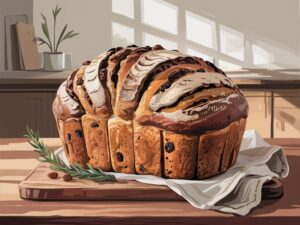
Sourdough baking is a therapeutic process that yields incredibly rewarding results. With a little patience and our detailed guidance, you’ll be creating stunning loaves in no time. Let’s dive in and transform simple ingredients into a masterpiece!
Ingredients List
Gather your ingredients! For the best results, we recommend using a kitchen scale for accuracy, especially for flour and water.
| Ingredient | Quantity | Unit |
|---|---|---|
| Active Sourdough Starter | 100 | grams |
| Warm Water (filtered is best) | 350 | grams |
| Bread Flour (high protein content) | 400 | grams |
| All-Purpose Flour (or whole wheat for flavor) | 50 | grams |
| Fine Sea Salt | 9 | grams |
| Ground Cinnamon | 2 | teaspoons |
| Raisins (preferably plumped) | 100 | grams |
Step-by-Step Instructions: Your Path to Perfect Sourdough
This recipe follows a typical sourdough timeline, often spread over two days for optimal flavor and texture. Don’t worry, most of it is hands-off waiting!
Day 1: Mixing and Bulk Fermentation
1. Prepare Your Raisins (Optional but Recommended)
- Why: Plumping raisins prevents them from absorbing moisture from your dough, keeping your bread softer.
- Place the 100 grams of raisins in a small bowl and cover with hot water. Let them sit for about 15-20 minutes. Drain thoroughly and pat dry with a paper towel before adding them to your dough.
2. Autolyse (The Initial Mix) – Morning/Early Afternoon
- Why: This step allows the flour to fully hydrate and gluten to start developing naturally, leading to a more extensible and easier-to-handle dough later. It reduces kneading!
- In a large mixing bowl, combine the 350 grams of warm water, 400 grams of bread flour, and 50 grams of all-purpose flour. Mix with your hands or a Danish dough whisk until no dry flour remains and a shaggy dough forms. Do not add the salt, starter, cinnamon, or raisins yet.
- Cover the bowl with a clean kitchen towel or plastic wrap and let it rest at room temperature for 30 minutes to 1 hour. This is your autolyse.
3. Incorporate Starter, Salt, and Cinnamon
- Why: Adding the starter now kick-starts fermentation. Salt strengthens gluten and adds flavor, while cinnamon infuses the bread with its warm spice.
- After the autolyse, add the 100 grams of active sourdough starter, 9 grams of fine sea salt, and 2 teaspoons of ground cinnamon directly onto the dough.
- Using wet hands (this prevents sticking), gently mix and squeeze the dough until the starter, salt, and cinnamon are fully incorporated. This might take 2-5 minutes. The dough will feel sticky at first, but keep going.
- Cover the bowl again and let it rest for 30 minutes.
- Beginner Tip: Ensure your starter is “active” – meaning it has been fed 4-8 hours prior and is bubbly, has increased in volume, and passes the float test (a small spoonful floats in water).
4. First Set of Stretch and Folds (or Coil Folds)
- Why: These gentle movements develop gluten strength without aggressive kneading, trapping air and building structure.
- After the 30-minute rest, perform your first set of stretch and folds. With wet hands, grab a portion of the dough from one side, stretch it up gently, and fold it over to the center. Rotate the bowl a quarter turn and repeat this process 3-4 more times, until you’ve worked your way around the dough. The dough will start to feel stronger.
- Cover and rest for 30 minutes.
- Common Mistake: Ripping the dough. Be gentle! If it tears, you’re stretching too far.
5. Incorporate Raisins & Subsequent Stretch and Folds
- Why: We add inclusions after some gluten development to ensure they don’t hinder the initial structure building.
- For the second set of stretch and folds, lightly flatten the dough in the bowl. Sprinkle the drained and patted dry 100 grams of raisins evenly over the surface.
- Perform another set of stretch and folds, incorporating the raisins as you fold. The goal is to distribute them evenly throughout the dough.
- Cover and rest for 30-45 minutes.
- Repeat the stretch and fold process (without adding more raisins) 2-3 more times, resting for 30-45 minutes between each set. In total, you’ll do 4-5 sets of folds. By the last set, your dough should feel much stronger, smoother, and more elastic.
6. Bulk Fermentation (First Rise)
- Why: This is where the magic happens! The yeast and bacteria in your starter consume sugars, producing gas and creating flavor.
- After your last set of folds, cover the bowl and let the dough continue to ferment at room temperature. The ideal temperature is around 75-78°F (24-26°C).
- This stage can take anywhere from 3-6 hours, depending on your room temperature and starter activity.
- How to tell it’s ready: Your dough should have increased in volume by about 20-30%, look bubbly on the surface and sides, and feel light and airy. A good test is to gently poke the dough with a wet finger; if the indentation slowly springs back halfway, it’s ready.
- Beginner Tip: Don’t rush this stage. Under-proofed dough will be dense; over-proofed dough will be hard to shape and spread.
7. Pre-Shaping
- Why: This step creates surface tension and a preliminary round shape, making final shaping easier and promoting good oven spring.
- Lightly flour your work surface. Gently tip the dough out of the bowl onto the floured surface.
- Shape the dough into a loose round (a boule) or an oval (a batard) by gently pulling the edges towards the center and then flipping it seam-side down. Use a bench scraper to help create tension on the surface.
- Cover the pre-shaped dough with a kitchen towel and let it rest for 20-30 minutes. This allows the gluten to relax.
8. Final Shaping
- Why: This is crucial for creating a loaf that holds its shape and gets a beautiful oven spring.
- Lightly flour your hands and the top of your dough. Gently flip the dough over so the seam side is up.
- For a boule (round): Gently stretch the top of the dough upwards, then fold it down past the center. Rotate the dough 180 degrees and repeat. Then, grab the sides and fold them towards the center, overlapping slightly. Flip the dough over and cup it with your hands, rotating it to create surface tension.
- For a batard (oval): Similar folds, but aim for an elongated shape.
- Once shaped, place the dough seam-side up into a well-floured banneton (proofing basket) or a bowl lined with a floured kitchen towel. This prevents it from sticking.
- Beginner Tip: Watch a few videos on sourdough shaping if you’re unsure. The goal is to create a tight “skin” on the outside of the dough.
9. Cold Proof (Second Rise) – Overnight
- Why: Retards fermentation, allowing flavors to deepen, and makes the dough much easier to handle and score when cold. It also contributes to a better oven spring.
- Cover your banneton/bowl with plastic wrap or a shower cap and place it in the refrigerator for 12-18 hours (or up to 24 hours).
- Alternative: If you’re in a hurry, you can proof at room temperature for 1-2 hours until it passes the poke test, but the cold proof yields superior results.
Day 2: Baking Day!
10. Preheat Your Oven and Dutch Oven
- Why: A super hot Dutch oven creates a steamy environment, mimicking a professional baker’s oven, which is essential for a beautiful crust and oven spring.
- About 1 hour before you plan to bake, place your Dutch oven with its lid inside your oven. Preheat your oven to 475°F (245°C). Make sure it’s fully preheated for at least 30 minutes.
11. Score and Bake
- Why: Scoring (slashing) the dough allows it to expand in a controlled manner, preventing uncontrolled tearing and creating an appealing pattern.
- Carefully remove the hot Dutch oven from the oven. Gently invert your cold dough from the banneton directly into the hot Dutch oven.
- Using a very sharp knife, razor blade (lame), or scissors, score the top of your dough with your desired pattern. A single, deep slash down the middle is a great start for beginners.
- Place the lid back on the Dutch oven.
- Bake with the lid on for 20 minutes at 475°F (245°C).
12. Finish Baking
- Why: Removing the lid allows the crust to brown and crisp up beautifully.
- After 20 minutes, carefully remove the lid from the Dutch oven.
- Reduce the oven temperature to 450°F (230°C).
- Continue baking for another 25-30 minutes, or until the crust is a deep golden brown and the internal temperature reaches 200-210°F (93-99°C).
- Beginner Tip: Don’t be afraid of a dark crust; it adds flavor!
13. Cool Completely
- Why: This is perhaps the most crucial step for texture and flavor. The internal cooking process continues as the bread cools, and cutting it too early will result in a gummy interior.
- Carefully remove the bread from the Dutch oven and place it on a wire rack to cool completely for at least 1.5 – 2 hours before slicing.
- Patience is key here! Resist the urge to cut into your warm loaf immediately.
Tips & Tricks for Sourdough Success
Baking sourdough is a journey, and every loaf teaches you something new. Here are some actionable tips to help you along the way:
- Know Your Starter: An active, healthy starter is paramount. It should be bubbly, have risen significantly after feeding, and pass the float test (a small piece floats in water). If your starter is sluggish, give it a few extra feedings before baking.
- Temperature Matters: Room temperature significantly impacts fermentation time. Colder temperatures mean longer proofing, warmer means faster. Learn to read your dough, not just the clock.
- Hydration: Sourdough dough is often sticky, especially with higher hydration. Don’t be afraid to wet your hands when handling the dough; it’s your best tool against stickiness.
- Gentle Handling: Sourdough gluten is delicate. Avoid aggressive kneading or tearing. Gentle stretches and folds preserve the air bubbles and structure you’re trying to build.
- Practice Your Shaping: Shaping is one of the trickiest parts for beginners. Watch videos, experiment, and don’t get discouraged if your first few loaves aren’t perfectly round. The goal is to create good surface tension.
- Invest in a Scale: Baking by weight (grams) is far more accurate than by volume (cups) and will lead to more consistent results, especially in sourdough.
- Listen to Your Dough: Instead of strictly following times, learn to observe your dough. Look for visual cues like increased volume, bubbles, and how it feels to the touch.
- Don’t Skip Cooling: As tempting as it is, cutting into warm sourdough results in a gummy texture. The bread needs time to set and for the starches to stabilize.
Essential Baking Tools
Having the right tools makes all the difference in your baking experience. Here are a few essentials:
- Mixing Bowl (large, for combining ingredients and bulk fermentation)
- Whisk (or a Danish dough whisk for easy mixing)
- Dutch Oven (for baking a beautiful, crusty loaf)
- Kitchen Scale (essential for accurate sourdough baking)
- Bench Scraper (invaluable for handling sticky dough and cleaning up)
- Banneton (proofing basket, round or oval) or a bowl lined with a floured towel
- Lame or very sharp knife (for scoring)
- Wire cooling rack
Nutrition Information (Estimated per slice, 1/12th of loaf)
Please note: These are estimated values and can vary based on specific ingredients and loaf size.
| Nutrient | Amount |
|---|---|
| Calories | 180-220 kcal |
| Total Carbohydrates | 35-45 g |
| Protein | 6-8 g |
| Total Fat | 1-3 g |
| Dietary Fiber | 2-4 g |
| Total Sugars | 6-10 g |
Frequently Asked Questions for Beginner Sourdough Bakers
Q1: My sourdough starter isn’t very active. Can I still bake with it?
A: It’s best to wait until your starter is consistently active and bubbly. A sluggish starter will result in a very dense loaf that doesn’t rise well. Feed your starter daily (or twice daily if needed) for a few days until it reliably doubles in size within 4-8 hours after feeding.
Q2: Why is my dough so sticky and hard to handle?
A: Sourdough dough, especially with higher hydration, is naturally sticky. Don’t worry! Using wet hands during the mixing and folding stages helps immensely. Also, ensuring you develop enough gluten through your stretch and folds will make the dough stronger and less sticky over time. A bench scraper is also your best friend for handling sticky dough on the counter.
Q3: Can I use regular all-purpose flour instead of bread flour?
A: While you can technically use all-purpose flour, bread flour has a higher protein content, which is crucial for developing strong gluten networks in sourdough. This results in better structure, rise, and chewiness. Using only all-purpose flour might give you a slightly flatter loaf with a less open crumb.
Q4: How do I know when my bulk fermentation is complete?
A: This is one of the trickiest parts! Look for visual cues: the dough should have increased in volume by about 20-30%, have visible bubbles on the surface and sides, and feel light and jiggly. A good test is the “poke test”: gently poke the dough with a wet finger. If the indentation slowly springs back halfway, it’s usually ready. If it springs back immediately, it needs more time; if it collapses completely, it might be over-proofed.
Q5: I don’t have a Dutch oven. Can I still bake this bread?
A: Yes, you can! While a Dutch oven creates the ideal steamy environment for a perfect crust and rise, you can improvise. Preheat a baking stone or heavy baking sheet in your oven. Place a pan of hot water on the bottom rack for steam. Bake the bread directly on the hot stone/sheet. You might need to adjust baking times slightly and you might not get quite the same oven spring or crust, but it will still be delicious!
Q6: How should I store my Cinnamon Raisin Sourdough Bread?
A: Once completely cooled, store your bread at room temperature in a paper bag or a breathable bread bag for 1-2 days to maintain its crust. For longer storage (up to a week), keep it in an airtight container or plastic bag. You can also slice the bread and freeze individual slices for up to a month, toasting them directly from frozen.
Your Delicious Sourdough Journey Begins Now!
Congratulations, you’ve made it through the ultimate guide to baking your very own Cinnamon Raisin Sourdough Bread! This recipe might seem like a marathon, but each step is a small, rewarding stride towards a truly exceptional loaf. The satisfaction of pulling a warm, aromatic loaf from your oven, knowing you created it from scratch, is unparalleled.
Don’t be discouraged if your first loaf isn’t perfect. Sourdough baking is a skill that improves with practice and patience. Every bake is a learning experience. So grab your active starter, roll up your sleeves, and get ready to enjoy the incredible aroma and taste of homemade sourdough. We can’t wait to hear about your baking adventures!