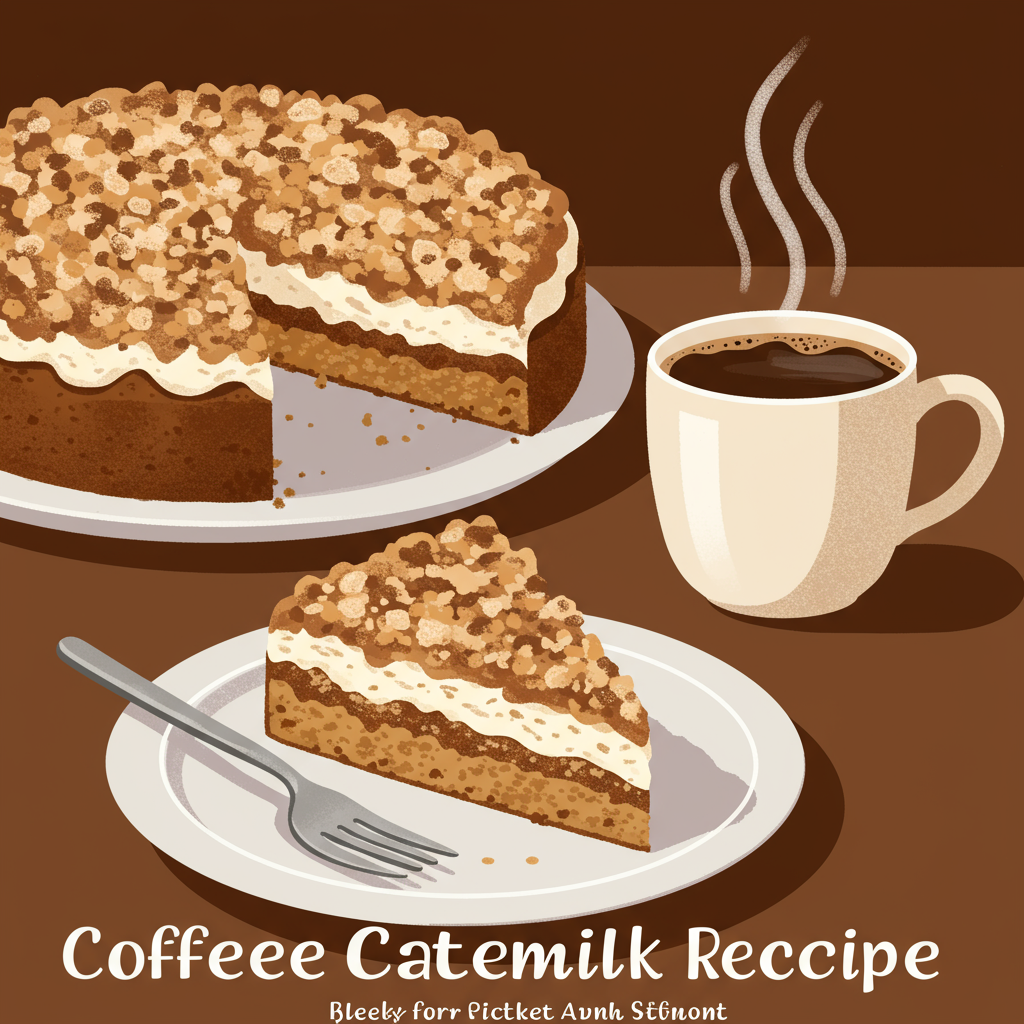
Gather Your Goodies: Ingredients List
Before we dive into the deliciousness, let’s make sure you have everything you need. Using precise measurements is one of the most important baking tips for beginners, so grab your measuring cups and spoons!
| Ingredient | Quantity | Unit |
|---|---|---|
For the Crumb Topping |
||
| All-purpose flour | 1 | cup |
| Granulated sugar | ½ | cup |
| Light brown sugar, packed | ¼ | cup |
| Ground cinnamon | 1 | tablespoon |
| Unsalted butter, melted | ½ | cup (1 stick) |
For the Coffee Cake Batter |
||
| All-purpose flour | 2 | cups |
| Granulated sugar | 1 | cup |
| Baking powder | 2 | teaspoons |
| Baking soda | ½ | teaspoon |
| Salt | ½ | teaspoon |
| Unsalted butter, softened | ½ | cup (1 stick) |
| Large eggs, room temperature | 2 | |
| Buttermilk, room temperature | 1 | cup |
| Vanilla extract | 1 | teaspoon |
For the Glaze (Optional, but Recommended!) |
||
| Powdered sugar (confectioners’ sugar) | 1 | cup |
| Milk (any kind) | 2-3 | tablespoons |
| Vanilla extract | ¼ | teaspoon |
Let’s Get Baking: Step-by-Step Instructions
Follow these detailed steps, and you’ll have a beautiful, delicious coffee cake in no time. Remember, baking is a science, so take your time and enjoy the process!
1. Prepare Your Crumb Topping
- Combine Dry Ingredients: In a medium-sized bowl, whisk together the all-purpose flour, granulated sugar, light brown sugar, and ground cinnamon until well combined. Use a whisk to ensure there are no lumps, especially in the brown sugar.
- Add Melted Butter: Pour the melted unsalted butter over the dry ingredients.
- Mix Until Crumbly: Using a fork, your fingertips, or a pastry blender, mix the ingredients until a coarse, crumbly mixture forms. You want distinct crumbs, not a paste. If it seems too wet, add a tiny bit more flour. If too dry, a tiny bit more melted butter. Set this aside for later.
2. Preheat Oven and Prepare Pan
- Preheat: Preheat your oven to **350°F (175°C)**. An accurate oven temperature is key for even baking!
- Prepare Pan: Lightly grease and flour a 9×13 inch baking pan. Alternatively, you can line it with parchment paper for easier removal and cleanup. If using parchment, leave an overhang on the sides to use as “handles.”
3. Make the Coffee Cake Batter
- Whisk Dry Ingredients: In a large mixing bowl, whisk together the 2 cups of all-purpose flour, 1 cup of granulated sugar, baking powder, baking soda, and salt. Make sure everything is evenly distributed. This helps prevent clumps of baking powder in your finished cake.
- Cream Butter and Sugar: In a separate, even larger bowl (or the bowl of your stand mixer), add your softened unsalted butter and the remaining 1 cup of granulated sugar. Using an electric mixer (handheld or stand mixer with paddle attachment), beat them together on medium speed for about 2-3 minutes until the mixture is light, fluffy, and pale yellow. This process, called creaming, incorporates air, which is crucial for a tender cake. **Beginner Tip:** If your butter isn’t soft enough (it should be easily indentable with a finger), it won’t cream properly.
- Add Eggs: Add the large eggs one at a time, beating well after each addition until fully incorporated. Scrape down the sides of the bowl with a spatula to ensure everything is mixed evenly.
- Alternate Dry and Wet: With the mixer on low speed, add about one-third of the dry ingredient mixture to the wet ingredients, mixing just until combined. Then, add half of the buttermilk, mixing until just incorporated. Repeat this process: another third of dry, then the remaining buttermilk, and finally the last third of dry ingredients. **Important Beginner Tip:** Be careful not to overmix! Overmixing develops gluten in the flour, which can lead to a tough, dry cake. Mix only until the streaks of flour disappear.
- Add Vanilla: Stir in the vanilla extract until just combined.
4. Assemble and Bake
- Layer Batter: Pour about half of the coffee cake batter into your prepared 9×13 inch baking pan. Spread it evenly with a spatula. Don’t worry if it’s not perfectly smooth; it will level out during baking.
- Add Crumb Topping: Generously sprinkle about half of the prepared crumb topping over the batter. Try to distribute it evenly.
- Add Remaining Batter: Carefully dollop the remaining cake batter over the crumb topping. Gently spread it out, trying not to disturb the crumb layer too much. It’s okay if some crumbs show through.
- Final Crumb Layer: Sprinkle the rest of the crumb topping over the top of the cake batter.
- Bake: Place the pan in the preheated oven and bake for **35-45 minutes**. **How to tell if it’s done for beginners:** The cake is ready when a wooden skewer or toothpick inserted into the center comes out clean or with just a few moist crumbs attached. The top should be golden brown and the edges slightly pulled away from the pan.
- Cool: Once baked, remove the coffee cake from the oven and place it on a wire rack to cool completely in the pan. Cooling completely before glazing is crucial to prevent the glaze from melting.
5. Prepare the Glaze (Optional)
- Whisk Glaze Ingredients: In a small bowl, whisk together the powdered sugar, 2 tablespoons of milk, and vanilla extract until smooth.
- Adjust Consistency: If the glaze is too thick, add the remaining tablespoon of milk, a tiny bit at a time, until you reach a pourable but still thick consistency. If it’s too thin, add a teaspoon more powdered sugar.
- Drizzle: Once the cake is completely cool, generously drizzle the glaze over the top using a spoon or by transferring it to a small Ziploc bag, snipping off a corner, and piping it.
Tips & Tricks for Baking Success!
Baking can seem daunting, but with a few simple tips, you’ll feel like a pro in no time! First, always ensure your ingredients are at room temperature, especially butter, eggs, and buttermilk. This allows them to emulsify better, creating a smoother, more uniform batter and a more tender cake. Another crucial tip is to **measure accurately**. Use proper measuring cups for dry ingredients (level off with a straight edge!) and liquid measuring cups for wet ingredients. Don’t eyeball it!
When mixing, remember the golden rule: do not overmix the batter once the flour is added. Overmixing develops gluten, making your cake tough. Mix only until the ingredients are just combined. For your crumb topping, don’t be afraid to get your hands in there; a good crumb often benefits from a little tactile mixing. If your crumb topping seems to melt into the cake, try chilling it for 15-20 minutes before sprinkling it on. Finally, always **trust your oven thermometer**, not just your oven’s dial. Oven temperatures can vary widely, and an inexpensive oven thermometer can be a baker’s best friend. Enjoy the process, and don’t be afraid to experiment a little once you’ve mastered the basics!
Essential Baking Tools
Having the right tools makes all the difference in your baking journey. Here are some essentials that will help you create this Coffee Cake and many other delicious treats:
- Mixing Bowl (various sizes)
- Whisk
- 9×13 Inch Baking Pan
- Measuring Cups and Spoons Set
- Rubber Spatula
- Electric Hand Mixer or Stand Mixer (optional, but highly recommended)
- Wire Rack for cooling
- Parchment Paper (optional)
Nutrition Information (Estimated per serving – 1/12 of cake)
Please note that these values are estimates and can vary based on specific ingredients and brands used.
| Nutrient | Amount |
|---|---|
| Calories | ~380 kcal |
| Carbohydrates | ~55g |
| Protein | ~4g |
| Fat | ~17g |
| Fiber | ~1g |
| Sugar | ~35g |
Frequently Asked Questions (FAQs)
Can I use regular milk instead of buttermilk?
While buttermilk gives this cake its signature tender crumb and slight tang, you can substitute it. To make a buttermilk substitute, simply add 1 tablespoon of white vinegar or lemon juice to a liquid measuring cup, then fill the rest of the cup with regular milk (dairy or non-dairy) up to the 1-cup mark. Let it sit for 5-10 minutes until it slightly curdles before using. The acidity is important for activating the baking soda.
How do I know if my coffee cake is fully baked?
The best way to check is to insert a wooden skewer or toothpick into the center of the cake. If it comes out clean or with just a few moist crumbs attached, your cake is done. The top should also be golden brown, and the edges will start to pull away slightly from the sides of the pan.
My crumb topping melted into the cake. What happened?
This can happen for a few reasons! Your butter in the crumb topping might have been too warm (melted butter should be slightly cooled but still liquid). Also, if your cake batter was too thin, the crumbs might sink. Ensure your crumb mixture is truly crumbly and not a paste. Chilling the crumb topping for 15-20 minutes before sprinkling it on can also help it hold its shape.
Can I make this coffee cake ahead of time?
Absolutely! This coffee cake is wonderful on the day it’s baked, but it also keeps well. You can bake it a day in advance. Store it covered at room temperature. If glazing, it’s best to glaze it closer to serving time or store the glazed cake covered to keep it fresh.
How should I store leftover coffee cake?
Store any leftover coffee cake tightly covered with plastic wrap or in an airtight container at room temperature for up to 3-4 days. For longer storage, you can freeze individual slices (without glaze, if possible) for up to 2-3 months. Thaw at room temperature before serving.
Ready to Bake Your Heart Out?
There you have it! A comprehensive, easy-to-follow guide to baking the most delicious Coffee Cake Buttermilk Recipe. We hope this detailed recipe, packed with baking tips for beginners, empowers you to step into the kitchen with confidence and create something truly special. There’s nothing quite like the satisfaction of pulling a warm, fragrant cake from the oven, especially one that tastes this good!
So, what are you waiting for? Grab your apron, preheat your oven, and let’s make some magic. Don’t forget to share your baking journey and finished creations with us in the comments below! Happy baking!
“`