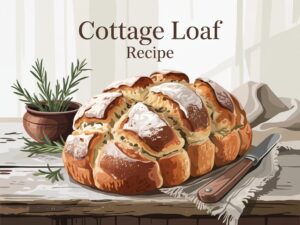
Welcome, aspiring bakers! Are you ready to dive into the wonderful world of homemade bread? There’s nothing quite like the aroma of freshly baked bread filling your kitchen, and with our Cottage Loaf Bread Recipe, you’re about to experience that joy firsthand. This traditional, charming loaf might look fancy with its distinctive stacked shape, but we promise it’s one of the most easy baking recipes you can tackle, even if you’ve never baked bread before.
We’ve packed this guide with essential baking tips for beginners to ensure your success, from understanding yeast to achieving that perfect golden crust. Get ready to impress yourself and your loved ones with a beautiful, delicious bread that’s surprisingly simple to make. Let’s get baking!
Ingredients You’ll Need
Gathering your ingredients beforehand, also known as “mise en place,” is a fantastic habit for any baker. Here’s what you’ll need for your delicious Cottage Loaf:
| Ingredient | Quantity | Unit |
|---|---|---|
| Warm Water (105-115°F / 40-46°C) | 1 ½ | cups |
| Instant Dry Yeast | 2 ¼ | teaspoons (1 standard packet) |
| Granulated Sugar | 1 | tablespoon |
| All-Purpose Flour (plus more for dusting) | 4 | cups |
| Salt | 1 ½ | teaspoons |
| Unsalted Butter (melted, cooled) or Olive Oil | 2 | tablespoons |
Step-by-Step Instructions: Your Path to Perfect Bread
Follow these detailed steps carefully, and you’ll be pulling a beautiful Cottage Loaf from your oven in no time!
Step 1: Activate Your Yeast (The First Rise of Excitement!)
- In a large mixing bowl, combine the **warm water** (ensure it’s between 105-115°F / 40-46°C – too hot will kill the yeast, too cold won’t activate it). A kitchen thermometer is your best friend here!
- Sprinkle the **granulated sugar** and then the **instant dry yeast** over the water. Give it a gentle stir.
- Let it sit undisturbed for about 5-10 minutes. You should see a foamy, bubbly layer form on top – this means your yeast is active and ready to work its magic! If it doesn’t foam, your yeast might be old, or your water temperature was off. Don’t worry, just start again with fresh yeast and check your water temperature carefully. This initial proofing step is a great way to guarantee your yeast is alive.
Step 2: Mix the Dough (The Foundation of Flavor)
- Add the **all-purpose flour** and **salt** to the yeast mixture in the bowl.
- Pour in the **melted butter or olive oil**.
- Using a sturdy spoon or a dough whisk, mix everything together until a shaggy, somewhat sticky dough forms. It’s okay if there are still some dry bits of flour; we’ll incorporate those during kneading. The goal is to get all the ingredients generally combined.
- Beginner Tip: Don’t be afraid to get your hands a little sticky! Bread making is a tactile experience. A rubber spatula or dough scraper can help you get the dough out of the bowl cleanly.
Step 3: Knead the Dough (Building Strength and Structure)
Kneading develops the gluten in the flour, which gives your bread its structure, elasticity, and chewiness. This is where the magic happens and your dough transforms!
- Lightly flour a clean work surface (your kitchen counter works perfectly). Don’t use too much flour, just enough to prevent sticking.
- Scrape the dough out of the bowl onto the floured surface.
- Hand Kneading Technique:
- Push the dough away from you with the heels of your hands, stretching it out.
- Fold the far end of the dough back over towards you.
- Rotate the dough a quarter turn (90 degrees).
- Repeat this push, fold, and turn motion for 8-10 minutes. It’s a rhythmic motion that becomes easier with practice.
- What to Look For: The dough will start out sticky, shaggy, and tough, but as you knead, it will become progressively smoother, more elastic, and less sticky. It should feel springy and bounce back slowly when poked with a finger. If it’s too sticky, add a tiny bit more flour (a tablespoon at a time, incorporating fully). If it’s too dry and stiff, add a tiny bit of water (a teaspoon at a time).
- Stand Mixer Alternative: If you have a stand mixer with a dough hook attachment, knead on low speed (setting 2 on most KitchenAids) for 6-8 minutes until the dough is smooth and elastic and pulls away from the sides of the bowl.
Step 4: First Rise (Proofing for Volume)
This is where the yeast gets to work, fermenting the sugars and producing carbon dioxide, which makes your bread light and airy.
- Lightly grease a clean large bowl with a little oil (olive oil or vegetable oil works well).
- Place the kneaded dough in the greased bowl, turning it once to coat the top with oil. This prevents it from drying out.
- Cover the bowl tightly with plastic wrap or a clean, damp kitchen towel.
- Place the bowl in a warm, draft-free spot. Good spots include a turned-off oven with the light on (the light generates enough warmth), a sunny spot on your counter, or even inside a microwave (turned off, of course).
- Let the dough rise for 1 to 1 ½ hours, or until it has **doubled in size**. This is called the “first proof” or “bulk fermentation.” The exact time will depend on your kitchen’s temperature.
- Beginner Tip: Don’t rush this step! A proper first rise is crucial for light, airy bread with good flavor development. If your kitchen is cool, it might take longer.
Step 5: Punch Down and Divide (Preparing for the Iconic Shape)
Releasing the air helps create a finer, more even crumb structure in your finished loaf.
- Once doubled, gently “punch down” the dough in the bowl to release the accumulated air. You can do this by gently pushing your fist into the center of the dough.
- Turn the dough out onto a lightly floured surface.
- Divide the dough into two pieces: one piece should be roughly two-thirds of the dough (for the base), and the other one-third (for the top ‘cottage’). Eyeballing is fine for beginners, no need to be exact with a scale here unless you want to.
Step 6: Shape Your Cottage Loaf (The Art of the Stack)
This is the fun part where your loaf gets its signature, charming look!
- Take the larger piece of dough and gently shape it into a smooth, round ball. To do this, cup your hands around the dough and gently pull the edges under, pinching the seams together at the bottom. This creates a taut, smooth surface on top.
- Repeat the shaping process with the smaller piece of dough, forming another smooth, round ball.
- Place the larger dough ball on a baking sheet lined with parchment paper. This prevents sticking and makes transfer easy.
- Carefully place the smaller dough ball directly on top of the larger one, centering it as best you can.
- Creating the Dimple: This is the most crucial step for the Cottage Loaf shape! Flour your index finger (or a wooden dowel/chopstick) and gently but firmly push it straight down through the center of the smaller ball, all the way through to the larger ball below, until your finger touches the baking sheet. Wiggle it slightly to widen the hole a bit. This “anchor” prevents the top part from sliding off or separating during baking and creates the classic cottage loaf indentation.
- Beginner Tip: Be gentle yet firm. You want to create a clear division without tearing the dough too much. If the dough springs back too much, try gently stretching it again.
Step 7: Second Rise (The Final Proof)
The final rise gives the bread its last boost of volume before baking.
- Loosely cover the shaped loaf with plastic wrap (lightly oiled to prevent sticking) or a clean, damp kitchen towel.
- Let it rise in a warm, draft-free place for another 45-60 minutes, or until the loaf has almost doubled in size again and looks visibly puffy and soft. This is the “second proof” or “final proof.” It should feel light and airy.
- Preheat Your Oven: About 20-30 minutes before the end of the second rise, preheat your oven to 400°F (200°C). If you have a baking stone or steel, place it in the oven while it preheats for an even crispier bottom crust. For extra crust development, place a shallow oven-safe pan (like a cast iron skillet or an old metal baking pan) on the bottom rack of your oven to prepare for steam.
Step 8: Score and Bake (The Grand Finale)
Get ready for that glorious bread aroma!
- Once the loaf is perfectly proofed and the oven is fully preheated, carefully remove the plastic wrap or towel.
- Scoring: Using a very sharp knife, a razor blade (lame), or even kitchen scissors, make a few shallow diagonal slashes or a simple cross pattern on the top of the smaller dough ball. This helps the bread expand evenly in the oven (called “oven spring”) and adds a beautiful, rustic touch.
- Adding Steam (Optional but Highly Recommended): Carefully pour about ½ cup of hot water into the shallow pan on the bottom rack of your preheated oven. Close the oven door quickly to trap the steam. **Be extremely careful of the hot steam escaping!** Steam helps create a beautiful, crackly, golden-brown crust.
- Carefully transfer the baking sheet with your loaf into the preheated oven.
- Bake for 25-35 minutes, or until the crust is deep golden brown and sounds hollow when tapped on the bottom. An instant-read thermometer inserted into the center of the loaf should read around 200-210°F (93-99°C) for a perfectly baked bread.
- Common Mistake: Opening the oven door too frequently in the first 15-20 minutes can release crucial steam and lower the oven temperature, negatively affecting crust development and oven spring. Try to resist peeking until at least halfway through!
Step 9: Cool (The Hardest Part!)
Patience, young padawan baker!
- Once baked, immediately transfer the loaf from the baking sheet to a wire rack to cool completely.
- Why Cool? Cooling allows the internal structure of the bread to set, the moisture to redistribute evenly, and the flavors to fully develop. Slicing into hot bread can result in a gummy texture and a less satisfying experience.
- Resist the urge to slice into it for at least an hour, or ideally until it’s completely cool to the touch. This step is truly essential for the best texture.
Tips & Tricks for Beginner Bread Bakers
Mastering bread baking takes practice, but these tips will set you up for success with your **Cottage Loaf Bread Recipe** and beyond:
- Use a Kitchen Scale for Accuracy: While cup measurements are provided, weighing your flour (1 cup = approx. 120-125g) is much more accurate and leads to consistent results every time. It eliminates variables due to how flour is scooped.
- Proper Water Temperature is Key: Invest in a kitchen thermometer. Yeast is a living organism and is very sensitive to temperature. The correct water temperature (105-115°F) is absolutely crucial for activation and fermentation.
- Don’t Over-Flour: When kneading, resist the urge to add too much extra flour to make the dough less sticky. A slightly sticky dough is often better than a dry one, which can lead to dense, tough bread. A dough scraper can help manage stickiness.
- Create a Warm, Humid Environment for Rising: If your kitchen is cool, turn your oven on for a minute or two, then turn it off and let the dough rise inside with the door slightly ajar. Placing a bowl of hot water in the oven with the dough can also provide warmth and humidity. The oven light alone can also provide enough warmth.
- Steam is Your Friend for Crust: The pan of hot water or spraying the oven walls with water at the beginning of baking helps create a beautiful, thin, crispy, golden-brown crust. Don’t skip it if you want that professional bakery finish!
- Listen to Your Dough: Learn to recognize how the dough feels. Is it smooth and elastic? Is it light and airy after rising? These sensory cues are invaluable for knowing when your dough is ready for the next step.
- Cool Completely: As mentioned, patience during the cooling process is key for the best texture and flavor. It allows the internal structure to set.
- Don’t Be Afraid to Experiment: Once you’ve mastered the basic recipe, try adding herbs like rosemary, a pinch of garlic powder, or even some grated cheese to the dough!
Essential Baking Tools
Having the right tools makes all the difference in your baking journey. Here are some essentials for your **Cottage Loaf Bread Recipe**:
- Large Mixing Bowl: For combining ingredients and the first rise.
- Whisk: For mixing dry ingredients and ensuring yeast is dissolved.
- Baking Sheet (or Round Baking Pan): For shaping and baking your loaf. A heavy-duty one is best.
- Measuring Cups & Spoons: For accurate ingredient quantities.
- Rubber Spatula or Dough Scraper: For scraping down bowls and handling sticky dough efficiently.
- Instant-Read Kitchen Thermometer: Crucial for verifying water temperature and checking bread doneness.
- Parchment Paper: Prevents sticking, makes cleanup easy, and helps transfer the dough.
- Wire Cooling Rack: Essential for allowing air circulation around your cooling bread.
Cottage Loaf Bread Nutrition Information (Estimated per slice)
Here’s an estimated nutritional breakdown for one slice of your homemade Cottage Loaf, assuming a loaf yields 12-16 slices. Please note these are approximations and can vary based on exact ingredients, portion size, and specific brands used.
| Nutrient | Amount |
|---|---|
| Calories | 180-200 kcal |
| Carbohydrates | 35-40 g |
| Protein | 6-7 g |
| Fat | 2-3 g |
| Fiber | 2-3 g |
| Sugar | 1-2 g |
Frequently Asked Questions (FAQs) for Beginner Bread Bakers
Q1: Why didn’t my bread rise?
A: This is a common issue for beginners! The most likely culprits are:
- Inactive Yeast: Your yeast might be old or “dead.” Always check for foam after mixing with warm water and sugar in Step 1. If no foam, get new yeast.
- Incorrect Water Temperature: Water that’s too hot (above 120°F/49°C) kills the yeast; too cold (below 100°F/38°C) won’t activate it effectively. Aim for 105-115°F (40-46°C).
- Cold Environment: Dough needs warmth to rise properly. Ensure your rising spot is warm and draft-free.
- Too Much Flour: Adding too much flour can make the dough too stiff and dense for the yeast to work effectively, hindering its ability to rise.
Q2: Can I use active dry yeast instead of instant dry yeast?
A: Yes, you absolutely can! The main difference is that active dry yeast typically needs to be “proofed” first to ensure it’s active. To do this, simply follow Step 1 exactly as written combine the active dry yeast with the warm water and sugar, let it sit for 5-10 minutes until foamy, and then proceed with adding your dry ingredients. Instant yeast can often be mixed directly with the dry ingredients, but for beginners, proofing it first (as instructed) is a good habit for both types to ensure vitality.