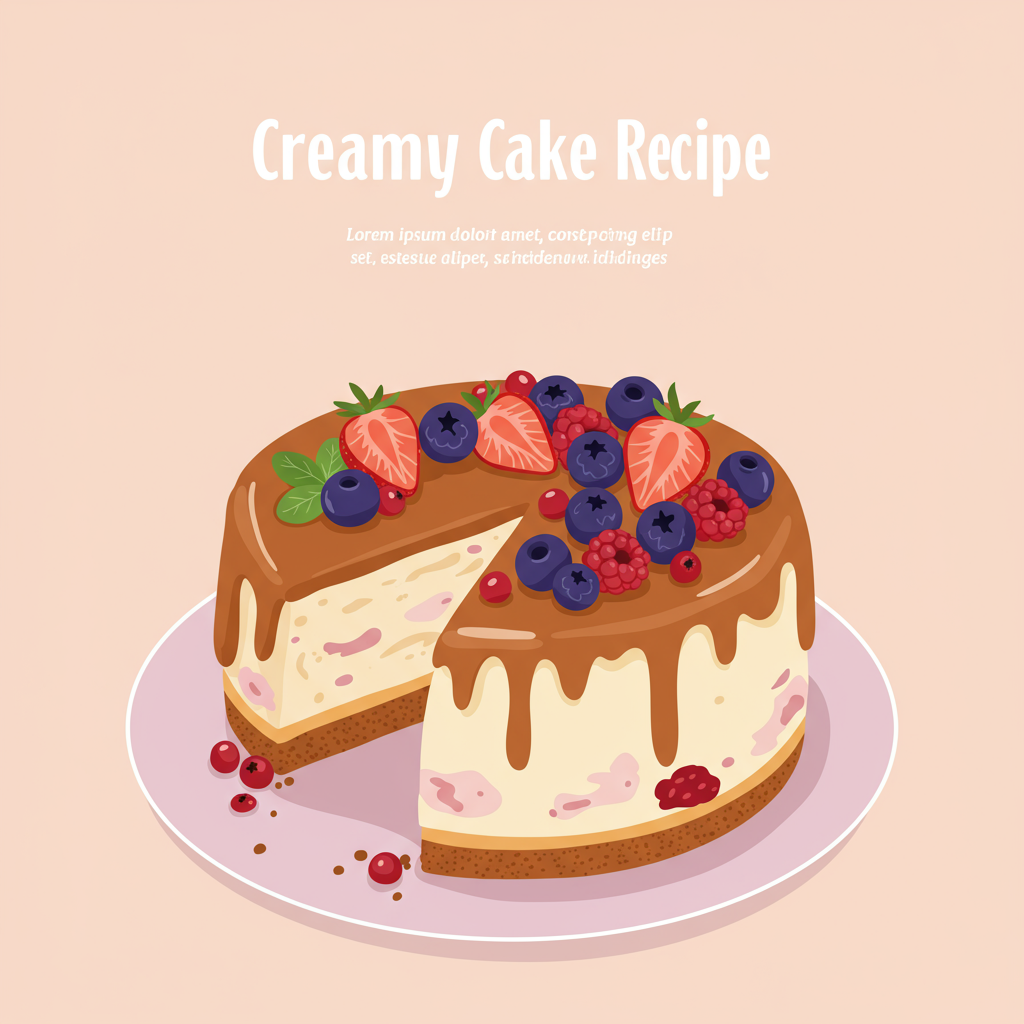
Welcome, fellow baking enthusiasts (and future enthusiasts)! Are you ready to dive into the wonderful world of homemade cakes? Today, we’re sharing our absolute favorite Creamy Cake Recipe a truly delightful dessert that promises a moist, tender crumb and a luscious, dreamy frosting. If you’ve ever thought baking was too complicated, think again! This recipe is specifically designed to be one of the most easy baking recipes you’ll ever try, perfect for anyone looking to impress without the stress.

We know that starting out can feel a little daunting, which is why we’ve packed this post with all the essential baking tips for beginners you’ll need to succeed. From understanding ingredient temperatures to mastering the art of not overmixing, we’ve got your back. Get ready to create a show-stopping cake that tastes as incredible as it looks, and most importantly, is incredibly fun to make!
Ingredients List
Gather your ingredients! Having everything measured out and ready before you start (this is called “mise en place”!) makes the baking process much smoother.
For the Creamy Vanilla Cake:
| Ingredient | Quantity | Unit |
|---|---|---|
| All-Purpose Flour | 2 ½ | cups |
| Granulated Sugar | 1 ¾ | cups |
| Baking Powder | 1 | tablespoon |
| Baking Soda | ½ | teaspoon |
| Salt | ½ | teaspoon |
| Unsalted Butter (softened) | 1 | cup (2 sticks) |
| Large Eggs (room temperature) | 4 | |
| Vanilla Extract | 2 | teaspoons |
| Full-Fat Sour Cream (room temperature) | 1 | cup |
| Whole Milk (room temperature) | ½ | cup |
For the Cream Cheese Frosting:
Pinch of Salt⅛teaspoon
| Ingredient | Quantity | Unit |
|---|---|---|
| Cream Cheese (softened) | 8 | ounces |
| Unsalted Butter (softened) | ½ | cup (1 stick) |
| Powdered Sugar (sifted) | 4 | cups |
| Vanilla Extract | 1 | teaspoon |
Step-by-Step Instructions: Baking Your Creamy Masterpiece
Follow these detailed steps carefully, and you’ll have a delicious, creamy cake in no time!
Step 1: Prepare Your Oven and Pans
- Preheat Oven: Adjust your oven rack to the middle position and preheat your oven to 350°F (175°C). An oven thermometer can be a great tool to ensure your oven is at the correct temperature, as many home ovens can be inaccurate!
- Prepare Cake Pans: Grease and flour two 8-inch or 9-inch round cake pans. To do this, lightly coat the inside of each pan with butter or baking spray. Then, sprinkle a tablespoon of flour into each pan, tilting and tapping it around until the entire greased surface is covered. Tap out any excess flour. For extra insurance against sticking, you can also line the bottoms with parchment paper circles. This step is crucial for easy cake release!
Step 2: Combine Dry Ingredients
- Whisk Dry Ingredients: In a large mixing bowl, whisk together the 2 ½ cups all-purpose flour, 1 ¾ cups granulated sugar, 1 tablespoon baking powder, ½ teaspoon baking soda, and ½ teaspoon salt. Whisking ensures that the leavening agents and salt are evenly distributed throughout the flour, which is key for a consistent rise and flavor. Set aside.
Step 3: Cream Butter and Sugar
- Cream Butter: In a separate, larger mixing bowl (or the bowl of a stand mixer fitted with the paddle attachment), beat the 1 cup (2 sticks) softened unsalted butter on medium speed for about 1-2 minutes until it’s light and creamy. Tip for Beginners: Softened butter should yield slightly to the touch, but not be melted or greasy.
- Add Sugar: Gradually add the remaining 1 ¾ cups granulated sugar to the butter, beating on medium-high speed for 3-5 minutes until the mixture is pale yellow, light, and fluffy. This process incorporates air, which contributes to the cake’s tender texture. Don’t rush this step!
Step 4: Incorporate Eggs and Vanilla
- Add Eggs: Add the 4 large eggs, one at a time, beating well after each addition until fully incorporated. Scrape down the sides of the bowl with a spatula after each egg to ensure everything is mixed evenly. Adding eggs one at a time helps the mixture emulsify properly, preventing a curdled appearance.
- Add Vanilla: Stir in the 2 teaspoons of vanilla extract.
Step 5: Alternate Dry and Wet Ingredients
- Combine Wet Ingredients: In a small bowl, whisk together the 1 cup full-fat sour cream and ½ cup whole milk. This will be your “wet” mixture to alternate with the dry.
- Alternate Mixing: With the mixer on low speed, add about one-third of the dry ingredients to the butter mixture, mixing just until combined. Then, add half of the sour cream/milk mixture, mixing until just incorporated. Repeat with another third of the dry ingredients, then the remaining sour cream/milk mixture, and finally the last third of the dry ingredients.
- Final Mix: Mix only until just combined and no streaks of flour remain. IMPORTANT: Do not overmix! Overmixing develops the gluten in the flour, leading to a tough, dense cake. A few small lumps are okay. Use a spatula to give it a final gentle stir by hand to ensure no hidden pockets of flour.
Step 6: Bake the Cake Layers
- Fill Pans: Divide the batter evenly between the two prepared cake pans. You can use a kitchen scale for perfectly even layers, or just eyeball it. Smooth the tops with a spatula.
- Bake: Bake for 30-35 minutes, or until a wooden skewer or toothpick inserted into the center of the cakes comes out clean or with a few moist crumbs attached. The cakes should be lightly golden brown and spring back when gently pressed.
- Cool: Let the cakes cool in their pans on a wire rack for 10-15 minutes. This allows them to firm up slightly before you attempt to remove them.
- Invert and Cool Completely: After 10-15 minutes, carefully invert the cakes onto the wire rack to cool completely. If you used parchment paper, peel it off. Crucial Tip: Do not attempt to frost warm cakes! The frosting will melt and slide right off.
Step 7: Make the Cream Cheese Frosting
- Beat Cream Cheese and Butter: In a large mixing bowl, beat the 8 ounces softened cream cheese and ½ cup (1 stick) softened unsalted butter on medium speed until smooth and creamy, about 2-3 minutes. Make sure there are no lumps of cream cheese.
- Add Powdered Sugar: Gradually add the 4 cups sifted powdered sugar, one cup at a time, beating on low speed until combined, then increasing to medium-high until light and fluffy. Sifting the powdered sugar beforehand prevents lumps in your frosting.
- Add Vanilla and Salt: Stir in the 1 teaspoon vanilla extract and pinch of salt. Beat for another minute until the frosting is light, fluffy, and spreadable. If the frosting is too thick, add a tablespoon of milk at a time until desired consistency is reached. If it’s too thin, add a little more sifted powdered sugar.
Step 8: Assemble and Frost Your Cake
- Level Cakes (Optional): If your cake layers have domed tops, you can use a serrated knife to carefully level them, creating a flat surface for easier stacking.
- Stack Layers: Place one cooled cake layer on your serving plate or cake stand. Spread about 1 cup of cream cheese frosting evenly over the top.
- Add Second Layer: Carefully place the second cake layer on top.
- Frost Entire Cake: Use the remaining frosting to cover the top and sides of the entire cake. You can make it as smooth or as rustic as you like! For a smooth finish, use an offset spatula or bench scraper.
- Chill (Optional): For cleaner slices and a firmer frosting, you can chill the frosted cake in the refrigerator for at least 30 minutes before serving.
Congratulations! You’ve just baked and frosted a delicious, creamy cake from scratch. Enjoy every slice!
Tips & Tricks for Baking Success
Achieving a perfect cake every time is easier than you think with these simple tips:
- Room Temperature Ingredients are Key: This is arguably the most important tip! Butter, eggs, sour cream, and milk should all be at room temperature. This allows them to emulsify (mix together smoothly) much better, creating a smooth, uniform batter that traps air efficiently, leading to a lighter, fluffier cake.
- Measure Accurately, Especially Flour: For flour, use the “spoon and level” method. Spoon flour into your measuring cup until it overflows, then level off the top with a straight edge (like the back of a knife). Don’t scoop directly from the bag, as this compacts the flour and you’ll end up with too much, resulting in a dry cake.
- Don’t Overmix the Batter: Once you add the flour, mix only until just combined. Overmixing develops gluten, which makes cakes tough and chewy instead of tender and moist. A few lumps are perfectly fine!
- Parchment Paper is Your Friend: Lining the bottom of your cake pans with parchment paper (even after greasing and flouring) guarantees that your cakes will release easily without sticking, preventing heartbreaking broken layers.
- Cool Cakes Completely: Resist the urge to frost a warm cake! Warm cakes will melt your frosting, turning it into a runny mess. Allow your cake layers to cool completely on a wire rack before frosting.
- Invest in an Oven Thermometer: Many home ovens are inaccurate by 25-50°F! An inexpensive oven thermometer will ensure your oven is consistently at the correct temperature, preventing under or over-baking.
- Sift Powdered Sugar for Frosting: Sifting powdered sugar before adding it to your frosting prevents lumps and ensures a super smooth, creamy texture.
Essential Baking Tools You’ll Need
Having the right tools makes all the difference! Here are some basics you’ll want:
- Mixing Bowl Set
- Whisk
- 8-inch or 9-inch Round Baking Pans
- Measuring Cups and Spoons
- Rubber Spatula
- Electric Hand Mixer or Stand Mixer
- Wire Cooling Rack
- Parchment Paper
- Offset Spatula (for frosting)
Nutrition Information (Estimated per slice, 1/12 of cake)
Please note: These are estimated values and can vary based on specific ingredients and portion sizes.
| Nutrient | Amount |
|---|---|
| Calories | 420-480 kcal |
| Carbohydrates | 55-65 g |
| Protein | 5-7 g |
| Fat | 20-25 g |
| Fiber | 0-1 g |
| Sugar | 40-50 g |
Frequently Asked Questions for Beginner Bakers
Q1: My cake sank in the middle! What went wrong?
A: This is a common issue for beginners! It can happen for a few reasons: opening the oven door too early (before the cake is set), an oven temperature that’s too low (or fluctuates), overmixing the batter, or using too much leavening agent. Ensure your oven is preheated correctly, avoid opening the door during the first 20-25 minutes of baking, and remember to mix the batter just until combined.
Q2: Can I substitute ingredients in this recipe?
A: While baking is a science, some minor substitutions are possible. You can use buttermilk instead of sour cream and milk (use 1 ½ cups buttermilk total, reducing milk to 0). For fats, butter provides the best flavor and texture, so we recommend sticking with it. For eggs, substitutions are tricky and often result in a different texture. For best results, especially as a beginner, stick to the recipe as written!
Q3: How do I know when the cake is perfectly done?
A: The most reliable method is the toothpick test: insert a wooden skewer or toothpick into the center of the cake. If it comes out clean or with just a few moist crumbs attached, it’s done. You can also gently touch the top of the cake; if it springs back, it’s ready. If it leaves an indentation, it needs more time.
Q4: How long does this Creamy Cake last, and how should I store it?
A: This cake will stay fresh at room temperature (covered) for up to 2-3 days, thanks to the moisture from the sour cream and cream cheese frosting. For longer storage, or if your kitchen is warm, refrigerate the cake in an airtight container for up to 5-7 days. Bring it to room temperature for about 30 minutes before serving for the best flavor and texture.
Q5: Why do my ingredients need to be at “room temperature”?
A: Room temperature ingredients, especially butter and eggs, are crucial for proper emulsification. When butter is soft, it creams with sugar to trap air, which gives the cake its light texture. Cold ingredients won’t emulsify properly, leading to a lumpy, dense batter and a less tender cake. Take them out of the fridge at least 30-60 minutes before you start baking.
Ready, Set, Bake!
There you have it! Your complete guide to baking a truly exceptional Creamy Cake Recipe. We hope this detailed, beginner-friendly post gives you the confidence to tie on an apron and get baking. There’s nothing quite like the smell of a homemade cake filling your kitchen, and the joy of sharing a slice with loved ones.

Remember, every baker starts somewhere, and every cake is a learning experience. Don’t be afraid to experiment, and most importantly, have fun with it! We can’t wait to hear about your baking adventures. Share your beautiful Creamy Cake creations with us in the comments below!