Welcome, aspiring bakers! Are you ready to fill your home with the irresistible aroma of freshly baked bread? If you’ve been searching for a reliable, Dairy Free Bread Recipe that’s perfect for those new to the kitchen, you’ve come to the right place.

This guide is designed to make baking your first loaf a joyful and stress-free experience. Forget complicated techniques and intimidating jargon we’re breaking it all down into simple, manageable steps. Whether you’re avoiding dairy for health reasons, dietary preferences, or simply want to try your hand at easy baking recipes, this recipe promises a soft, delicious loaf every time. Get ready to master some fundamental baking tips for beginners and impress yourself with your culinary skills!
Homemade bread isn’t just food; it’s an experience. The warmth, the smell, the simple satisfaction of creating something so wholesome from scratch is incredibly rewarding. Let’s get baking!
Ingredients List
Gathering your ingredients before you start is a great habit! Here’s what you’ll need for your delicious dairy-free loaf:
| Ingredient | Quantity |
|---|---|
| Warm Water (105-115°F / 40-46°C) | 1 ½ cups |
| Active Dry Yeast | 2 ¼ teaspoons (1 standard packet) |
| Granulated Sugar | 1 tablespoon |
| All-Purpose Flour (or Bread Flour) | 3 to 3 ½ cups |
| Salt | 1 ½ teaspoons |
| Olive Oil (or other neutral oil like canola, vegetable) | 2 tablespoons, plus more for greasing |
Step-by-Step Instructions: Your Path to Perfect Bread!
Follow these detailed steps carefully, and you’ll be enjoying your homemade dairy-free bread in no time. Don’t rush, and remember, baking is all about practice!
-
Activate the Yeast: The Spark of Your Bread
In a large mixing bowl (or the bowl of your stand mixer), combine the **warm water** (1 ½ cups) and **granulated sugar** (1 tablespoon). It’s crucial that your water is warm, not hot or cold. Water that’s too hot will kill the yeast, and water that’s too cold won’t activate it. Aim for a temperature like a warm bath – ideally between 105-115°F (40-46°C). Sprinkle the **active dry yeast** (2 ¼ teaspoons) over the top. Give it a gentle stir and let it sit for 5-10 minutes. You’ll know it’s working when the mixture becomes foamy and bubbly. This foam is a sign that your yeast is alive and ready to make your bread rise!
Beginner Tip: If your yeast doesn’t foam, it might be old, the water was the wrong temperature, or it’s dead. Don’t proceed; start over with fresh yeast and properly warmed water.
-
Combine Dry Ingredients: Building the Foundation
While your yeast is activating, in a separate medium bowl, whisk together 3 cups of the **all-purpose flour** and the **salt** (1 ½ teaspoons). Whisking ensures the salt is evenly distributed, which is important for flavor and yeast activity.
-
Mix the Dough: Bringing it All Together
Once your yeast mixture is foamy, add the **olive oil** (2 tablespoons) to it. Then, gradually add the dry flour mixture to the wet ingredients, about a cup at a time. Mix with a sturdy spoon or the dough hook attachment of your stand mixer on low speed. Continue mixing until a shaggy dough forms and all the flour is incorporated. The dough might seem sticky at this point, which is normal.
Beginner Tip: Start with 3 cups of flour. You might need to add up to ½ a cup more during kneading, but it’s easier to add flour than to take it away!
-
Kneading the Dough: Developing Structure
This is where the magic happens! Kneading develops the gluten in the flour, which gives bread its chewiness and structure. If using a stand mixer, increase the speed to medium-low and knead for 7-10 minutes. If kneading by hand, turn the dough out onto a lightly floured surface. Knead by folding the dough over itself, pressing down with the heels of your hands, rotating, and repeating. Continue kneading for 8-12 minutes.
The dough should become smooth, elastic, and less sticky, passing the “windowpane test” (you should be able to stretch a small piece thin enough to see light through it without tearing). If the dough is too sticky, add flour one tablespoon at a time until it’s manageable but still soft and pliable. If it’s too stiff, add a tiny bit of water.
Common Mistake: Over-kneading can make the bread tough, but under-kneading will result in a dense, crumbly loaf. Aim for that smooth, elastic texture.
-
First Rise (Proofing): Letting the Yeast Work
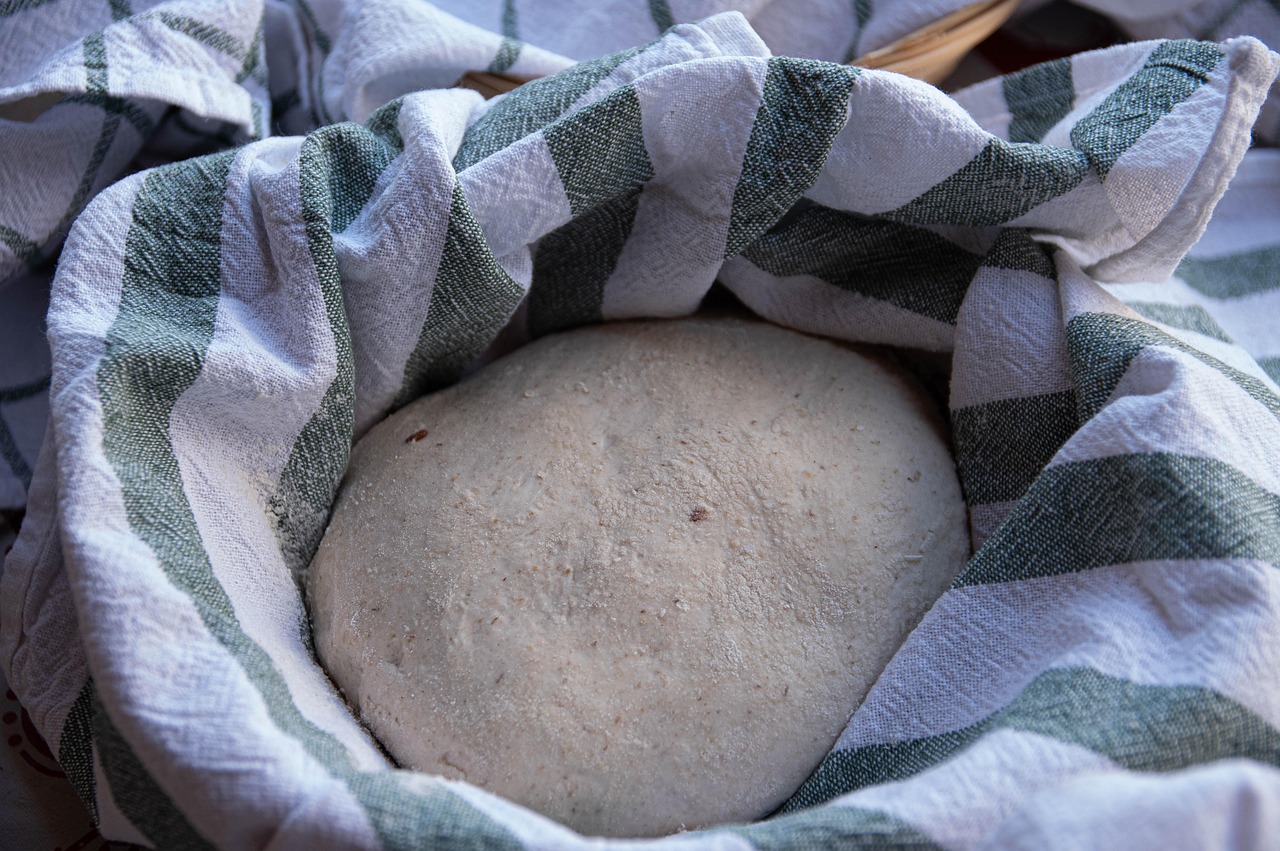
Lightly grease a clean large bowl with a little olive oil. Place the kneaded dough into the bowl, turning it once to coat the entire surface with oil. This prevents it from drying out. Cover the bowl tightly with plastic wrap or a clean kitchen towel.
Place the bowl in a warm, draft-free spot. A slightly warm oven (turned off, or just turned on for a minute and then off), or a sunny spot on your counter works well. Let the dough rise for 1 to 1 ½ hours, or until it has doubled in size. This is called the ‘first rise’ or ‘bulk fermentation’.
Beginner Tip: Patience is key here! Don’t try to rush the rise. The exact time will depend on the warmth of your kitchen.
-
Punch Down and Shape: Preparing for the Loaf
Once the dough has doubled, gently “punch it down” to release the air. This isn’t aggressive; just gently deflate it. Turn the dough out onto a lightly floured surface. Gently shape it into a rectangular loaf that will fit snugly into your prepared loaf pan. You can do this by flattening it into a rectangle, then rolling it up tightly from one of the longer sides, pinching the seam closed at the bottom.
-
Second Rise (Proofing): Final Ascent
Lightly grease a 9×5-inch loaf pan with olive oil. Place the shaped dough seam-side down into the prepared pan. Cover the pan loosely with plastic wrap or a clean kitchen towel. Return it to your warm, draft-free spot for another 30-45 minutes, or until the dough has risen about 1-2 inches above the rim of the pan. This is the ‘second rise’ or ‘proof’.
Common Mistake: Don’t let it over-proof during the second rise, or the bread might collapse in the oven. It should look puffy and light.
-
Preheat Your Oven: Getting Ready to Bake
About 15 minutes before the second rise is complete, preheat your oven to 375°F (190°C). Make sure the oven rack is in the middle position.
-
Bake Your Bread: The Grand Finale!
Carefully place the loaf pan into the preheated oven. Bake for 30-35 minutes, or until the crust is golden brown and the internal temperature reaches 200-210°F (93-99°C) when measured with an instant-read thermometer. If the top is browning too quickly, you can loosely tent it with aluminum foil for the last 10-15 minutes of baking.
Beginner Tip: A good sign of doneness without a thermometer is if the bottom of the loaf sounds hollow when tapped.
-
Cooling: The Final (Crucial) Step
Once baked, immediately remove the bread from the loaf pan and transfer it to a wire rack. This is crucial to prevent the bottom from becoming soggy. Let the bread cool completely for at least 1-2 hours before slicing. Slicing hot bread can make it gummy and dense inside.
Common Mistake: Resist the urge to cut into it right away! The internal structure is still setting as it cools.
Tips & Tricks for Beginner Bread Bakers
Baking bread is a journey, not a race. Here are some extra pointers to help you along the way:
- Accurate Measuring: Always level off your flour with a straight edge (like the back of a knife) when using measuring cups. Too much flour is a common reason for dense bread.
- Yeast Freshness: Store yeast in the refrigerator or freezer to prolong its life. Always check the expiration date.
- Warm Environment for Rising: If your kitchen is cold, try placing the dough bowl in a turned-off oven with just the oven light on, or in a microwave (also turned off) with a cup of hot water next to it.
- Don’t Over-Flour: When kneading, resist the urge to add too much flour to your work surface. A slightly sticky dough is often better than a dry, stiff one. Use just enough to prevent sticking.
- Listen to Your Dough: Learn to feel the dough. Is it too sticky? Add a little flour. Too stiff? A tiny bit of water. It’s a living thing!
- Baking Stone/Steel (Optional): For an even crispier crust, preheat a baking stone or steel in your oven and place the loaf pan directly on it.
- Steam for Crust: For a chewier crust, you can place a pan of hot water on the bottom rack of your oven during the first 10-15 minutes of baking.
Essential Baking Tools
Having the right tools makes a world of difference, especially for beginners. Here are some basics that will make your dairy-free bread baking easier:
- Mixing Bowl (large)
- Whisk
- Loaf Pan (9×5 inches)
- Measuring Cups and Spoons
- Spatula or sturdy spoon
- Instant-read thermometer (optional but highly recommended for accuracy)
- Wire cooling rack
Nutrition Info (Approximate per slice, based on 16 slices per loaf)
Please note that these values are estimates and can vary based on specific ingredient brands and preparation methods.
| Nutrient | Per Serving (approx.) |
|---|---|
| Calories | 120-150 kcal |
| Carbohydrates | 25-30g |
| Protein | 4-5g |
| Fat | 2-3g |
| Fiber | 1-2g |
| Sugar | 1-2g |
Frequently Asked Questions (FAQs)
Q1: Why didn’t my bread rise?
There are several common reasons: your yeast might be old or dead (always check for foam in step 1!), the water temperature was too hot or too cold, or your kitchen environment was too cold for proper proofing. Ensure fresh yeast and correct water temperature are your first checks.
Q2: Can I use whole wheat flour instead of all-purpose?
Yes, you can! However, whole wheat flour absorbs more liquid, so you might need to add an extra tablespoon or two of water. Also, whole wheat bread tends to be denser and may not rise as high. A good compromise for beginners is to use a 50/50 blend of whole wheat and all-purpose flour.
Q3: How do I store homemade dairy-free bread?
Once completely cooled, store your bread at room temperature in an airtight container, a bread box, or a sealed plastic bag. It will stay fresh for 3-4 days. For longer storage, slice the bread and freeze it in an airtight freezer bag for up to 2-3 months. You can then toast slices directly from frozen!
Q4: Is active dry yeast the same as instant yeast?
While both are types of dry yeast, they are slightly different. Active dry yeast needs to be dissolved in warm water with a bit of sugar (activated) before mixing with other ingredients, as done in this recipe. Instant yeast can be mixed directly with the dry ingredients. If using instant yeast, you can skip the activation step and just combine all ingredients at once, though the water should still be warm. The rise times might also be slightly shorter with instant yeast.
Q5: My crust is too hard, what happened?
A hard crust can be caused by overbaking, baking at too high a temperature, or not enough moisture in the dough. Try reducing baking time slightly, ensuring your oven temperature is accurate (an oven thermometer helps!), or adding a pan of hot water to the oven for the first part of baking to create steam.
Conclusion: You Did It!
Congratulations, baker! You’ve successfully made your very own loaf of delicious, homemade Dairy Free Bread Recipe. There’s truly nothing quite like the taste and texture of bread baked with your own hands. Don’t worry if your first loaf isn’t picture-perfect; every bake is a learning experience. With each attempt, you’ll gain confidence and refine your skills. Enjoy your creation, share it with loved ones, and most importantly, savor the incredible satisfaction of baking from scratch. Happy baking, and we hope this has been one of your favorite easy baking recipes!