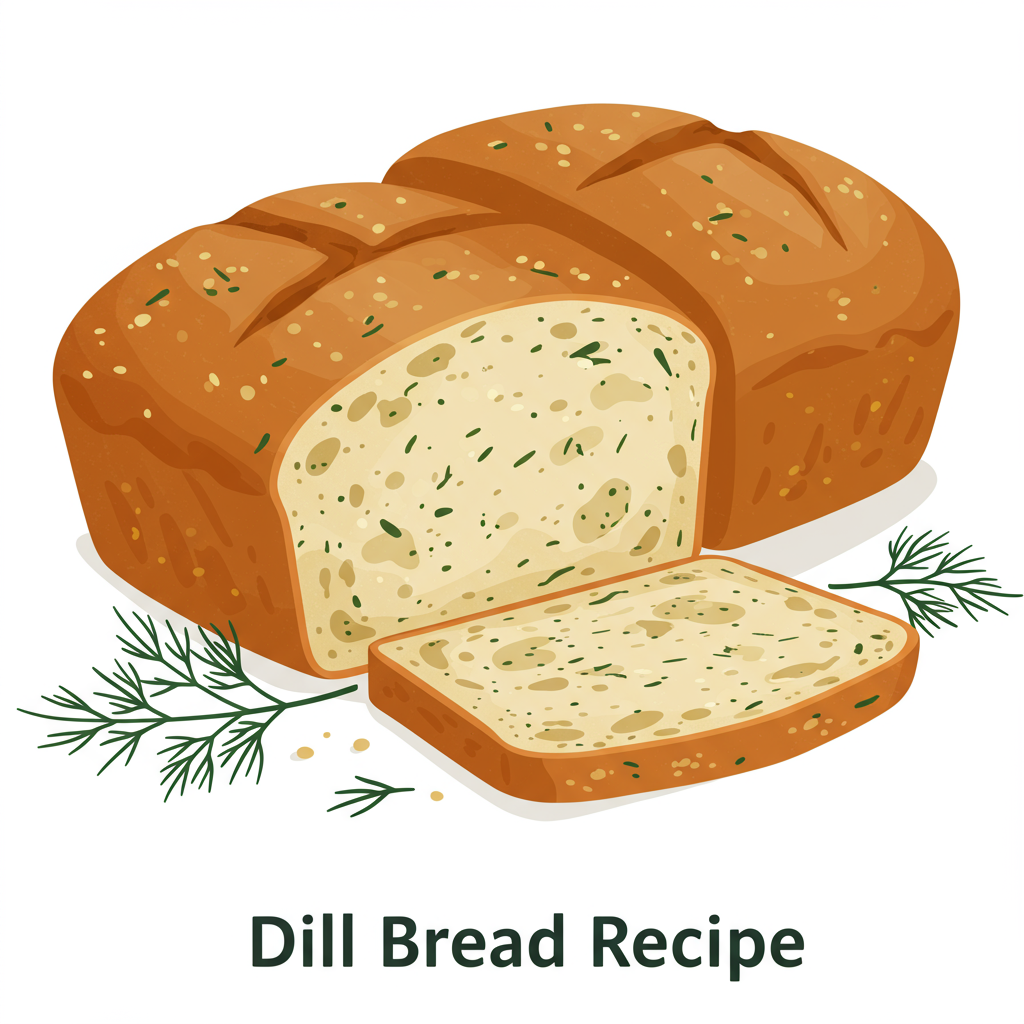
There’s something truly magical about the aroma of freshly baked bread filling your home. It’s comforting, inviting, and makes any meal feel special. If you’ve ever wanted to try your hand at baking bread but felt intimidated, this Dill Bread Recipe is the perfect place to start! We believe that everyone can bake delicious bread, and this guide is specifically designed to be one of the easiest easy baking recipes you’ll ever follow. Forget store-bought loaves – with our detailed baking tips for beginners, you’ll be pulling a golden, fragrant loaf of dill bread out of your oven in no time. Get ready to impress yourself and your loved ones with this incredibly flavorful and surprisingly simple bread that’s perfect for sandwiches, toast, or alongside your favorite soup.
Ingredients List: What You’ll Need for Your Delicious Dill Bread
Gathering your ingredients beforehand, also known as “mise en place,” is one of the best **baking tips for beginners**! It makes the process smoother and ensures you don’t miss anything. Here’s everything required for your aromatic dill bread:
| Ingredient | Quantity | Unit |
|---|---|---|
| All-Purpose Flour | 3 | cups |
| Warm Water (105-115°F / 40-46°C) | 1 | cup |
| Active Dry Yeast | 2.25 | teaspoons (1 standard packet) |
| Granulated Sugar | 1 | tablespoon |
| Salt | 1 | teaspoon |
| Unsalted Butter, melted | 2 | tablespoons |
| Fresh Dill, finely chopped | 1/4 | cup |
| Egg (for egg wash, optional) | 1 | large |
Step-by-Step Instructions: Baking Your Perfect Dill Bread Loaf
Follow these steps carefully, and you’ll be amazed at the result. Don’t rush, and enjoy the process!
Step 1: Activate Your Yeast
In a large mixing bowl, combine the **warm water** (make sure it’s not too hot, or it will kill the yeast, and not too cold, or it won’t activate) and the **granulated sugar**. Sprinkle the **active dry yeast** over the top. Gently stir once or twice. Let it sit for 5-10 minutes. You should see a foamy, bubbly layer form on top – this means your yeast is active and ready to work! If it doesn’t foam, your yeast might be old or the water temperature was off; you’ll need to start this step over with fresh yeast.
Step 2: Combine Wet and Dry Ingredients
To the activated yeast mixture, add the **melted unsalted butter** and the **salt**. Stir well. Now, gradually add the **all-purpose flour**, about a cup at a time, mixing with a wooden spoon or a spatula until a shaggy dough forms. Once it becomes too stiff to stir, it’s time to get your hands a little messy (or use a stand mixer!).
Step 3: Knead the Dough
For Hand Kneading:
Turn the dough out onto a lightly floured surface. Knead the dough for about 8-10 minutes. The technique involves pushing the dough away from you with the heels of your hands, folding it back towards you, and rotating it. It might be sticky at first, but **resist the urge to add too much extra flour**; only add a tiny sprinkle if it’s truly unmanageable. As you knead, the dough will become smoother, more elastic, and less sticky. It should pass the “windowpane test” – when you stretch a small piece of dough, it should become thin enough to see light through it without tearing.
For Stand Mixer:
If using a stand mixer with a dough hook, knead on medium-low speed for 6-8 minutes. The dough should gather around the hook and pull away from the sides of the bowl. It will become smooth and elastic.
After kneading, incorporate the **finely chopped fresh dill**. Knead for another minute or two until the dill is evenly distributed throughout the dough.
Step 4: First Rise (Bulk Fermentation)
Lightly grease a large bowl with a little oil (vegetable or olive oil works great). Place the kneaded dough into the bowl, turning it once to coat the top with oil. This prevents it from drying out. Cover the bowl tightly with plastic wrap or a clean kitchen towel. Place it in a warm, draft-free spot. A slightly warm oven (turned off, or just warmed for a few minutes and then turned off), or simply on your kitchen counter on a warm day, works well. Let the dough rise for **1 to 1.5 hours**, or until it has **doubled in size**. This is a crucial step for the bread’s texture and flavor, so don’t rush it!
Step 5: Shape the Loaf
Once the dough has doubled, gently punch it down to release the air. Turn the dough out onto a lightly floured surface. Gently shape it into a rectangular loaf. The easiest way is to flatten it slightly, fold the two longer sides towards the middle, and then roll it up tightly from one of the short ends. Pinch the seam closed at the bottom. This creates tension that helps the bread hold its shape.
Step 6: Second Rise (Proofing)
Lightly grease a standard 9×5 inch loaf pan. Carefully place the shaped dough into the prepared pan, seam-side down. Cover the loaf pan with plastic wrap or a clean kitchen towel and return it to your warm, draft-free spot. Let it rise again for another **30-45 minutes**, or until it has nearly doubled in size and looks puffy. While it’s rising, preheat your oven to **375°F (190°C)**.
Beginner Tip: If you want a beautiful golden crust, whisk the egg with a tablespoon of water to create an egg wash. Gently brush this over the top of the risen loaf before baking. This step is optional but highly recommended for visual appeal!
Step 7: Bake Your Dill Bread
Place the loaf pan in the preheated oven. Bake for **30-35 minutes**, or until the crust is golden brown and the internal temperature reaches **200-210°F (93-99°C)** when measured with an instant-read thermometer. If the top is browning too quickly, you can loosely tent it with aluminum foil for the last 10-15 minutes of baking.
Step 8: Cool and Enjoy!
Once baked, immediately remove the bread from the loaf pan and transfer it to a wire cooling rack. This is very important to prevent the bottom of the bread from becoming soggy. Let the bread cool completely, or at least for **30-60 minutes**, before slicing. Slicing hot bread can make it dense and gummy. Once cooled, slice, serve, and savor your incredible homemade dill bread!
Tips & Tricks for Baking Success
Baking bread is a science and an art, but these simple tips will help you achieve perfect results every time, especially if you’re new to it:
- **Measure Flour Correctly:** Don’t scoop flour directly from the bag with your measuring cup. Instead, fluff the flour with a spoon, then spoon it into your measuring cup until overflowing, and level off the top with a straight edge. This prevents adding too much flour, which can make your bread dry and dense.
- **Yeast Temperature is Key:** Too hot (above 120°F/49°C) kills the yeast; too cold (below 100°F/38°C) won’t activate it. Aim for a warm bath temperature, around 105-115°F (40-46°C).
- **Don’t Rush the Rise:** The rising time is crucial for flavor and texture. If your kitchen is cool, it might take longer for the dough to double. Be patient and wait for the dough to reach the specified size. A warm, draft-free spot is ideal.
- **Kneading is Essential:** Proper kneading develops the gluten, giving the bread its structure and chewiness. If you’re hand-kneading, aim for a smooth, elastic dough that springs back when poked.
- **Check for Doneness:** An instant-read thermometer is your best friend for bread baking. The ideal internal temperature for most yeast breads is 200-210°F (93-99°C). If you don’t have one, tap the bottom of the loaf – it should sound hollow.
- **Cool Completely:** Always cool your bread on a wire rack. This allows air to circulate around the entire loaf, preventing condensation and ensuring a perfect crust. Slicing too early can result in a gummy texture.
- **Experiment with Dill:** While fresh dill is amazing, you can use dried dill in a pinch. Use about 1 tablespoon of dried dill for every 3 tablespoons of fresh dill called for.
- **Add Cheese!** For an extra flavor boost, try adding 1/2 cup of shredded sharp cheddar or Parmesan cheese to the dough during the last minute of kneading.
Essential Baking Tools for Your Kitchen
Having the right tools makes baking a breeze! Here are some essentials you’ll want on hand:
- Mixing Bowl
- Whisk (for egg wash)
- 9×5 Inch Loaf Pan
- Measuring Cups
- Spatula or Wooden Spoon
- Measuring Spoons
- Instant-Read Thermometer (highly recommended!)
- Wire Cooling Rack
Nutrition Information (Per Slice – Approx. 1/12th of Loaf)
Please note that these are approximate estimates and can vary based on exact ingredient brands and measurements.
| Nutrient | Amount |
|---|---|
| Calories | 180-200 kcal |
| Carbohydrates | 35-40 g |
| Protein | 6-7 g |
| Fat | 3-4 g |
| Fiber | 1-2 g |
| Sugar | 2-3 g |
Frequently Asked Questions (FAQs)
Q1: My dough didn’t rise, what went wrong?
A1: The most common reasons for dough not rising are inactive yeast or incorrect water temperature. Ensure your yeast is fresh (check the expiration date!) and your water is between 105-115°F (40-46°C). If the water is too hot, it kills the yeast; too cold, it won’t activate it. Also, make sure your rising spot is warm and draft-free.
Q2: Can I use dried dill instead of fresh?
A2: Yes, you can! As a general rule, use about one-third the amount of dried herbs compared to fresh. So, for 1/4 cup (4 tablespoons) of fresh dill, you would use approximately 1 to 1.5 tablespoons of dried dill. Add it in with the dry ingredients.
Q3: How do I know when the bread is perfectly done?
A3: The best way is to use an instant-read thermometer. When inserted into the center of the loaf, it should read between 200-210°F (93-99°C). Visually, the crust should be deep golden brown, and if you tap the bottom of the loaf, it should sound hollow.
Q4: Can I make this dill bread dairy-free?
A4: Absolutely! Substitute the unsalted butter with an equal amount of dairy-free butter alternative or a neutral-flavored oil like vegetable or canola oil. The egg wash is optional, so you can omit that too.
Q5: How should I store homemade dill bread?
A5: Once completely cooled, store your dill bread in an airtight container or a bread bag at room temperature for up to 3-4 days. For longer storage, you can slice the bread and freeze it in a freezer-safe bag for up to 2-3 months. Thaw slices as needed or toast directly from frozen.
Conclusion: Your Delicious Dill Bread Awaits!
Congratulations, baker! You’ve just unlocked the secrets to creating your very own homemade dill bread. It’s a journey that fills your kitchen with incredible aromas and rewards you with a loaf that’s far superior to anything you can buy. Don’t be afraid to experiment, and remember that every bake is a learning experience. We hope this comprehensive guide has empowered you with the confidence and knowledge to tackle this **Dill Bread Recipe** and many more **easy baking recipes** in the future. Enjoy your delicious creation, and happy baking!
“`