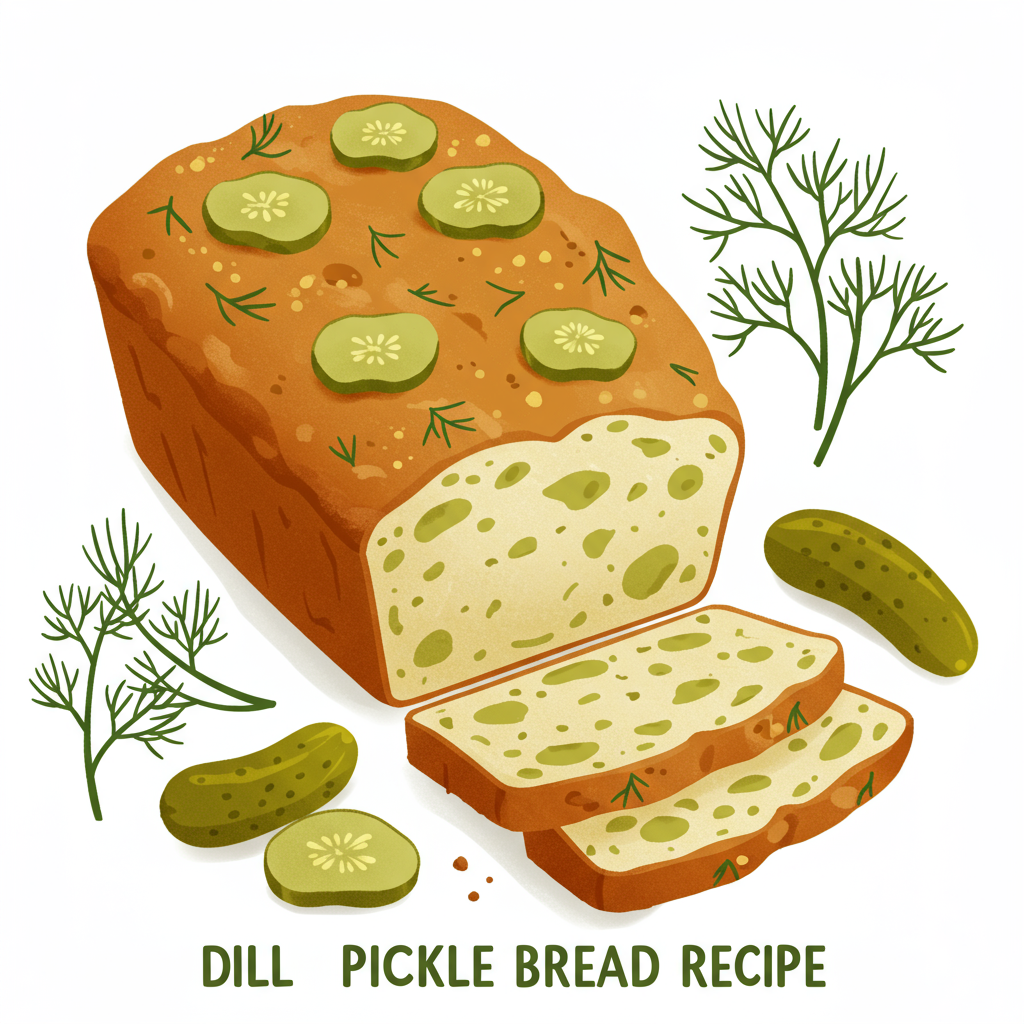
Dill Pickle Bread Recipe: Your New Favorite Savory Loaf!
Are you ready to dive into the wonderful world of savory baking? Prepare to have your taste buds tingle with excitement because today we’re making a truly unique and incredibly delicious **Dill Pickle Bread Recipe**! If you love the tangy crunch of a good dill pickle, you’re going to adore this bread. It’s surprisingly simple to make, making it one of the best **easy baking recipes** to add to your repertoire. Even if you’re just starting your culinary journey, this post is packed with essential **baking tips for beginners** to ensure your success. Forget complex techniques; we’re focusing on straightforward steps that yield a fantastic, flavorful loaf. Get ready to impress yourself and your friends with this unexpected delight!
Ingredients List
Gather your ingredients! Precision is key in baking, so make sure to measure everything accurately. Here’s what you’ll need:
| Ingredient | Quantity | Unit |
|---|---|---|
| All-Purpose Flour | 2 | cups |
| Granulated Sugar | 1 | tablespoon |
| Baking Powder | 1 | tablespoon |
| Baking Soda | ½ | teaspoon |
| Salt | ½ | teaspoon |
| Large Eggs | 2 | |
| Whole Milk (or Buttermilk) | ¾ | cup |
| Vegetable Oil (or melted unsalted butter) | ¼ | cup |
| Dill Pickle Juice (from the jar) | ¼ | cup |
| Dill Pickles, finely chopped | 1 | cup |
| Fresh Dill, chopped | 2 | tablespoons |
| Optional: Shredded Cheddar Cheese | ½ | cup |
Step-by-Step Instructions
Follow these detailed steps carefully, and you’ll have a perfect loaf of Dill Pickle Bread in no time. Remember, baking is a science, but it’s also a lot of fun!
-
Prepare Your Oven and Pan:
Preheat your oven to 350°F (175°C). This ensures the oven is at a consistent temperature when your bread goes in, which is crucial for even baking. Lightly grease and flour a 9×5 inch loaf pan, or line it with parchment paper, leaving an overhang on the long sides to easily lift the bread out later. Beginner Tip: Greasing and flouring prevents sticking. If using parchment, make sure it’s smooth against the pan to avoid misshapen bread.
-
Combine Dry Ingredients:
In a large mixing bowl, whisk together the all-purpose flour, granulated sugar, baking powder, baking soda, and salt. Whisking ensures all the leavening agents (baking powder and soda) and salt are evenly distributed throughout the flour, which helps your bread rise uniformly. A few good swirls with a whisk will do the trick!
-
Mix Wet Ingredients:
In a separate medium bowl, whisk the two large eggs until they are lightly beaten. Then, add the whole milk (or buttermilk), vegetable oil (or melted butter), and dill pickle juice. Whisk these wet ingredients together until they are well combined. Beginner Tip: Ensure your eggs and milk are at room temperature if possible. This helps them incorporate better into the batter, leading to a smoother, more consistent texture.
-
Combine Wet and Dry Mixtures:
Pour the wet ingredients into the bowl with the dry ingredients. Using a spatula or a wooden spoon, gently mix until *just* combined. The most important rule here is DO NOT OVERMIX! Overmixing develops the gluten in the flour too much, resulting in a tough, dense bread instead of a light and tender one. A few lumps in the batter are perfectly fine – embrace them!
-
Fold in the Flavorful Add-ins:
Add the finely chopped dill pickles and chopped fresh dill to the batter. If you’re using the optional shredded cheddar cheese, add it now too. Gently fold these ingredients into the batter using your spatula until they are evenly distributed. Again, be gentle and don’t overmix. We want those bursts of pickle flavor throughout without sacrificing the bread’s texture.
-
Pour into the Pan and Bake:
Pour the batter into your prepared loaf pan, spreading it evenly with your spatula. Place the pan in the preheated oven. Bake for 50-60 minutes, or until a wooden skewer or toothpick inserted into the center of the loaf comes out clean. Beginner Tip: Every oven is different, so start checking around the 45-minute mark. If the top starts to brown too quickly, you can loosely tent it with aluminum foil for the remaining baking time.
-
Cooling Process:
Once baked, remove the loaf pan from the oven and let the bread cool in the pan for about 10-15 minutes. This allows the bread to set and firm up before you remove it. After 10-15 minutes, carefully run a knife around the edges (if not using parchment paper) and then invert the pan onto a wire rack. Gently lift the bread out and let it cool completely on the wire rack before slicing. Beginner Tip: Cooling completely is crucial! Slicing hot bread can make it gummy and crumbly. Patience is a virtue here, we promise it’s worth the wait!
-
Slice and Enjoy!
Once fully cooled, slice your delicious Dill Pickle Bread and serve! It’s fantastic on its own, toasted, or as a unique base for sandwiches. Enjoy the tangy, savory goodness!
Tips & Tricks for Perfect Pickle Bread
Here are some extra nuggets of wisdom to help you master this recipe and baking in general:
- Measure Accurately: Especially with flour, spoon it into your measuring cup and then level it off with a straight edge (like a knife). Don’t scoop directly from the bag, as this compacts the flour and you’ll end up with too much.
- Don’t Overmix: This is the golden rule for quick breads! Mix until just combined. Lumps are okay; overmixing leads to tough bread.
- Room Temperature Ingredients: Eggs and milk at room temperature emulsify better with other ingredients, leading to a smoother batter and a more even texture in your final product.
- Check Your Leavening Agents: Baking powder and baking soda lose their potency over time. To check baking powder, add a teaspoon to half a cup of hot water; it should bubble vigorously. For baking soda, add a teaspoon to a few tablespoons of vinegar; it should also bubble.
- Customize Your Pickles: While dill pickles are classic, feel free to experiment with other varieties like bread and butter pickles for a sweeter note, or even spicy pickles for a kick! Just make sure they’re finely chopped.
- Storage: Store your Dill Pickle Bread at room temperature in an airtight container for up to 3-4 days. For longer storage, slice the bread and freeze it in a freezer-safe bag for up to 2-3 months. Thaw slices as needed.
- Serving Suggestions: This bread is fantastic with cream cheese, alongside a bowl of soup, or as the base for a savory open-faced sandwich.
Essential Baking Tools
Having the right tools makes all the difference, especially when you’re starting out. Here are some basics you’ll want to have on hand:
- Mixing Bowl (a set of different sizes is ideal)
- Whisk (for combining wet and dry ingredients)
- Baking Pan (a standard 9×5 inch loaf pan)
- Measuring Cups (for dry ingredients)
- Measuring Spoons (for smaller quantities)
- Spatula (silicone is great for scraping bowls and folding)
- Wire Rack (for cooling your bread evenly)
- Parchment Paper (optional, but makes cleanup and removal easier)
Nutrition Information (Estimated per slice, assuming 12 slices per loaf)
Here’s an estimated nutritional breakdown for one slice of Dill Pickle Bread. Please note these are approximate values and can vary based on specific ingredient brands and quantities.
| Nutrient | Amount |
|---|---|
| Calories | 190 kcal |
| Carbohydrates | 28g |
| Protein | 4g |
| Fat | 7g |
| Fiber | 1g |
| Sugar | 3g |
Frequently Asked Questions (FAQs)
Can I use dried dill instead of fresh dill?
Yes, you can! As a general rule, use about one-third the amount of dried herbs compared to fresh. So, for 2 tablespoons of fresh dill, you would use about 2 teaspoons of dried dill. The flavor won’t be as vibrant, but it will still be delicious.
My bread didn’t rise much, what went wrong?
Several factors could cause this. Ensure your baking powder and baking soda are fresh and active (see “Tips & Tricks”). Also, avoid overmixing the batter, as this can prevent proper rise. Make sure your oven was fully preheated to the correct temperature too!
Can I add cheese to this Dill Pickle Bread?
Absolutely! Shredded cheddar cheese (about ½ to 1 cup) is a fantastic addition. You can fold it into the batter along with the pickles and fresh dill, or sprinkle some on top before baking for a cheesy crust. Other cheeses like Monterey Jack or a sharp white cheddar would also be delicious.
How do I know when the bread is fully baked?
The best way is to insert a wooden skewer or toothpick into the very center of the loaf. If it comes out clean (without wet batter clinging to it), your bread is done. The top should also be golden brown, and the sides should be pulling away slightly from the pan.
What kind of pickles are best for this recipe?
Classic dill pickles (spears or whole) work wonderfully. Look for pickles that are firm and crisp, as they will hold up better when chopped and baked. Avoid overly soft or mushy pickles. Any brand you love to eat on its own will likely be great in this bread!
Conclusion
Congratulations, baker! You’ve successfully created a loaf of incredible Dill Pickle Bread. This recipe proves that baking doesn’t have to be intimidating, and that sometimes the most unexpected flavor combinations lead to the most delightful results. Whether you’re a seasoned pro or just dipping your toes into the world of baking, we hope this guide has empowered you to create something truly special. Don’t be afraid to experiment and make it your own. Share your creations with us, and happy baking!
“`