There’s nothing quite like the aroma of freshly baked bread filling your kitchen. If you’ve ever dreamt of pulling a warm, crusty loaf out of your oven but felt intimidated by the process, you’re in the right place! This Dill Rye Bread Recipe is specifically designed to be one of the most easy baking recipes you’ll ever try. We’ll walk you through every step, providing all the crucial baking tips for beginners to ensure your success.
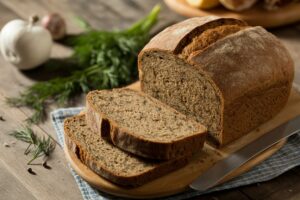
This isn’t just any bread; it’s a delightfully savory loaf with a tender crumb, a subtle tang from the rye flour, and the bright, herbaceous kick of fresh dill. Perfect for sandwiches, toast, or simply slathered with butter, this homemade dill rye bread will become a staple in your kitchen. Get ready to impress yourself and everyone you share it with!
Ingredients List
Gathering your ingredients is the first step to baking success. Accuracy matters, especially for bread!
| Ingredient | Quantity | Unit |
|---|---|---|
| Warm Water (105-115°F / 40-46°C) | 1 ¾ | cups |
| Active Dry Yeast | 2 ¼ | teaspoons (1 packet) |
| Granulated Sugar or Honey | 1 | tablespoon |
| Rye Flour (light or medium) | 1 ½ | cups |
| All-Purpose Flour | 2 ½ – 3 | cups (plus more for dusting) |
| Salt | 1 ½ | teaspoons |
| Olive Oil or Vegetable Oil | 2 | tablespoons |
| Fresh Dill, chopped | ¼ | cup |
| Caraway Seeds (optional) | 1 | tablespoon |
| Egg Wash (1 egg + 1 tbsp water, optional for crust shine) | – | – |
Step-by-Step Instructions: Baking Your Perfect Dill Rye Bread
Follow these detailed steps carefully, and you’ll be enjoying warm, homemade bread in no time!
Step 1: Activate the Yeast (The Foundation of Your Bread)
- In a large mixing bowl (or the bowl of a stand mixer), combine the warm water (make sure it’s between 105-115°F / 40-46°C – too hot will kill the yeast, too cold won’t activate it) with the sugar or honey. The sugar acts as food for the yeast.
- Sprinkle the active dry yeast evenly over the water.
- Give it a gentle stir and let it sit for 5-10 minutes. You’re looking for a foamy, bubbly layer to form on the surface. This is a sign that your yeast is alive and active! Beginner Tip: If it doesn’t foam, your yeast might be old or your water temperature was off. Don’t proceed; get new yeast or re-check your water temperature.
Step 2: Mix the Dough (Bringing it All Together)
- Once the yeast is bubbly, add the rye flour, 2 ½ cups of all-purpose flour, salt, olive oil, chopped fresh dill, and caraway seeds (if using) to the yeast mixture.
- Using a sturdy spoon or a dough hook on your stand mixer, mix on low speed until the ingredients are just combined and form a shaggy, somewhat sticky dough.
- If mixing by hand, turn the dough out onto a lightly floured surface. If using a stand mixer, continue to the next step directly in the bowl.
- Common Mistake & Alternative: Your dough might seem too wet or too dry. Bread dough consistency can vary based on humidity and flour type. If it’s too sticky to handle, add the remaining ½ cup of all-purpose flour gradually, a tablespoon at a time, until it’s manageable but still soft. Avoid adding too much flour, as this can result in dense, dry bread.
Step 3: Knead the Dough (Developing the Gluten)
- By Hand: Knead the dough for 8-10 minutes. Fold the dough over itself, push down with the heel of your hand, rotate, and repeat. Continue until the dough is smooth, elastic, and no longer sticky. It should spring back slowly when you gently poke it.
- With a Stand Mixer: Attach the dough hook and knead on medium-low speed for 6-8 minutes. The dough should gather around the hook and pull away from the sides of the bowl, becoming smooth and elastic.
- Beginner Tip: Kneading develops gluten, which gives bread its structure and chewiness. Don’t skip this step! If your dough feels tough, give it a 5-minute rest; this allows the gluten to relax, making it easier to knead.
Step 4: First Rise (Bulk Fermentation)
- Lightly oil a large clean bowl. Place the kneaded dough into the bowl, turning it once to coat all sides with oil. This prevents it from drying out.
- Cover the bowl tightly with plastic wrap or a clean kitchen towel.
- Place the bowl in a warm, draft-free spot. A slightly warm oven (turned off, with just the light on) or near a sunny window works well.
- Let the dough rise for 1 to 1 ½ hours, or until it has doubled in size. Beginner Tip: The rising time can vary greatly depending on the temperature of your kitchen. Don’t rush it; doubling in size is the key indicator, not the clock.
Step 5: Shape the Loaf (Giving Your Bread Form)
- Once the dough has doubled, gently punch it down to release the air. This is called “degassing” and helps redistribute the yeast and creates a finer crumb.
- Turn the dough out onto a lightly floured surface.
- To shape a traditional loaf: Gently flatten the dough into a rectangle. Fold the top third down to the center, then fold the bottom third up and over that. Pinch the seam closed. Turn the dough over so the seam is down. Gently cup your hands around the dough and roll it back and forth a few times to create an even, tight loaf shape.
- Lightly grease a 9×5-inch loaf pan. Carefully place the shaped dough into the prepared pan, seam-side down.
Step 6: Second Rise (Proofing for Lightness)
- Cover the loaf pan loosely with plastic wrap or a clean kitchen towel.
- Return the pan to your warm, draft-free spot for the second rise (also called proofing).
- Let it rise for another 30-45 minutes, or until the dough has nearly doubled in size again and looks puffy. It should just crest over the top of the loaf pan. Common Mistake: Don’t let it overproof! If it rises too much, it might collapse in the oven. A gentle poke should leave a slight indentation that slowly springs back.
Step 7: Bake Your Dill Rye Bread!
- Preheat your oven to 375°F (190°C) about 15-20 minutes before the second rise is complete. This ensures the oven is fully heated.
- If using an egg wash for a shiny, golden crust, whisk one egg with one tablespoon of water. Gently brush the top of the risen loaf with the egg wash.
- Carefully place the loaf pan into the preheated oven.
- Bake for 30-35 minutes, or until the crust is golden brown and the internal temperature of the bread reaches 200-210°F (93-99°C) when measured with an instant-read thermometer.
- Beginner Tip: If you don’t have a thermometer, tap the bottom of the loaf – it should sound hollow. If the top is browning too quickly, you can loosely tent it with aluminum foil.
Step 8: Cool (The Hardest But Most Important Step!)
- Once baked, immediately remove the bread from the loaf pan and place it on a wire cooling rack.
- Let the bread cool completely for at least 1-2 hours before slicing. Common Mistake: Slicing hot bread traps steam, leading to a gummy texture. Cooling allows the internal structure to set and steam to escape, resulting in a perfect crumb.
- Slice, serve, and enjoy your amazing homemade Dill Rye Bread!
Tips & Tricks for Beginner Bread Bakers
- Accurate Measurements: Especially for flour, it’s best to measure by weight using a kitchen scale for consistent results. If using measuring cups, spoon the flour into the cup and level it off with a straight edge, don’t scoop directly from the bag.
- Yeast Confidence: Always check your yeast’s expiration date. If your yeast doesn’t foam in Step 1, it’s inactive, and your bread won’t rise. Start over with fresh yeast.
- Warmth is Key (But Not Too Hot!): Yeast loves warmth for rising, but direct heat can kill it. Aim for a consistently warm, draft-free environment for both rises.
- Don’t Rush the Rise: Rising times are guides. The dough’s appearance (doubled in size, puffy) is the true indicator. Patience is a virtue in bread baking!
- Resist Adding Too Much Flour: A slightly sticky dough is often a good thing. Adding too much flour during kneading or shaping can lead to dry, dense bread. Use just enough to prevent sticking.
- Listen to Your Loaf: The hollow sound when tapping the bottom of a baked loaf is a classic sign of doneness. An internal temperature reading is even more precise.
- Cool Completely: This cannot be stressed enough. Hot bread is delicious, but slicing it while hot ruins the texture. The cooling process is crucial for the crumb to set properly.
Essential Baking Tools
Having the right tools makes the baking process much smoother and more enjoyable.
- Large Mixing Bowl
- Whisk (for yeast activation)
- 9×5 inch Loaf Pan
- Measuring Cups and Spoons
- Rubber Spatula or Dough Scraper
- Optional: Stand Mixer with Dough Hook
- Optional: Kitchen Scale (for precise flour measurement)
- Optional: Instant-Read Thermometer (for water temp & bread doneness)
- Optional: Wire Cooling Rack
Nutrition Info (Estimated per slice, 12 slices per loaf)
Please note: These are approximate values and can vary based on specific ingredient brands and preparation.
| Nutrient | Amount |
|---|---|
| Calories | 160 kcal |
| Carbohydrates | 30 g |
| Protein | 5 g |
| Fat | 2 g |
| Fiber | 3 g |
| Sugar | 2 g |
Frequently Asked Questions (FAQs)
Q1: My dough didn’t rise. What went wrong?
A1: The most common culprits are inactive yeast (check the expiration date!), water that was too hot (killed the yeast) or too cold (didn’t activate it), or a cold environment for rising. Ensure your water is between 105-115°F and your yeast is fresh and active (foams up).
Q2: Can I use dried dill instead of fresh dill?
A2: Yes, you can! As a general rule, use about one-third of the amount of dried herbs compared to fresh. So, for ¼ cup of fresh dill, use about 1 tablespoon of dried dill. The flavor will be a bit more concentrated.
Q3: Why is my bread dense and heavy?
A3: This can happen if you added too much flour during mixing or kneading, resulting in a stiff dough that can’t rise properly. Other reasons include under-kneading (not enough gluten development), not letting the dough rise long enough, or using inactive yeast. Make sure to follow the flour measurements carefully and ensure good rises.
Q4: How should I store homemade dill rye bread?
A4: Store your cooled bread at room temperature in an airtight container, a bread box, or a sealed plastic bag for 3-4 days. For longer storage, slice the bread and freeze it in a freezer-safe bag for up to 2-3 months. You can pull out slices as needed!
Q5: Can I make this recipe in a bread machine?
A5: While this recipe is optimized for traditional oven baking, many bread machines have a “dough” cycle. You could use the bread machine for the mixing and first rise, then remove the dough, shape it, let it do a second rise, and bake it in your oven as instructed.
Q6: Can I add other spices besides caraway seeds?
A6: Absolutely! Dill rye bread is wonderful with other additions. Consider a pinch of onion powder, garlic powder, or even a touch of fennel seeds for a different aromatic profile. Get creative and make it your own!
Conclusion: Your Homemade Bread Journey Begins!
Congratulations, future baker! You’re now equipped with a fantastic Dill Rye Bread Recipe and all the baking tips for beginners you need to succeed. Don’t be afraid to get your hands a little floury – the process of making bread is incredibly rewarding, and the result is truly a labor of love.
Remember, baking is a skill that improves with practice. Even if your first loaf isn’t perfect, it will still be delicious and a testament to your efforts. So, roll up your sleeves, embrace the joy of creating something wonderful from scratch, and get ready to fill your home with the irresistible aroma of homemade bread. Happy baking!