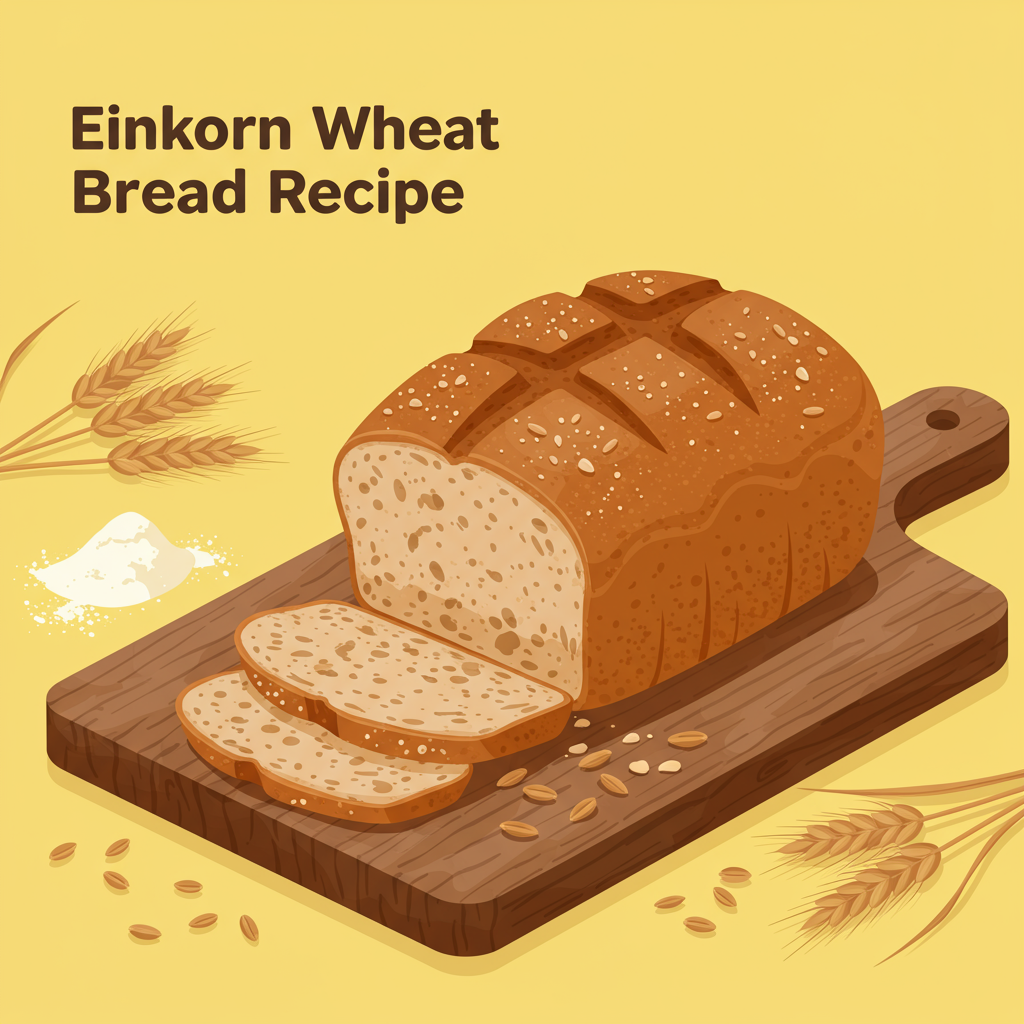
Einkorn Wheat Bread Recipe: Your Simple Guide to Delicious, Ancient Grain Baking!
Welcome, fellow baking enthusiasts and curious beginners! Are you ready to embark on a truly rewarding culinary journey that will fill your home with the most incredible aroma? Today, we’re diving into the wonderful world of homemade bread with our special **Einkorn Wheat Bread Recipe**. If you’ve been searching for **easy baking recipes** that yield impressive results, you’ve come to the right place. Einkorn, an ancient grain, offers a distinct, slightly nutty flavor and a tender crumb that’s often easier on the digestive system for many. Don’t be intimidated by bread making – with our comprehensive **baking tips for beginners**, you’ll be pulling a warm, golden loaf from your oven in no time. Get ready to discover the simple joy of baking from scratch!
Ingredients You’ll Need
Gathering your ingredients is the first step to success. We’ve kept this list simple and accessible for a classic, delicious loaf.
| Ingredient | Quantity | Unit |
|---|---|---|
| Warm Water (105-115°F / 40-46°C) | 1 ¾ | cups |
| Instant Yeast | 2 ¼ | teaspoons |
| Honey or Maple Syrup (optional, for flavor) | 1 | tablespoon |
| Einkorn All-Purpose Flour (or Whole Grain Einkorn) | 4 ½ | cups |
| Fine Sea Salt | 1 ½ | teaspoons |
| Olive Oil (plus extra for greasing) | 2 | tablespoons |
Step-by-Step Instructions: Baking Your Einkorn Masterpiece
Follow these detailed steps carefully, and remember, baking is as much about feel as it is about precision. Don’t be afraid to get your hands a little floury!
Step 1: Activate the Yeast (The Life of Your Bread!)
- In a large mixing bowl (or the bowl of your stand mixer), pour in the **1 ¾ cups of warm water**. Beginner Tip: The water temperature is crucial! Too hot will kill the yeast, too cold won’t activate it. It should feel like a warm bath on your wrist, not scalding. Use a thermometer if you have one.
- Sprinkle the **2 ¼ teaspoons of instant yeast** over the warm water. If using active dry yeast, you might let it sit for 5-10 minutes until foamy before proceeding. For instant yeast, it’s often not strictly necessary, but a few minutes won’t hurt.
- Add the **1 tablespoon of honey or maple syrup** (if using). This isn’t just for sweetness; it gives the yeast a little “food” to get started and enhances the bread’s flavor and crust color. Give it a gentle stir.
Step 2: Mix the Dough (Bringing it All Together)
- Add **4 ½ cups of Einkorn flour** and **1 ½ teaspoons of fine sea salt** to the bowl.
- Pour in the **2 tablespoons of olive oil**.
- Using a sturdy spoon, a dough whisk, or the dough hook attachment of your stand mixer, mix on low speed until a shaggy dough forms. Beginner Tip: Einkorn dough is generally softer and stickier than modern wheat doughs. Don’t be alarmed! Avoid adding too much extra flour at this stage, as it can make your bread dense.
- Once combined, mix for another 3-5 minutes, just until the ingredients are well incorporated and the dough starts to come together. Einkorn doesn’t require extensive kneading like traditional wheat flour; over-kneading can actually break down its delicate gluten structure. The goal is a soft, somewhat sticky, but cohesive ball of dough.
Step 3: First Rise (Bulk Fermentation – The Magic Happens!)
- Lightly grease a clean large bowl with a little olive oil.
- Transfer the dough to the greased bowl, turning it once to coat the top with oil. This prevents it from drying out.
- Cover the bowl tightly with plastic wrap or a clean kitchen towel.
- Place the bowl in a warm, draft-free place to rise. Beginner Tip: A slightly warm oven (turned off, with just the light on), a sunny spot, or even on top of your fridge are good options. Let it rise for **1.5 to 2 hours**, or until the dough has roughly doubled in size. This is called bulk fermentation, and it’s where much of the flavor develops. Common Mistake: If your dough isn’t rising, check your yeast (was the water too hot/cold?) or your environment (is it warm enough?).
Step 4: Shape the Loaf (Giving it Form)
- Lightly flour your work surface and your hands with Einkorn flour.
- Gently punch down the risen dough to release the air. This step is less about “punching” and more about gently deflating.
- Carefully transfer the dough to your floured surface.
- Shape the dough into a loaf. Beginner Tip: For a simple loaf, gently pat the dough into a rectangle, then fold one short end over about two-thirds of the way, then fold the other short end over to meet it, creating a log. Pinch the seam closed. Place it seam-side down.
- Lightly grease a standard 9×5-inch loaf pan with olive oil.
- Carefully transfer the shaped dough into the prepared loaf pan, seam-side down.
Step 5: Second Rise (Proofing – The Final Ascent)
- Cover the loaf pan loosely with plastic wrap or a clean kitchen towel.
- Return the pan to a warm, draft-free place for its second rise (proofing). This will take about **45 minutes to 1 hour**, or until the dough has risen significantly and is visibly puffy, extending slightly above the rim of the pan. Beginner Tip: To check if it’s ready, gently poke the dough with a floured finger. If the indentation springs back slowly, it’s ready. If it springs back immediately, it needs more time. If it collapses, it’s over-proofed (but still bakeable!).
- About 15 minutes before the second rise is complete, preheat your oven to **375°F (190°C)**.
Step 6: Bake Your Bread (The Grand Finale!)
- Once the oven is preheated and the dough has completed its second rise, carefully place the loaf pan into the hot oven.
- Bake for **35-45 minutes**. Beginner Tip: The baking time can vary depending on your oven. Look for a deep golden-brown crust.
- To check for doneness, you can also use an instant-read thermometer. The internal temperature of the bread should reach **200-210°F (93-99°C)**. If the crust is browning too quickly, you can loosely tent the top with foil.
Step 7: Cool and Enjoy (Patience is a Virtue!)
- Once baked, remove the loaf pan from the oven.
- Immediately turn the bread out onto a wire rack to cool completely. Beginner Tip: This step is CRUCIAL! Slicing into warm bread can make it gummy inside, even if fully baked. The bread continues to cook as it cools, and moisture redistributes. Resist the urge!
- Let the bread cool for at least **1-2 hours** before slicing and serving.
- Slice and enjoy your homemade Einkorn Wheat Bread! It’s perfect with butter, jam, or as a side to your favorite meal.
Tips & Tricks for Baking Success
- Measure Accurately: For baking, precision is key. Use measuring cups for volume, but consider investing in a kitchen scale for flour and water for the most consistent results. A cup of flour can vary significantly depending on how it’s scooped.
- Don’t Over-Knead Einkorn: Unlike modern wheat, Einkorn has a more fragile gluten structure. Excessive kneading can break it down, leading to a dense, brick-like loaf. A gentle mix until just combined and cohesive is usually enough.
- The Warmth Factor: Yeast loves warmth! Ensure your water is the right temperature and your rising environment is warm and draft-free for optimal dough expansion.
- Listen to Your Dough: Dough doesn’t always follow exact timings. Watch for visual cues like doubling in size for the first rise and puffiness for the second.
- Embrace the Stickiness: Einkorn dough is often stickier. Use a light hand with flour on your work surface and hands, but don’t try to make the dough completely dry. A bench scraper can be your best friend for handling sticky dough.
- Cool Completely: This is arguably the hardest part for excited bakers! But allowing your bread to cool on a wire rack for at least an hour or two is essential for its final texture and flavor.
Essential Baking Tools
Having the right tools makes the baking process smoother and more enjoyable. Here are some basics you’ll want to have on hand:
- Mixing Bowl (large)
- Whisk (or dough whisk)
- Baking Pan (9×5 inch loaf pan)
- Measuring Cups & Measuring Spoons
- Spatula (or rubber scraper)
- Kitchen Scale (highly recommended for accuracy)
- Instant-Read Thermometer (for water temp & bread doneness)
- Wire Cooling Rack
Nutrition Information (Approximate per Slice)
This is an estimated nutritional breakdown for a typical slice (about 1/12th of the loaf) of Einkorn Wheat Bread. Values can vary based on exact ingredients and slice size.
| Nutrient | Amount |
|---|---|
| Calories | 180-200 kcal |
| Carbohydrates | 35-40 g |
| Protein | 7-9 g |
| Fat | 2-3 g |
| Fiber | 3-5 g |
| Sugar | 1-2 g |
Frequently Asked Questions
Q1: Why choose Einkorn flour for bread?
A: Einkorn is an ancient grain, often considered easier to digest by some people compared to modern wheat due to its different gluten structure. It also offers a delicious, slightly sweet, nutty flavor and a tender crumb, making for a truly unique and enjoyable loaf of bread.
Q2: Can I use whole grain Einkorn flour instead of all-purpose?
A: Absolutely! This recipe works beautifully with whole grain Einkorn flour. Just be aware that whole grain flours absorb more liquid, so your dough might be a bit stiffer. You might need to add an extra tablespoon or two of water to achieve the right consistency, or reduce the flour slightly. Whole grain Einkorn will also result in a denser loaf with a richer flavor.
Q3: My dough isn’t rising, what went wrong?
A: The most common culprits are: 1) Your yeast is expired or inactive (test it next time by letting it foam in warm water first). 2) Your water was too hot (killed the yeast) or too cold (didn’t activate it). 3) Your rising environment isn’t warm enough. Ensure your water is between 105-115°F and your dough is in a cozy, draft-free spot.
Q4: How do I know if my bread is baked through?
A: The best way is to check the internal temperature with an instant-read thermometer; it should be between 200-210°F (93-99°C). Visually, the crust should be a deep, golden-brown, and if you tap the bottom of the loaf, it should sound hollow. If it’s pale or doesn’t sound hollow, it needs more time.
Q5: How should I store my homemade Einkorn bread?
A: Store your cooled bread at room temperature in an airtight container, a bread box, or a sealed plastic bag for 3-4 days. For longer storage, slice the cooled loaf and freeze the slices in a freezer-safe bag. You can then toast individual slices directly from frozen.
Conclusion
Congratulations, you’ve just unlocked the secrets to baking a truly wonderful **Einkorn Wheat Bread Recipe**! There’s nothing quite like the feeling of pulling a warm, fragrant loaf of bread from your own oven. This recipe is designed to be one of those satisfying **easy baking recipes** that builds confidence and delivers delicious results every time. We hope our **baking tips for beginners** have made this process enjoyable and accessible for you. Don’t stop here – let this be the beginning of your homemade bread adventure! Experiment with different flours, add-ins, and shapes. The kitchen is your canvas, and you are the artist. Happy baking!
“`