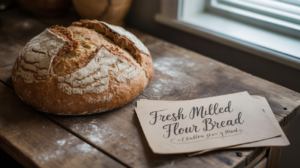
This Fresh Milled Flour Bread Recipe is designed specifically with you in mind the beginner baker! We’re going to demystify the process and show you just how simple it can be to create a glorious loaf of wholesome bread right in your own kitchen. Forget complex techniques; we’ll focus on **easy baking recipes** that yield incredible results. Get ready to impress yourself and your loved ones with these straightforward **baking tips for beginners** and a loaf of bread that tastes like sunshine!
Ingredients List
Gathering your ingredients is the first step to baking success. Here’s what you’ll need for your delicious Fresh Milled Flour Bread:
| Ingredient | Quantity | Unit |
|---|---|---|
| Warm Water (105-115°F / 40-46°C) | 1 ½ | cups |
| Active Dry Yeast | 2 ¼ | teaspoons |
| Granulated Sugar or Honey (optional, for yeast activation) | 1 | teaspoon |
| Fresh Milled Whole Wheat Flour | 4 – 4 ½ | cups |
| Fine Sea Salt | 1 ½ | teaspoons |
| Olive Oil or Melted Butter | 2 | tablespoons |
Step-by-Step Instructions
Follow these detailed steps carefully, and you’ll be pulling a beautiful loaf of bread from your oven in no time!
Step 1: Activate Your Yeast
- Get your water ready: In a large mixing bowl, pour in 1 ½ cups of warm water. The temperature is crucial here – it should feel comfortably warm to the touch, like a baby’s bath. If it’s too hot, it will kill the yeast; too cold, and the yeast won’t activate. Aim for between 105-115°F (40-46°C).
- Add the yeast and sweetener: Sprinkle 2 ¼ teaspoons of active dry yeast over the warm water. If you’re using sugar or honey (recommended for beginners), add 1 teaspoon of it now. The sugar gives the yeast something to “eat” and helps kickstart the process.
- Let it bloom: Gently stir once or twice. Now, let the mixture sit for 5-10 minutes. You should see a foamy, bubbly layer form on the surface. This is a good sign! It means your yeast is alive and ready to work its magic. Beginner Tip: If you don’t see foam, your yeast might be old or the water temperature was off. It’s best to start over with fresh yeast and check your water temperature.
Step 2: Mix the Dough
- Add wet ingredients: Once your yeast is foamy, pour in 2 tablespoons of olive oil or melted butter into the bowl.
- Add dry ingredients (partially): Add 2 cups of your fresh milled whole wheat flour and 1 ½ teaspoons of fine sea salt to the bowl with the yeast mixture. Using a sturdy spoon or a Danish dough whisk, mix until just combined.
- Gradually add more flour: Begin adding the remaining flour, about ½ cup at a time, mixing well after each addition. Fresh milled flour can absorb liquids differently than store-bought flour, so you might not need all of the flour, or you might need a tiny bit more.
- Look for the right consistency: Continue adding flour until the dough starts to come together into a shaggy ball and pulls away from the sides of the bowl. It should still be a bit sticky, but manageable. Don’t add too much flour at this stage, or your bread will be dense and dry.
Step 3: Knead the Dough
- Prepare your surface: Lightly flour a clean countertop or a large wooden cutting board.
- Turn out the dough: Scrape the dough out of the bowl onto your floured surface.
- Begin kneading by hand: Push the dough away from you with the heels of your hands, then fold it back over towards you. Rotate the dough a quarter turn and repeat. Continue this motion for 8-10 minutes. Beginner Tip: The dough will be sticky at first, but as you knead, it will become smoother, more elastic, and less sticky. Resist the urge to add too much extra flour; a light dusting is all you need if it sticks too much.
- Check for readiness (the windowpane test): To know if your dough is kneaded enough, pinch off a small piece and gently stretch it. If you can stretch it thin enough to see light through it without it tearing (like a windowpane), it’s ready! If it tears quickly, keep kneading for a few more minutes.
Step 4: First Rise (Bulk Fermentation)
- Prepare the bowl: Lightly grease your mixing bowl (the one you used before, or a clean one) with a little olive oil.
- Place the dough: Form the kneaded dough into a ball and place it in the oiled bowl, turning it once to coat the top with oil. This prevents it from drying out.
- Cover and rise: Cover the bowl tightly with plastic wrap or a clean kitchen towel. Place the bowl in a warm, draft-free spot. A slightly warm oven (turned off, but warmed for a minute then turned off again) or a sunny spot on your counter works well.
- Let it double: Allow the dough to rise for 60-90 minutes, or until it has roughly doubled in size. Common Mistake: Don’t rush this step! The rise is crucial for flavor and texture. If your kitchen is cool, it might take longer.
- Check for readiness: To test if it’s risen enough, gently poke two fingers into the dough about half an inch deep. If the indentations remain, it’s ready. If they spring back quickly, it needs more time.
Step 5: Shape the Loaf
- “Punch down” the dough: Once doubled, gently punch the dough down to release the air. This helps create a more even crumb structure.
- Prepare your loaf pan: Lightly grease a standard 9×5-inch loaf pan with butter or cooking spray.
- Shape the dough: On a lightly floured surface, gently flatten the dough into a rectangle, roughly the length of your loaf pan. Fold the shorter sides towards the middle, then roll the dough up tightly from one of the long sides, sealing the seam with your fingers as you go. Pinch the ends to seal them.
- Place in pan: Place the shaped dough, seam-side down, into your prepared loaf pan.
Step 6: Second Rise (Proofing)
- Cover and rise again: Cover the loaf pan loosely with plastic wrap or a kitchen towel. Place it back in your warm, draft-free spot.
- Let it rise: Allow the dough to rise for another 30-45 minutes, or until it has risen about 1 inch above the rim of the loaf pan. It should look puffy and soft.
Step 7: Bake Your Bread
- Preheat your oven: About 15-20 minutes before the second rise is complete, preheat your oven to 375°F (190°C).
- Optional: Score the top: For a professional look and to help control how the bread expands, you can gently score the top of the loaf with a very sharp knife or razor blade (a ‘lame’) about ½ inch deep, right before baking.
- Bake the bread: Place the loaf pan in the preheated oven. Bake for 30-35 minutes.
- Check for doneness: The bread should be beautifully golden brown on top. For absolute certainty, use an instant-read thermometer to check the internal temperature. It should read 200-210°F (93-99°C). Common Mistake: Undercooking leads to a gummy texture. When in doubt, bake for a few more minutes. If the top is browning too quickly, you can loosely tent it with aluminum foil.
Step 8: Cool and Enjoy!
- Remove from pan: Once baked, immediately remove the bread from the loaf pan and transfer it to a wire cooling rack.
- Cool completely: This is a crucial step! Allow the bread to cool completely for at least 1-2 hours before slicing. Slicing too early traps steam, which can make the inside gummy.
- Slice and serve: Once cooled, slice your homemade Fresh Milled Flour Bread and enjoy its incredible flavor and texture! It’s perfect with butter, jam, or as a base for your favorite sandwich.
Tips & Tricks for Beginner Bread Bakers
Baking bread is a journey, not a race. These tips will help you achieve consistent success:
- Measure Accurately: Especially for flour, use the “spoon and level” method (spoon flour into your measuring cup, then level off with a straight edge) or, even better, use a kitchen scale for precise measurements. Fresh milled flour can be lighter and fluffier than commercial flour, so volume measurements can be less consistent.
- Trust Your Yeast: Don’t skip the yeast activation step. If your yeast doesn’t foam, it’s not active, and your bread won’t rise. Start over with fresh yeast.
- Don’t Over-Flour: A common beginner mistake is adding too much flour during kneading. A slightly sticky dough is good! Too much flour makes for a dry, dense loaf.
- Patience is Key for Rising: Dough rising times are approximate. Focus on the visual cues (doubled in size, passes the poke test) rather than strictly adhering to the clock. Cooler kitchens will mean longer rise times.
- Know Your Oven: Oven temperatures can vary significantly. Consider investing in an inexpensive oven thermometer to ensure your oven is truly at the temperature you set.
- The Thump Test: Besides the internal temperature, a perfectly baked loaf often sounds hollow when you tap its bottom.
- Store Properly: Once cooled, store your bread at room temperature in an airtight container or bread bag for 2-3 days. For longer storage, slice and freeze.
Essential Baking Tools
Having the right tools makes all the difference. Here are a few essentials:
- Mixing Bowl
- Whisk
- Loaf Baking Pan
- Measuring Cups & Spoons
- Rubber Spatula or Dough Scraper
- Optional but Recommended: Kitchen Scale, Instant-Read Thermometer, Danish Dough Whisk, Bench Scraper
Nutrition Info (per serving, estimated)
Please note: These are estimated nutritional values per slice (assuming 10 slices per loaf) and can vary based on exact ingredients and milling process.
| Nutrient | Amount |
|---|---|
| Calories | 280 kcal |
| Carbohydrates | 48 g |
| Protein | 9 g |
| Fat | 6 g |
| Fiber | 5 g |
| Sugar | 3 g |
Frequently Asked Questions (FAQs)
Q1: What’s the biggest difference when baking with fresh milled flour compared to store-bought?
A: Fresh milled flour retains all parts of the wheat berry (bran, germ, endosperm), meaning it’s incredibly flavorful and nutrient-dense. However, it also absorbs liquid differently and often more slowly than commercial flour. You might need slightly less or more water, and the dough can feel different. Its enzymes are also more active, leading to faster rises, so keep a close eye on your dough!
Q2: My yeast didn’t foam. What went wrong?
A: The most common reasons are water temperature (too hot kills the yeast, too cold keeps it dormant) or expired yeast. Always check the expiration date on your yeast and ensure your water is in the 105-115°F range. If it doesn’t foam after 10 minutes, discard and start again with fresh yeast and correctly tempered water.
Q3: My dough isn’t rising. What should I do?
A: First, ensure your yeast was active (see Q2). If it was, the issue might be a too-cold environment. Try placing your dough in a warmer spot, like a turned-off oven that was briefly warmed, or near a sunny window. Patience is key; sometimes it just needs more time.
Q4: Can I use a stand mixer to knead the dough?
A: Absolutely! A stand mixer with a dough hook attachment can save you a lot of effort. Knead on medium-low speed for about 6-8 minutes, or until the dough passes the windowpane test. Just be careful not to over-knead.
Q5: How do I store my Fresh Milled Flour Bread to keep it fresh?
A: Once completely cooled, store your bread in an airtight container, a bread box, or a sealed plastic bag at room temperature for 2-3 days. For longer storage, slice the bread and freeze the slices in a freezer-safe bag. You can then toast individual slices from frozen.
Conclusion
Congratulations, you’ve just unlocked the secret to incredibly flavorful and nutritious homemade bread with fresh milled flour! This Fresh Milled Flour Bread Recipe is more than just a set of instructions; it’s your first step into a world of satisfying baking.

Don’t worry if your first loaf isn’t perfect every bake is a learning experience. The joy of creating something so wholesome and delicious from scratch is truly unmatched. So, go ahead, slice into your masterpiece, savor the aroma, and enjoy the fruits of your labor. We can’t wait to hear about your baking adventures!
“`
1 thought on “Fresh Milled Flour Bread Recipe – Baking Made Fun”