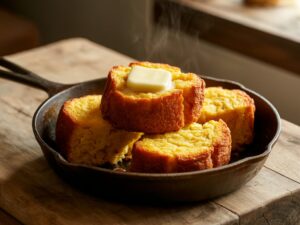
Whether you’re a complete novice in the kitchen or just looking to expand your repertoire, this recipe is designed specifically for you. We’ll walk you through every step, sharing invaluable baking tips for beginners to ensure your fried cornbread turns out perfectly golden, crispy on the outside, and wonderfully tender on the inside, every single time. Get ready to impress yourself and your loved ones with this timeless favorite!
Ingredients List
Gathering your ingredients beforehand is a crucial step in any successful baking adventure. Here’s everything you’ll need for this delicious fried cornbread:
| Ingredient | Quantity | Unit |
|---|---|---|
| Yellow Cornmeal (medium grind recommended) | 1 | cup |
| All-purpose Flour | 1/2 | cup |
| Granulated Sugar (adjust to taste) | 2 | tablespoons |
| Baking Powder | 1 | teaspoon |
| Salt | 1/2 | teaspoon |
| Large Egg | 1 | |
| Whole Milk (or buttermilk for extra tang) | 1 | cup |
| Vegetable Oil (for the batter) | 2 | tablespoons |
| Vegetable Oil (for frying) | 1/2 – 1 | cup |
Step-by-Step Instructions
Follow these detailed steps carefully, and you’ll be enjoying homemade fried cornbread in no time! Remember, patience and proper technique are your best friends in the kitchen.
Step 1: Prepare Your Workspace and Dry Ingredients
Before you even crack an egg, take a moment to set yourself up for success. Gather all your ingredients and measuring tools. In a large mixing bowl, combine your dry ingredients: the **yellow cornmeal**, **all-purpose flour**, **granulated sugar**, **baking powder**, and **salt**. Use a whisk to thoroughly combine them. This step is more important than you might think! Whisking ensures that leavening agents like baking powder are evenly distributed, leading to a consistent rise and texture in your finished cornbread. If you skip this, you might end up with dense spots or unevenly cooked pieces.
Step 2: Combine the Wet Ingredients
In a separate, medium-sized bowl, crack your **large egg**. Add the **whole milk** (or buttermilk if you prefer a richer, tangier flavor) and the 2 tablespoons of **vegetable oil** that are designated for the batter. Whisk these wet ingredients together until they are well combined and the egg is fully incorporated. This creates a smooth, uniform liquid base for your batter.
Step 3: Gently Mix Wet and Dry Ingredients
Now, pour the wet ingredient mixture into the bowl with your dry ingredients. Using a spatula or a wooden spoon, gently mix them together until just combined. **This is a critical step for beginners: DO NOT OVERMIX!** Overmixing develops the gluten in the flour, which can lead to tough, rubbery cornbread instead of the tender, crumbly texture we’re aiming for. A few small lumps in the batter are perfectly fine and even desirable. Stop mixing as soon as you no longer see streaks of dry flour.
Beginner Tip: If you’re unsure, it’s better to slightly undermix than to overmix. Your cornbread will thank you!
Step 4: Rest the Batter (Optional, but Recommended)
While not strictly necessary, allowing the batter to rest for 5-10 minutes at room temperature can improve the texture of your fried cornbread. This gives the cornmeal a chance to fully hydrate, resulting in a more tender crumb. Use this time to prepare your frying pan!
Step 5: Heat the Frying Oil
Place a large, heavy-bottomed skillet (a cast-iron skillet works wonderfully here) over medium-high heat. Pour in about 1/2 to 1 cup of **vegetable oil** for frying. You want enough oil to cover the bottom of the pan by about 1/2 inch. Let the oil heat up for several minutes. The correct oil temperature is crucial for crispy, non-greasy fried cornbread.
How to test oil temperature: Drop a tiny speck of batter into the hot oil. If it immediately sizzles and floats to the surface, the oil is ready. If it just sits there or bubbles very slowly, the oil isn’t hot enough. If it smokes furiously, it’s too hot – remove from heat briefly to cool down.
Step 6: Fry the Cornbread Patties
Once your oil is at the ideal temperature, carefully spoon portions of the batter into the hot oil. You can use a large spoon or a 1/4 cup measuring cup to create uniform patties. Don’t overcrowd the pan; leave enough space between each patty for even cooking and easy flipping. Frying in batches is key!
Fry the cornbread patties for 2-4 minutes on each side, or until they are a beautiful golden brown and cooked through. The exact time will depend on the thickness of your patties and the heat of your oil. You’ll see the edges firm up and turn golden first.
Common Mistake & Fix: If your cornbread is browning too quickly on the outside but still raw inside, your oil is too hot. Reduce the heat slightly for the next batch. If it’s soaking up too much oil and not getting crispy, your oil isn’t hot enough.
Step 7: Drain and Serve
As each batch of fried cornbread is ready, use a slotted spoon or spatula to carefully remove the patties from the oil. Place them on a plate lined with paper towels to drain any excess oil. This helps keep them crispy and less greasy.
Serve your delicious **Fried Corn Bread** immediately while it’s warm and fresh! It pairs wonderfully with chili, stews, collard greens, or simply with a dollop of butter and a drizzle of honey or molasses. Enjoy the fruits of your baking labor!
Tips & Tricks for Perfect Fried Corn Bread
Mastering fried cornbread is simple with a few extra pointers. These **baking tips for beginners** will elevate your results every time:
- The Power of Not Overmixing: We can’t stress this enough! Overmixing is the number one culprit for tough, dense cornbread. Mix just until the dry ingredients are moistened. Lumps are your friends.
- Oil Temperature is King: For that perfect crispy exterior without a greasy interior, your oil must be hot enough (around 350-375°F or 175-190°C). If it’s too cool, the cornbread will absorb too much oil; too hot, and it will burn before cooking through. A small piece of batter or a wooden spoon handle (if bubbles form around it) can help you gauge.
- Use a Cast-Iron Skillet: Cast iron provides excellent, even heat distribution and retains heat beautifully, which is ideal for frying. If you don’t have one, any heavy-bottomed skillet will do.
- Don’t Crowd the Pan: Frying in batches is essential. Overcrowding lowers the oil temperature, leading to soggy instead of crispy cornbread. Give each patty space to sizzle and brown.
- Experiment with Sweetness: The amount of sugar is entirely up to your preference. For a more savory cornbread, reduce or omit the sugar. For a sweeter version, add an extra tablespoon or two.
- Flavor Boosters: Feel free to get creative! Add 1/4 cup of shredded cheddar cheese, a few tablespoons of finely chopped pickled jalapeños, or even some cooked corn kernels to the batter for extra flavor and texture.
- Buttermilk for Tang: Substituting whole milk with buttermilk will give your cornbread a delightful tang and often a more tender crumb due to its acidity reacting with the baking powder.
- Serving Suggestions: Fried cornbread is incredibly versatile. Enjoy it alongside a hearty bowl of chili, a plate of BBQ, or with Southern greens. For breakfast, serve it with butter and maple syrup or jam!
Essential Baking Tools
Having the right tools makes all the difference, especially when you’re just starting out. Here are some essentials for this **Fried Corn Bread Recipe** (and many other **easy baking recipes**!):
Nutrition Info (per serving, estimated)
Please note that these are approximate values and can vary based on specific ingredients, preparation methods, and serving size. This estimate is for one serving out of a batch yielding 8 servings.
| Nutrient | Amount |
|---|---|
| Calories | 230 kcal |
| Carbohydrates | 28 g |
| Protein | 4 g |
| Fat | 12 g |
| Fiber | 2 g |
| Sugar | 3 g |
Disclaimer: These nutritional values are estimates based on typical ingredients and preparation methods for this recipe. Actual values may vary depending on specific brands, ingredient substitutions, and precise cooking techniques.
Frequently Asked Questions (FAQs)
Q1: Why is my fried cornbread tough or dense?
The most common reason for tough cornbread is **overmixing the batter**. When you mix flour too much, it develops gluten, which leads to a chewy rather than tender texture. Mix just until the dry ingredients are moistened, even if there are a few lumps.
Q2: How do I know the oil is hot enough for frying?
A simple test is to drop a tiny speck of batter into the oil. If it immediately sizzles and floats to the surface, your oil is ready. If it sinks or barely bubbles, it’s not hot enough. If it smokes, it’s too hot and needs to cool slightly. Ideally, the oil temperature should be around 350-375°F (175-190°C).
Q3: Can I use different types of cornmeal?
Yes, you can! This recipe works best with medium-grind yellow cornmeal, which gives a nice texture. Fine-grind will result in a smoother texture, while coarse-grind will yield a more rustic, textured cornbread. The cooking time might vary slightly with different grinds.
Q4: Can I make this recipe gluten-free?
To make this recipe gluten-free, substitute the all-purpose flour with a 1:1 gluten-free baking flour blend (ensure it contains xanthan gum) or a combination of gluten-free flours like rice flour and tapioca starch. The texture might be slightly different, but it will still be delicious!
Q5: How do I store leftover fried cornbread?
Allow any leftover fried cornbread to cool completely. Store it in an airtight container at room temperature for up to 2 days, or in the refrigerator for up to 4 days. To reheat, you can warm it gently in a toaster oven, air fryer, or a dry skillet to regain some crispiness.
Q6: What’s the main difference between fried and baked cornbread?
The primary difference lies in the texture and preparation. Baked cornbread, typically made in a skillet or baking dish, has a softer, more uniform crumb. Fried cornbread, like this recipe, is cooked in oil, resulting in a distinctively crispy, golden-brown exterior and a tender, moist interior. It often forms individual patties or cakes.
Conclusion
And there you have it! Your very own, perfectly executed Fried Corn Bread Recipe. We hope this detailed, beginner-friendly guide has demystified the process and empowered you to create a truly delicious Southern classic right in your own kitchen. Remember, baking is all about practice and having fun, so don’t be afraid to experiment and make this recipe your own. With these baking tips for beginners, you’re well on your way to becoming a confident baker. Enjoy your warm, crispy, and comforting fried cornbread, and share this delightful experience with friends and family. Happy baking!