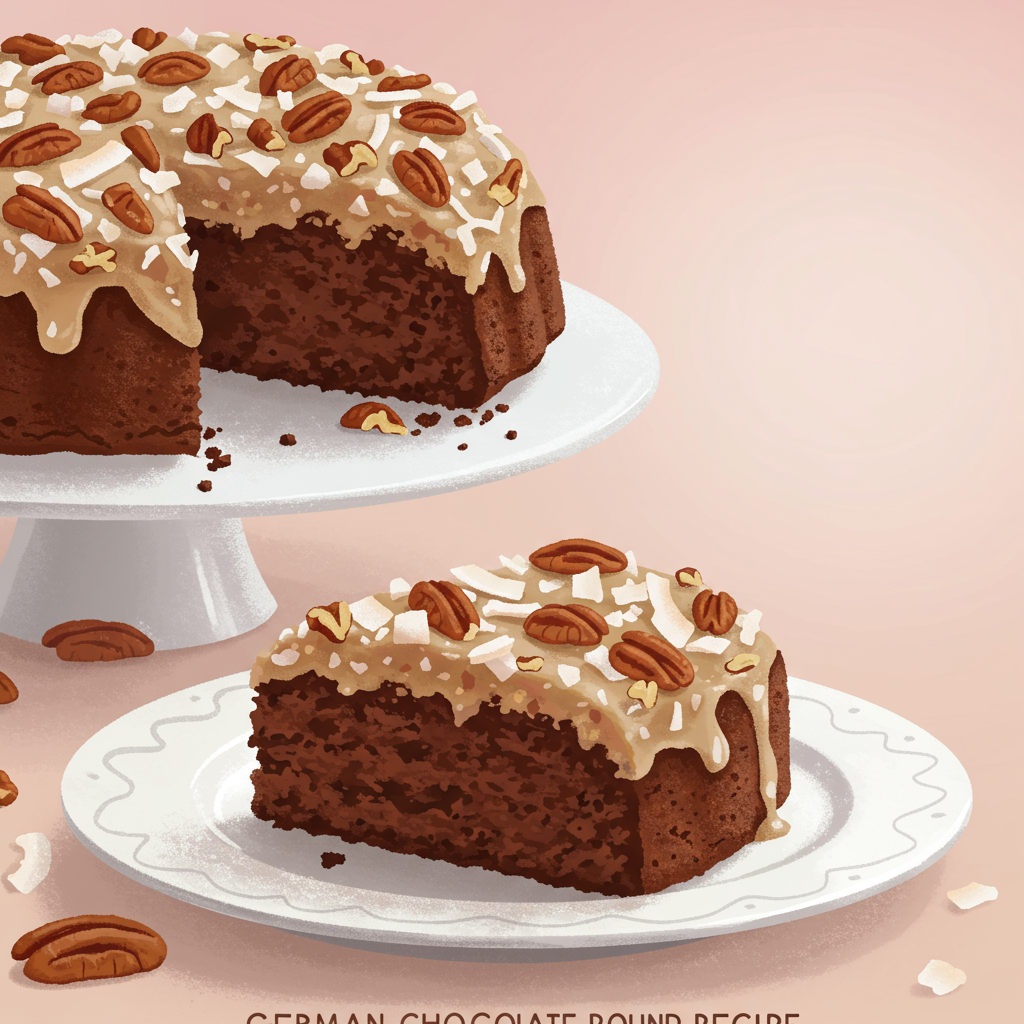

Ingredients You’ll Need
Gathering your ingredients before you start is one of the best baking tips for beginners. It makes the process smooth and stress-free!
For the German Chocolate Pound Cake:
| Quantity | Unit | Ingredient |
|---|---|---|
| 3 | cups | All-purpose flour, spooned and leveled |
| 1/2 | cup | Unsweetened cocoa powder |
| 1 | teaspoon | Baking powder |
| 1/2 | teaspoon | Salt |
| 1 | cup (2 sticks) | Unsalted butter, softened to room temperature |
| 2 3/4 | cups | Granulated sugar |
| 5 | large | Eggs, at room temperature |
| 1 | teaspoon | Vanilla extract |
| 1 | cup | Sour cream, at room temperature |
For the Classic German Chocolate Frosting:
| Quantity | Unit | Ingredient |
|---|---|---|
| 1 | (12 oz) can | Evaporated milk |
| 1 | cup | Granulated sugar |
| 3 | large | Egg yolks |
| 1/2 | cup (1 stick) | Unsalted butter, cut into pieces |
| 1 | teaspoon | Vanilla extract |
| 1 1/2 | cups | Sweetened shredded coconut |
| 1 | cup | Chopped pecans |
Step-by-Step Instructions: Your Path to Pound Cake Perfection
Follow these detailed steps carefully, and you’ll be amazed at what you can create!
Step 1: Get Prepped (The Golden Rule for Beginners!)
- Preheat Your Oven: Adjust your oven rack to the middle position and preheat to 325°F (160°C). Using an oven thermometer can help ensure accuracy, as oven temperatures can vary.
- Prepare Your Pan: Grease and flour a 10-12 cup Bundt pan or a 9×13 inch baking pan thoroughly. Don’t skip this! Use a baking spray with flour, or generously coat with butter/shortening, then dust with flour, tapping out the excess. For a chocolate cake, you can dust with cocoa powder instead of flour to avoid white residue.
- Bring Ingredients to Room Temperature: This is CRUCIAL for a smooth, emulsified batter. Take your butter, eggs, and sour cream out of the fridge at least 1-2 hours before you plan to bake. Room temperature ingredients combine more easily and create a more uniform texture.
Step 2: Combine the Dry Ingredients
- In a medium bowl, whisk together the 3 cups all-purpose flour, 1/2 cup cocoa powder, 1 teaspoon baking powder, and 1/2 teaspoon salt. Whisking ensures everything is evenly distributed and helps aerate the flour. Set aside.
Step 3: Cream Butter and Sugar (The Foundation of Pound Cake)
- In a large mixing bowl (using a stand mixer with a paddle attachment or a hand mixer), cream the 1 cup softened unsalted butter and 2 3/4 cups granulated sugar together. Beat on medium-high speed for about 5-7 minutes, until the mixture is light, fluffy, and pale yellow. This step incorporates air, which contributes to the cake’s tender texture. Scrape down the sides of the bowl often.
Step 4: Add Eggs and Vanilla
- Add the 5 room-temperature eggs, one at a time, beating well after each addition. Make sure each egg is fully incorporated before adding the next. This prevents the batter from curdling.
- Stir in the 1 teaspoon vanilla extract until just combined.
Step 5: Alternate Wet and Dry Ingredients (The Secret to a Moist Cake)
- With the mixer on low speed, begin adding the dry ingredients mixture and the 1 cup sour cream alternately to the wet ingredients.
- Start by adding about one-third of the dry ingredients. Mix until just combined.
- Next, add half of the sour cream. Mix until just combined.
- Repeat: add another third of the dry ingredients, then the remaining sour cream.
- Finish with the remaining dry ingredients.
- DO NOT OVERMIX! As soon as the last streaks of flour disappear, stop mixing. Overmixing develops the gluten in the flour too much, which can lead to a tough, dry cake.
Step 6: Bake Your Pound Cake
- Pour the batter evenly into your prepared Bundt or baking pan. Smooth the top with a spatula.
- Bake for 60-75 minutes for a Bundt pan, or 50-65 minutes for a 9×13 inch pan. Baking times can vary, so keep an eye on it.
- Check for Doneness: Insert a wooden skewer or toothpick into the center of the cake. If it comes out clean or with a few moist crumbs attached, the cake is done. If it comes out with wet batter, continue baking for another 5-10 minutes and test again.
- Cooling: Let the cake cool in the pan on a wire rack for 10-15 minutes. This allows it to firm up before handling.
- Invert and Cool Completely: Carefully invert the cake onto the wire rack to cool completely. If you’re using a Bundt pan, gently tap the bottom to release. It MUST be completely cool before frosting, otherwise, your frosting will melt and slide off!
Step 7: Make the German Chocolate Frosting
- In a medium saucepan, combine the 1 (12 oz) can evaporated milk, 1 cup granulated sugar, and 3 large egg yolks. Whisk well to combine.
- Add the 1/2 cup (1 stick) unsalted butter pieces to the saucepan.
- Cook over medium-low heat, stirring constantly with a whisk, until the mixture thickens to a pudding-like consistency. This usually takes about 10-15 minutes. It should be thick enough to coat the back of a spoon. Do not let it boil vigorously, just a gentle simmer.
- Remove the saucepan from the heat. Stir in the 1 teaspoon vanilla extract, 1 1/2 cups sweetened shredded coconut, and 1 cup chopped pecans.
- Let the frosting cool to room temperature, stirring occasionally. It will continue to thicken as it cools.
Step 8: Frost and Enjoy!
- Once the pound cake is completely cool and the frosting has thickened, spoon the German chocolate frosting over the top of the cake. Let it drizzle down the sides for a beautiful, rustic look.
- Slice and serve! Store any leftover cake covered at room temperature for up to 3 days, or in the refrigerator for up to a week.
Tips & Tricks for Baking Success (Especially for Beginners!)
Baking is a science, but with these simple tips, you’ll feel like a pro in no time!
- Room Temperature is Your Friend: We mentioned it, but it bears repeating! Cold ingredients don’t emulsify (mix smoothly) well, leading to a lumpy batter and a less tender cake. Plan ahead!
- Measure Accurately: Especially flour! Spoon and level it: use a spoon to scoop flour into your measuring cup, then use the back of a knife to level off the top. Don’t pack it down or scoop directly from the bag, as this can add too much flour, resulting in a dry cake.
- Don’t Overmix: This is a common beginner mistake. Once you add the dry ingredients, mix only until just combined. Overmixing develops gluten, which makes cakes tough and chewy.
- Grease and Flour Your Pan Properly: A well-greased and floured pan is the key to an easy release. For intricate Bundt pans, be extra thorough in every crevice. You can even use a pastry brush to ensure full coverage.
- Invest in an Oven Thermometer: Oven temperatures can fluctuate, and an inexpensive oven thermometer can save your bake by showing you the true temperature inside.
- Cooling Patience: It’s tempting to frost a warm cake, but resist! A warm cake will melt your frosting, turning it into a runny mess. Let it cool completely.
- Don’t Open the Oven Door Too Soon: Opening the oven door during the first 2/3 of baking can cause your cake to sink in the middle due to sudden temperature changes. Peek only when absolutely necessary and after the cake has set.
Essential Baking Tools
Having the right tools makes all the difference! Here are some basics you’ll want:
- Mixing Bowl
- Whisk
- Baking Pan (Bundt pan or 9×13 inch)
- Measuring Cups & Spoons
- Spatula
- Hand mixer or Stand mixer (optional, but highly recommended)
- Wire cooling rack
- Oven thermometer (highly recommended for accuracy!)
Nutrition Information (Estimated per slice, assuming 12 slices)
Please note: These values are estimates and can vary based on specific ingredients and portion sizes.
| Nutrient | Amount |
|---|---|
| Calories | 480-550 kcal |
| Carbohydrates | 60-75g |
| Protein | 6-8g |
| Fat | 25-35g |
| Fiber | 2-3g |
| Sugar | 45-60g |
Frequently Asked Questions (FAQs)
Q1: Why is it so important for my ingredients to be at room temperature?
A: Room temperature ingredients (especially butter, eggs, and sour cream) emulsify much better, meaning they combine smoothly and evenly. Cold butter will create lumps, and cold eggs can cause the batter to curdle. This smooth mixture traps more air, leading to a lighter, more tender, and uniform cake texture.
Q2: How do I know if I’m overmixing the cake batter?
A: Overmixing occurs when you continue to beat the batter after the dry ingredients have been added and just barely incorporated. You’ll notice the batter becoming very elastic, shiny, and almost glue-like. To avoid this, mix on low speed and stop as soon as the last streaks of flour disappear. A few small lumps are fine!
Q3: My cake sank in the middle after baking, what went wrong?
A: There are a few common culprits! It could be: 1) **Oven temperature issues** (oven too cool, or opening the door too early), 2) **Overmixing the batter**, which incorporates too much air that then collapses, 3) **Expired leavening agents** (baking powder that’s no longer active), or 4) **Undercooking** – the center wasn’t fully set when removed from the oven. Ensure your oven is accurate and you bake until a toothpick comes out clean.
Q4: Can I make this German Chocolate Pound Cake ahead of time?
A: Absolutely! The cake itself can be baked 1-2 days in advance, wrapped tightly in plastic wrap, and stored at room temperature. The frosting can also be made a day ahead and stored in an airtight container in the refrigerator; you might need to gently warm it and stir well to loosen it up before applying. Frost the cake closer to serving for the freshest taste and texture.
Q5: What if I don’t have sour cream? Can I substitute it?
A: Yes, you can! The best substitute for sour cream in this recipe would be full-fat plain Greek yogurt or buttermilk. Both will provide the necessary moisture and tanginess that sour cream offers. Use them in the same 1:1 ratio. If using buttermilk, you might find the batter slightly thinner, but the end result will still be delicious.
Conclusion: Your Baking Journey Begins!
And there you have it! You’ve just created a magnificent German Chocolate Pound Cake, a dessert that looks and tastes like it came straight from a professional bakery. We hope this detailed, beginner-friendly guide has demystified the baking process and shown you just how rewarding it can be. Remember, every great baker started somewhere, and with each recipe, you’re building your skills and confidence.

Don’t be afraid to experiment, and most importantly, have fun in the kitchen! This easy baking recipe is a fantastic stepping stone to more complex bakes, armed with all the baking tips for beginners you’ve learned today. Enjoy your delicious creation, share it with loved ones, and savor every single bite. Happy baking!