
Welcome, aspiring bakers! There’s something incredibly comforting about the aroma of freshly baked banana bread wafting through your home. But if you live in a higher elevation, you know that baking can sometimes be a bit of a challenge. That’s why we’re thrilled to share our definitive High Altitude Banana Bread Recipe specially formulated to give you perfect results, even when you’re closer to the clouds! This isn’t just another recipe; it’s a comprehensive guide designed with baking tips for beginnersin mind, ensuring your first (or hundredth!) loaf is a resounding success.

Forget dense, dry, or sunken loaves. This recipe is one of the most easy baking recipes you’ll find, providing a moist, flavorful, and beautifully risen banana bread that will have everyone asking for more. We’ll walk you through every step, demystify high-altitude adjustments, and equip you with all the knowledge you need to bake with confidence. Get ready to turn those ripe bananas into a masterpiece!
Why This Recipe is Perfect for High Altitude (and Everyone Else!)
Baking at high altitudes means lower atmospheric pressure, which affects how ingredients react. Leavening agents (like baking soda) work faster, causing baked goods to rise too quickly and then collapse. Liquids evaporate quicker, and sugars become more concentrated. Our recipe makes subtle but crucial adjustments – slightly less leavening, a touch less sugar, and careful liquid balance – to counteract these effects, guaranteeing a stable, moist, and tender crumb. Even if you’re at sea level, these adjustments often result in a beautifully balanced, not-too-sweet bread!
Gather Your Ingredients: What You’ll Need
The secret to great banana bread starts with great ingredients. Make sure your bananas are nice and ripe – the browner, the better!
| Ingredient | Quantity | Unit |
|---|---|---|
| All-purpose flour | 1 ½ | cups |
| Baking soda | ½ | teaspoon |
| Salt | ¼ | teaspoon |
| Ground cinnamon (optional) | ½ | teaspoon |
| Ripe bananas, mashed | 3 | medium |
| Granulated sugar | ½ | cup |
| Large egg | 1 | |
| Unsalted butter, melted | ¼ | cup |
| Buttermilk | 2 | tablespoons |
| Vanilla extract | 1 | teaspoon |
| Chopped nuts or chocolate chips (optional) | ½ | cup |
Step-by-Step Baking Instructions: Let’s Make Magic!
Follow these detailed steps carefully for the best results. Don’t worry, we’ll guide you through every part of the process!
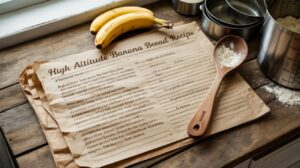
Step 1: Preheat & Prep Your Pan
- Preheat your oven: Set your oven to 350°F (175°C). For high altitude baking, some bakers prefer to slightly increase the oven temperature by 15-25°F, but for this recipe, 350°F should work perfectly.
- Prepare your loaf pan: Grease a 9×5-inch loaf pan with butter or cooking spray. You can also line it with parchment paper, leaving an overhang on the long sides; this makes lifting the baked bread out incredibly easy!
- Beginner Tip: A well-greased pan prevents your delicious bread from sticking, ensuring a clean release. Parchment paper is an extra layer of protection and makes cleanup a breeze.
Step 2: Combine the Dry Ingredients
- In a medium-sized mixing bowl, whisk together the all-purpose flour, baking soda, salt, and ground cinnamon (if using).
- Beginner Tip: Whisking dry ingredients together ensures they are evenly distributed throughout your batter. This prevents pockets of unmixed flour or too much salt in one bite.
- Common Mistake & Correction: When measuring flour, don’t scoop directly from the bag with your measuring cup! This compacts the flour, leading to too much flour and a dry loaf. Instead, spoon the flour into your measuring cup and then level it off with the back of a knife.
Step 3: Prepare the Wet Ingredients (The Banana Mash!)
- In a separate, larger mixing bowl, mash your ripe bananas thoroughly with a fork or a potato masher until mostly smooth. A few small lumps are perfectly fine and add texture.
- Add the granulated sugar, large egg, melted unsalted butter, buttermilk, and vanilla extract to the mashed bananas.
- Whisk these wet ingredients together until they are well combined and smooth.
- Beginner Tip: Using very ripe bananas (with plenty of brown spots) is crucial! They are sweeter, softer, and more flavorful, contributing immensely to the bread’s taste and moisture.
- Alternative: If you don’t have buttermilk, you can make a quick substitute by adding 1/2 teaspoon of lemon juice or white vinegar to 2 tablespoons of regular milk. Let it sit for 5 minutes until it slightly curdles, then add it to your wet ingredients.
Step 4: Gently Combine Wet and Dry Mixtures
- Pour the wet banana mixture into the bowl with the dry ingredients.
- Using a spatula or wooden spoon, gently mix until *just* combined. Stop mixing as soon as you no longer see streaks of dry flour.
- CRITICAL Beginner Tip: DO NOT OVERMIX! Overmixing develops the gluten in the flour, which will result in a tough, dense, and chewy banana bread instead of a light, tender one. A few small lumps of flour are better than an overmixed batter.
Step 5: Add Optional Mix-ins (Nuts or Chocolate Chips)
- If you’re adding chopped nuts (like walnuts or pecans) or chocolate chips, gently fold them into the batter now.
- Alternative: Get creative! You can also add shredded coconut, dried cranberries, or even a swirl of cream cheese for extra indulgence.
Step 6: Bake Your Banana Bread
- Pour the batter into your prepared loaf pan, spreading it evenly.
- Bake in your preheated oven for 55-65 minutes.
- How to check for doneness: Insert a wooden skewer or toothpick into the center of the loaf. If it comes out clean or with a few moist crumbs attached (but no wet batter), your banana bread is done!
- Common Mistake & Correction: Avoid opening the oven door too early or too often, especially in the first 30-40 minutes. This can cause the bread to sink. If the top starts to brown too quickly, you can loosely tent it with aluminum foil.
Step 7: Cool and Enjoy!
- Once baked, remove the loaf pan from the oven and let it cool in the pan on a wire rack for 10-15 minutes. This allows the bread to set and prevents it from crumbling when you remove it.
- After 10-15 minutes, carefully lift the banana bread out of the pan (using the parchment paper overhang if you used it) and place it directly onto the wire rack to cool completely.
- Beginner Tip: While it’s tempting to slice into a warm loaf, letting it cool completely allows the flavors to meld and the texture to firm up, making for a much better slice.
- Slice and serve! Enjoy your perfectly baked **High Altitude Banana Bread Recipe** with a cup of coffee or tea.
Expert Tips & Tricks for Perfect Banana Bread Every Time
Elevate your banana bread game with these actionable pieces of advice:
- Embrace the Brown Bananas: The browner and spottier your bananas are, the sweeter and more flavorful your bread will be. Don’t throw out those overripe bananas; they are a baker’s gold! If you only have yellow bananas, you can ripen them faster by baking them unpeeled on a baking sheet at 300°F (150°C) for 15-30 minutes until they turn black.
- Don’t Overmix: We can’t stress this enough! Overmixing is the most common mistake in quick bread baking. Mix until just combined – a few lumps are perfectly fine. This ensures a tender, moist crumb.
- Room Temperature Ingredients: Ensure your egg and buttermilk are at room temperature. This helps them emulsify better with the other ingredients, leading to a smoother, more uniform batter and a better texture.
- Measure Flour Correctly: Always spoon your flour into the measuring cup and level it off. Scooping directly from the bag compacts the flour, adding too much to your recipe, which results in a dry loaf.
- Pan Preparation is Key: Whether you grease and flour, or use parchment paper, properly preparing your loaf pan is essential to prevent sticking and ensure your beautiful loaf comes out in one piece.
- Test for Doneness: The toothpick test is your best friend. Always insert it into the *center* of the loaf, not just the side, to ensure it’s cooked through.
- Cool Completely: Patience is a virtue, especially in baking! Letting your banana bread cool completely on a wire rack allows it to finish cooking gently and prevents it from becoming gummy or falling apart when sliced.
- Storage: Store leftover banana bread tightly wrapped in plastic wrap or in an airtight container at room temperature for up to 3-4 days, or in the refrigerator for up to a week. It also freezes beautifully for up to 3 months!
Essential Baking Tools for Your Kitchen
Having the right tools makes baking easier and more enjoyable. Here are a few essentials:
- Mixing Bowl
- Whisk
- Baking Pan (9×5 inch loaf pan)
- Measuring Cups
- Spatula
- Measuring Spoons
- Wire Cooling Rack
- Potato Masher or Fork (for bananas)
Nutrition Information (Per Serving)
(Estimates based on 12 servings per loaf. Actual values may vary based on ingredients and portion size.)
| Nutrient | Amount |
|---|---|
| Calories | 260 kcal |
| Carbohydrates | 45 g |
| Protein | 4 g |
| Fat | 9 g |
| Fiber | 2 g |
| Sugar | 25 g |
Frequently Asked Questions (FAQs)
Q1: What if my bananas aren’t ripe enough?
A1: Green or yellow bananas won’t give you the same flavor or moisture. If you’re short on time, you can ripen them quickly by baking them unpeeled on a baking sheet at 300°F (150°C) for 15-30 minutes until the skins turn black. Let them cool, then mash. The flavor won’t be as intense as naturally ripened bananas, but it’s a good alternative.
Q2: Can I use frozen bananas for this recipe?
A2: Absolutely! Frozen ripe bananas are excellent for banana bread. Thaw them completely (they’ll release a lot of liquid, which you can drain off if excessive, or just incorporate if not too much), then mash as usual. Freezing can actually enhance their sweetness!
Q3: How do I store leftover banana bread?
A3: Once completely cooled, wrap the loaf tightly in plastic wrap or aluminum foil, or store it in an airtight container at room temperature for up to 3-4 days. For longer storage, you can refrigerate it for up to a week or freeze individual slices (wrapped well) for up to 3 months. Thaw frozen slices at room temperature or warm gently in the microwave.
Q4: My banana bread turned out dense/dry, what went wrong?
A4: A dense or dry loaf is often due to overmixing the batter (developing too much gluten) or using too much flour (from improper measuring). Ensure you spoon and level your flour, and mix only until just combined. Also, make sure your oven temperature is accurate – an oven that runs too hot can dry out your bread quickly.
Q5: Why is high altitude baking different, and why do I need a special recipe?
A5: At higher altitudes, atmospheric pressure is lower. This affects baking in several ways: leavening agents work more efficiently, causing batters to rise too quickly and potentially collapse; liquids evaporate faster; and sugars become more concentrated. High-altitude recipes typically adjust leavening, sugar, and sometimes liquid to compensate, ensuring proper structure, moisture, and sweetness.
Q6: Can I add different mix-ins to this recipe?
A6: Yes, this recipe is very versatile! Feel free to experiment with other additions like toasted coconut flakes, dried cranberries, chopped dates, white chocolate chips, or even a swirl of cream cheese filling. Just remember not to add too much, as it can affect the structure of the bread.
Ready to Bake Your Best Banana Bread Yet?
There you have it – your complete guide to baking a sensational **High Altitude Banana Bread Recipe**! We hope this detailed, beginner-friendly post has empowered you with the confidence and knowledge to tackle high-altitude baking head-on. This isn’t just about making banana bread; it’s about enjoying the process, learning new skills, and sharing something delicious with those you love.

So go ahead, grab those ripe bananas, preheat your oven, and get ready to fill your home with the irresistible aroma of homemade goodness. We’re confident that with these **baking tips for beginners**, your banana bread will be moist, flavorful, and perfectly risen every single time. Happy baking! Don’t forget to share your creations and tell us how it turned out in the comments below.
“`