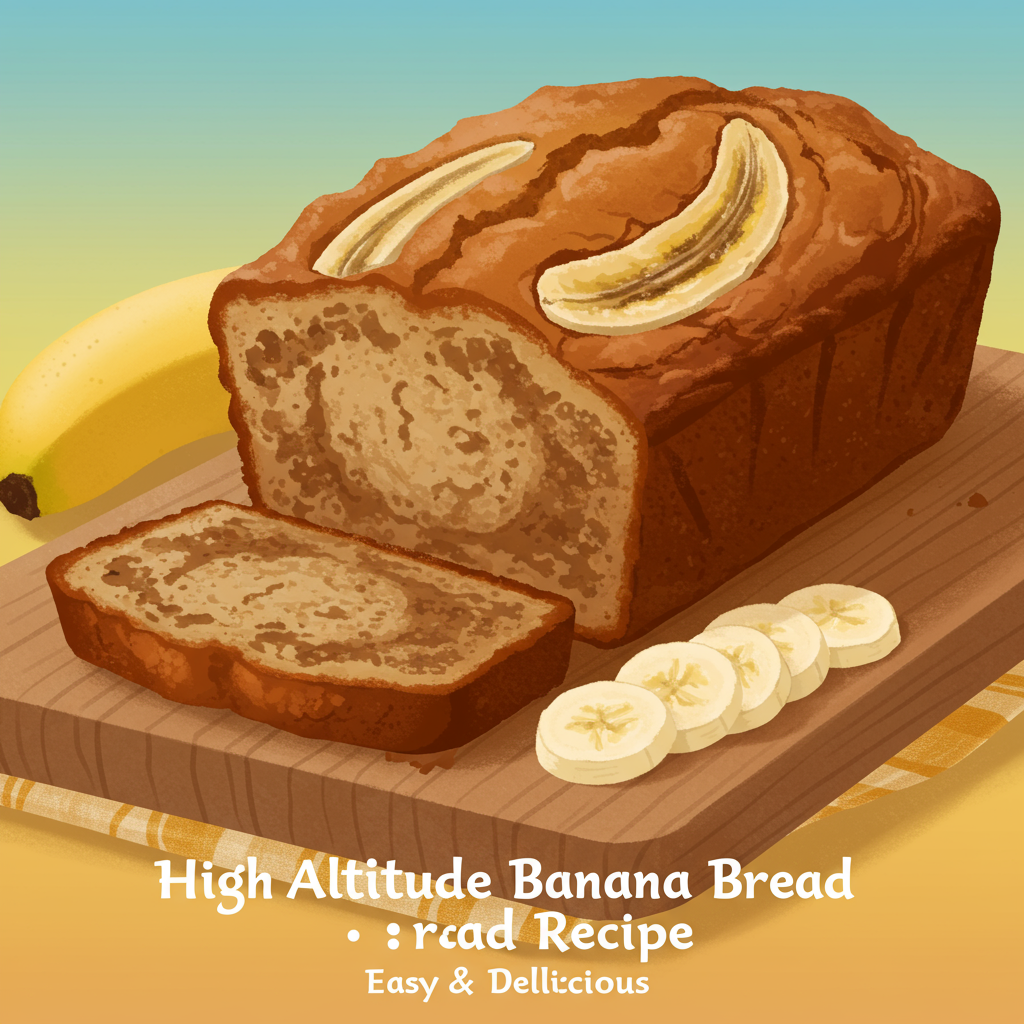
Welcome to Your New Favorite High Altitude Banana Bread Recipe!
Are you living in a higher elevation and finding your baked goods just aren’t turning out quite right? Don’t worry, you’re not alone! Baking at altitude presents unique challenges, but it’s nothing a few simple adjustments can’t fix. This High Altitude Banana Bread Recipe is specifically designed to give you that perfectly moist, beautifully risen, and utterly delicious banana bread, even if you’re baking miles above sea level. Forget sunken centers or dry crumbs – we’re going for golden perfection!
This post is packed with easy baking recipes and essential baking tips for beginners, ensuring your first (or hundredth!) loaf is a resounding success. We’ll walk you through every step, explaining the ‘why’ behind the high-altitude tweaks, so you can bake with confidence and impress everyone with your newfound baking prowess. Let’s transform those overripe bananas into a masterpiece!
Gather Your Ingredients
Before we dive into the deliciousness, let’s make sure you have all your ingredients ready. Using room temperature ingredients (especially eggs and milk) helps them combine more smoothly, leading to a more consistent batter and a better final product. These quantities are adjusted for baking at elevations roughly between 5,000 to 7,000 feet. If you’re significantly higher or lower, slight additional tweaks might be needed, but this is a fantastic starting point!
| Quantity | Unit | Ingredient |
|---|---|---|
| 2 cups + 2 tbsp | All-Purpose Flour (sifted for best results) | |
| 3/4 cup | Granulated Sugar | |
| 3/4 teaspoon | Baking Soda | |
| 1/2 teaspoon | Salt | |
| 1/2 teaspoon | Ground Cinnamon (optional, but highly recommended!) | |
| 3-4 medium | Very Ripe Bananas (about 1.5 cups mashed) | |
| 2 large | Eggs (room temperature) | |
| 1/2 cup | Unsalted Butter, melted and slightly cooled | |
| 1/3 cup | Milk (any kind, room temperature) | |
| 1 teaspoon | Vanilla Extract | |
| 1/2 cup | Optional Add-ins: chocolate chips, chopped nuts (walnuts/pecans), or dried fruit |
Baking Bliss: Step-by-Step Instructions
Follow these detailed steps carefully, and you’ll be enjoying warm, fragrant banana bread in no time. Remember, baking is a science, but a delicious one!
Step 1: The Perfect Prep Work
- Preheat Your Oven: Adjust your oven rack to the middle position. Preheat your oven to 375°F (190°C). Yes, that’s a bit higher than sea level recipes – this helps set the structure of your bread before it over-expands in the lower atmospheric pressure.
- Prepare Your Loaf Pan: Lightly grease a standard 9×5-inch loaf pan with butter or baking spray. For easy removal, you can also line it with parchment paper, leaving an overhang on the long sides like “handles.” This is a fantastic trick for beginners, making it almost impossible for your bread to get stuck!
- Mash Those Bananas: In a medium bowl, mash your very ripe bananas with a fork until mostly smooth but with a few small lumps remaining. Overripe bananas (with lots of brown spots) are key for intense banana flavor and natural sweetness. Don’t worry if they look a little unappetizing; they’re perfect for baking!
Step 2: Combine the Wet Ingredients
- Whisk the Wet: In a large mixing bowl, whisk together the mashed bananas, melted butter (make sure it’s cooled slightly so it doesn’t scramble your eggs!), eggs, milk, and vanilla extract until well combined. This is your “wet” mixture. Ensure the eggs are fully incorporated; you shouldn’t see streaks of egg white or yolk.
Step 3: Mix the Dry Ingredients
- Sift and Whisk Dry: In a separate medium bowl, whisk together the flour, granulated sugar, baking soda, salt, and ground cinnamon (if using). Whisking them together thoroughly ensures that the leavening and salt are evenly distributed throughout the batter, preventing pockets of unmixed ingredients. Beginner Tip: Sifting your flour can make a big difference in light and fluffy bread! It removes lumps and aerates the flour. If you don’t have a sifter, whisking vigorously for 30 seconds works too.
Step 4: Gently Bring Them Together
- Combine Wet and Dry: Pour the dry ingredients into the wet ingredients. Using a spatula, gently fold the ingredients together until *just* combined. This is perhaps the most crucial step for tender banana bread. Overmixing develops the gluten in the flour too much, leading to a tough, dense loaf. A few small streaks of flour are perfectly fine – they will disappear during baking.
- Fold in Add-ins (Optional): If you’re using chocolate chips, nuts, or dried fruit, gently fold them into the batter now. Don’t stir too much!
Step 5: Bake It Perfect
- Fill the Pan: Pour the batter into your prepared loaf pan, spreading it evenly.
- Bake: Place the loaf pan in the preheated 375°F (190°C) oven. Bake for 50-65 minutes, or until a wooden skewer or toothpick inserted into the center comes out clean or with a few moist crumbs attached (no wet batter!).
- Watch for Browning: If the top of your bread starts to brown too quickly before the inside is cooked, you can loosely tent it with aluminum foil for the remaining baking time. This is a common high-altitude adjustment as the higher oven temperature can sometimes cause faster surface browning.
Step 6: Cooling Down for Perfection
- Cool in Pan: Once baked, remove the loaf pan from the oven and let it cool in the pan on a wire rack for about 10-15 minutes. This allows the bread to set further and prevents it from collapsing.
- Remove and Finish Cooling: After 10-15 minutes, carefully remove the banana bread from the pan (using those parchment paper handles if you used them!). Transfer it directly to the wire rack to cool completely. Slicing into warm banana bread is tempting, but letting it cool fully makes for cleaner slices and a better texture. If you can wait, it’s even better the next day!
High Altitude Baking Wisdom: Tips & Tricks for Success
- Don’t Overmix! This is the golden rule for most quick breads. Overmixing develops gluten, which makes your banana bread tough and chewy instead of tender and moist. Mix until just combined.
- Use Very Ripe Bananas: The browner, the better! Overripe bananas are sweeter and have a more intense banana flavor, which is crucial for a delicious bread. They also add more moisture.
- Room Temperature Ingredients: Eggs and milk at room temperature emulsify better with the fat (butter), creating a smoother, more uniform batter. This leads to a finer crumb and better texture.
- Measure Accurately: Especially at high altitude, precision matters. Use proper measuring cups for dry ingredients (levelled off) and liquid measuring cups for wet ingredients. Consider using a kitchen scale for flour and sugar for ultimate accuracy.
- Know Your Oven: Ovens can vary! If your oven tends to run hot or cold, adjust the temperature accordingly. An oven thermometer can be a great investment for consistent baking.
- Patience is a Virtue: Resist the urge to open the oven door frequently while baking, especially in the first 30-40 minutes, as this can cause the bread to fall. Let it cool completely before slicing for the best texture.
- Customize It: Feel free to experiment with add-ins! Walnuts, pecans, chocolate chips, dried cranberries, or a sprinkle of coarse sugar on top before baking can elevate your banana bread.
Your Essential High Altitude Baking Arsenal
Having the right tools makes all the difference! Here are a few essentials that will make your high-altitude banana bread baking a breeze:
- Mixing Bowls (various sizes)
- Whisk
- 9×5-inch Loaf Baking Pan
- Measuring Cups and Spoons
- Rubber Spatula
- Wire Cooling Rack
- Optional: Kitchen Scale for precise ingredient measurement
- Optional: Oven Thermometer to ensure accurate oven temperature
Nourishment Notes (Per Serving, Estimated)
These values are approximate and based on 12 servings per loaf, without optional add-ins. Actual nutritional content may vary depending on specific ingredients and serving size.
| Nutrient | Amount |
|---|---|
| Calories | ~280-320 kcal |
| Carbohydrates | ~40-50g |
| Protein | ~4-5g |
| Fat | ~12-15g |
| Fiber | ~1-2g |
| Sugar | ~20-25g |
Frequently Asked Questions (FAQs)
New to high-altitude baking? Here are some common questions beginners often ask:
Q: Why do I need to adjust recipes for high altitude?
A: At higher elevations, atmospheric pressure is lower. This causes leavening agents (like baking soda) to work more efficiently, making baked goods rise faster and potentially collapse. Liquids also evaporate more quickly, leading to dryer results. High-altitude adjustments compensate for these changes by reducing leavening, increasing liquid and flour, and sometimes adjusting oven temperature.
Q: Can I use frozen bananas?
A: Absolutely! Frozen ripe bananas are excellent for banana bread. Just be sure to thaw them completely (you can do this on the counter or in the microwave) and drain any excess liquid before mashing. The liquid can be added back if your batter seems too dry, but usually, it’s best to discard the extra water.
Q: My banana bread top cracked. Is that normal?
A: Yes, a crack down the middle of banana bread is very common and completely normal! It’s often a sign of a good rise. It happens because the outside of the bread sets and bakes faster than the middle, and as the middle continues to rise, it pushes through the set crust, creating that signature crack.
Q: How can I tell if my bananas are ripe enough?
A: For the best banana bread, you want bananas that are very ripe, meaning they have a lot of brown spots or are almost entirely brown. They should be soft to the touch. Green or yellow bananas won’t offer the same sweetness or moistness to your bread.
Q: How do I store leftover banana bread?
A: Once cooled completely, store your banana bread tightly wrapped in plastic wrap or in an airtight container at room temperature for up to 3-4 days. For longer storage, you can freeze slices or the whole loaf (well-wrapped) for up to 2-3 months. Thaw at room temperature when ready to enjoy.
Your High Altitude Banana Bread Journey Begins!
Congratulations! You’ve just unlocked the secrets to baking fantastic banana bread, even from the heights of your kitchen. This High Altitude Banana Bread Recipe is more than just a list of instructions; it’s a gateway to confident high-altitude baking. Don’t be intimidated by the altitude; embrace the challenge, make these simple adjustments, and get ready for the delicious rewards.
We hope these detailed steps and baking tips for beginners have empowered you to create a loaf that’s moist, flavorful, and perfectly risen. Share your baking triumphs with us – we can’t wait to hear how your high-altitude banana bread turned out! Happy baking!
“`