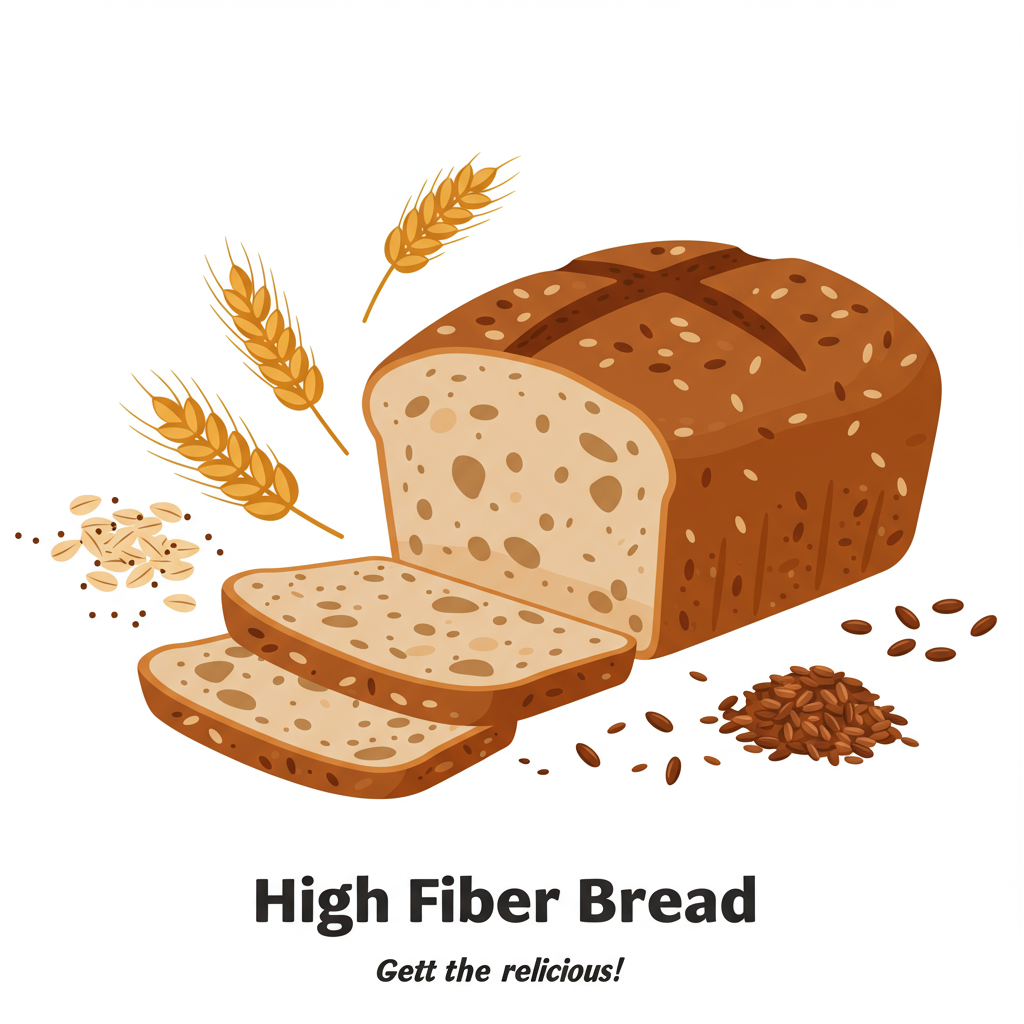
Discover the Joy of Baking: Easy High Fiber Bread Recipe for Beginners!
Are you ready to embark on a delicious and rewarding baking adventure? If you’ve been searching for a healthy, hearty, and incredibly satisfying bread to bake at home, you’ve come to the right place! Our **High Fiber Bread Recipe** is specifically designed with beginners in mind, making it one of the most approachable and **easy baking recipes** you’ll find. Forget complicated techniques and intimidating jargon; we’re breaking down every step so you can confidently create a wholesome loaf that’s perfect for sandwiches, toast, or simply enjoying with a smear of butter. We’ll cover all the essential **baking tips for beginners** to ensure your first (or fiftieth!) loaf is a resounding success. Get ready to fill your kitchen with the irresistible aroma of freshly baked bread!
Ingredients You’ll Need
Gathering your ingredients is the first step to baking success. Here’s everything you’ll need for this delicious high-fiber loaf:
| Quantity | Unit | Ingredient |
|---|---|---|
| 1 ¾ | cups | Warm Water (105-115°F / 40-46°C) |
| 2 ¼ | teaspoons | Active Dry Yeast (one standard packet) |
| 2 | tablespoons | Honey or Maple Syrup |
| 1 | teaspoon | Salt |
| 2 | tablespoons | Olive Oil (plus extra for greasing) |
| 3 | cups | Whole Wheat Flour |
| ½ | cup | Rolled Oats (plus 1-2 tbsp for topping, optional) |
| 2 | tablespoons | Flaxseed Meal |
| 1 | tablespoon | Psyllium Husk Powder (optional, for extra fiber and binding) |
Step-by-Step Instructions: Your Guide to Perfect High Fiber Bread
Follow these detailed steps, and you’ll be enjoying warm, homemade bread in no time!
Step 1: Activate Your Yeast
- Prepare your water: In a large mixing bowl, pour in 1 ¾ cups of warm water. The temperature is crucial here – it should feel warm to the touch, like a baby’s bath, but not hot. Too hot will kill the yeast, too cold won’t activate it. A good range is 105-115°F (40-46°C).
- Add the sweetener: Stir in 2 tablespoons of honey or maple syrup. This acts as food for the yeast, helping it to wake up and get active.
- Introduce the yeast: Sprinkle 2 ¼ teaspoons (one standard packet) of active dry yeast over the water. Do not stir it in immediately. Let it sit undisturbed for 5-10 minutes.
- Check for foam: After 5-10 minutes, you should see a foamy, bubbly layer forming on the surface of the water. This is a sign that your yeast is alive and active! If you don’t see foam, your yeast might be old or the water temperature was off. It’s best to start over with fresh yeast and recheck your water temperature.
Step 2: Combine Wet and Dry Ingredients
- Add remaining wet ingredients: Once your yeast is foamy, stir in 1 teaspoon of salt and 2 tablespoons of olive oil into the yeast mixture.
- Prepare dry ingredients: In a separate medium bowl, whisk together 3 cups of whole wheat flour, ½ cup of rolled oats, 2 tablespoons of flaxseed meal, and 1 tablespoon of psyllium husk powder (if using). Whisking ensures all the dry ingredients are evenly distributed.
- Combine: Gradually add the dry ingredient mixture to the wet yeast mixture, about one cup at a time, stirring with a sturdy spoon or a rubber spatula until a shaggy dough forms. It will look a bit rough and sticky at this stage, which is perfectly normal.
Step 3: Knead the Dough (The Fun Part!)
- Prepare your surface: Lightly flour a clean countertop or a large wooden cutting board. You don’t need a lot of flour, just enough to prevent sticking.
- Turn out the dough: Scrape the shaggy dough out of the bowl onto your floured surface.
- Knead by hand: Begin kneading the dough. This involves folding the dough towards you, pushing it away with the heels of your hands, rotating it a quarter turn, and repeating.
- Beginner Tip: Don’t add too much extra flour during kneading. A slightly sticky dough is better than a dry, tough one. Only add a tiny sprinkle of flour if the dough is really sticking to your hands or the surface.
- What to look for: Knead for about 8-10 minutes. The dough will transform from a sticky, lumpy mass into a smooth, elastic ball. It should feel springy and less sticky when properly kneaded. If you press a finger into it, the indentation should slowly spring back.
- Alternatively (Stand Mixer): If you have a stand mixer with a dough hook, you can knead on low speed for 6-8 minutes, until the dough is smooth and elastic.
Step 4: First Rise (Proofing)
- Prepare the bowl: Lightly grease a clean large bowl with a little olive oil. This prevents the dough from sticking.
- Place the dough: Place your kneaded dough ball into the greased bowl, turning it once to coat the entire surface with oil.
- Cover and rise: Cover the bowl tightly with plastic wrap or a clean kitchen towel. Place it in a warm, draft-free place. Good spots include a sunny windowsill, inside a slightly warm (turned off) oven, or near a heating vent.
- Wait for the rise: Let the dough rise for 1 to 1.5 hours, or until it has doubled in size. The exact time will depend on the warmth of your environment.
- Common Mistake: Don’t rush this step! An under-proofed dough will result in dense, heavy bread.
Step 5: Shape the Loaf
- Punch down the dough: Once doubled, gently punch down the dough to release the air. This is satisfying!
- Prepare your pan: Lightly grease a 9×5 inch loaf pan with olive oil or cooking spray.
- Shape the loaf: Turn the dough out onto a lightly floured surface. Gently flatten it into a rectangle, roughly the length of your loaf pan. Starting from one of the longer sides, tightly roll the dough into a log. Pinch the seam closed firmly with your fingers, and tuck the ends under to create a neat loaf shape.
- Place in pan: Carefully place the shaped dough, seam-side down, into your prepared loaf pan.
Step 6: Second Rise
- Cover and rise again: Cover the loaf pan loosely with plastic wrap or a clean kitchen towel. Place it back in a warm, draft-free spot.
- Second rise: Let it rise for another 30-45 minutes, or until the dough has nearly doubled in size again and extends about 1 inch above the rim of the pan. It should look puffy and light.
- Beginner Tip: To check if it’s ready, gently poke the side of the dough with a floured finger. If the indentation springs back slowly, it’s ready. If it springs back quickly, it needs more time. If it collapses, it’s over-proofed.
Step 7: Bake Your Bread!
- Preheat oven: About 15 minutes before the second rise is complete, preheat your oven to 375°F (190°C).
- Optional topping: If desired, lightly brush the top of the risen loaf with a little water and sprinkle with extra rolled oats for a rustic look.
- Bake: Place the loaf pan in the preheated oven. Bake for 30-35 minutes.
- Check for doneness: The bread should be golden brown on top and sound hollow when tapped on the bottom. For a precise check, an instant-read thermometer inserted into the center of the loaf should read between 200-210°F (93-99°C).
Step 8: Cool and Enjoy!
- Cool in pan: Remove the loaf from the oven and let it cool in the pan for about 5-10 minutes. This helps it firm up.
- Cool on rack: Carefully remove the bread from the pan and transfer it to a wire cooling rack. Allow it to cool completely (at least 1-2 hours) before slicing.
- Why cool completely? Slicing hot bread can make it gummy and dense. Cooling allows the internal structure to set properly.
- Slice and enjoy: Once fully cooled, slice your beautiful, homemade high-fiber bread and enjoy!
Tips & Tricks for Baking Success
Baking bread is a journey, and these tips will help you along the way:
- Ingredient Quality Matters: Use fresh yeast and good quality whole wheat flour. Old ingredients can lead to disappointing results.
- Embrace the Stickiness: Whole wheat dough can be a bit stickier than white flour dough. Don’t be tempted to add too much extra flour during kneading, as this will make your bread dry and dense. A light dusting is usually enough.
- Warmth for Rising: Yeast loves warmth! If your kitchen is cool, try creating a warm environment for your dough to rise. You can turn your oven on for a minute, then turn it off and let the dough rise inside (with the door ajar).
- Patience is Key: Don’t rush the rising times. The dough will tell you when it’s ready – it should be visibly puffy and doubled in size.
- Don’t Skip the Cooling: It’s tempting to cut into a warm loaf, but cooling completely on a wire rack allows the internal moisture to redistribute, resulting in a better texture.
- Storage: Store your cooled bread in an airtight container or bread bag at room temperature for up to 3-4 days. For longer storage, slice the loaf and freeze in an airtight bag for up to 3 months. Toast slices directly from frozen.
- Experiment with Add-ins: Once you’re comfortable with the basic recipe, try adding a handful of sunflower seeds, pumpkin seeds, or even a couple of tablespoons of wheat germ for extra texture and nutrition.
Essential Baking Tools
Having the right tools makes all the difference! Here are some basics you’ll want:
- Mixing Bowls (at least one large)
- Whisk
- 9×5 inch Loaf Pan
- Measuring Cups and Spoons
- Rubber Spatula or Sturdy Spoon
- Wire Cooling Rack (highly recommended!)
- Kitchen Towel or Plastic Wrap
- Optional: Instant-Read Thermometer (for water and bread internal temp)
Nutrition Information (per slice, estimated for 12 slices)
Enjoying your delicious bread also means knowing what good it’s doing for your body!
| Nutrient | Amount |
|---|---|
| Calories | ~140 kcal |
| Carbohydrates | ~25g |
| Protein | ~6g |
| Fat | ~3.5g |
| Fiber | ~5-6g |
| Sugar | ~2g |
Note: These values are estimates and can vary based on exact ingredient brands and portion sizes.
Frequently Asked Questions (FAQs)
- Q: My dough isn’t rising. What went wrong?
- A: The most common culprit is inactive yeast. This can happen if your water was too hot (killed the yeast), too cold (didn’t activate it), or if your yeast is old/expired. Always check for foam after the initial activation step!
- Q: Can I use all-purpose flour instead of whole wheat?
- A: While you can, it won’t be a “high fiber” bread. All-purpose flour will result in a lighter, less dense loaf, but you’ll lose the nutritional benefits and the unique texture of whole wheat. If you want a slightly lighter loaf but still high fiber, you could try a blend of 2 cups whole wheat and 1 cup all-purpose.
- Q: How do I know if I’ve kneaded enough?
- A: A properly kneaded dough will be smooth, elastic, and springy. If you poke it with your finger, the indentation should slowly spring back. It should also be less sticky than when you started.
- Q: Can I add other seeds or nuts to this recipe?
- A: Absolutely! Once you’re comfortable with the basic recipe, feel free to experiment. You can add ¼ to ½ cup of sunflower seeds, pumpkin seeds, or even chopped walnuts during the mixing of dry ingredients. This adds extra flavor, texture, and nutrition!
- Q: How long does homemade high fiber bread last?
- A: Stored in an airtight container or bread bag at room temperature, it will typically last 3-4 days. For longer storage, slice the cooled bread and freeze it in a freezer-safe bag for up to 3 months. You can toast slices directly from frozen.
Conclusion: Your First Loaf Awaits!
Congratulations, future bread baker! You now have everything you need to bake a truly delicious and nutritious **High Fiber Bread Recipe**. Don’t be afraid to get your hands a little floury – that’s part of the fun! Remember, every baker starts somewhere, and with patience and these detailed instructions, you’re well on your way to creating something wonderful. Imagine the pride of pulling your own homemade loaf from the oven, filling your home with that comforting aroma. Slice it thick, slather on some avocado, or make a hearty sandwich. We can’t wait to hear about your baking success. Happy baking!
“`