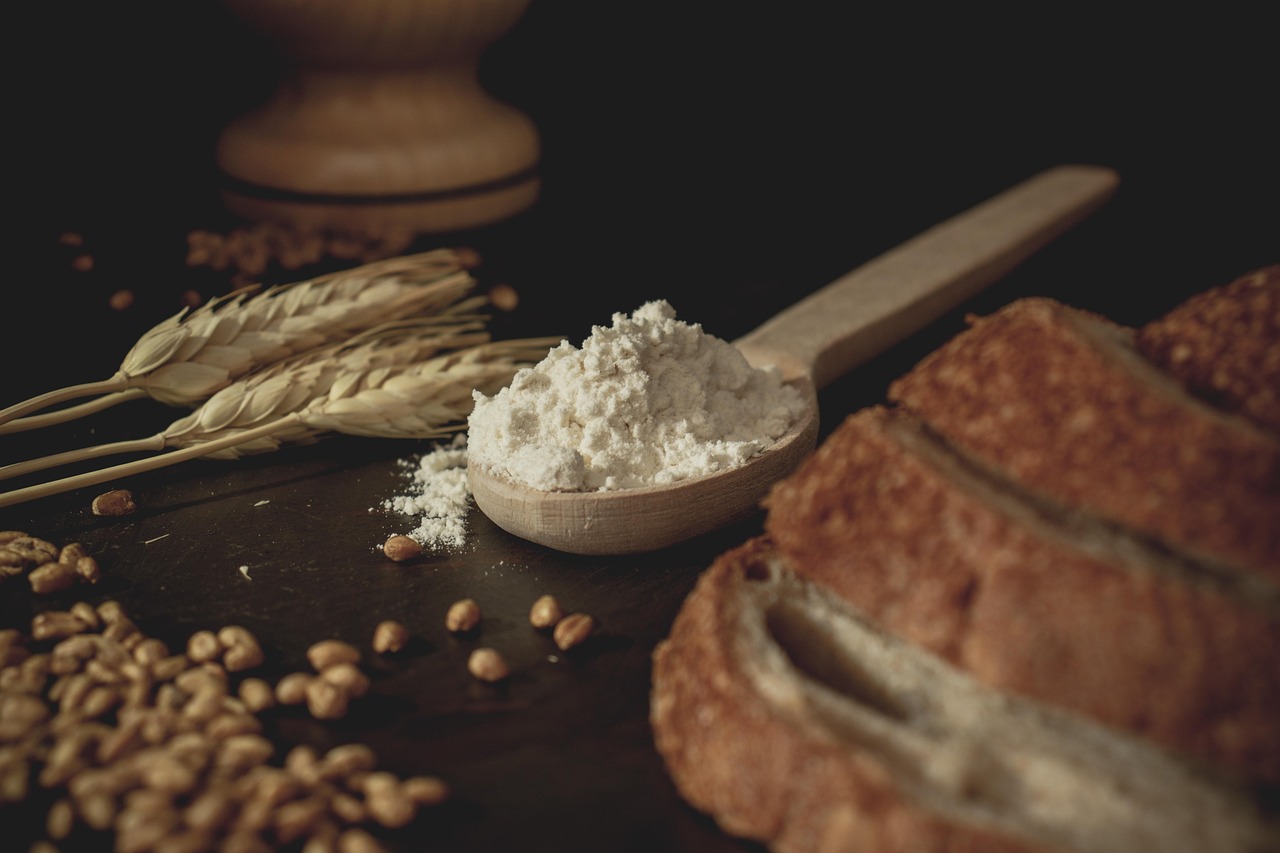
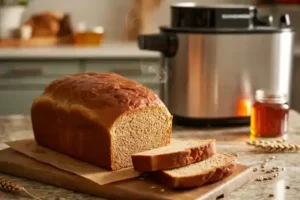
This Honey Wheat Bread Machine Recipe is specifically designed for beginners, guiding you through each step to create a beautifully golden, soft, and slightly sweet loaf of bread. Forget the intimidation of traditional baking; your bread machine does most of the heavy lifting! We’ll share essential baking tips for beginners to ensure your success, turning you into a confident home baker in no time. Get ready to impress yourself and your loved ones with this wholesome, irresistible bread!
Ingredients List: What You’ll Need
Precision is key in baking, especially for bread machines. Make sure to level your measurements carefully! This recipe is optimized for a 1.5-pound loaf.
| Ingredient | Quantity | Unit |
|---|---|---|
| Warm Water (105-115°F / 40-46°C) | 1 | cup |
| Honey | 1/4 | cup |
| Vegetable Oil (or melted unsalted butter) | 2 | tablespoons |
| Salt | 1 | teaspoon |
| Whole Wheat Flour | 2 | cups |
| All-Purpose Flour (unbleached) | 1 | cup |
| Active Dry Yeast (or Instant Yeast) | 2 | teaspoons |
Step-by-Step Instructions: Baking Your Perfect Loaf
Follow these detailed steps carefully for a foolproof loaf of Honey Wheat Bread. Remember, consistency in measuring is your best friend!
Step 1: Gather and Prepare Your Ingredients
Before you even open your bread machine, ensure all your ingredients are measured out and ready. This is called “mise en place” and it prevents you from scrambling mid-recipe. Make sure your water is warm, but not hot – too hot will kill the yeast, too cold won’t activate it properly. Aim for a comfortable bathwater temperature. If you’re using butter instead of oil, melt it and let it cool slightly.
Step 2: Load Your Bread Machine Pan
This is arguably the most crucial step for bread machine success! Ingredients must be added in a specific order to prevent the yeast from prematurely activating or coming into direct contact with salt (which can inhibit it).
- Liquids First: Pour the warm water, honey, and vegetable oil (or melted butter) into the bread machine pan.
- Dry Ingredients (Except Yeast): Carefully add the salt, followed by the whole wheat flour, and then the all-purpose flour. Try to layer the flour evenly over the liquids.
- Yeast Last: Make a small indentation or “well” in the center of the flour mixture with your finger. Spoon the active dry yeast directly into this well. Do not let the yeast touch the liquid yet! This prevents early activation and ensures the yeast has a powerful rise when it’s time.
Step 3: Select Your Cycle
Place the bread machine pan securely back into the bread machine. Close the lid. Now, it’s time to choose the right setting:
- Program: Select the “Whole Wheat” or “Basic Wheat” cycle on your bread machine. If your machine doesn’t have a specific wheat setting, the “Basic” or “White Bread” cycle can often work, though the texture might be slightly different.
- Loaf Size: Confirm your machine is set for a 1.5-pound loaf.
- Crust Setting: Choose your preferred crust color – “Light,” “Medium,” or “Dark.” For beginners, “Medium” is usually a safe bet for a golden-brown crust.
Press “Start” and let the magic begin!
Step 4: Monitor the Dough (The “Windowpane” Test)
During the first kneading cycle (usually within the first 10-15 minutes), keep an eye on your dough. This is one of the most important **baking tips for beginners**!
- Dough Too Dry/Stiff: If the dough ball looks shaggy, isn’t forming a smooth ball, or the machine seems to be struggling, it might be too dry. Add water, one teaspoon at a time, until the dough forms a smooth, elastic ball that cleans the sides of the pan.
- Dough Too Sticky/Wet: If the dough looks very sticky, doesn’t form a cohesive ball, or is sticking excessively to the sides of the pan, it might be too wet. Add all-purpose flour, one teaspoon at a time, until it reaches the desired consistency.
The ideal dough ball should be slightly tacky to the touch but not sticky, smooth, and elastic. It should form a ball that moves around the pan as it kneads. This adjustment window is crucial for the final texture of your bread.
Step 5: Let the Machine Do Its Work
Once you’ve made any necessary dough adjustments, you can sit back and relax! The bread machine will now go through its preheating, kneading, rising, and baking cycles automatically. Resist the urge to open the lid frequently, especially during the rising and baking phases, as this can affect the bread’s structure.
Step 6: Remove and Cool Your Bread
When the bread machine beeps, signaling the end of the cycle, carefully open the lid. The aroma will be incredible!
- Remove the Pan: Using oven mitts, carefully remove the hot bread pan from the machine.
- Invert the Loaf: Immediately invert the pan onto a wire cooling rack. If the bread doesn’t come out easily, gently shake the pan or use a non-metal spatula to loosen the sides. Be careful of the kneading paddle often stuck in the bottom of the loaf – remove it if it comes out with the bread.
- Cool Completely: This is another critical step! Allow the bread to cool on the wire rack for at least 1 to 2 hours, or until completely cool to the touch. Slicing hot bread traps steam, leading to a gummy texture. Patience here will be rewarded with a perfect slice.
Step 7: Slice and Enjoy!
Once cooled, use a serrated bread knife to slice your beautiful Honey Wheat Bread. It’s perfect for sandwiches, toast, or simply slathered with butter. Congratulations, you’ve baked homemade bread!
Tips & Tricks for Bread Machine Success
Mastering your bread machine is all about understanding a few key principles. These actionable pieces of advice will help you achieve perfect loaves every time:
- Yeast Freshness is Paramount: Yeast is a living organism. If it’s old or expired, your bread won’t rise. Always check the expiration date. To test active dry yeast, mix 1 teaspoon with 1/4 cup warm water (105-115°F) and a pinch of sugar. If it foams within 5-10 minutes, it’s good to go!
- Measure Accurately: Baking is a science! Use proper measuring cups and spoons. For flour, spoon it into your measuring cup and level it off with a straight edge (like the back of a knife) rather than scooping directly from the bag, which can compact the flour and lead to too much.
- Water Temperature Matters: As mentioned, water that is too hot will kill the yeast, and water that is too cold won’t activate it efficiently. Use a thermometer to be precise (105-115°F / 40-46°C).
- Ingredient Quality: Use good quality whole wheat flour for the best flavor and texture. Unbleached all-purpose flour is also preferable as it has a higher protein content, which is great for bread structure.
- Listen to Your Dough: The visual inspection during the first knead cycle is your opportunity to adjust the dough. Don’t skip it! A perfectly balanced dough is the secret to a well-risen, soft loaf.
- Cooling is Crucial: Seriously, resist the urge to slice immediately! Cooling allows the internal structure of the bread to set and prevents a gummy texture.
- Storage: Store cooled bread in an airtight container or a bread bag at room temperature for 3-5 days. For longer storage, slice the loaf and freeze the slices in a freezer-safe bag for up to 3 months.
Essential Baking Tools
While your bread machine does most of the work, a few basic tools will make your baking experience even smoother:
- Mixing Bowl (for pre-measuring ingredients)
- Whisk (for combining dry ingredients if you choose)
- Measuring Cups (for liquids and dry ingredients)
- Measuring Spoons (for smaller quantities like salt and yeast)
- Rubber Spatula (for scraping out honey or oil)
- Wire Cooling Rack (essential for proper cooling)
- Serrated Bread Knife (for clean slices)
Nutrition Info (Estimated per Slice)
Please note that these values are approximate and can vary based on specific ingredient brands and loaf size. This estimation is for one slice of a 1.5-pound loaf, yielding approximately 12-16 slices.
| Nutrient | Amount |
|---|---|
| Calories | 130-145 kcal |
| Total Fat | 2-3 g |
| Saturated Fat | 0 g |
| Cholesterol | 0 mg |
| Sodium | 160-190 mg |
| Total Carbohydrates | 26-30 g |
| Dietary Fiber | 2-3 g |
| Total Sugars | 6-8 g |
| Protein | 4-5 g |
Frequently Asked Questions (FAQs)
Q1: My bread came out too dense. What went wrong?
A dense loaf is often caused by too much flour, not enough liquid, or inactive yeast. Double-check your measurements, especially for flour (spoon into the cup, then level). Ensure your water temperature is correct and your yeast is fresh. Also, remember to monitor the dough during the first knead and adjust with a teaspoon of water if it seems too dry.
Q2: Can I use different types of flour?
This recipe uses a blend of whole wheat and all-purpose flour for a good balance of flavor and texture. You can experiment with different ratios, but remember that whole wheat flour absorbs more liquid than all-purpose. If you use more whole wheat, you might need a tiny bit more water, and vice-versa. Always adjust during the initial knead.
Q3: Why did my bread machine loaf sink in the middle?
A sunken loaf usually indicates too much liquid, too much yeast, or over-proofing. If there’s too much yeast or sugar (honey in this case), the yeast can over-activate and exhaust itself, causing the structure to collapse. Ensure accurate measurements and check your yeast’s freshness. Sometimes, high humidity can also contribute.
Q4: How do I know if my yeast is still active?
To test active dry yeast, combine 1 teaspoon of yeast with 1/4 cup of warm water (105-115°F) and a pinch of sugar. Let it sit for 5-10 minutes. If it becomes foamy and bubbly, your yeast is active and ready to use. If not, it’s time for a new packet.
Q5: Can I add extra ingredients like seeds or nuts?
Absolutely! Most bread machines have a “mix-in” beep during the kneading cycle. This is the perfect time to add up to 1/2 cup of seeds (like sunflower or flax), nuts, or dried fruit. Adding them at the beep ensures they are evenly distributed without interfering with the initial dough formation.
Q6: How should I store my homemade bread?
Once completely cooled, store your bread in an airtight container, a bread box, or a sealed plastic bag at room temperature for up to 3-5 days. For longer storage, slice the cooled loaf and freeze the slices in a freezer-safe bag. You can then toast individual slices as needed!
Conclusion: Enjoy Your Bread Machine Journey!
And there you have it – a straightforward, incredibly satisfying Honey Wheat Bread Machine Recipe that proves homemade bread is within everyone’s reach! This recipe is more than just a list of ingredients; it’s an invitation to explore the wonderful world of baking with confidence and ease. There’s an immense satisfaction that comes from pulling a warm, fragrant loaf from your bread machine, knowing you created it yourself. Don’t be afraid to experiment, tweak, and make this recipe your own. With these baking tips for beginners and your trusty bread machine, you’re well on your way to becoming a seasoned home baker. So go ahead, whip up a loaf, share it with loved ones, and savor the simple, delicious joy of homemade honey wheat bread. Happy baking!