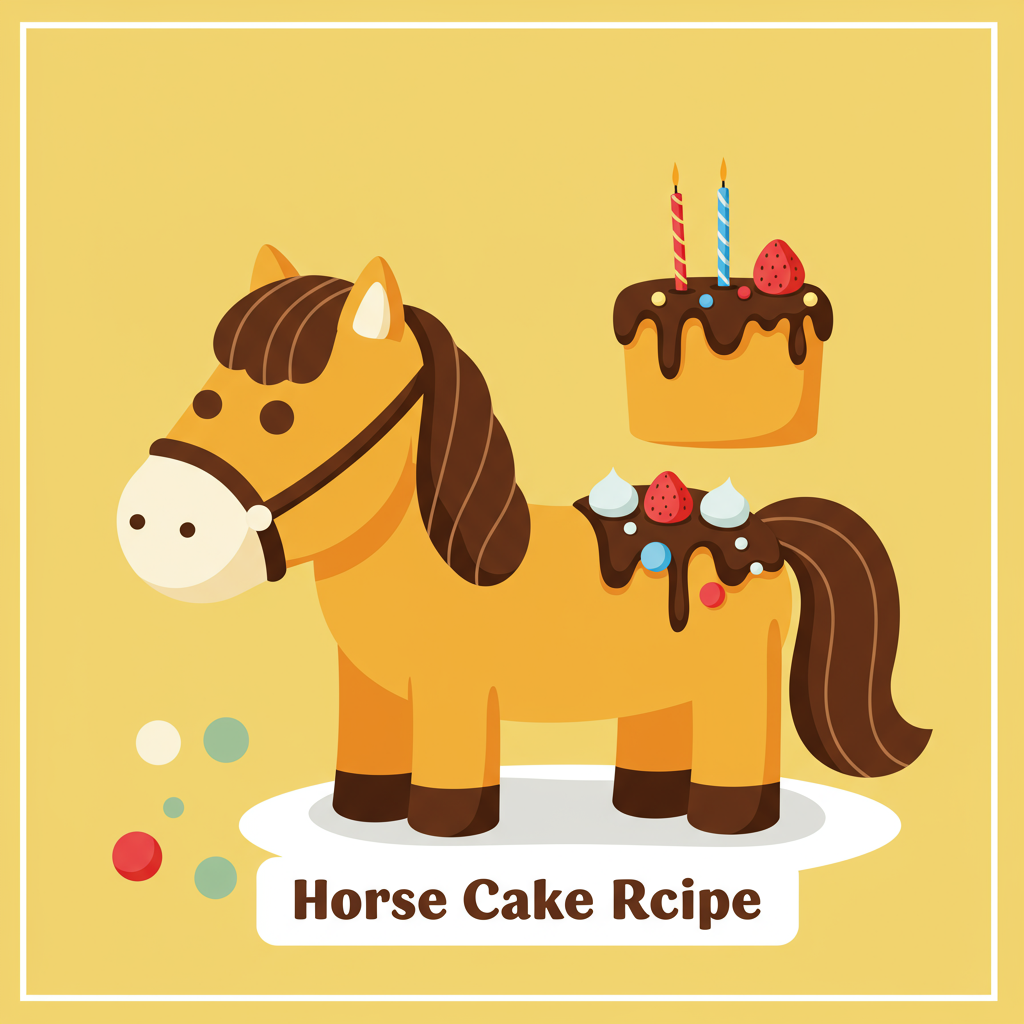
Are you ready to bake a magical treat that’s perfect for birthdays, special occasions, or just because you love horses? This Horse Cake Recipe is designed specifically for you, the aspiring baker! We believe that baking should be a joy, not a chore, and this recipe delivers on that promise. Forget complicated techniques and intimidating instructions – we’re focusing on easy baking recipes that yield fantastic results every time. Whether you’re a complete novice or just looking for reliable baking tips for beginners, you’ve come to the right place. Get ready to create a delightful vanilla cake that’s as fun to make as it is to eat, complete with simple decorating ideas to bring your horse theme to life!
This detailed guide will walk you through every step, ensuring your first (or fiftieth!) cake is a resounding success. We’ll cover everything from precise measurements to common pitfalls, giving you the confidence to whip up a truly impressive dessert. Let’s saddle up and get baking!
Ingredients for Your Magnificent Horse Cake
Gathering your ingredients before you start is one of the best baking tips for beginners. It ensures a smooth process and prevents any mid-bake scrambles!
For the Vanilla Cake:
| Quantity | Unit | Ingredient |
|---|---|---|
| 2 ½ | cups | All-purpose flour (sifted) |
| 1 ½ | cups | Granulated sugar |
| 1 | tablespoon | Baking powder |
| ½ | teaspoon | Salt |
| 1 | cup | Unsalted butter, softened |
| 4 | large | Eggs, room temperature |
| 1 | cup | Whole milk, room temperature |
| 2 | teaspoons | Vanilla extract |
For the Vanilla Buttercream Frosting:
| Quantity | Unit | Ingredient |
|---|---|---|
| 1 | cup | Unsalted butter, softened |
| 4 | cups | Powdered sugar (confectioners’ sugar), sifted |
| 2-3 | tablespoons | Whole milk or heavy cream |
| 1 | teaspoon | Vanilla extract |
| Pinch | Salt | |
| Optional | Food coloring (brown, black, or your choice for horse details) | |
| Optional | Horse-themed sprinkles or toy horse figurines for decoration |
Step-by-Step Instructions: Crafting Your Horse Cake
Follow these detailed steps carefully. Remember, baking is a science, but it’s also a lot of fun!
Step 1: Prepare Your Baking Stage
- Preheat Your Oven: Start by preheating your oven to 350°F (175°C). This is crucial for even baking. If your oven isn’t hot enough when the cake goes in, it can affect the rise and texture.
- Prepare Your Pan: Grease and flour a 9×13 inch baking pan (or two 8 or 9-inch round pans). This means spreading a thin layer of butter or shortening all over the inside of the pan, then sprinkling flour and tapping it around until the entire greased surface is coated. Dump out any excess flour. Alternatively, you can line the bottom with parchment paper and grease the sides. This step is vital to prevent your cake from sticking!
Step 2: Combine the Dry Ingredients
- Sift Your Flour: In a large **Mixing Bowl**, sift together the 2 ½ cups of all-purpose flour, 1 ½ cups of granulated sugar, 1 tablespoon of baking powder, and ½ teaspoon of salt. Why sift? Sifting removes lumps and aerates the flour, leading to a lighter, fluffier cake. If you don’t have a sifter, you can whisk them really well together.
- Whisk Thoroughly: Use a **Whisk** to make sure these dry ingredients are perfectly combined. This ensures the leavening agent (baking powder) is evenly distributed, so your cake rises beautifully.
Step 3: Mix the Wet Ingredients
- Cream the Butter: In a separate large **Mixing Bowl** (or the bowl of a stand mixer), add the 1 cup of softened unsalted butter. Beat it on medium speed with an electric mixer until it’s light and fluffy, about 2-3 minutes. Tip for beginners: Softened butter should be pliable but still cool to the touch, not melted. If it’s too warm, your cake might be greasy.
- Add Eggs One by One: Add the 4 large eggs, one at a time, beating well after each addition. Scrape down the sides of the bowl with a **Spatula** occasionally. This helps incorporate air and ensures a smooth batter. Make sure your eggs are at room temperature – this helps them emulsify better with the butter.
- Introduce Vanilla: Stir in the 2 teaspoons of vanilla extract. Vanilla isn’t just for flavor; it also enhances the perception of sweetness.
Step 4: Combine Wet and Dry Mixtures
- Alternate Additions: With your mixer on low speed, gradually add the dry ingredients to the wet ingredients, alternating with the 1 cup of whole milk. Start and end with the dry ingredients. For example:
- Add about a third of the dry ingredients, mix until just combined.
- Add half of the milk, mix until just combined.
- Add another third of the dry ingredients, mix until just combined.
- Add the remaining milk, mix until just combined.
- Add the final third of the dry ingredients, mix until just combined.
- Do Not Overmix! This is one of the most important **baking tips for beginners**. Mix only until the ingredients are just combined and no streaks of flour remain. Overmixing develops the gluten in the flour, leading to a tough, dense cake. A few small lumps are better than an overmixed batter.
Step 5: Bake Your Cake
- Pour into Pan: Pour the cake batter evenly into your prepared **Baking Pan(s)**. Use your **Spatula** to level the top gently.
- Bake to Perfection: Bake for 30-35 minutes for a 9×13 pan, or 25-30 minutes for round pans. Baking times can vary depending on your oven, so keep an eye on it.
- Check for Doneness: The cake is done when a wooden skewer or toothpick inserted into the center comes out clean. The top should also be lightly golden and spring back when gently touched.
- Cooling Time: Once baked, remove the cake from the oven and let it cool in the pan on a wire rack for about 10-15 minutes. This allows the cake to set and prevents it from breaking when you remove it.
- Transfer and Cool Completely: Carefully invert the cake onto the wire rack to cool completely. This is critical before frosting! Frosting a warm cake will cause your frosting to melt and slide right off.
Step 6: Prepare the Vanilla Buttercream Frosting
- Cream the Butter: In a large **Mixing Bowl** (or stand mixer), beat the 1 cup of softened unsalted butter on medium speed until creamy and pale, about 3-5 minutes. This incorporates air and makes your frosting light.
- Gradually Add Powdered Sugar: Gradually add the 4 cups of sifted powdered sugar, about ½ cup at a time, beating well after each addition. Start on low speed to avoid a “sugar cloud,” then increase to medium.
- Add Liquids and Flavor: Once all the sugar is incorporated, add 1 teaspoon of vanilla extract and a pinch of salt. Then, slowly add 2-3 tablespoons of whole milk or heavy cream, one tablespoon at a time, until you reach your desired consistency. You want it smooth, spreadable, but not too thin.
- Beat Until Fluffy: Increase the mixer speed to medium-high and beat for another 2-3 minutes until the frosting is light, fluffy, and smooth.
- Optional: Color Your Frosting: If you want to add horse-like details (e.g., brown for a mane, black for eyes), divide a small portion of frosting into separate bowls and mix in food coloring.
Step 7: Frost and Decorate Your Horse Cake
- Frost Your Cooled Cake: Once your cake is completely cool, use an offset **Spatula** or knife to spread the vanilla buttercream frosting evenly over the top and sides of the cake.
- Get Creative with Decoration:
- Simple Horse Theme: Use horse-themed sprinkles to create a fun pattern. You can even place small toy horse figurines on top for an instant “Horse Cake.”
- Mane and Tail: If you colored some frosting, you can use a piping bag with a star tip to pipe a simple “mane” along one edge and a “tail” on another.
- Hoof Prints: Use a small round cookie cutter or the back of a spoon to gently press “hoof prints” into the frosting.
- Serve and Enjoy: Slice your beautiful **Horse Cake Recipe** and share it with friends and family!
Tips & Tricks for Beginner Bakers
Baking can be incredibly rewarding, especially when you know a few secrets to success. These **baking tips for beginners** will help you achieve perfect results every time with your **Horse Cake Recipe**:
- Room Temperature Ingredients are Key: This is a game-changer! Make sure your butter, eggs, and milk are all at room temperature. They combine more easily and create a smoother, more emulsified batter, which leads to a lighter cake.
- Measure Accurately: Baking is a science. Use proper **Measuring Cups** and spoons. For flour, spoon it into your measuring cup and then level it off with a straight edge – don’t scoop directly from the bag, as this can compact the flour and lead to too much being used.
- Don’t Overmix: We mentioned this in the instructions, but it bears repeating! Once you add the dry ingredients to the wet, mix only until just combined. Overmixing develops gluten, making your cake tough and chewy instead of tender and fluffy.
- Patience with Cooling: Resist the urge to frost a warm cake. A warm cake will melt your frosting into a gooey mess. Let it cool completely on a wire rack, which can take a couple of hours.
- Quality Ingredients Matter: While you don’t need the most expensive brands, good quality butter, fresh eggs, and pure vanilla extract can make a noticeable difference in flavor.
- Read the Entire Recipe First: Before you even get started, read through the entire recipe from start to finish. This helps you understand the process, identify any steps that might need extra time (like softening butter), and prevent surprises.
- Oven Calibration: Ovens can vary. If your cakes often bake too quickly or too slowly, consider getting an oven thermometer to check if your oven’s temperature matches its dial setting.
Essential Baking Tools
Having the right tools makes baking easier and more enjoyable. Here are some essentials for your **Horse Cake Recipe**:
- Mixing Bowl (various sizes)
- Whisk
- Baking Pan (9×13 inch or two 8/9-inch rounds)
- Measuring Cups & Spoons
- Spatula (rubber spatula for scraping, offset spatula for frosting)
- Electric Mixer (handheld or stand mixer)
- Parchment Paper (optional, but recommended for easy release)
- Wire Cooling Rack
- Sifter (optional, but good for lump-free flour)
Nutrition Information (per serving)
This information is an estimate based on approximately 12 servings for a 9×13 inch cake. Actual values may vary based on specific ingredients and portion sizes.
| Nutrient | Amount |
|---|---|
| Calories | 450-500 kcal |
| Total Carbohydrates | 60-70 g |
| Protein | 5-7 g |
| Total Fat | 20-25 g |
| Fiber | 1-2 g |
| Sugars | 40-50 g |
Frequently Asked Questions (FAQs) for Your Horse Cake
Q1: Can I make this cake in a different pan size?
A: Yes, you can! For cupcakes, bake for 18-22 minutes. For a bundt cake, increase baking time to 45-55 minutes. Always fill your pan no more than two-thirds full. You might need to adjust baking times and always do the toothpick test for doneness. If using smaller pans, you might need to make more batter or reduce the amount you make.
Q2: My cake sunk in the middle! What went wrong?
A: This is a common issue for beginners! It can happen for several reasons:
- Opening the oven door too early: The sudden temperature change can cause the cake to collapse. Avoid opening the oven door before the last 10-15 minutes of baking.
- Underbaking: If the center isn’t fully cooked, it won’t be able to support itself. Always check with a toothpick.
- Too much leavening: Using too much baking powder can cause the cake to rise too quickly and then fall.
- Expired leavening agents: Make sure your baking powder is fresh.
Q3: Can I make this a chocolate horse cake instead of vanilla?
A: Absolutely! To turn this into a chocolate cake, reduce the all-purpose flour by ¼ cup and add ¼ cup of unsweetened cocoa powder along with the dry ingredients. You might also want to add an extra splash of milk if the batter seems too thick. For the frosting, you can add ½ cup of unsweetened cocoa powder to the buttercream along with the powdered sugar, or melt some chocolate and mix it in once cooled.
Q4: How should I store leftover Horse Cake?
A: Store your frosted cake at room temperature in an airtight container for up to 2-3 days. If your kitchen is very warm, or if your frosting contains perishable ingredients like cream cheese (which this one doesn’t), refrigerate it. If refrigerated, let it come to room temperature for about 30 minutes before serving for the best texture and flavor.
Q5: What if I don’t have milk? Can I use water?
A: While milk provides richness and flavor, you can substitute it with buttermilk (for a tangier cake, reduce baking powder slightly) or even water in a pinch. However, using water might result in a slightly less moist and flavorful cake. For best results, stick to whole milk if possible.
Conclusion: Your Baking Journey Begins!
Congratulations, you’ve just baked a fantastic Horse Cake Recipe! We hope this detailed, beginner-friendly guide has made your baking experience enjoyable and successful. Remember, every baker starts somewhere, and every cake you bake is a step forward in your culinary journey. Don’t be afraid to experiment, learn from any “oops” moments, and most importantly, have fun!
This easy baking recipe is perfect for creating lasting memories, celebrating special moments, or simply enjoying a delicious treat. Share your creations with us – we love seeing your baking triumphs! Keep practicing these baking tips for beginners, and you’ll be a confident baker in no time. Happy baking!
“`