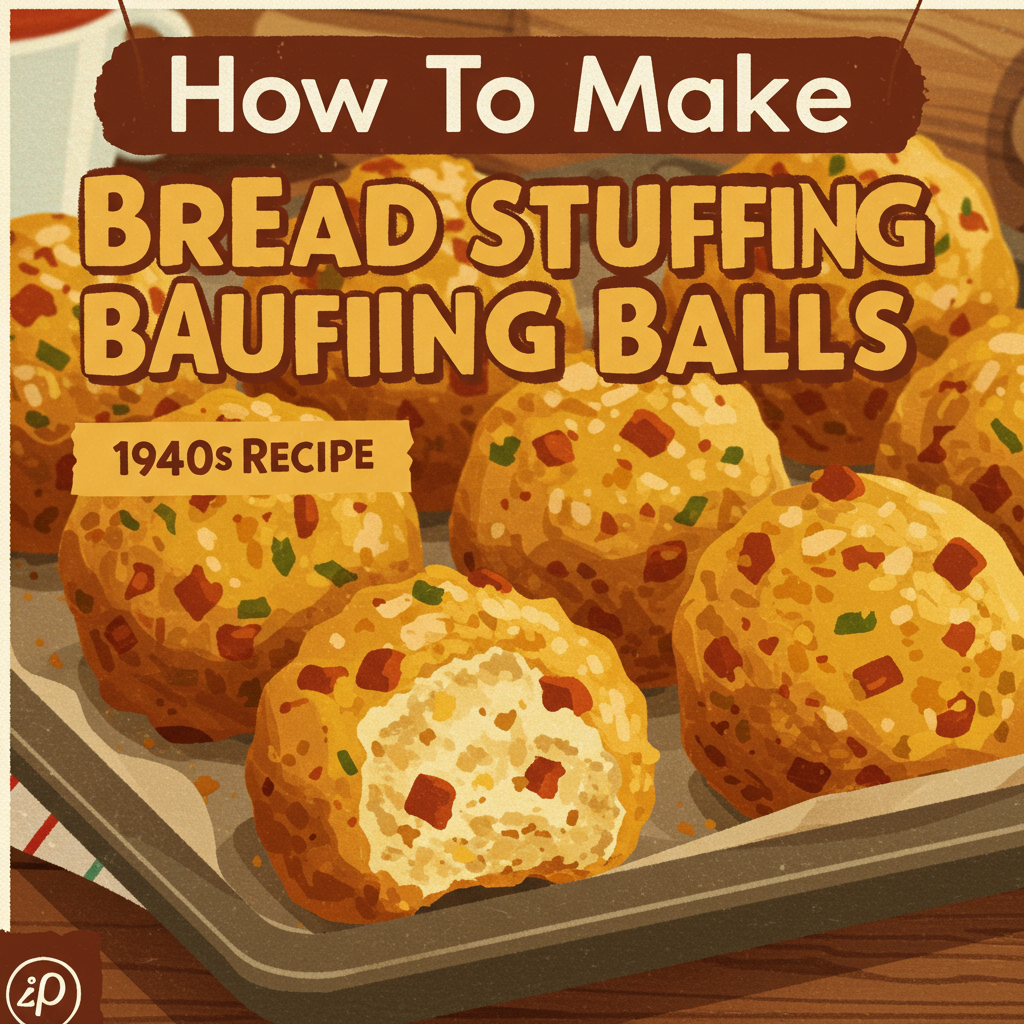
How To Make Bread Stuffing Balls 1940S Recipe: A Vintage Delight for Beginners!
Step back in time with this classic, comforting side dish.
Introduction: A Taste of Nostalgia Made Easy
Welcome, fellow food enthusiasts and aspiring bakers! Are you ready to dive into a truly timeless recipe that evokes warmth, comfort, and a touch of history? Today, we’re bringing back a cherished classic: the **How To Make Bread Stuffing Balls 1940S Recipe**. This isn’t just any stuffing; it’s a delightful, individual serving of savory goodness, perfect for any holiday feast or a cozy Sunday dinner. If you’re looking for **easy baking recipes** that deliver big on flavor without overwhelming complexity, you’ve come to the right place.
Even if you’re new to the kitchen, don’t fret! We’ve meticulously crafted this guide with **baking tips for beginners** at every turn. From choosing the right bread to getting that perfect golden-brown crust, we’ll walk you through each step. Prepare to impress your family and friends with these wonderfully moist and flavorful stuffing balls, a true testament to simple, delicious cooking from a bygone era.
Ingredients List: Gathering Your Essentials
Before we begin our culinary journey, let’s ensure you have all the necessary ingredients. Quality ingredients are the foundation of any great dish, so try to choose the freshest available!
| Ingredient | Quantity | Unit |
|---|---|---|
| Stale white bread (or lightly toasted) | 8 | cups, cubed |
| Unsalted butter | 1/2 | cup (1 stick) |
| Yellow onion, finely chopped | 1 | large |
| Celery stalks, finely chopped | 2 | medium |
| Fresh parsley, chopped | 1/4 | cup |
| Dried sage | 2 | teaspoons |
| Dried thyme | 1 | teaspoon |
| Salt | 1 | teaspoon (or to taste) |
| Black pepper | 1/2 | teaspoon (or to taste) |
| Chicken or vegetable broth, warm | 1.5 – 2 | cups |
| Large egg, lightly beaten | 1 |
Step-by-Step Instructions: Your Guide to Perfect Stuffing Balls
Follow these detailed steps, and you’ll be enjoying your homemade stuffing balls in no time!
Step 1: Prepare Your Bread (The Foundation of Flavor)
- Preheat Oven & Prep Pan: Start by preheating your oven to 375°F (190°C). Lightly grease a large baking pan or a 9×13 inch casserole dish. This prevents the stuffing balls from sticking.
- Cube the Bread: Cut your stale white bread into approximately 1/2-inch to 3/4-inch cubes.
Beginner Tip: Using stale bread is crucial! Fresh bread contains too much moisture and will result in soggy stuffing. If your bread isn’t stale, you can cube it and spread it on a baking sheet, then bake at 300°F (150°C) for 10-15 minutes, or until lightly dried out. Let it cool completely before using.
- Set Aside: Place the bread cubes in a very large mixing bowl.
Step 2: Sauté the Aromatics (Building the Flavor Base)
- Melt Butter: In a large skillet over medium heat, melt the 1/2 cup of unsalted butter.
- Sauté Veggies: Add the finely chopped yellow onion and celery to the skillet. Cook, stirring occasionally, for 8-10 minutes, or until the vegetables are softened and translucent but not browned.
Beginner Tip: Don’t rush this step! Softened vegetables release their flavors better and integrate smoothly into the stuffing. If you cook them too fast, they might burn or remain too crunchy.
- Cool Slightly: Remove the skillet from heat and let the mixture cool for a few minutes.
Step 3: Combine Dry Ingredients (The Herbaceous Heart)
- Add Herbs and Seasoning: To the large bowl with the bread cubes, add the chopped fresh parsley, dried sage, dried thyme, salt, and black pepper.
Common Mistake & Alternative: Don’t be shy with seasoning, but taste as you go! If you only have fresh herbs, use about three times the amount of dried herbs (e.g., 6 tsp fresh sage instead of 2 tsp dried). Fresh herbs offer a brighter flavor.
- Toss Gently: Use your hands or a large spoon to gently toss the bread cubes with the herbs and spices, ensuring they’re evenly distributed.
Step 4: Incorporate Wet Ingredients (Moisture and Binding)
- Add Sautéed Veggies: Pour the slightly cooled butter and vegetable mixture over the seasoned bread cubes.
- Add Broth and Egg: Pour in 1.5 cups of the warm chicken or vegetable broth and the lightly beaten egg.
- Mix Gently: Using your hands (the best tool for this!), gently mix everything together. The goal is to moisten all the bread cubes without mashing them.
Beginner Tip: Start with 1.5 cups of broth. If the mixture still feels too dry and crumbly (it should be moist enough to hold its shape when squeezed), gradually add the remaining 1/2 cup of broth, a little at a time, until you reach the desired consistency. Do not overmix! Overmixing can lead to dense, tough stuffing balls.
Common Mistake: Too much liquid results in soggy stuffing; too little results in dry, crumbly balls. The mixture should feel like a wet sandcastle – just enough moisture to clump together.
Step 5: Form the Stuffing Balls (Shaping Perfection)
- Form Balls: Take about 1/4 cup of the stuffing mixture and gently compress it with your hands to form a ball, about 1.5 to 2 inches in diameter. Don’t pack them too tightly, as this can make them dense. You want them to be firm enough to hold their shape but still a bit airy.
- Arrange in Pan: Place the formed stuffing balls in your prepared baking pan, leaving a little space between each one for even baking.
Step 6: Bake to Golden Perfection
- Bake: Place the baking pan in your preheated oven. Bake for 25-35 minutes, or until the stuffing balls are beautifully golden brown on the outside and heated through.
Beginner Tip: The baking time can vary depending on your oven and the size of your balls. Keep an eye on them after 25 minutes. If they start to brown too quickly, you can loosely cover the pan with foil for the remainder of the baking time.
- Check for Doneness: A cooked stuffing ball will feel firm to the touch. You can also carefully cut one open to ensure it’s hot and moist inside.
- Serve: Carefully remove the pan from the oven. Let the stuffing balls cool for a few minutes before serving. They are best enjoyed warm!
Tips & Tricks for Stuffing Ball Success
Mastering this classic recipe is easy with a few extra pointers:
- The Power of Stale Bread: We can’t stress this enough! Stale bread (or dried-out fresh bread) is key to absorbing the liquid without becoming mushy. It gives the stuffing its characteristic texture.
- Don’t Overmix: Gentle mixing is paramount. Overworking the mixture can develop the gluten in the bread, leading to tough, chewy stuffing balls instead of light and tender ones.
- Taste and Adjust: Before forming the balls, take a small spoonful of the mixture and microwave it for about 15-20 seconds. Taste it! This allows you to adjust the salt, pepper, or herbs before baking the entire batch.
- Make Ahead Option: You can prepare the stuffing mixture, form the balls, and arrange them in the baking pan up to 24 hours in advance. Cover tightly with plastic wrap and refrigerate. When ready to bake, remove from the fridge 30 minutes before baking and add an extra 5-10 minutes to the baking time.
- Add-ins for Variation: Feel free to experiment! Sautéed mushrooms, finely diced cooked sausage, crumbled bacon, or a handful of dried cranberries can add wonderful depth and flavor.
- Fresh vs. Dried Herbs: While dried herbs are convenient and traditional for this 1940s recipe, fresh herbs (like sage, thyme, rosemary) offer a more vibrant flavor. If using fresh, double or triple the quantity.
- Storage: Leftover stuffing balls can be stored in an airtight container in the refrigerator for up to 3-4 days. Reheat gently in the oven or microwave.
Essential Baking Tools You’ll Need
Having the right tools makes any baking adventure smoother. Here are the basics for this recipe:
- Large Mixing Bowl
- Whisk (for the egg)
- Baking Pan (9×13 inch or similar)
- Measuring Cups and Measuring Spoons
- Spatula (or large spoon for mixing)
- Large Skillet
- Sharp Knife and Cutting Board
Nutrition Information (Estimated Per Serving)
Here’s an estimated nutritional breakdown for one serving (approximately 2-3 stuffing balls). Please note these are approximations and can vary based on exact ingredients and portion sizes.
| Nutrient | Amount |
|---|---|
| Calories | ~280 kcal |
| Total Carbohydrates | ~35 g |
| Protein | ~8 g |
| Total Fat | ~13 g |
| Dietary Fiber | ~3 g |
| Sugars | ~2 g |
Frequently Asked Questions (FAQs)
Q1: Can I use fresh bread for this recipe?
A: While stale bread is highly recommended for the best texture, you can use fresh bread if you dry it out first. Cube the fresh bread and spread it on a baking sheet. Bake at 300°F (150°C) for 10-15 minutes, tossing occasionally, until it’s lightly toasted and dried out. Let it cool completely before proceeding with the recipe.
Q2: How do I know if my stuffing mixture has the right amount of moisture?
A: The mixture should be moist enough to hold its shape when you gently squeeze a handful, but not so wet that it’s soggy. If it crumbles easily, add a little more broth (1-2 tablespoons at a time). If it feels too wet, you can add a small amount of extra dried bread crumbs, but be careful not to make it too dense.
Q3: Can I freeze these bread stuffing balls?
A: Yes, absolutely! You can freeze them either baked or unbaked.
- Unbaked: Form the balls, place them on a baking sheet, and freeze until solid. Then transfer to a freezer-safe bag or container. Bake from frozen, adding about 15-20 minutes to the baking time.
- Baked: Allow them to cool completely, then freeze in a single layer before transferring to a freezer-safe bag. Reheat in the oven at 350°F (175°C) until warmed through.
Q4: What if my stuffing balls are falling apart?
A: This usually means the mixture isn’t moist enough or lacks a good binder. Ensure you’ve added the egg, and if the mixture still feels too dry, gradually add a little more warm broth (1-2 tablespoons at a time) until it holds together better. When forming, gently compress them rather than just loosely rolling them.
Q5: Can I make this recipe vegetarian?
A: Yes! Simply use vegetable broth instead of chicken broth. The rest of the ingredients are already vegetarian-friendly.
Conclusion: Enjoy Your Vintage Culinary Creation!
Congratulations, you’ve just mastered the **How To Make Bread Stuffing Balls 1940S Recipe**! This classic dish, with its rich history and comforting flavors, is a wonderful addition to any meal. We hope these detailed instructions and **baking tips for beginners** have empowered you to create something truly delicious and memorable.
Don’t be afraid to experiment a little, but most importantly, enjoy the process and the delightful aroma filling your kitchen. This recipe proves that sometimes, the simplest ingredients, combined with a little care, can create the most extraordinary culinary experiences. Share your creations with us, and happy baking!
“`