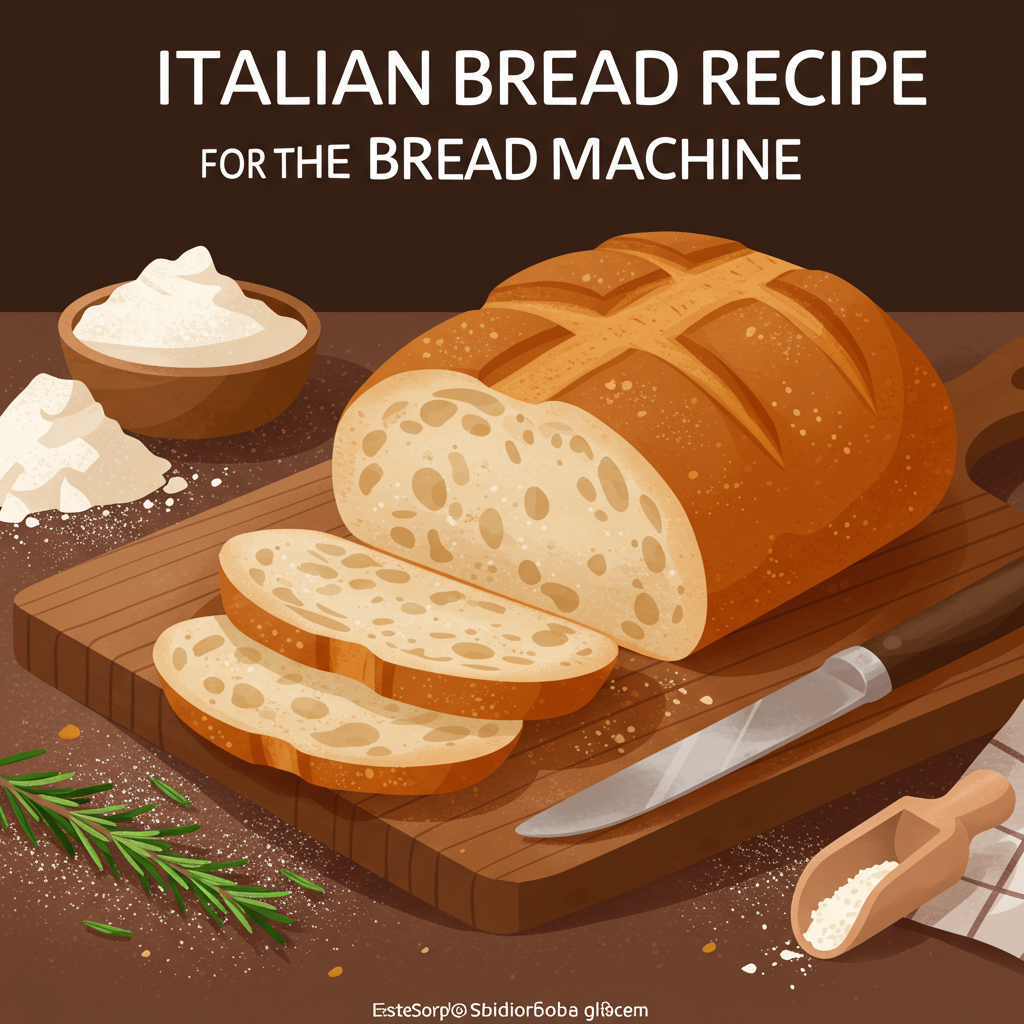
Are you ready to fill your kitchen with the irresistible aroma of freshly baked bread, even if you’re a complete novice in the kitchen? You’ve come to the right place! We’re diving into an **Italian Bread Recipe For The Bread Machine** that is unbelievably simple and yields a crusty, soft, and utterly delicious loaf every single time. Forget complicated kneading or long proofing times; your trusty bread machine does all the hard work for you!
This recipe is perfect for anyone looking for **easy baking recipes** to start their baking journey. We’ve packed it with essential **baking tips for beginners** to ensure your first loaf is a resounding success. Imagine slicing into a warm piece of Italian bread, perfect for dipping in olive oil, alongside pasta, or simply slathered with butter. Get ready to impress yourself and your loved ones with minimal effort!
Ingredients List
Gathering your ingredients correctly is the first step to baking success. Remember to measure precisely!
| Quantity | Unit | Ingredient |
|---|---|---|
| 1 ¼ | cups | Warm Water (105-115°F / 40-46°C or room temp if your machine has a preheat cycle) |
| 2 | tablespoons | Olive Oil (extra virgin for best flavor) |
| 3 | cups | Bread Flour (unbleached is preferred for better texture) |
| 1 ½ | teaspoons | Salt |
| 1 | tablespoon | Granulated Sugar |
| 2 ¼ | teaspoons | Instant Dry Yeast (or one standard packet) |
Step-by-Step Instructions: Baking Your Italian Bread
Follow these detailed steps, and your bread machine will do the heavy lifting, giving you perfect Italian bread with ease.
-
Prepare Your Bread Machine Pan:
First, make sure your bread machine pan and paddle are clean and securely in place inside the machine. A little non-stick spray on the paddle can help prevent the bread from sticking later, but it’s often not necessary with a good non-stick pan.
-
Add Liquid Ingredients First:
Pour the **warm water** and **olive oil** into the bread machine pan. The warmth of the water is important for activating the yeast, but if your machine has a preheat cycle, room temperature water is often sufficient as the machine will gently warm it. If you’re unsure, slightly warm water (like a baby’s bath water) is a safe bet. Using a liquid measuring cup will ensure accuracy here.
-
Add Dry Ingredients (Flour Next!):
Carefully spoon the **bread flour** over the liquid ingredients. Try to create a mound that covers the liquids. Using bread flour specifically is key here, as its higher protein content develops more gluten, giving your Italian bread that characteristic chewy texture. For beginners, remember to *level* your flour measurements – use a knife or straight edge to scrape off any excess from your measuring cup, don’t pack it down!
-
Add Salt and Sugar (Separate from Yeast):
Place the **salt** in one corner of the flour mound and the **granulated sugar** in another corner. It’s important to keep the salt and yeast separate at this stage because salt can inhibit yeast activity if they come into direct contact for too long before mixing begins. The sugar, on the other hand, provides food for the yeast, helping it activate and rise beautifully.
-
Add Yeast Last (The Golden Rule!):
Make a small indentation in the center of the flour mound (away from the salt and sugar) and pour the **instant dry yeast** into it. This is crucial! Placing the yeast on top of the flour, isolated from the liquids and salt, prevents premature activation and ensures a good rise. If you’re using active dry yeast, you can still place it this way, but instant dry yeast is generally preferred for bread machines as it doesn’t require proofing.
-
Select Your Bread Machine Cycle:
Close the lid of your bread machine. Select the **”Basic”**, **”White Bread”**, or **”French Bread”** cycle. For a lighter, airier crust, the “French Bread” cycle often works wonderfully as it typically has a longer rise time. Choose a **1.5 lb loaf size** and a **light or medium crust setting** according to your preference. Press start!
Beginner Tip: Observe Your Dough! About 5-10 minutes into the first kneading cycle, open the lid (briefly!) and check the dough consistency. It should form a smooth, elastic ball that cleans the sides of the pan.
- If it looks too sticky and wet (like thick pancake batter), add flour, one tablespoon at a time, until it forms a proper ball.
- If it looks too dry and crumbly or the machine is struggling to mix it, add warm water, one teaspoon at a time, until it comes together.
This is one of the most important **baking tips for beginners** for perfect bread machine results!
-
The Waiting Game (It’s Worth It!):
Allow the bread machine to complete its full cycle – this usually takes between 3 to 4 hours, depending on the cycle you chose. Resist the urge to open the lid frequently, especially during the rising and baking stages, as this can cause the bread to collapse or bake unevenly.
-
Remove and Cool Your Bread:
Once the cycle is complete, the machine will usually beep. Immediately remove the bread pan from the machine using oven mitts (it will be very hot!). Carefully invert the pan onto a wire cooling rack to release the loaf. If the kneading paddle sticks in the bread, you can gently remove it once the bread has cooled slightly. Be careful not to tear the bottom of the loaf.
-
Cool Completely Before Slicing:
This step is crucial for texture! Let the bread cool on the wire rack for at least 1-2 hours before slicing. Slicing hot bread can result in a gummy texture inside, as the steam needs time to fully dissipate and the crumb to set. Patience is key for the perfect slice!
Tips & Tricks for Bread Machine Success
Elevate your bread-making game with these actionable tips, especially for beginners!
- Measure Accurately: This is the golden rule of baking! Use proper measuring cups and spoons, and for flour, spoon it into the measuring cup and then level it off, rather than scooping directly from the bag (which compacts it).
- Ingredient Temperature Matters: Ensure your water is warm (not hot!) to activate the yeast. Cold water will delay or inhibit activation, while too hot will kill the yeast. Room temperature ingredients generally mix better.
- Check Your Yeast: If your yeast is old or not stored properly, it might not be active. To test, dissolve 1 teaspoon of sugar in ½ cup warm water (105-115°F), then stir in 2 ¼ teaspoons of yeast. Let it sit for 5-10 minutes. If it foams and gets bubbly, your yeast is active!
- Don’t Peek Too Often: While it’s okay to check the dough consistency during the first knead, avoid opening the lid during the rising and baking cycles. This can cause temperature fluctuations and lead to a collapsed or unevenly baked loaf.
- Customize Your Loaf: Feel free to add 1-2 tablespoons of dried Italian herbs (like oregano, basil, rosemary) or a couple of cloves of minced garlic during the initial mixing phase for an extra flavor boost. Add-ins like shredded Parmesan can also be wonderful!
- Proper Cooling is Key: Always cool your bread completely on a wire rack. This allows steam to escape, preventing a gummy texture and ensuring a crisp crust and tender crumb.
- Storage: Store cooled bread in an airtight container or a bread bag at room temperature for 2-3 days. For longer storage, slice and freeze.
Essential Baking Tools
Having the right tools makes all the difference, especially when you’re starting out. Here are a few basics:
- Mixing Bowl (for preparing ingredients if not adding directly to machine)
- Whisk (for combining dry ingredients if needed)
- Bread Machine Pan (comes with your bread machine!)
- Measuring Cups (both liquid and dry sets)
- Measuring Spoons
- Spatula (for scraping down ingredients)
- Wire Cooling Rack
Nutrition Information (Per Slice, approximate for 1/12th of a 1.5lb loaf)
Please note: These are estimated values and can vary based on exact ingredient brands and measurements.
| Nutrient | Amount |
|---|---|
| Calories | 150 kcal |
| Total Carbohydrates | 28 g |
| Protein | 5 g |
| Total Fat | 2.5 g |
| Dietary Fiber | 1 g |
| Sugars | 1 g |
Frequently Asked Questions (FAQs)
Can I use active dry yeast instead of instant dry yeast?
Yes, you can! If you’re using active dry yeast, you might want to increase the quantity by about 25% (so, roughly 2 ¾ teaspoons instead of 2 ¼). While instant dry yeast can be added directly with other ingredients, active dry yeast traditionally requires “proofing” (dissolving in warm water with a pinch of sugar to activate it) before adding to the mix. However, for bread machines, many people find success simply adding active dry yeast on top of the flour like instant yeast, especially if their machine has a preheat cycle. If your bread doesn’t rise well, try proofing it separately next time.
Why is my bread too dense or crumbly?
A dense loaf often indicates too much flour or not enough liquid, or possibly inactive yeast. A crumbly loaf can be due to too much flour, too little liquid, or over-baking. Ensure you’re measuring your flour accurately (spoon and level!) and check your yeast’s freshness. Observing the dough consistency during the first knead (as mentioned in Step 6) is crucial for getting the liquid-to-flour ratio just right.
How should I store my Italian bread?
Once completely cooled, store your Italian bread at room temperature in an airtight container, a clean plastic bag, or a bread box. It will stay fresh for about 2-3 days. For longer storage, you can slice the cooled bread and freeze it in a freezer-safe bag for up to 2-3 months. Thaw slices as needed or toast directly from frozen.
Can I add herbs, cheese, or garlic to this recipe?
Absolutely! This recipe is a fantastic base for customization. You can add 1-2 tablespoons of dried Italian herbs (like oregano, basil, or a mixed Italian seasoning blend) along with the flour. For fresh minced garlic (1-2 cloves), add it with the liquids. If you want to add shredded Parmesan cheese (about ¼ cup), add it during the last 5-10 minutes of the kneading cycle, usually when your bread machine beeps for “add-ins” if it has that feature. Experiment to find your favorite variations!
What if my dough looks too wet or too dry during the kneading cycle?
This is a common beginner question and an easy fix! During the first kneading cycle (usually within the first 5-10 minutes), briefly open the lid. If the dough is too sticky and wet, not forming a ball that cleans the sides of the pan, add flour one tablespoon at a time until it reaches the right consistency. If it’s too dry, crumbly, or the machine is struggling, add warm water one teaspoon at a time. Close the lid and let the machine continue kneading. This small adjustment can make a huge difference!
Conclusion
Congratulations, future bread enthusiast! You’ve just unlocked the secret to incredibly easy and delicious homemade Italian bread, all thanks to your bread machine. This **Italian Bread Recipe For The Bread Machine** is designed to give you consistent, mouth-watering results with minimal fuss, making it one of the most rewarding **easy baking recipes** you’ll try. Remember the **baking tips for beginners** we shared, and don’t be afraid to experiment a little once you’ve mastered the basic loaf.
There’s truly nothing quite like the smell and taste of fresh bread straight from your own kitchen. So go ahead, give this recipe a try, and prepare to enjoy the simple pleasure of homemade goodness. Happy baking!
“`