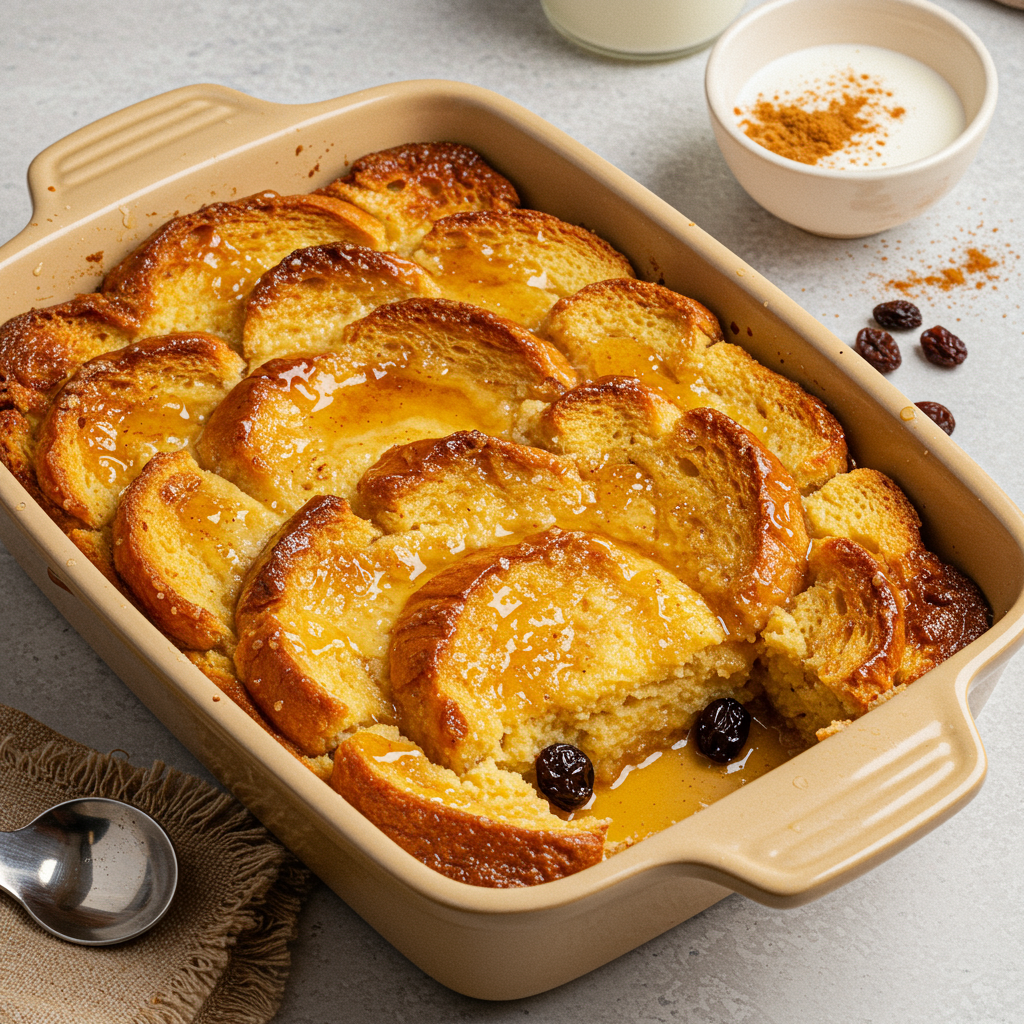
Welcome, aspiring bakers and comfort food enthusiasts! If you’re looking for a dessert that’s warm, inviting, and bursting with flavor, you’ve come to the right place. Today, we’re diving into the delightful world of Jamaican Bread Pudding Recipe. This classic Caribbean dessert is a true hug in a bowl, known for its rich, custardy texture and aromatic spices.

Forget complicated techniques; this recipe is one of those fantastic easy baking recipes that even absolute beginners can master with confidence. We’ll walk you through every step, sharing essential baking tips for beginners to ensure your first (or fiftieth!) Jamaican bread pudding turns out perfectly golden and utterly delicious. Get ready to transform simple ingredients into a masterpiece!
Ingredients List
Gather your ingredients! Using good quality components is the first step to a truly delicious bread pudding.
| Ingredient | Quantity | Unit |
|---|---|---|
| Stale Bread (Brioche, Challah, or White Sandwich Bread work best) | 6-8 | cups (cubed) |
| Whole Milk | 2 | cups |
| Heavy Cream (optional, for richer pudding) | 1/2 | cup |
| Large Eggs | 4 | |
| Granulated Sugar | 1/2 | cup |
| Light Brown Sugar (packed) | 1/4 | cup |
| Unsalted Butter (melted, plus extra for greasing) | 2 | tablespoons |
| Vanilla Extract | 1 | teaspoon |
| Ground Cinnamon | 1 | teaspoon |
| Ground Nutmeg | 1/2 | teaspoon |
| Salt | 1/4 | teaspoon |
| Raisins (or other dried fruit) | 1/2 | cup |
| For the Optional Rum Sauce: | ||
| Unsalted Butter | 1/4 | cup |
| Light Brown Sugar | 1/2 | cup |
| Water or Milk | 1/4 | cup |
| Dark Rum (optional, omit for non-alcoholic) | 2 | tablespoons |
| Vanilla Extract | 1/2 | teaspoon |
Step-by-Step Instructions: Your Path to Perfect Bread Pudding
Follow these detailed steps carefully, and you’ll be enjoying a magnificent Jamaican Bread Pudding in no time!
Step 1: Prep Your Bread and Pan
- Preheat Oven: Start by preheating your oven to 350°F (175°C). This ensures a consistent baking temperature from the moment your pudding goes in.
- Prepare Baking Pan: Lightly grease an 8×8 inch or 9×9 inch baking pan with butter. You can also use a 2-quart casserole dish. Greasing prevents sticking and makes serving easier.
- Cube the Bread: Cut your stale bread into 1-inch cubes. Stale bread is crucial here because it absorbs the custard mixture better without becoming mushy. If your bread isn’t stale, you can lightly toast the cubes in the oven for 10-15 minutes at 300°F (150°C) to dry them out a bit.
- Arrange Bread: Place the cubed bread into your prepared baking pan. Sprinkle the raisins evenly over the bread cubes.
Step 2: Whisk Up the Custard Mixture
- Combine Wet Ingredients: In a large mixing bowl, whisk together the whole milk, heavy cream (if using), melted butter, and vanilla extract until well combined.
- Add Eggs and Sugars: In a separate medium bowl, whisk the eggs thoroughly. Then, add the granulated sugar, light brown sugar, ground cinnamon, ground nutmeg, and salt to the eggs. Whisk vigorously until the sugars are dissolved and the mixture is pale and slightly frothy. Beginner Tip: Whisking eggs well ensures a smooth, even custard.
- Combine Custard: Slowly pour the egg-sugar mixture into the milk mixture, whisking continuously. This prevents the eggs from scrambling due to the temperature difference (if your milk was warm, though usually it’s not).
Step 3: Soak and Assemble
- Pour Custard Over Bread: Gently pour the custard mixture evenly over the bread cubes in the baking pan.
- Soak the Bread: Press the bread down lightly with a spatula or the back of a spoon to ensure all the bread cubes are submerged and absorb the custard. Let it sit for at least 15-20 minutes at room temperature. For an even richer, more thoroughly soaked pudding, you can cover it and refrigerate it for 30 minutes to an hour, or even overnight! Common Mistake Alert: Not letting the bread soak long enough can result in dry spots in your pudding.
Step 4: Bake to Golden Perfection
- Bake: Place the baking pan in the preheated oven. Bake for 45-60 minutes, or until the pudding is set, golden brown on top, and a knife inserted into the center comes out clean (or with just moist crumbs, not liquid batter). The edges should be slightly puffed and firm.
- Optional Water Bath for Even Cooking: For an incredibly creamy and evenly cooked pudding, especially recommended for beginners, place your bread pudding pan inside a larger roasting pan. Carefully pour hot water into the larger pan until it comes about halfway up the sides of the bread pudding pan. This “water bath” prevents the edges from drying out and promotes gentle, uniform baking.
- Cool: Once baked, remove the pudding from the oven. If you used a water bath, carefully lift the smaller pan out of the larger one. Let the bread pudding cool on a wire rack for at least 15-20 minutes before serving. This allows the custard to set further and makes for cleaner slices.
Step 5: Prepare the Optional Rum Sauce (Highly Recommended!)
- Melt Butter: While the pudding cools, melt 1/4 cup of unsalted butter in a small saucepan over medium heat.
- Add Sugar and Liquid: Stir in 1/2 cup light brown sugar and 1/4 cup water or milk. Bring the mixture to a gentle simmer, stirring constantly until the sugar is completely dissolved.
- Add Flavorings: Remove from heat and stir in the dark rum (if using) and vanilla extract. Be careful when adding rum to hot liquid as it can create a puff of steam.
- Serve: Pour the warm rum sauce generously over individual servings of bread pudding.
Tips & Tricks for Bread Pudding Success
Mastering bread pudding is easy with a few insider secrets. These **baking tips for beginners** will elevate your dessert from good to absolutely glorious!
- Stale Bread is Your Best Friend: Seriously, don’t skip this. Fresh bread will turn mushy. If you only have fresh, cube it and leave it out uncovered overnight, or toast it gently in a low oven for 10-15 minutes.
- Don’t Overbake: Overbaking is the enemy of a creamy bread pudding. Keep an eye on it. The center should still have a slight “jiggle” when you gently shake the pan, as it will continue to set as it cools. A knife inserted into the center should come out mostly clean.
- Customize Your Add-ins: While raisins are traditional, feel free to experiment! Dried cranberries, chopped dried apricots, chocolate chips, or even a sprinkle of toasted pecans or walnuts can add wonderful texture and flavor.
- Room Temperature Ingredients: Eggs and milk at room temperature combine more easily and create a smoother, more emulsified custard. This leads to a better overall texture.
- The Power of the Water Bath: If you want a truly custardy, silky-smooth bread pudding without any dry edges, a water bath (bain-marie) is your secret weapon. It ensures even, gentle cooking.
- Serve Warm: While delicious cold, bread pudding truly shines when served warm, especially with that luscious rum sauce or a scoop of vanilla ice cream.
Essential Baking Tools
Having the right tools makes baking a breeze! Here are some essentials for your kitchen:
- Mixing Bowl
- Whisk
- Baking Pan
- Measuring Cups
- Spatula
- Measuring Spoons (highly recommended for spices!)
Nutrition Information (Estimated per serving)
Please note: These are estimated values for one of eight servings and can vary based on specific ingredients and portion sizes. The rum sauce is included in these estimates.
| Nutrient | Amount |
|---|---|
| Calories | 380 kcal |
| Carbohydrates | 55g |
| Protein | 9g |
| Fat | 15g |
| Fiber | 2g |
| Sugar | 35g |
Frequently Asked Questions (FAQs)
Q1: What kind of bread is best for bread pudding?
A1: For the best texture, use a rich, sturdy bread like brioche, challah, or day-old white sandwich bread. These breads absorb the custard beautifully without falling apart. Avoid very dense or extremely light, airy breads.
Q2: Can I make Jamaican Bread Pudding ahead of time?
A2: Absolutely! You can assemble the bread and custard mixture, cover it, and refrigerate it for several hours or even overnight before baking. This allows the bread to soak up even more flavor. You can also bake the pudding entirely and reheat individual servings.
Q3: How do I know when my bread pudding is fully cooked?
A3: The pudding is done when the top is golden brown, and the center is set. When you gently shake the pan, the center should have only a slight jiggle, not be watery. A knife or toothpick inserted into the center should come out mostly clean, with perhaps a few moist crumbs, but no liquid batter.
Q4: Can I omit the rum from the sauce?
A4: Yes, you can! For a non-alcoholic version, simply leave out the dark rum from the sauce recipe. The sauce will still be wonderfully buttery and sweet, complementing the pudding perfectly. You could add a touch more vanilla extract for extra flavor.
Q5: My bread pudding turned out dry/soggy. What went wrong?
A5: If it’s dry, you might have overbaked it, or the bread didn’t soak enough custard. Ensure you let the bread soak adequately and don’t bake past the point where the center is just set. If it’s soggy, it might be underbaked, or you used too much liquid for the amount of bread. Make sure your oven temperature is accurate and bake until the center is properly set.
Q6: How should I store leftover bread pudding?
A6: Store any leftover bread pudding in an airtight container in the refrigerator for up to 3-4 days. You can reheat individual servings in the microwave or oven until warm through.
Conclusion
There you have it – your complete guide to crafting a luscious, comforting Jamaican Bread Pudding Recipe! We hope these baking tips for beginners and detailed instructions empower you to create a dessert that will impress everyone.
This recipe proves that even the most decadent treats can be incredibly simple to make. So go ahead, tie on your apron, gather your ingredients, and fill your home with the irresistible aroma of this Caribbean classic. Don’t be shy to experiment with your own twists, and most importantly, enjoy every single delicious bite. Happy baking!
“`
1 thought on “Jamaican Bread Pudding Recipe – Easy Steps for Success”