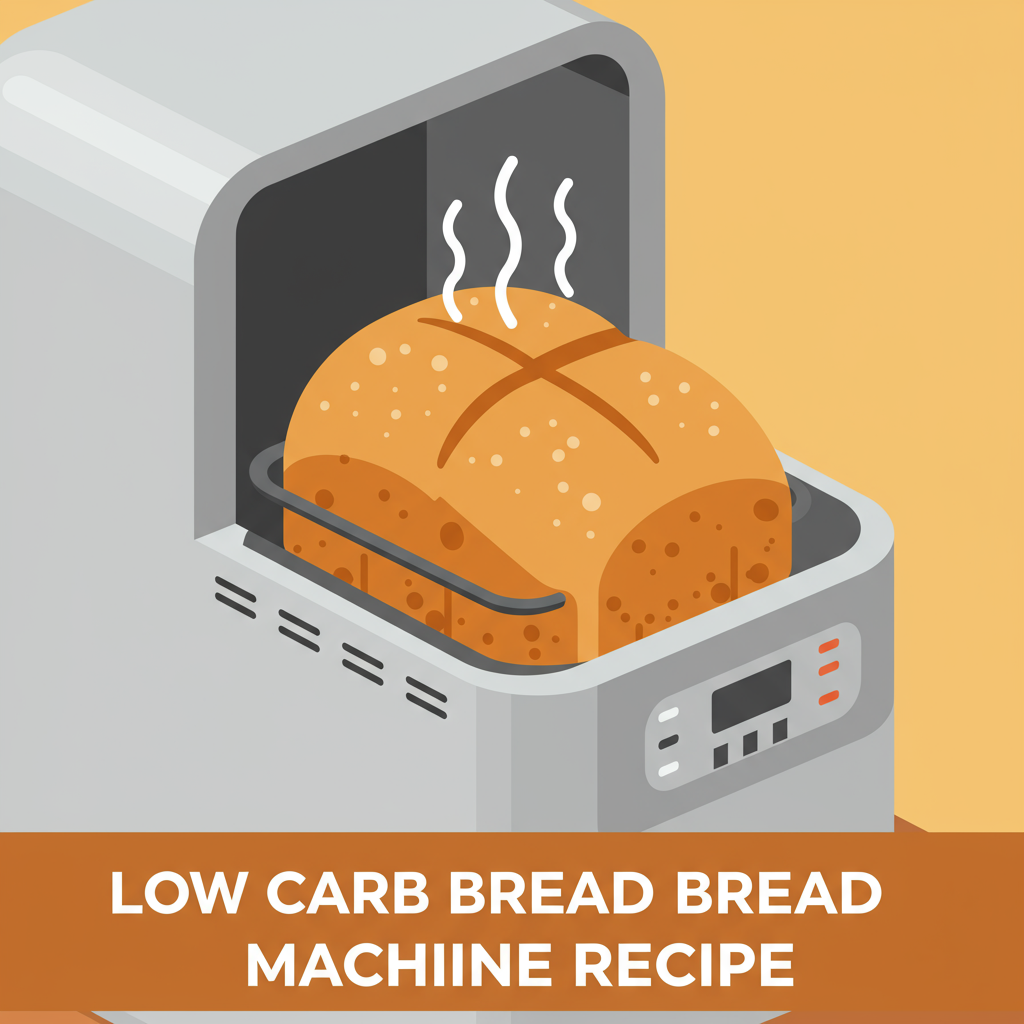
Recipe Name: Low Carb Bread Machine Recipe
Embrace the Joy of Homemade Low Carb Bread!
Are you following a low-carb lifestyle but desperately missing the comfort and convenience of a fresh slice of bread? You’re not alone! Many people struggle to find truly satisfying **low carb bread machine recipe** options that are both delicious and easy to make. That’s where your trusty bread machine comes in! This recipe is specifically designed to be one of those **easy baking recipes** that even absolute beginners can master. We’ll walk you through every step, providing essential **baking tips for beginners** to ensure your first loaf is a resounding success. Get ready to enjoy guilt-free sandwiches, toast, and more, all from the convenience of your own kitchen!
Ingredients You’ll Need
For a 1.5 lb Loaf:
| Quantity | Unit | Ingredient |
|---|---|---|
| 1 | cup | Warm Water (105-115°F / 40-46°C) |
| 3 | tablespoons | Melted Unsalted Butter or Olive Oil |
| 1 | tablespoon | Apple Cider Vinegar |
| 1 ½ | cups | Super-Fine Almond Flour |
| 1 | cup | Vital Wheat Gluten |
| ¼ | cup | Coconut Flour |
| 1 | teaspoon | Xanthan Gum |
| 1 | teaspoon | Salt |
| 1 | teaspoon | Erythritol (optional, helps yeast activate but is low-carb) |
| 2 | teaspoons | Active Dry Yeast |
Step-by-Step Instructions for a Perfect Loaf
Making low-carb bread in a bread machine is a little different from traditional wheat bread, but with these detailed steps and tips, you’ll be a pro in no time!
1. Prepare Your Ingredients
First things first, gather all your ingredients and measure them precisely. Baking, especially low-carb baking, is a science! Use proper measuring cups and spoons, and for flours, it’s best to spoon them into the cup and level off, rather than scooping directly, which can compact the flour and lead to too much being added. Ensure your water is the correct temperature; too hot will kill the yeast, too cold won’t activate it. If using butter, make sure it’s melted but not boiling hot.
2. Load Your Bread Machine
Most bread machines recommend adding liquids first, followed by dry ingredients, and finally the yeast on top, separate from the salt. This prevents the salt from inhibiting the yeast’s action prematurely. Here’s the order:
- Pour the **warm water**, **melted butter/olive oil**, and **apple cider vinegar** into the bread machine pan.
- Carefully add the **almond flour**, **vital wheat gluten**, and **coconut flour** on top of the liquids. Try to create a small mound.
- Sprinkle the **xanthan gum**, **salt**, and **erythritol** (if using) evenly over the flours.
- Finally, make a small indentation in the center of the dry ingredients (away from the wet edges) and add the **active dry yeast**.
Beginner Tip: Always consult your specific bread machine’s manual for its recommended loading order, as some models might vary slightly. However, the liquid-first approach is generally safe and effective.
3. Select Your Cycle
This is where low-carb bread deviates most from traditional recipes. Low-carb flours don’t develop gluten in the same way as wheat flour, so they require less kneading time. Look for a cycle on your bread machine that has a shorter knead and rise time, or a ‘Low Carb’ setting if your machine has one. If not, the ‘Whole Wheat’ cycle is often a good substitute because it typically involves a longer preheat/rest phase and a single rise, which can work well for the denser, less-rising low-carb doughs. If your machine has a ‘Dough’ cycle, you can use that for kneading and the first rise, then remove the dough and bake it in a conventional oven (see FAQs).
For most bread machines, try these settings:
- Cycle: ‘Whole Wheat’ or ‘Basic’ (if you can adjust crust setting).
- Loaf Size: 1.5 lb.
- Crust Color: Medium or Dark, depending on your preference for a crispier crust.
4. Monitor and Adjust (Crucial for Low Carb!)
Unlike regular bread, low-carb dough can be a bit finicky. During the first kneading cycle (usually within the first 10-15 minutes), **peep through the lid or briefly open it** to observe the dough consistency. It should form a relatively soft, slightly sticky ball that cleans the sides of the pan as it kneads. Because low-carb flours absorb liquid differently:
- If the dough looks too dry or crumbly: Add liquid, one teaspoon at a time, until it comes together.
- If the dough looks too wet or soupy: Add more almond flour, one tablespoon at a time, until it forms a cohesive ball.
Beginner Tip: Don’t panic if it’s not perfect right away! This adjustment phase is normal and crucial for low-carb bread. Make small changes and give the machine a minute or two to incorporate the additions before adding more.
5. The Baking Process
Once you’ve made any necessary adjustments, close the lid and let your bread machine do its magic. Avoid opening the lid during the rising and baking cycles, as this can cause the bread to collapse or affect the internal temperature, leading to an underbaked or dense loaf. The unique combination of vital wheat gluten and alternative flours will create a texture that is denser than traditional bread but still wonderfully satisfying.
6. Cooling Your Bread
Once the cycle is complete, the machine will usually beep. Immediately remove the bread pan from the machine using oven mitts. Carefully invert the pan onto a wire cooling rack and shake the loaf out. If the kneading paddle is stuck in the bottom of the loaf, gently remove it with a utensil. It is **absolutely essential** to let the bread cool completely on the rack for at least 1-2 hours (or even longer) before slicing. Slicing warm low-carb bread can result in a gummy texture or cause it to crumble. Cooling allows the internal structure to set properly.
Expert Tips & Tricks for Low Carb Bread Machine Success
- Precision is Key: Always measure your ingredients accurately. Low-carb baking is more sensitive to ratios than traditional baking. Consider using a kitchen scale for flour for even more precision.
- Ingredient Quality: Use super-fine almond flour, not almond meal, for the best texture. Fresh yeast also makes a big difference in rise.
- Avoid Over-Kneading: Low-carb flours don’t develop gluten like wheat. Over-kneading can actually break down the structure provided by the vital wheat gluten and xanthan gum, leading to a denser loaf. Trust your bread machine’s cycle.
- Don’t Rush the Cooling: This cannot be stressed enough! Patience during the cooling process will reward you with a much better-textured slice.
- Crust Control: If you prefer a softer crust, you can rub a little butter on the loaf immediately after taking it out of the pan. For a crisper crust, leave it as is.
- Customization: Feel free to add 2-3 tablespoons of seeds (like flax, chia, or sesame) or dried herbs during the mix-in cycle (if your machine has one) or during the initial kneading phase for extra flavor and nutrition.
- Storage: Store your cooled low-carb bread in an airtight container at room temperature for up to 3-4 days, or slice and freeze for longer storage (up to 2-3 months).
Essential Tools for Your Low Carb Baking Adventure
Having the right tools makes all the difference, especially when you’re just starting out. Here are some essentials:
- Bread Machine (of course!)
- Measuring Cups
- Measuring Spoons
- Kitchen Scale (highly recommended for precision)
- Wire Cooling Rack
- Rubber Spatula (for scraping down sides if needed)
- Oven Mitts
Nutrition Information (Per Slice, approx. 1/10th of loaf)
Please note: Nutritional values are approximate and can vary based on specific brands and exact measurements.
| Nutrient | Amount |
|---|---|
| Calories | 182 kcal |
| Total Carbs | 7g |
| Net Carbs | 3.4g |
| Protein | 13g |
| Fat | 12.4g |
| Fiber | 4.2g |
| Sugar | 0g |
Frequently Asked Questions (FAQs)
Can I make this recipe without a bread machine?
While this recipe is optimized for a bread machine, you can adapt it for a conventional oven. You would combine ingredients, knead by hand or with a stand mixer for about 5-7 minutes, let it rise in a warm place until doubled (this may take longer than traditional bread), punch down, shape into a loaf, let it rise again, and then bake at 350°F (175°C) for 35-45 minutes. However, a bread machine truly simplifies the process, especially for beginners!
My bread is too dense/crumbly. What went wrong?
This is a common issue with low-carb bread. It could be due to several factors: too much or too little liquid during kneading (remember to monitor and adjust!), not letting it cool completely before slicing, old yeast, or incorrect bread machine settings. Ensure your water temperature is right for yeast activation, and always allow ample cooling time.
Can I substitute the flours in this recipe?
It is generally **not recommended** to substitute the flours in low-carb baking without significant recipe adjustments. Almond flour, vital wheat gluten, and coconut flour all have very different properties and absorption rates. Swapping them out can drastically alter the texture and structure of your bread. Stick to the specified flours for best results, especially as a beginner.
How should I store my Low Carb Bread?
Once completely cooled, store your low-carb bread in an airtight container or a bread bag at room temperature for up to 3-4 days. For longer storage, slice the loaf and freeze the slices in a freezer-safe bag or container. This way, you can easily grab a single slice to toast whenever you want!
What bread machine program should I use?
As mentioned in the instructions, a ‘Whole Wheat’ or ‘Basic’ cycle (for a 1.5 lb loaf with a medium/dark crust) is generally a good starting point if your machine doesn’t have a specific ‘Low Carb’ setting. The key is finding a cycle with a shorter kneading time and perhaps a single rise cycle, as low-carb doughs don’t rise as dramatically as traditional ones.
Can I add seeds or nuts to this bread?
Absolutely! Adding seeds (like sunflower, pumpkin, flax, or chia) or chopped nuts can add wonderful texture and flavor. We recommend adding about 2-3 tablespoons during the kneading cycle. If your bread machine has a ‘mix-in’ or ‘add-ins’ beep, wait for that, otherwise, add them about 5-10 minutes into the first kneading phase.
Your Low Carb Bread Journey Begins Now!
Congratulations! You’re now equipped with everything you need to bake a fantastic **low carb bread machine recipe** right in your own kitchen. Say goodbye to carb cravings and hello to delicious, homemade low-carb bread that fits perfectly into your healthy lifestyle. Don’t be afraid to experiment a little once you get the hang of the basic recipe. Remember, every baker starts somewhere, and with these **easy baking recipes** and **baking tips for beginners**, you’re off to a great start. Happy baking, and enjoy your wonderful, fresh-baked loaf!
“`