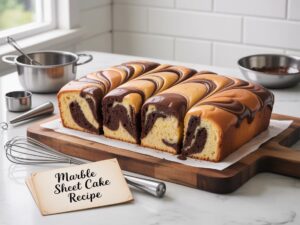
Welcome, aspiring bakers! Are you ready to create a show-stopping dessert that looks as good as it tastes, without the stress? You’ve come to the right place! This Marble Sheet Cake Recipe is specifically designed for anyone new to the kitchen, making it one of the most easy baking recipes you’ll ever tackle. Forget complicated techniques; we’re breaking down every step, offering clear baking tips for beginners, and ensuring your journey to a perfectly swirled, moist, and delicious cake is a joyful one. Get ready to impress your friends and family with a beautiful marble cake that tastes like it came from a professional bakery!
Ingredients You’ll Need
Gathering your ingredients is the first step to baking success. Make sure everything is at room temperature unless otherwise specified – this is a key tip for a smooth batter!
| Ingredient | Quantity |
|---|---|
| For the Marble Sheet Cake: | |
| All-Purpose Flour | 2 ½ cups (300g) |
| Granulated Sugar | 1 ¾ cups (350g) |
| Baking Powder | 1 tbsp |
| Salt | ½ tsp |
| Unsalted Butter, softened | 1 cup (2 sticks / 226g) |
| Large Eggs, room temperature | 4 |
| Whole Milk, room temperature | 1 cup (240ml) |
| Vanilla Extract | 2 tsp |
| Unsweetened Cocoa Powder | ¼ cup (22g) |
| Hot Water | 2 tbsp |
| For the Vanilla Buttercream Frosting: | |
| Unsalted Butter, softened | 1 cup (2 sticks / 226g) |
| Powdered Sugar (Confectioners’ Sugar) | 4 cups (480g) |
| Heavy Cream or Milk | 3-4 tbsp |
| Vanilla Extract | 1 tsp |
| Pinch of Salt | |
Step-by-Step Instructions: Your Path to Baking Success!
Follow these detailed steps carefully, and you’ll be enjoying your homemade Marble Sheet Cake in no time. Don’t rush, and remember, baking is a fun process!
For the Marble Sheet Cake:
- Preheat and Prep Your Pan: First things first, preheat your oven to 350°F (175°C). This ensures the oven is at the correct temperature when your cake goes in. Take a 9×13 inch baking pan and grease it thoroughly with butter or non-stick spray. For extra insurance against sticking, you can also line the bottom with parchment paper, then grease the parchment too. This step is crucial for an easy release!
- Whisk Dry Ingredients: In a large mixing bowl, whisk together the all-purpose flour, granulated sugar, baking powder, and salt. Whisking ensures these ingredients are evenly distributed, which is important for a consistent cake texture. Set this aside.
- Cream Butter and Sugar: In a separate large bowl (or the bowl of a stand mixer fitted with the paddle attachment), beat the softened unsalted butter on medium speed until it’s light and fluffy, about 2-3 minutes. This incorporates air, making your cake tender. Gradually add the remaining granulated sugar and continue beating for another 3-5 minutes, scraping down the sides of the bowl occasionally. The mixture should be pale yellow and very fluffy. This is called “creaming” and it’s a fundamental step in many cake recipes.
- Add Eggs One at a Time: Add the large eggs, one at a time, beating well after each addition until just combined. Make sure to scrape down the sides of the bowl after each egg to ensure everything is incorporated. Adding eggs slowly helps to emulsify the batter, preventing it from separating.
- Alternate Dry and Wet Ingredients: With the mixer on low speed, gradually add the dry ingredient mixture to the wet ingredients in three additions, alternating with the whole milk and vanilla extract in two additions. Begin and end with the dry ingredients. For example: Add ⅓ dry, mix until just combined, then ½ milk/vanilla, mix, then ⅓ dry, mix, then ½ milk/vanilla, mix, then finish with ⅓ dry, mix until *just* combined. Do not overmix! Overmixing develops the gluten in the flour too much, leading to a tough, dry cake.
- Prepare Cocoa Batter: In a small bowl, whisk together the unsweetened cocoa powder and hot water until smooth, creating a thick paste. This “blooms” the cocoa, intensifying its flavor and color.
- Create the Marble Swirl: Divide your vanilla cake batter in half between two separate bowls. To one half, gently fold in the prepared cocoa paste until just combined. Now you have a vanilla batter and a chocolate batter!
- Layer and Swirl: Spoon alternating dollops of vanilla and chocolate batter into your prepared 9×13 inch baking pan. Don’t worry about perfection here; the beauty is in the randomness. Once all the batter is in the pan, take a butter knife or a skewer and gently swirl through the batters a few times to create the marble effect. Be careful not to overswirl, or your colors will blend completely instead of creating distinct marble patterns. Less is more for a beautiful swirl!
- Bake the Cake: Place the pan in your preheated oven and bake for 30-35 minutes, or until a wooden skewer or toothpick inserted into the center comes out clean. If it comes out with wet batter, bake for a few more minutes and check again. Avoid opening the oven door too frequently, especially in the first 20 minutes, as this can cause the cake to sink.
- Cool Completely: Once baked, remove the cake from the oven and let it cool in the pan on a wire rack for about 10-15 minutes. Then, carefully invert the cake onto the wire rack to cool completely. Do not frost a warm cake! The frosting will melt and slide right off. Patience is key here.
For the Vanilla Buttercream Frosting:
- Cream the Butter: In a large mixing bowl (or stand mixer with paddle attachment), beat the softened unsalted butter on medium speed for 3-5 minutes until it’s very light, pale, and fluffy. This is essential for a smooth, airy buttercream.
- Gradually Add Sugar: With the mixer on low speed, gradually add the powdered sugar, about 1 cup at a time, beating well after each addition until fully incorporated. The mixture will be thick and crumbly at first.
- Add Liquid and Flavor: Once all the powdered sugar is added, slowly add the heavy cream (or milk), vanilla extract, and pinch of salt. Start with 3 tablespoons of cream and add more if needed to reach your desired consistency. Beat on medium-high speed for another 2-3 minutes until the frosting is light, fluffy, and spreadable. If it’s too thick, add a tiny bit more liquid; if too thin, add a tablespoon or two more powdered sugar.
- Frost the Cooled Cake: Once your cake is completely cool, use an offset spatula or knife to spread the vanilla buttercream evenly over the top of the cake. Get creative with swirls or smooth finishes!
- Serve and Enjoy!: Slice your beautiful Marble Sheet Cake and serve!
Tips & Tricks for Baking Beginners
Baking can be incredibly rewarding, and these extra tips will help you master this **Marble Sheet Cake Recipe** and beyond!
- Room Temperature Ingredients: This is not just a suggestion! Room temperature butter, eggs, and milk emulsify better, creating a smoother batter and a more uniform, tender crumb. Plan ahead and take them out of the fridge at least 30-60 minutes before you start.
- Measure Accurately: Baking is a science. Use proper measuring cups and spoons. For flour, spoon it into your measuring cup and then level it off with the back of a knife (the “spoon and level” method). Don’t scoop directly from the bag, as this compacts the flour and you’ll end up with too much.
- Don’t Overmix: Once you add flour to your wet ingredients, mix only until just combined. Overmixing develops gluten, leading to a tough, dry cake. A few small lumps in the batter are perfectly fine!
- Oven Temperature Matters: Ovens can vary. Consider investing in an inexpensive oven thermometer to ensure your oven is truly heating to the temperature you set. This can prevent over or under-baked cakes.
- Scrape the Bowl: Regularly scrape down the sides and bottom of your mixing bowl with a rubber spatula to ensure all ingredients are thoroughly incorporated. No one wants pockets of unmixed flour!
- Cool Completely: As tempting as it is, do not frost a warm cake. Warm cake will melt your beautiful buttercream, turning it into a runny mess. Patience is a virtue in baking!
Essential Baking Tools
Having the right tools makes baking easier and more enjoyable. Here are some essentials for your kitchen:
- Mixing Bowl (various sizes)
- Whisk (or an electric hand mixer/stand mixer)
- 9×13 Inch Baking Pan
- Measuring Cups (dry ingredients)
- Measuring Spoons
- Rubber Spatula (for scraping bowls)
- Parchment Paper
- Wire Cooling Rack
- Offset Spatula (for frosting)
Nutrition Information (Approximate Per Serving)
Please note that these values are approximate and can vary based on specific ingredients and serving size. This is for one slice of a 12-slice cake.
| Nutrient | Per Serving (approx.) |
|---|---|
| Calories | 450-500 kcal |
| Carbohydrates | 70-80g |
| Protein | 4-6g |
| Fat | 18-22g |
| Fiber | 1-2g |
| Sugar | 50-60g |
Frequently Asked Questions (FAQs) for Beginners
How do I get a perfect marble swirl without overmixing?
The key is gentle swirling! After dolloping alternating batters, use a butter knife or skewer to make S-shaped motions through the batter only a few times. Don’t go deep into the pan’s bottom and avoid stirring vigorously. You want distinct streaks, not a fully blended color.
Can I use a different pan size for this recipe?
Yes, but you’ll need to adjust baking time. For an 8×8 inch square pan or two 8-inch round pans, the cake will be thicker, so it will take longer (likely 40-50 minutes). For a larger 10×15 inch jelly roll pan, the cake will be thinner and bake faster (20-25 minutes). Always use the toothpick test for doneness.
Why is my cake dry?
A dry cake is usually due to overmixing the batter (developing too much gluten) or overbaking. Ensure you mix only until ingredients are just combined and remove the cake from the oven as soon as the toothpick test comes out clean.
How should I store leftover Marble Sheet Cake?
Store your frosted cake in an airtight container at room temperature for up to 2-3 days. If your kitchen is very warm, or if you prefer, you can store it in the refrigerator for up to 5 days. Just bring it back to room temperature for the best taste and texture before serving.
Can I make this recipe dairy-free or gluten-free?
While this recipe isn’t specifically designed for those dietary needs, it’s possible with substitutions. For dairy-free, use plant-based butter, milk alternatives (like almond or oat milk), and a dairy-free frosting. For gluten-free, you can try a 1:1 gluten-free all-purpose flour blend, but results can vary, and you might need to adjust liquid slightly. Always check the package instructions for GF flour blends.
How do I know when the cake is perfectly done?
The most reliable method is the toothpick test! Insert a wooden toothpick into the center of the cake. If it comes out clean with no wet batter attached, your cake is done. If there are a few moist crumbs, it’s usually perfect, but if it’s wet, it needs a few more minutes.
Conclusion: Your Baking Adventure Begins!
Congratulations, future master baker! You’ve just created a stunning and delicious Marble Sheet Cake Recipe from scratch. This journey wasn’t just about baking a cake; it was about gaining confidence in the kitchen, understanding key baking principles, and discovering the joy of homemade treats. Don’t be afraid to experiment with different flavors or frosting designs next time. Every bake is a learning experience, and with this easy baking recipe under your belt, you’re well on your way to becoming a seasoned pro. Share your beautiful creation with friends and family, and most importantly, enjoy every single bite. Happy baking!