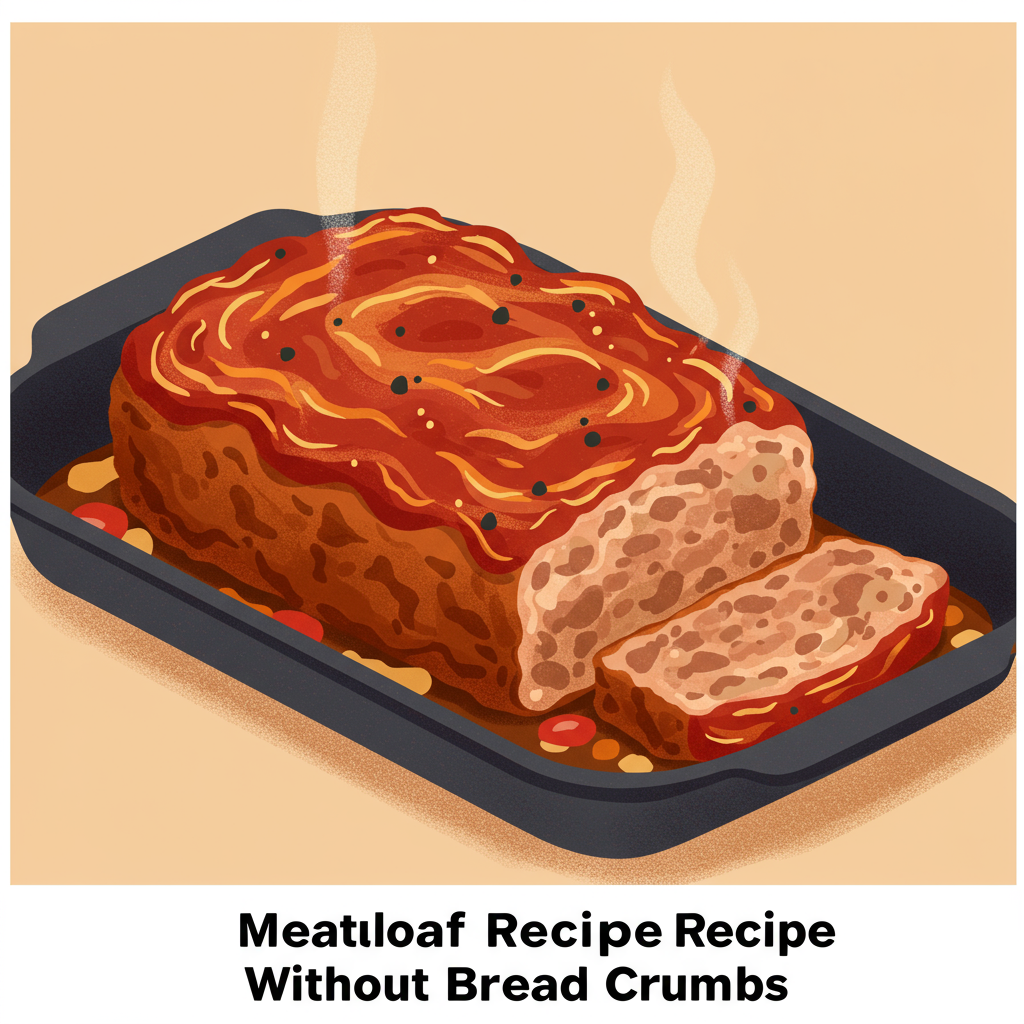
The Ultimate **Meatloaf Recipe Without Bread Crumbs**: A Beginner-Friendly Guide to Juicy Perfection!
Welcome, aspiring bakers and comfort food enthusiasts! Are you ready to dive into one of America’s most beloved classic dishes, but with a twist? This isn’t just any meatloaf recipe; it’s our specially crafted **Meatloaf Recipe Without Bread Crumbs**, designed to be incredibly moist, flavorful, and surprisingly easy to master. If you’ve been searching for **easy baking recipes** that deliver big on taste without requiring complex techniques, you’ve found your next kitchen adventure!
Often, meatloaf can get a bad rap for being dry or bland, or perhaps you’re avoiding gluten or just prefer a different texture. Fear not! We’re here to banish those concerns and show you how to create a succulent, tender meatloaf that will become a staple in your home. This recipe is packed with helpful **baking tips for beginners**, ensuring your first (or fiftieth!) attempt is a resounding success. Get ready to impress your family and friends with a dish that’s hearty, satisfying, and utterly delicious!
Ingredients List
Gather your ingredients! Fresh, quality components make all the difference in this delicious meatloaf.
| Ingredient | Quantity | Unit |
|---|---|---|
| Lean Ground Beef (80/20 works best for flavor and moisture) | 2 | pounds |
| Large Egg | 1 | |
| Milk (whole or 2%) | 1/2 | cup |
| Yellow Onion, finely diced | 1 | medium |
| Garlic, minced | 2 | cloves |
| Ketchup (for meatloaf mixture) | 1/4 | cup |
| Worcestershire Sauce | 1 | tablespoon |
| Dijon Mustard | 1 | teaspoon |
| Salt | 1 | teaspoon |
| Black Pepper, freshly ground | 1/2 | teaspoon |
| Optional: Fresh Parsley, chopped | 2 | tablespoons |
| For the Glaze: | ||
| Ketchup | 1/2 | cup |
| Brown Sugar, packed | 2 | tablespoons |
| Apple Cider Vinegar | 1 | tablespoon |
Step-by-Step Instructions: Your Path to Perfect Meatloaf
Follow these detailed steps carefully, and you’ll be enjoying a fantastic meatloaf in no time! Remember, baking is a science, but it’s also about having fun and learning along the way.
Step 1: Preheat and Prepare Your Pan
- Preheat your oven to 350°F (175°C). This ensures an even bake from the start.
- Lightly grease a standard loaf pan (9×5 inches) or a baking sheet. If using a baking sheet, you might want to line it with parchment paper for easier cleanup.
- Beginner Tip: Preheating is crucial! Don’t skip this step. It helps the meatloaf cook evenly and develop a nice crust.
Step 2: Sauté Aromatics (Optional, but Recommended for Flavor)
- In a small skillet over medium heat, add a teaspoon of olive oil. Add the finely diced onion and cook for 5-7 minutes, until softened and translucent.
- Add the minced garlic and cook for another minute until fragrant. Be careful not to burn the garlic!
- Remove from heat and let cool slightly.
- Why do this? Sautéing the onion and garlic mellows their flavor, making them less pungent and more integrated into the meatloaf. It also prevents crunchy bits of raw onion in your cooked meatloaf.
Step 3: Prepare the Liquid Binders and Flavorings
- In a large mixing bowl, whisk together the egg, milk, 1/4 cup ketchup, Worcestershire sauce, and Dijon mustard.
- Add the salt and black pepper, and the optional fresh parsley if using. Whisk until well combined. This mixture provides moisture and binds the meat without the need for bread crumbs.
- Beginner Tip: Ensure all liquid ingredients are well mixed before adding the meat. This distributes the flavors evenly.
Step 4: Combine All Ingredients
- Add the lean ground beef and the cooled, sautéed onion and garlic to the large mixing bowl with the liquid mixture.
- Now, the crucial part: using your hands, gently mix all the ingredients together until just combined.
- Common Mistake & How to Avoid It: Do NOT overmix! Overmixing the meat will result in a tough, dense, and dry meatloaf. Mix just enough so that the ingredients are evenly distributed – typically about 1-2 minutes of gentle handling. Think of it like making a delicate cake batter, not kneading bread dough.
Step 5: Form the Meatloaf
- Transfer the meat mixture into your prepared loaf pan or shape it into an oblong loaf directly on the greased baking sheet.
- If using a baking sheet, try to make it about 9 inches long and 4-5 inches wide.
- Gently press the mixture to form an even loaf, but don’t compact it too tightly. A slightly looser pack allows for better moisture retention.
- Beginner Tip: If you’re having trouble shaping it, moisten your hands slightly with water; this can prevent the meat from sticking to your skin.
Step 6: Prepare and Apply the Glaze
- In a small bowl, whisk together the 1/2 cup ketchup, brown sugar, and apple cider vinegar for the glaze.
- Spread about half of this glaze evenly over the top and sides of the formed meatloaf. This glaze adds a beautiful tangy-sweet flavor and helps create a lovely caramelized crust.
- Alternative Glaze: If you prefer a spicier kick, add a dash of hot sauce to your glaze. For a smoky flavor, try BBQ sauce instead of ketchup.
Step 7: Bake the Meatloaf
- Place the meatloaf in the preheated oven.
- Bake for 45 minutes.
- After 45 minutes, remove the meatloaf from the oven and spread the remaining glaze over the top.
- Return to the oven and bake for another 15-20 minutes, or until an internal temperature of 160°F (71°C) is reached.
- Beginner Tip: An instant-read meat thermometer is your best friend here! Insert it into the thickest part of the meatloaf to check for doneness. Do not rely solely on visual cues.
- Common Mistake: Overcooking. This is the fastest way to dry out your meatloaf. As soon as it hits 160°F, it’s done!
Step 8: Rest and Serve
- Once the meatloaf reaches 160°F, remove it from the oven.
- Crucial Step: Let the meatloaf rest for at least 10-15 minutes before slicing.
- Why Rest? Resting allows the juices to redistribute throughout the meatloaf, resulting in a much moister and more flavorful slice. If you cut into it immediately, all those delicious juices will run out, leaving you with a dry mess.
- After resting, carefully transfer the meatloaf to a cutting board, slice, and serve.
- Enjoy your perfectly baked, juicy meatloaf!
Tips & Tricks for Meatloaf Mastery
Even though this is an **easy baking recipe**, these extra insights will elevate your meatloaf from great to phenomenal!
- Don’t Overmix: We can’t stress this enough! Gentle handling of the meat mixture is key to a tender meatloaf. Overmixing develops the proteins, leading to a tough, rubbery texture. Use your hands and mix just until combined.
- Use Quality Meat: An 80/20 lean-to-fat ratio for ground beef is ideal. The fat provides flavor and moisture, preventing a dry meatloaf. If you use leaner meat, consider adding a tablespoon of olive oil or a bit of heavy cream to the mixture.
- Chop Veggies Finely: For an undetectable texture and even flavor distribution, ensure your onions and garlic (and any other vegetables you add) are very finely diced. This is especially important if you have picky eaters!
- The Power of a Meat Thermometer: This is the single most important tool for preventing overcooked, dry meatloaf. Always aim for 160°F (71°C) internal temperature. The meatloaf will continue to cook slightly as it rests.
- Resting is Non-Negotiable: Seriously, resist the urge to slice immediately. Those 10-15 minutes of resting are vital for a juicy, intact slice.
- Make Ahead Option: You can prepare the meatloaf mixture, form it, and store it covered in the refrigerator for up to 24 hours before baking. Just bring it to room temperature for about 30 minutes before baking, and add an extra 5-10 minutes to the baking time if it’s still cold.
- Customize Your Flavors: Feel free to experiment with herbs like thyme or rosemary, or add a pinch of smoked paprika for extra depth. For a little heat, mix in some finely diced jalapeño.
Essential Baking Tools
Having the right tools makes baking easier and more enjoyable. Here are some essentials for this recipe:
- Mixing Bowl
- Whisk
- Baking Pan (loaf pan or baking sheet)
- Measuring Cups & Measuring Spoons
- Spatula (for mixing and spreading glaze)
- Cutting Board and Sharp Knife (for dicing vegetables)
- Instant-Read Meat Thermometer (highly recommended!)
Nutrition Info (per serving, approximate)
This information is an estimate and can vary based on specific ingredients and portion sizes.
| Nutrient | Amount |
|---|---|
| Calories | 350 kcal |
| Carbohydrates | 15 g |
| Protein | 30 g |
| Fat | 18 g |
| Fiber | 1 g |
| Sugar | 9 g |
Frequently Asked Questions (FAQs)
Q1: Why no bread crumbs in this recipe?
A: Many people prefer meatloaf without bread crumbs for various reasons: to make it gluten-free, to avoid a specific texture, or simply out of personal preference. In this recipe, the combination of egg and milk (or other liquid binders) effectively holds the meatloaf together and contributes to its moistness, providing a tender texture without relying on bread crumbs.
Q2: How do I know if my meatloaf is fully cooked without overcooking it?
A: The most reliable way is to use an instant-read meat thermometer. Insert it into the thickest part of the meatloaf. It’s done when it reaches an internal temperature of 160°F (71°C). Visual cues can be misleading, so a thermometer is your best friend for perfectly cooked, juicy meatloaf every time.
Q3: Can I prepare this meatloaf ahead of time?
A: Absolutely! You can mix all the ingredients and form the meatloaf up to 24 hours in advance. Cover it tightly with plastic wrap and refrigerate. When ready to bake, let it sit at room temperature for about 30 minutes before placing it in the oven. You might need to add an extra 5-10 minutes to the baking time if it’s still quite cold.
Q4: What can I use instead of milk if I don’t have it or have dietary restrictions?
A: You can easily substitute milk with equal parts beef broth, chicken broth, water, or even heavy cream for a richer flavor. For dairy-free options, unsweetened almond milk or oat milk can also work, though they might slightly alter the flavor profile.
Q5: My meatloaf turned out dry. What went wrong?
A: Dry meatloaf is usually a result of one of two things: overmixing the meat, which makes it tough and dense, or overcooking it, which causes all the moisture to evaporate. Ensure you mix gently until just combined, and always use a meat thermometer to pull it out of the oven as soon as it hits 160°F. Also, using lean beef without enough added fat can contribute to dryness, so an 80/20 blend is often recommended.
Q6: Can I freeze leftover meatloaf?
A: Yes, meatloaf freezes beautifully! Allow it to cool completely, then wrap individual slices or the entire loaf tightly in plastic wrap, then aluminum foil. It can be frozen for up to 3 months. Thaw in the refrigerator overnight and reheat gently in the oven or microwave.
Ready to Bake Your Best Meatloaf Ever?
There you have it – a comprehensive, **beginner-friendly baking recipe blog post** for a truly delicious **Meatloaf Recipe Without Bread Crumbs**! We’ve covered everything from ingredient selection to expert baking tips, ensuring your journey into the world of homemade meatloaf is nothing short of successful and satisfying. This recipe proves that comfort food can be both simple to make and incredibly flavorful.
Don’t be intimidated; roll up your sleeves, gather your ingredients, and give this recipe a try. You’ll be amazed at how easy it is to create a juicy, tender, and perfectly glazed meatloaf that will earn rave reviews. We encourage you to experiment with flavors and make it your own. Happy baking, and happy eating!
“`