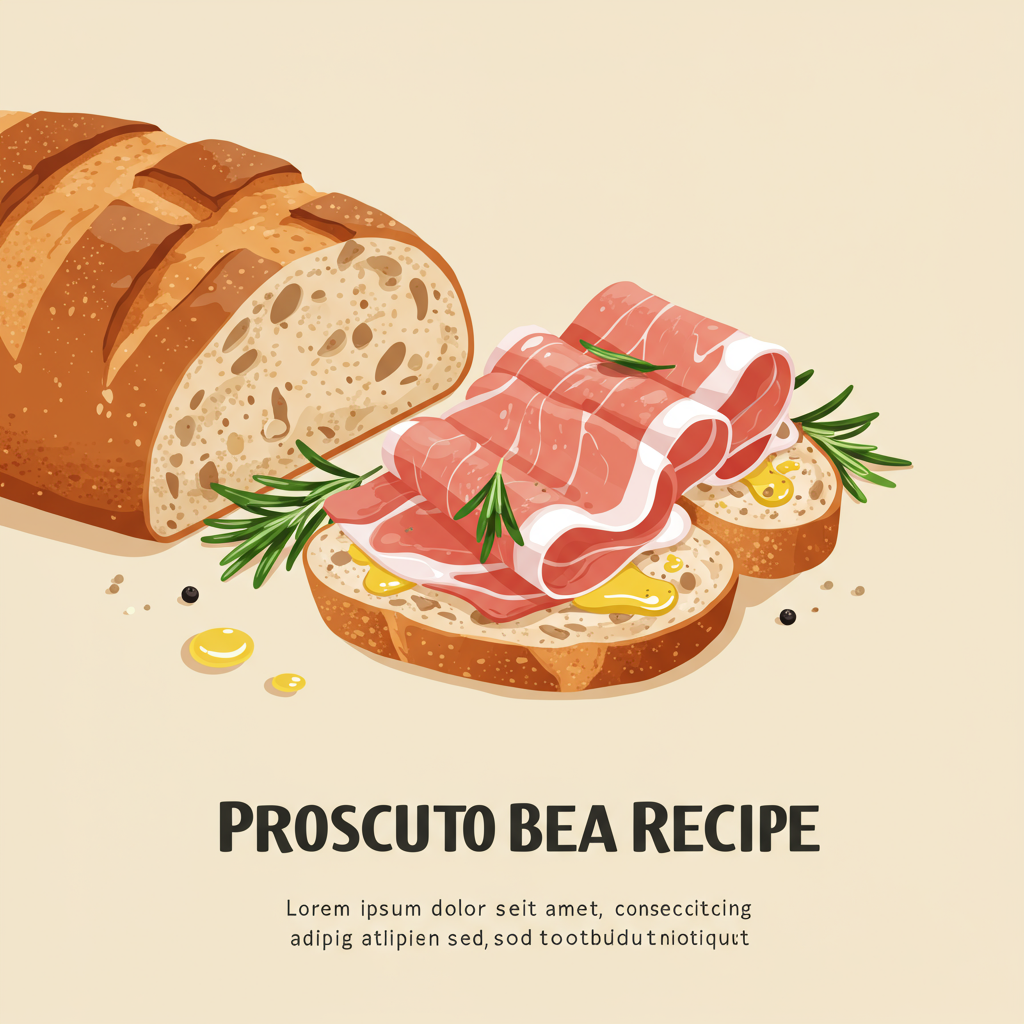
Welcome, fellow food lovers and aspiring bakers! Are you ready to dive into the wonderful world of homemade bread? Today, we’re tackling a truly irresistible classic: our Prosciutto Bread Recipe. Forget complicated techniques; this recipe is designed to be one of the most easy baking recipes you’ll ever try, perfect for anyone looking for solid baking tips for beginners. Imagine a warm, crusty loaf, studded with savory prosciutto, gooey melted cheese, and aromatic herbs. It’s an absolute showstopper for brunch, a fantastic appetizer, or a delightful side to any meal. If you’ve ever been intimidated by baking, this recipe is your friendly guide to creating something truly spectacular from scratch. Let’s get baking!
Gather Your Delicious Ingredients
Before we begin our baking adventure, let’s make sure we have all our culinary treasures ready. Having everything measured and prepped beforehand, a technique called “mise en place,” makes the baking process smooth and stress-free, especially for beginners!
| Ingredient | Quantity | Unit |
|---|---|---|
| All-Purpose Flour | 3 ½ | cups |
| Active Dry Yeast | 2 ¼ | teaspoons (1 packet) |
| Granulated Sugar | 1 | tablespoon |
| Salt | 1 ½ | teaspoons |
| Warm Water (105-115°F / 40-46°C) | 1 ¼ | cups |
| Olive Oil | 2 | tablespoons |
| Prosciutto | 4 | ounces |
| Provolone or Mozzarella Cheese (shredded or diced) | 1 | cup |
| Fresh Rosemary (chopped) | 1 | tablespoon |
| Egg (for egg wash) | 1 | large |
Step-by-Step Instructions: Bake Your Best Prosciutto Bread

Follow these detailed steps carefully, and you’ll be pulling a gorgeous loaf of Prosciutto Bread from your oven in no time! Remember, baking is a journey, and every step is a part of the delicious adventure.
Step 1: Activate Your Yeast
- Prepare your yeast: In a large mixing bowl (or the bowl of your stand mixer), combine the warm water (ensure it’s between 105-115°F or 40-46°C – this is crucial for yeast activation!), granulated sugar, and active dry yeast. The sugar gives the yeast something to “eat,” helping it wake up.
- Let it bloom: Gently stir these ingredients together. Then, let the mixture sit undisturbed for about 5-10 minutes. You’re looking for a foamy, bubbly layer to form on the surface. This foam indicates that your yeast is alive and active – a good sign for a successful rise! If it doesn’t foam, your water might have been too hot (killing the yeast) or too cold (not activating it), or your yeast might be old. In this case, it’s best to start over with fresh yeast and properly tempered water.
Step 2: Mix the Dough
- Add wet ingredients: Once your yeast is foamy, add the olive oil to the bowl.
- Combine dry ingredients: In a separate bowl, whisk together the **all-purpose flour** and **salt**. Adding salt directly to the yeast can inhibit its activity, so it’s best to mix it with the flour first.
- Combine wet and dry: Gradually add the flour mixture to the wet ingredients in the large bowl, mixing with a wooden spoon or a dough hook on a stand mixer on low speed. Mix until a shaggy dough forms and all the flour is incorporated.
- Begin kneading: If using a stand mixer, increase the speed to medium-low and knead for 7-10 minutes. If kneading by hand, turn the dough out onto a lightly floured surface and knead for 10-12 minutes.
- Check for readiness: The dough should become smooth, elastic, and less sticky. It should pass the “windowpane test”: you should be able to stretch a small piece of dough thin enough to see light through it without tearing. If it tears, keep kneading!
- Troubleshooting: If your dough is too sticky, add a tablespoon of flour at a time until it’s manageable. If it’s too dry, add a teaspoon of water at a time. The goal is a soft, pliable dough.
Step 3: First Rise (Proofing)
- Prepare for rising: Lightly grease a clean large bowl with a little olive oil. Place the dough ball in the bowl, turning it once to coat all sides with oil. This prevents it from drying out.
- Cover and rise: Cover the bowl tightly with plastic wrap or a clean kitchen towel. Place it in a warm, draft-free spot. A slightly warm oven (turned off, with just the light on) or a sunny spot works well.
- Wait patiently: Let the dough rise for 1 to 1.5 hours, or until it has doubled in size. This process, called proofing, allows the yeast to produce carbon dioxide, creating air pockets and giving the bread its wonderful texture. **Beginner Tip:** Don’t rush this step! A proper first rise is crucial for flavor and texture.
Step 4: Incorporate Fillings
- Prep your fillings: While the dough is rising, prepare your prosciutto by tearing or chopping it into small, bite-sized pieces. If using fresh mozzarella, dice it into small cubes; if using shredded, ensure it’s not too clumpy. Roughly chop your fresh rosemary.
- Gently deflate: Once the dough has doubled, gently punch it down to release the air. This is called “degassing” and helps redistribute the yeast and gluten.
- Mix in fillings: Turn the dough out onto a lightly floured surface. Flatten it into a rough rectangle. Sprinkle the chopped prosciutto, cheese, and rosemary evenly over the dough.
- Fold and knead lightly: Fold the dough over itself a few times and gently knead for just 1-2 minutes to evenly distribute the fillings. Be careful not to over-knead here, as you don’t want to tear the prosciutto or mush the cheese too much.
Step 5: Shape the Bread and Second Rise
- Shape your loaf: Gently shape the dough into a rustic, oblong loaf or a round boule. You can also place it into a lightly greased 9×5 inch loaf pan for a more uniform shape. If using a loaf pan, ensure it’s well-greased or lined with parchment paper.
- Second rise: Place the shaped dough on a parchment-lined baking sheet or in your loaf pan. Cover it loosely with plastic wrap or a kitchen towel. Let it rise again in a warm, draft-free spot for another 30-45 minutes, or until it has noticeably puffed up. It won’t quite double this time, but it should look light and airy.
- Preheat oven: About 15-20 minutes before the end of the second rise, preheat your oven to 375°F (190°C).
Step 6: Bake Your Masterpiece
- Prepare egg wash: In a small bowl, whisk the large egg with 1 tablespoon of water. This creates an egg wash that will give your bread a beautiful golden-brown crust and a lovely sheen.
- Apply egg wash: Gently brush the top of the risen dough with the egg wash. Be careful not to press down too hard, as this can deflate your beautifully risen dough.
- Score the bread (optional): For a professional touch and to help control where the bread expands, you can make a few shallow cuts (about ½ inch deep) on the top of the loaf with a very sharp knife or a bread lame.
- Bake: Place the bread in the preheated oven. Bake for 30-40 minutes, or until the crust is deeply golden brown and the internal temperature reaches 200-210°F (93-99°C) when measured with an instant-read thermometer.
- Cool: Once baked, carefully remove the bread from the oven and transfer it to a wire rack to cool completely. This is crucial! Slicing hot bread can make it gummy inside. Resist the urge to cut into it for at least 30 minutes, or even an hour for best results.
Tips & Tricks for Beginner Bakers
Baking bread can seem daunting, but these tips will help you achieve success every time!
- Measure Accurately: For baking, precision is key. Use measuring cups for liquids and dry ingredients, but for flour, it’s best to weigh it using a kitchen scale (about 120-125g per cup) for the most consistent results. If you don’t have a scale, lightly spoon flour into your measuring cup and level it off with a straight edge, don’t pack it down.
- Temperature is Everything (for Yeast): Always ensure your water is the correct temperature for activating yeast (105-115°F). Too cold, and the yeast won’t activate; too hot, and it will die. An instant-read thermometer is your best friend here.
- Don’t Rush the Rise: Patience is a virtue in bread baking. The rising (proofing) steps are crucial for flavor development and texture. If your kitchen is cool, find a warm spot (like a slightly warm, turned-off oven with the light on) to help the dough rise properly.
- Know Your Dough: Pay attention to how your dough feels. It should be elastic, smooth, and slightly tacky, but not overly sticky after kneading. Adjust with small amounts of flour or water if needed.
- Preheat Properly: Always give your oven ample time to preheat completely. This ensures an even bake and a good crust.
- Cool Completely: Resist the urge to slice into your bread right out of the oven. Letting it cool on a wire rack allows the internal structure to set and prevents a gummy texture.
- Customize It: Feel free to experiment with other additions! Sun-dried tomatoes, olives, different herbs like thyme or oregano, or a mix of cheeses can all be fantastic in this bread.
Essential Baking Tools
Having the right tools makes all the difference, especially when you’re just starting out. Here are a few essentials that will make your Prosciutto Bread baking (and future baking endeavors) a breeze:
- Mixing Bowl
- Whisk
- Baking Pan (or a large baking sheet)
- Measuring Cups & Spoons
- Spatula (or a wooden spoon)
- Kitchen Scale (highly recommended for accuracy!)
- Instant-Read Thermometer
- Parchment Paper
Nutrition Information (Estimated per serving, 1/12th of loaf)
Please note that these are approximate values and can vary based on exact ingredient quantities and brands used.
| Nutrient | Value |
|---|---|
| Calories | 280-320 kcal |
| Carbohydrates | 40-45 g |
| Protein | 12-15 g |
| Fat | 8-10 g |
| Fiber | 2-3 g |
| Sugar | 2-3 g |
Frequently Asked Questions (FAQs)
-
Can I use different types of cheese or meat?
Absolutely! This recipe is very versatile. Feel free to substitute provolone with Gruyère, cheddar, or even a mix of Parmesan and mozzarella. For the meat, cooked bacon bits, diced ham, or even sun-dried tomatoes (for a vegetarian option) would work wonderfully.
-
What if my dough isn’t rising?
The most common reasons for a dough not rising are inactive yeast (check the expiration date and ensure your water temperature was correct) or a cold environment. Ensure your yeast foamed up in the first step. If your kitchen is cold, try placing the dough in a slightly warm, turned-off oven with just the light on, or near a warm window.
-
How should I store leftover Prosciutto Bread?
Once completely cooled, store your Prosciutto Bread at room temperature in an airtight container or wrapped tightly in plastic wrap for up to 2-3 days. For longer storage, you can freeze slices or the whole loaf (well-wrapped) for up to 1 month. Thaw at room temperature and refresh in a warm oven for a few minutes before serving.
-
Can I make this recipe ahead of time?
Yes! You can prepare the dough through the first rise, then punch it down, incorporate the fillings, and shape it. Instead of the second rise, cover it tightly and refrigerate overnight (up to 24 hours). The next day, let it come to room temperature for about 1-2 hours, then proceed with the second rise, egg wash, and baking.
-
What’s the best way to get a crispy crust?
For an extra crispy crust, you can place a pan of hot water on the bottom rack of your oven during the first 10-15 minutes of baking. The steam helps create a beautiful, crackly crust. Also, ensure your oven is fully preheated.