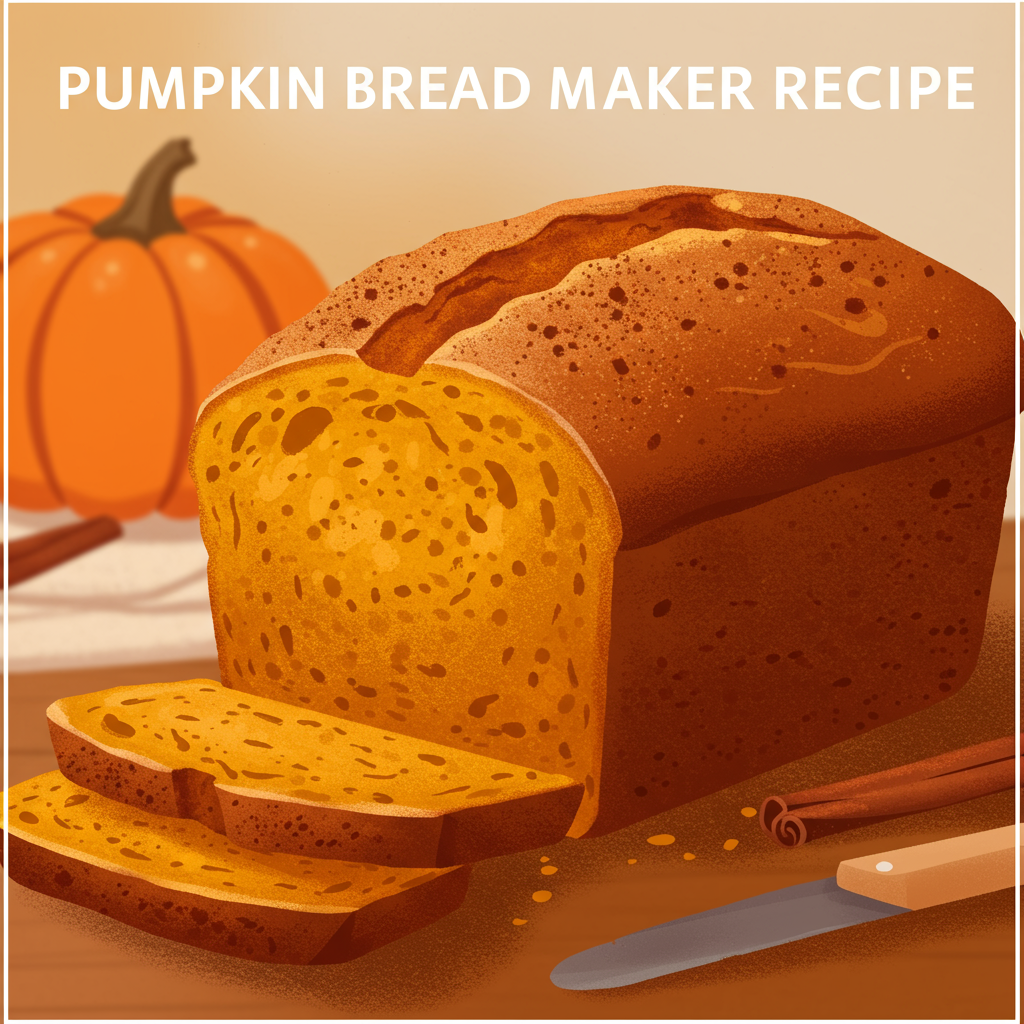
The crisp air, the vibrant leaves, and that undeniable craving for all things pumpkin – it can only mean one thing: it’s pumpkin season! If you’re new to baking or simply looking for a hassle-free way to enjoy a warm, spiced loaf, you’ve landed in the right place.
This Pumpkin Bread Maker Recipe is designed to be incredibly straightforward, making it one of the most delightful easy baking recipes you can tackle. Forget complicated mixing bowls and multiple pans; your trusty bread maker will do most of the heavy lifting! We’ll walk you through every step, packed with essential **baking tips for beginners**, ensuring your first (or fiftieth!) pumpkin bread turns out perfectly moist, fragrant, and utterly delicious. Get ready to fill your home with the inviting aroma of autumn!
Gather Your Ingredients: What You’ll Need
Accuracy is key in baking, especially for beginners! Measure everything carefully before you start.
| Ingredient | Quantity |
|---|---|
| All-Purpose Flour | 2 cups (240g) |
| Granulated Sugar | ½ cup (100g) |
| Light Brown Sugar (packed) | ¼ cup (50g) |
| Baking Powder | 1 teaspoon |
| Baking Soda | 1 teaspoon |
| Salt | ½ teaspoon |
| Pumpkin Pie Spice | 2 teaspoons |
| Canned Pumpkin Puree (not pie filling!) | 1 cup (240g) |
| Large Eggs (room temperature) | 2 |
| Vegetable Oil (or melted coconut oil) | ½ cup (120ml) |
| Vanilla Extract | 1 teaspoon |
| Optional: Chopped Pecans or Walnuts, or Chocolate Chips | ½ cup |
Step-by-Step Instructions for Your Bread Maker Pumpkin Bread
Follow these detailed steps for a perfect loaf every time. Remember, the key to success in a bread maker is often the order of ingredients!
Step 1: Prep Your Ingredients and Bread Maker Pan
Before you even touch your bread maker, ensure all your ingredients are measured out and ready. For beginners, this is called “mise en place” – everything in its place! Make sure your eggs are at room temperature; this helps them incorporate better into the batter, leading to a more consistent texture in your finished bread. Lightly grease the bread maker pan if you’ve had issues with quick breads sticking in the past, even if it’s non-stick. While most bread makers are great, a little extra precaution never hurts!
Step 2: Add Wet Ingredients to the Bread Maker Pan
This is a crucial step for quick breads in a bread maker. Start by pouring the wet ingredients into the bread maker pan first. Add the canned pumpkin puree, vegetable oil, room temperature eggs, and vanilla extract. Use a spatula to scrape out all the pumpkin puree from the measuring cup to ensure you have the correct amount. Beginner Tip: Ensure your pumpkin puree is not pumpkin pie filling, which contains added sugars and spices that will throw off the recipe balance.
Step 3: Combine Dry Ingredients Separately (Optional but Recommended)
In a separate medium-sized bowl, whisk together the all-purpose flour, granulated sugar, light brown sugar, baking powder, baking soda, salt, and pumpkin pie spice. Whisking them together ensures that the leavening agents (baking powder and baking soda) and spices are evenly distributed throughout the flour mixture. This prevents pockets of unmixed ingredients and leads to a more uniform rise and flavor. Beginner Tip: When measuring flour, spoon it into your measuring cup and then level it off with the back of a knife. Scooping directly can pack too much flour, making your bread dense.
Step 4: Add Dry Ingredients to the Bread Maker Pan
Carefully pour the combined dry ingredients over the wet ingredients in the bread maker pan. Do your best to spread it evenly over the surface. Do not mix it by hand at this stage; the bread maker will handle the mixing.
Step 5: Add Optional Mix-Ins (If Using)
If you’re adding chopped nuts or chocolate chips, scatter them on top of the dry ingredients. Some bread makers have a specific “add-in” beep during the cycle, but for quick breads, adding them at the start with the dry ingredients usually works perfectly fine as the mixing is less intense than a yeast bread cycle.
Step 6: Select the Right Bread Maker Cycle
Place the bread maker pan securely into the machine. Close the lid. Now, select the appropriate cycle. For pumpkin bread, which is a quick bread (meaning it uses baking powder/soda instead of yeast), you’ll want to use your bread maker’s “Quick Bread”, “Cake”, or sometimes “Sweet Bread” cycle. These cycles typically involve mixing, a short resting period, and then baking, without the long proofing times of yeast breads. Consult your bread maker’s manual if you’re unsure which setting to use. Common Mistake: Do not select a “Basic White Bread” or “Whole Wheat” cycle, as these are for yeast breads and will not work for this recipe.
Step 7: Let the Bread Maker Do Its Magic!
Press start and let your bread maker work! During the mixing phase, you can occasionally use a rubber spatula to scrape down the sides of the pan to ensure all ingredients are incorporated, especially if any flour is sticking to the corners. However, once the baking cycle begins, avoid opening the lid! Opening the lid during baking can cause the quick bread to fall, resulting in a dense, sunken loaf.
Step 8: Check for Doneness
Towards the end of the baking cycle (usually around the last 10-15 minutes, or when your machine beeps), you can perform a quick check. Carefully open the lid and insert a wooden skewer or toothpick into the center of the loaf. If it comes out clean or with a few moist crumbs attached, your pumpkin bread is done. If it comes out wet, close the lid and allow it to bake for another 5-10 minutes, checking again.
Step 9: Cool Your Bread
Once the cycle is complete and the bread is baked, immediately remove the bread maker pan from the machine. Carefully invert the pan onto a wire cooling rack to release the loaf. If the paddle is stuck in the bread, you can gently remove it once the bread has cooled slightly. Allow the pumpkin bread to cool on the wire rack for at least 30-60 minutes before slicing. Beginner Tip: Cooling is not just for preventing burns! It allows the internal structure of the bread to set and prevents it from becoming gummy or falling apart when sliced. Patience is a virtue here!
Step 10: Slice and Enjoy!
Once cooled, slice your delicious, fragrant pumpkin bread with a serrated knife. Serve it warm with a pat of butter, cream cheese, or simply enjoy it plain with your favorite coffee or tea. This bread is perfect for breakfast, a snack, or even a light dessert!
Tips & Tricks for Bread Maker Success
- Room Temperature Ingredients: Always aim for room temperature eggs. They emulsify better with other ingredients, leading to a smoother batter and a more uniform texture in your final bread.
- Don’t Rush the Cooling: We know it’s tempting to slice into that warm, aromatic loaf, but patience pays off! Cooling on a wire rack allows steam to escape, preventing a gummy texture and helping the bread’s structure to set properly.
- Customize Your Loaf: Feel free to get creative! Add ½ cup of dried cranberries, chopped dried apricots, or even a different type of nut. A cream cheese swirl can also be added on top before baking for an extra decadent touch.
- Proper Storage: Once completely cooled, store your pumpkin bread in an airtight container at room temperature for up to 3-4 days, or in the refrigerator for up to a week. For longer storage, slice the bread and freeze individual slices for up to 3 months. Thaw at room temperature or gently warm in a toaster oven.
- Adjust for Altitude: If you live at a high altitude, you might need to make slight adjustments to quick bread recipes, such as reducing baking powder/soda slightly or increasing liquid. This recipe is optimized for sea level to moderate altitudes.
- Clean Your Machine: After each use, make sure to clean your bread maker pan and paddle thoroughly. Residue can affect future loaves and the lifespan of your machine.
- Check Expiration Dates: Always double-check the expiration dates on your baking powder, baking soda, and pumpkin puree. Old leavening agents won’t activate properly, leading to a flat, dense bread.
Essential Baking Tools
While your bread maker does most of the work, having these basic tools will make your baking experience even smoother:
- Mixing Bowl (for combining dry ingredients)
- Whisk (for aerating dry ingredients)
- Wire Cooling Rack (essential for proper cooling, though not a traditional baking pan)
- Measuring Cups
- Measuring Spoons
- Rubber Spatula (for scraping down sides and ensuring all ingredients are incorporated)
Nutrition Information (Estimated per Serving)
This is an approximate nutritional breakdown for one slice (assuming 12 slices per loaf). Values may vary based on exact ingredients and portion size. This does not include optional mix-ins.
| Nutrient | Amount |
|---|---|
| Calories | 280-310 kcal |
| Carbohydrates | 45-50 g |
| Protein | 4-5 g |
| Fat | 10-14 g |
| Fiber | 2-3 g |
| Sugars | 25-30 g |
Frequently Asked Questions (FAQs) for Beginner Bakers
Q1: Can I use pumpkin pie filling instead of pumpkin puree?
A: Absolutely not! This is a common mistake. Pumpkin pie filling is pre-sweetened and spiced, often containing ingredients like high-fructose corn syrup, cinnamon, nutmeg, and ginger. Using it will make your bread overly sweet, change the texture, and make it difficult to control the spice balance. Always ensure your can says “100% Pure Pumpkin Puree” or “Solid Pack Pumpkin.”
Q2: My bread maker doesn’t have a “Quick Bread” setting. What cycle should I use?
A: Most bread makers will have an equivalent! Look for settings like “Cake,” “Sweet Bread,” or sometimes even a “Bake” only cycle if you need to manually manage the mixing. The key is to find a cycle that does not include long yeast proofing times. If all else fails, you can mix the ingredients in a separate bowl and use the “Bake” cycle, monitoring for doneness.
Q3: How do I know when my pumpkin bread is truly done baking?
A: The best way is the “toothpick test.” Carefully insert a wooden skewer or toothpick into the center of the loaf. If it comes out clean or with only a few moist crumbs attached (not wet batter), your bread is done. If it’s still wet, close the lid and bake for another 5-10 minutes, then re-test.
Q4: Can I add other mix-ins like nuts or chocolate chips?
A: Yes, definitely! This recipe is wonderful for customization. You can add up to ½ cup of chopped nuts (pecans, walnuts), chocolate chips (milk, dark, or white), dried cranberries, or even a combination. Add them with the dry ingredients before starting the bread maker cycle. Some bread makers have an “add-in” beep during the mixing cycle; if yours does, you can wait for that cue to add them for slightly better distribution.
Q5: How long does this pumpkin bread stay fresh?
A: Once completely cooled, store your pumpkin bread in an airtight container at room temperature for up to 3-4 days. For extended freshness, you can store it in the refrigerator for up to a week. For even longer storage, slice the bread and freeze individual slices in a freezer-safe bag or container for up to 3 months. Thaw at room temperature or warm gently in a toaster oven for a quick treat!
Q6: My bread came out dense. What went wrong?
A: Several factors can lead to a dense quick bread. The most common culprits are: 1) Using too much flour (always spoon and level!). 2) Using old or expired baking powder/soda. 3) Opening the bread maker lid too often during the baking cycle, causing the bread to fall. 4) Not using the correct “Quick Bread” or “Cake” cycle on your machine.
Your Autumn Baking Adventure Awaits!
There you have it – a straightforward, delicious, and incredibly satisfying Pumpkin Bread Maker Recipe that’s perfect for anyone, especially aspiring bakers! This recipe proves that you don’t need to be a seasoned pro to enjoy the warmth and comfort of homemade baked goods. Your bread maker is a fantastic tool for creating amazing treats with minimal fuss. We hope these detailed instructions and beginner-friendly tips empower you to confidently bake your very own spiced pumpkin loaf.
So go ahead, embrace the cozy flavors of fall, and fill your kitchen with the irresistible scent of fresh pumpkin bread. Don’t forget to share your creations and let us know how it turned out in the comments below! Happy baking!