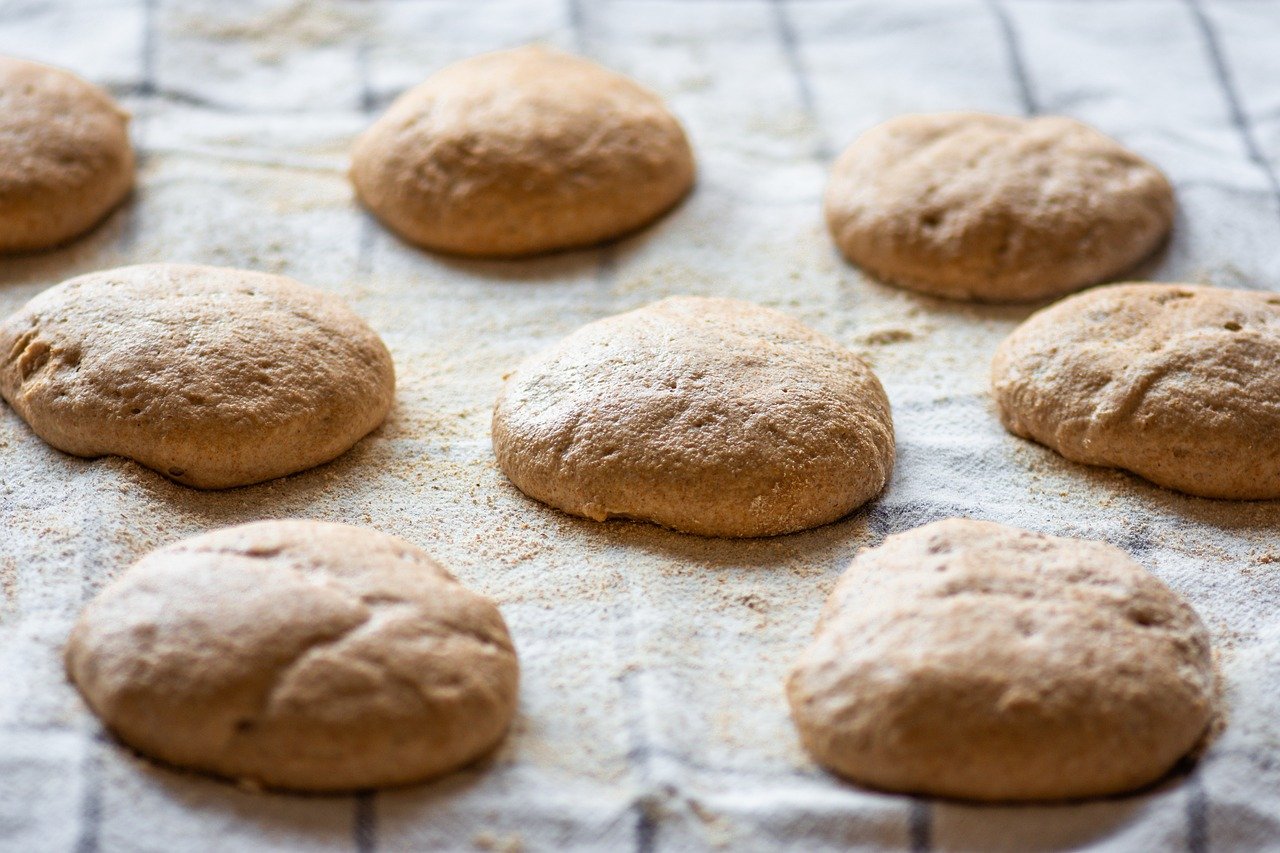
There’s nothing quite like the aroma of freshly baked bread filling your home, and these Milk Bread Rolls are here to prove that baking can be a truly joyful and rewarding experience, even for beginners! Forget intimidating recipes; this guide is designed to be one of the most easy baking recipes you’ll ever follow, breaking down every step to ensure your success. You’re about to discover the secret to incredibly soft, fluffy, and tender bread rolls that melt in your mouth, perfect for breakfast, dinner, or a delightful snack.

We’ve packed this post with all the essential baking tips for beginners, from understanding yeast to achieving that perfect golden crust. So, roll up your sleeves, gather your ingredients, and get ready to impress yourself (and everyone else!) with these utterly delicious, homemade milk bread rolls. Let’s turn your kitchen into a bakery!
Ingredients List: What You’ll Need
Precision is key in baking, so make sure to measure your ingredients carefully. Using a kitchen scale for flour is highly recommended for the best results!
For the Milk Bread Dough:
| Ingredient | Quantity | Units |
|---|---|---|
| All-Purpose Flour | 3 | cups (approx. 360g) |
| Granulated Sugar | ¼ | cup (approx. 50g) |
| Instant Dry Yeast | 2 ¼ | teaspoons (1 packet, 7g) |
| Salt | 1 | teaspoon (6g) |
| Warm Whole Milk | 1 | cup (240ml, 105-115°F / 40-46°C) |
| Large Egg | 1 | (at room temperature) |
| Unsalted Butter | ¼ | cup (56g, softened) |
For the Egg Wash (Optional, but recommended for golden shine):
| Ingredient | Quantity | Units |
|---|---|---|
| Large Egg Yolk | 1 | |
| Milk | 1 | tablespoon |
Step-by-Step Instructions: Your Path to Perfect Milk Bread Rolls
Follow these detailed steps carefully, and you’ll be enjoying warm, homemade milk bread rolls in no time!
Step 1: Activate the Yeast (The First Sign of Life!)
In a large mixing bowl (or the bowl of your stand mixer), combine the **warm whole milk** (ensure it’s not too hot, or it will kill the yeast; it should feel like a warm bath on your wrist), **granulated sugar**, and **instant dry yeast**. Give it a gentle stir. Let this mixture sit for 5-10 minutes. You should see a foamy layer form on top – this means your yeast is active and ready to work its magic! If it doesn’t foam, your yeast might be old or the milk temperature was off, and you should start with new yeast.
Step 2: Combine Dry Ingredients
In a separate medium bowl, whisk together the **all-purpose flour** and **salt**. Whisking ensures the salt is evenly distributed throughout the flour.
Step 3: Mix Wet and Dry Ingredients
Pour the foamy yeast mixture into the bowl with the dry ingredients. Add the **room temperature large egg**. Using a wooden spoon or the dough hook attachment of your stand mixer, mix on low speed until a shaggy dough forms. It will look rough at this stage, don’t worry!
Step 4: Knead the Dough (Developing the Magic!)
Now comes the most important part for that fluffy texture! Add the **softened unsalted butter** to the dough. Continue to knead the dough for 8-10 minutes if using a stand mixer (on medium-low speed) or 12-15 minutes if kneading by hand. The dough will be sticky at first, but resist the urge to add too much extra flour, as this will make your rolls dense. As you knead, the dough will become smooth, elastic, and less sticky. It should pass the **”windowpane test”**: take a small piece of dough, gently stretch it with your fingers. If you can stretch it thin enough to see light through it without tearing, your gluten is well-developed!
Beginner Tip: If kneading by hand, flour your hands lightly, not the counter excessively. Use a bench scraper to help gather the dough. The stickiness will reduce as you knead and build gluten.
Step 5: First Rise (Bulk Fermentation – Let it Grow!)
Lightly grease a large bowl with a little oil or non-stick spray. Form your kneaded dough into a ball and place it in the greased bowl, turning it once to coat the entire surface. Cover the bowl tightly with plastic wrap or a clean kitchen towel. Place it in a warm, draft-free spot in your kitchen. This could be a slightly warm oven (turned off!), near a sunny window, or on top of your refrigerator. Let the dough rise for 1 to 1.5 hours, or until it has **doubled in size**. The time can vary depending on your kitchen’s temperature.
Step 6: Shape the Rolls (Creating Uniformity)
Once the dough has doubled, gently **punch it down** to release the air. This step is crucial for an even texture. Turn the dough out onto a lightly floured surface. Using a kitchen scale, divide the dough into 12 equal pieces (each should be about 50-55g). For each piece, gently flatten it slightly, then pull the edges towards the center and pinch them together at the bottom to form a smooth ball. Roll it briefly between your palm and the counter to create a taut, smooth surface on top.
Beginner Tip: Aim for smooth, tight balls. This helps the rolls rise evenly and creates a better texture. Don’t over-flour your surface when shaping.
Step 7: Second Rise (Proofing – Getting Puffy!)
Lightly grease a 9×13 inch baking pan (or a similar size). Arrange the shaped dough balls in the pan, leaving a little space between each one, as they will expand. Cover the pan loosely with plastic wrap or a clean kitchen towel. Return the pan to a warm, draft-free spot for another 30-45 minutes, or until the rolls look visibly puffy and have almost doubled in size again. They should be touching or nearly touching.
Step 8: Preheat Oven & Prepare Egg Wash
Towards the end of the second rise, preheat your oven to **375°F (190°C)**. If using the egg wash, whisk together the **egg yolk** and **1 tablespoon of milk** in a small bowl. Gently brush the tops of the proofed rolls with the egg wash. This will give them a beautiful golden-brown color and a lovely sheen.
Step 9: Bake to Golden Perfection!
Place the baking pan in the preheated oven. Bake for **15-20 minutes**, or until the rolls are deeply golden brown on top and sound hollow when tapped on the bottom. Keep an eye on them towards the end of baking to prevent over-browning.
Common Mistake: If your rolls brown too quickly, you can loosely tent them with aluminum foil for the remaining baking time.
Step 10: Cool and Enjoy!
Once baked, remove the pan from the oven. For the softest rolls, immediately brush the tops with a little melted butter (optional, but highly recommended!). Let the rolls cool in the pan for 5-10 minutes before transferring them to a wire rack to cool completely. While they are delicious warm, cooling them fully allows the internal structure to set, preventing them from becoming gummy. Serve warm with butter, jam, or as a side to any meal!
Tips & Tricks for Baking Success: Your Baker’s Cheat Sheet
- Measure Accurately, Especially Flour: For baking, accuracy is paramount. While cup measurements are provided, using a **kitchen scale** to measure flour (360g for 3 cups) will give you the most consistent results. Too much flour is the most common reason for dry, dense bread.
- The Right Temperature for Yeast: Yeast is a living organism. Milk that’s too cold won’t activate it, and milk that’s too hot will kill it. Aim for 105-115°F (40-46°C) – think warm bathwater, not hot.
- Don’t Skimp on Kneading: Kneading develops the gluten network, which is what gives bread its structure, chewiness, and ability to hold air (making it fluffy!). If you cut this short, your rolls will be dense. The “windowpane test” is your best friend here.
- The Perfect Proofing Environment: A warm, draft-free spot is ideal for rising dough. If your kitchen is cool, you can turn your oven on to its lowest setting for 1-2 minutes, then turn it off and place the covered dough inside with the door slightly ajar.
- Room Temperature Ingredients: Eggs and butter incorporate much more easily and evenly into dough when they are at room temperature. Plan ahead and take them out of the fridge an hour or two before you start.
- Watch, Don’t Just Time: Baking times are guidelines. Ovens vary. Always look for visual cues like “doubled in size” for rising and “golden brown” for baking, rather than strictly sticking to the clock.
- Don’t Overbake: Overbaking will dry out your rolls, making them less soft. Once they’re golden and internal temperature reaches 200-210°F (93-99°C), they’re done!
- Embrace the Stickiness: Bread dough can be sticky, especially milk bread dough. Resist the urge to add excessive flour during kneading or shaping, as this will lead to a dry, tough roll. A lightly floured surface or lightly oiled hands are better.
Essential Baking Tools: Gear Up for Deliciousness!
Having the right tools makes baking much easier and more enjoyable. Here are a few essentials:
- Mixing Bowl (Large enough for dough to rise)
- Whisk (For dry ingredients and egg wash)
- Baking Pan (A 9×13 inch pan is perfect for this recipe)
- Measuring Cups & Measuring Spoons (For accurate liquid and small dry ingredient measurements)
- Spatula (A rubber spatula for scraping bowls)
- Kitchen Scale (Highly recommended for flour accuracy)
- Stand Mixer with Dough Hook (Optional, but makes kneading much easier)
- Bench Scraper (Helpful for dividing and handling sticky dough)
- Wire Rack (For cooling baked goods)
Nutrition Information (Approximate per Roll, based on 12 rolls)
Please note that these are approximate values and can vary based on specific ingredient brands and exact measurements.
| Nutrient | Approximate Value |
|---|---|
| Calories | ~210-230 kcal |
| Carbohydrates | ~35-40 g |
| Protein | ~6-7 g |
| Fat | ~9-11 g |
| Fiber | ~1-2 g |
| Sugar | ~6-8 g |
Frequently Asked Questions (FAQs) for Beginner Bakers
Q1: My dough isn’t rising. What went wrong?
A: The most common culprit is inactive yeast. This could be because your yeast is old/expired, or the liquid you used was too hot (killing the yeast) or too cold (not activating it). Always check the expiry date on your yeast and ensure your milk is between 105-115°F (40-46°C). If your yeast didn’t foam in Step 1, it’s best to start over.
Q2: Can I make these milk bread rolls ahead of time?
A: Yes! You can do an overnight proof. After shaping the rolls (Step 6), place them in the greased baking pan, cover tightly with plastic wrap, and refrigerate overnight (8-12 hours). The next morning, take them out, let them sit at room temperature for 30-60 minutes while your oven preheats, then proceed with the egg wash and baking (Steps 8-9).
Q3: Why are my rolls dense and not fluffy?
A: Several factors can cause dense rolls: 1) **Not enough kneading:** Gluten needs to be developed. 2) **Too much flour:** This makes the dough dry and stiff. Use a kitchen scale! 3) **Under-proofing:** The dough didn’t have enough time to rise properly. 4) **Over-proofing:** While less common for density, over-proofing can cause the gluten structure to collapse, leading to a flat, dense texture.
Q4: What is the “windowpane test” and why is it important?
A: The windowpane test is a way to check if your dough has been kneaded enough. Take a small piece of dough (about a golf ball size) and gently stretch it between your fingers. If you can stretch it thin enough to see light through it without tearing, like a “windowpane,” then the gluten has developed sufficiently, and your dough is ready for its first rise.
Q5: How do I store leftover milk bread rolls?
A: Store cooled milk bread rolls in an airtight container or a large zip-top bag at room temperature for up to 3-4 days. For longer storage, you can freeze them for up to 2-3 months. Thaw them at room temperature and warm them slightly in the microwave or oven for that fresh-baked taste.
Q6: Can I use different types of milk (e.g., skim, almond, oat milk)?
A: Whole milk is recommended for the richest flavor and softest texture due to its fat content. You can use skim milk, but the rolls might be slightly less rich. Plant-based milks like almond or oat milk can work, but the fat and protein content differ, which might slightly alter the texture and rise. You might need to adjust the liquid slightly as plant milks can vary in consistency.
Conclusion: Your Baking Journey Begins Here!
Congratulations, aspiring baker! You’ve just unlocked the secrets to creating incredibly soft, pillowy Milk Bread Rolls right in your own kitchen. We hope this detailed, beginner-friendly guide has given you the confidence and knowledge to tackle this delightful recipe. There’s immense satisfaction in pulling a tray of golden, fragrant rolls from the oven, knowing you made them from scratch.
Don’t be afraid to experiment, and remember that every bake is a learning experience. Even if your first batch isn’t absolutely perfect, it will still be delicious! Keep practicing, use these **baking tips for beginners**, and you’ll soon be a bread-baking pro. Enjoy the warmth, the aroma, and the sheer joy of homemade bread. Happy baking!