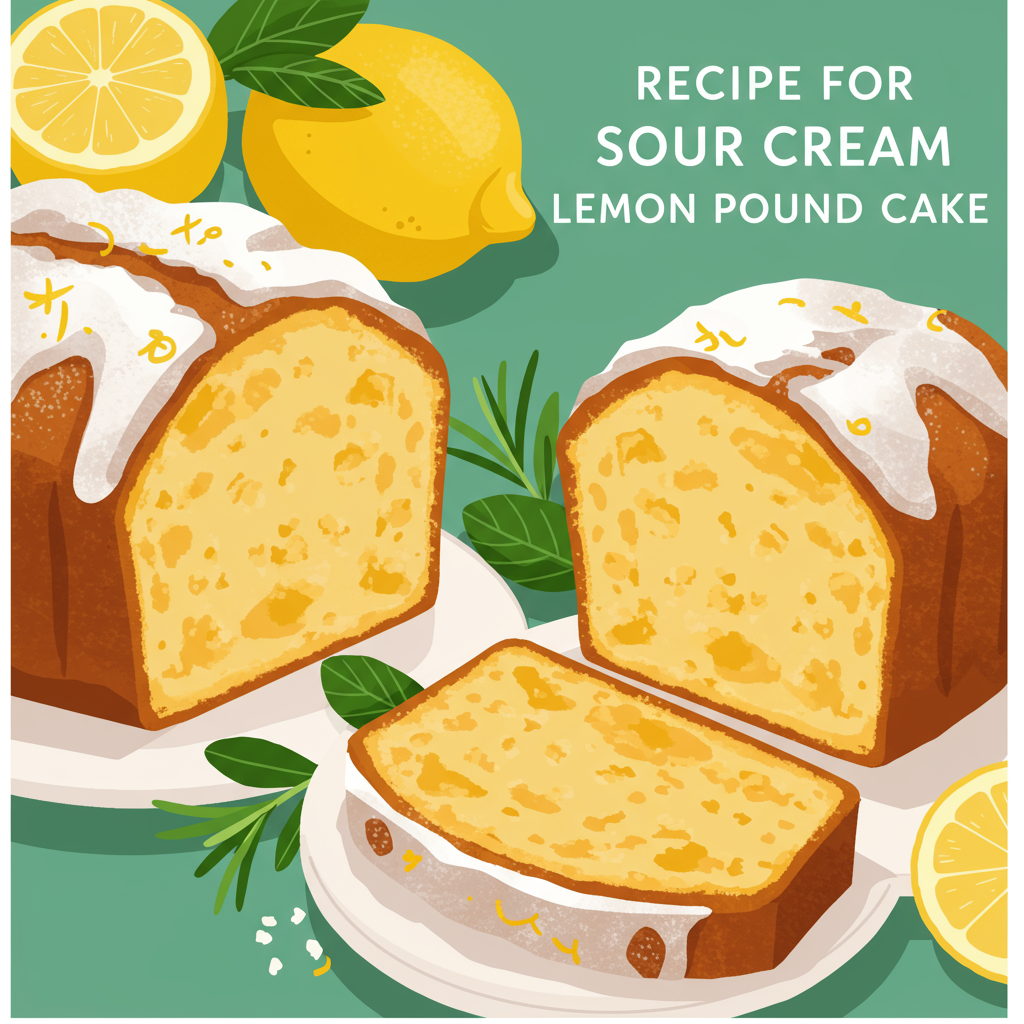
Welcome, fellow baking enthusiasts (and future enthusiasts)! Are you ready to dive into the wonderfully aromatic world of pound cake? Today, we’re not just baking any pound cake; we’re crafting the ultimate Recipe For Sour Cream Lemon Pound Cake.

This isn’t just a dessert; it’s a slice of sunshine, a dense yet tender crumb bursting with bright lemon flavor, all made incredibly moist thanks to the magic of sour cream. Forget intimidating recipes this is one of those truly easy baking recipes that delivers show-stopping results with minimal fuss. Whether you’re a seasoned baker or just starting your journey, our detailed baking tips for beginners will guide you every step of the way to achieve pound cake perfection. Get ready to impress yourself and everyone lucky enough to taste a slice of this heavenly creation!
Gather Your Zesty Essentials: The Ingredients List
Before we don our aprons and get to the fun part, let’s make sure you have all the necessary ingredients. Using high-quality ingredients, especially at room temperature where specified, makes a huge difference in the final texture and flavor of your pound cake!
| Ingredient | Quantity |
|---|---|
| All-Purpose Flour | 2 ½ cups |
| Granulated Sugar | 2 cups |
| Unsalted Butter (softened, room temp) | 1 cup (2 sticks) |
| Large Eggs (room temp) | 4 |
| Full-Fat Sour Cream (room temp) | 1 cup |
| Fresh Lemon Zest (from 2-3 lemons) | 2 tablespoons |
| Fresh Lemon Juice | ¼ cup (for cake) + 2-3 tbsp (for glaze) |
| Baking Powder | 1 ½ teaspoons |
| Salt | ½ teaspoon |
| Vanilla Extract | 1 teaspoon |
| For the Lemon Glaze (Optional but highly recommended!) | |
| Powdered Sugar (confectioners’ sugar) | 1 ½ cups |
| Fresh Lemon Juice | 2-3 tablespoons (or more, to desired consistency) |
Baking Brilliance: Step-by-Step Instructions for Your Pound Cake
Follow these detailed steps carefully, and you’ll be on your way to a perfectly baked Sour Cream Lemon Pound Cake!
Step 1: Prep Your Space and Pan
- Preheat Oven: Get your oven ready by preheating it to 325°F (160°C). A consistent oven temperature is key to even baking.
- Prepare Pan: Thoroughly grease and flour a 10-12 cup Bundt pan or a 9×5 inch loaf pan. Greasing means coating the entire inside surface with butter or a non-stick baking spray. Flour means dusting the greased pan with a thin layer of flour, tapping out any excess. This creates a non-stick barrier and ensures your beautiful cake releases easily!
- Beginner Tip: Don’t skip the greasing and flouring, especially with intricate Bundt pans. It’s the most common reason cakes stick!
Step 2: Whisk the Dry Ingredients
- In a medium bowl, whisk together the all-purpose flour, baking powder, and salt.
- Why this step is important: Whisking ensures these dry ingredients are evenly distributed throughout the flour. This prevents clumps of baking powder or salt in your cake, leading to an uneven rise and flavor. Set this bowl aside for now.
Step 3: Cream the Butter and Sugar
- In a large mixing bowl (or the bowl of a stand mixer fitted with the paddle attachment), beat the softened unsalted butter and granulated sugar together on medium speed.
- What to look for: Continue beating for about 3-5 minutes, scraping down the sides of the bowl occasionally, until the mixture is light in color and fluffy in texture. This process, called “creaming,” incorporates air into the butter and sugar, which is crucial for a light, tender crumb in your pound cake.
- Beginner Tip: Ensure your butter is truly at room temperature. It should be soft enough to indent easily with your finger but not melted or greasy. Cold butter won’t cream properly, and melted butter will lead to a dense cake.
Step 4: Add Eggs, Vanilla, and Lemon Zest
- Add the eggs one at a time, beating well after each addition until fully incorporated.
- Why one at a time? Adding eggs slowly allows them to emulsify properly with the butter and sugar, creating a stable batter. Adding them all at once can make the mixture look curdled. Don’t worry if it looks slightly curdled after an egg or two; it will come together.
- Stir in the vanilla extract and fresh lemon zest. The zest holds all the essential oils and intense lemon flavor, so don’t skimp on it!
Step 5: Alternate Dry and Wet Ingredients
- Now, it’s time to combine the dry ingredients with the wet, using the “alternating method.”
- First: Add about one-third of the dry ingredient mixture to the butter mixture and mix on low speed until just combined.
- Next: Add half of the sour cream and mix until just incorporated.
- Repeat: Add another third of the dry mixture, then the remaining sour cream, and finally the last third of the dry mixture.
- Crucial Beginner Tip: Mix only until just combined after each addition. The very last addition of flour should be mixed *just* until no dry streaks remain. DO NOT OVERMIX! Overmixing develops gluten in the flour, which will result in a tough, dense, and chewy cake instead of a tender, moist one. A few small lumps are perfectly fine.
- Finally, gently fold in the ¼ cup of fresh lemon juice.
Step 6: Bake Your Masterpiece
- Pour the batter evenly into your prepared Bundt or loaf pan.
- Gently tap the pan a few times on the counter to release any large air bubbles and level the batter.
- Bake in the preheated oven for 60-75 minutes for a Bundt pan, or 50-60 minutes for a loaf pan.
- How to check for doneness: The cake is done when a wooden skewer, toothpick, or thin knife inserted into the center comes out clean or with a few moist crumbs attached (but no wet batter). The top will be golden brown and spring back when lightly touched.
- Common Mistake & Fix: If your cake is browning too quickly on top but isn’t cooked through, you can loosely tent it with aluminum foil for the last 15-20 minutes of baking. Avoid opening the oven door frequently, especially in the first 45 minutes, as this can cause the cake to sink.
Step 7: Cool and Glaze
- Once baked, remove the cake from the oven and let it cool in the pan on a wire rack for 15-20 minutes. This allows the cake to set and prevents it from crumbling when you invert it.
- After 15-20 minutes, carefully invert the cake onto the wire rack to cool completely. If you’re using a Bundt pan, a little gentle shaking might be needed.
- Prepare the Glaze: While the cake cools, whisk together the powdered sugar and 2-3 tablespoons of fresh lemon juice in a small bowl until smooth. Add more lemon juice a tiny bit at a time if you want a thinner glaze, or more powdered sugar for a thicker glaze.
- Once the cake is completely cool, drizzle the lemon glaze generously over the top. Allow the glaze to set for a few minutes before slicing and serving.
Baking Like a Pro: Essential Tips & Tricks
Room Temperature is Your Best Friend
Seriously, this is a game-changer! Cold butter won’t cream properly with sugar, leading to a denser cake. Cold eggs won’t emulsify well with the batter, causing a curdled look and potentially affecting the texture. Plan ahead and take your butter, eggs, and sour cream out of the fridge at least 30-60 minutes before you start baking.
Measure Accurately, Especially Flour
Baking is a science! Too much flour can make your cake dry and crumbly. The best way to measure flour is to “spoon and level.” Lightly spoon the flour into your measuring cup until it overflows, then use the straight edge of a knife to level off the excess. Don’t pack it down or scoop directly from the bag, as this can add up to 25% more flour!
Don’t Overmix the Batter
We’ve said it before, and we’ll say it again: overmixing is the enemy of a tender cake! Once you add the flour, mix only until just combined. A few lumps are okay. Overmixing develops gluten, which makes bread wonderfully chewy, but makes cakes tough and rubbery.
Trust Your Oven (But Verify)
Oven temperatures can vary significantly. An inexpensive oven thermometer can be a valuable tool to ensure your oven is truly at the temperature you set. This prevents under or over-baking and contributes to consistent results.
Cooling Patience is a Virtue
It’s tempting to flip that cake out of the pan as soon as it comes out of the oven, but resist! Allowing it to cool in the pan for the recommended time helps it firm up and prevents it from breaking apart when you invert it. A completely cool cake also ensures the glaze sets beautifully and doesn’t just melt off.
Your Baking Arsenal: Essential Tools
Having the right tools makes all the difference for a smooth and enjoyable baking experience. Here are a few essentials you’ll want to have on hand:
- Mixing Bowl
- Whisk
- Bundt or Loaf Baking Pan
- Measuring Cups and Spoons
- Rubber Spatula
- Electric Mixer (stand or hand-held)
- Wire Cooling Rack
- Lemon Zester
Nourishing Notes: Nutrition Information (Estimated)
Please note that this nutrition information is an estimate based on typical ingredients and a serving size of 1/12th of the cake, including the glaze. Actual values may vary depending on specific brands and exact measurements.
| Nutrient | Amount per Serving (estimated) |
|---|---|
| Calories | Approx. 420 kcal |
| Total Carbohydrates | Approx. 60g |
| Protein | Approx. 5g |
| Total Fat | Approx. 20g |
| Dietary Fiber | Approx. 1g |
| Total Sugars | Approx. 38g |
Your Baking Questions Answered: FAQs
Q: Why are room temperature ingredients so important for this pound cake?
A: Room temperature butter creams beautifully with sugar, incorporating air and creating a light, fluffy base. Cold butter won’t emulsify as well, leading to a denser, potentially lumpy batter. Similarly, room temperature eggs integrate more smoothly into the batter, preventing curdling and contributing to a uniform texture.
Q: My cake sank in the middle after baking. What went wrong?
A: A sunken cake can happen for a few reasons. Common culprits include opening the oven door too early (especially in the first 2/3 of baking time), which causes a sudden temperature drop; underbaking the cake; using too much leavening agent (like baking powder); or overmixing the batter, which develops too much gluten and can’t support the rise.
Q: Can I use low-fat or fat-free sour cream?
A: While technically you can, for the best results in terms of moisture, richness, and tender crumb, we highly recommend using full-fat sour cream. The fat content is crucial for the pound cake’s signature texture and flavor. Low-fat alternatives may result in a drier cake with less depth of flavor.
Q: How do I know when my Sour Cream Lemon Pound Cake is perfectly baked?
A: The most reliable test is the wooden skewer or toothpick test. Insert it into the very center of the cake. If it comes out clean (no wet batter), your cake is done. A few moist crumbs are acceptable, but wet batter means it needs more time. Also, the cake should be golden brown on top and should spring back lightly when gently pressed.
Q: Can I make this pound cake ahead of time? How should I store it?
A: Absolutely! Pound cake actually tastes even better the next day as the flavors meld. Store the cooled and glazed cake in an airtight container at room temperature for up to 3-4 days. For longer storage, you can wrap individual slices or the whole unglazed cake tightly in plastic wrap and then foil, and freeze for up to 2-3 months. Thaw at room temperature before serving or glazing.
Q: I don’t have a Bundt pan. Can I use a regular loaf pan?
A: Yes, you can! This recipe works perfectly in a 9×5 inch loaf pan. Just be aware that the baking time will likely be shorter, typically around 50-60 minutes. Always rely on the skewer test to confirm doneness, as oven temperatures and pan materials can affect baking times.
Your Delicious Journey Begins Now!
And there you have it! Your comprehensive guide to baking a truly exceptional Sour Cream Lemon Pound Cake. We hope this detailed, beginner-friendly recipe has demystified the baking process and left you feeling confident and excited to get into the kitchen. The joy of pulling a beautifully golden, fragrant pound cake from the oven is unmatched, and the taste of this moist, tangy, and sweet creation is simply divine. Don’t be afraid to experiment and make it your own, but most importantly, have fun with it!

We’d love to hear about your baking adventures and see your beautiful creations. Share your experiences in the comments below, and happy baking!