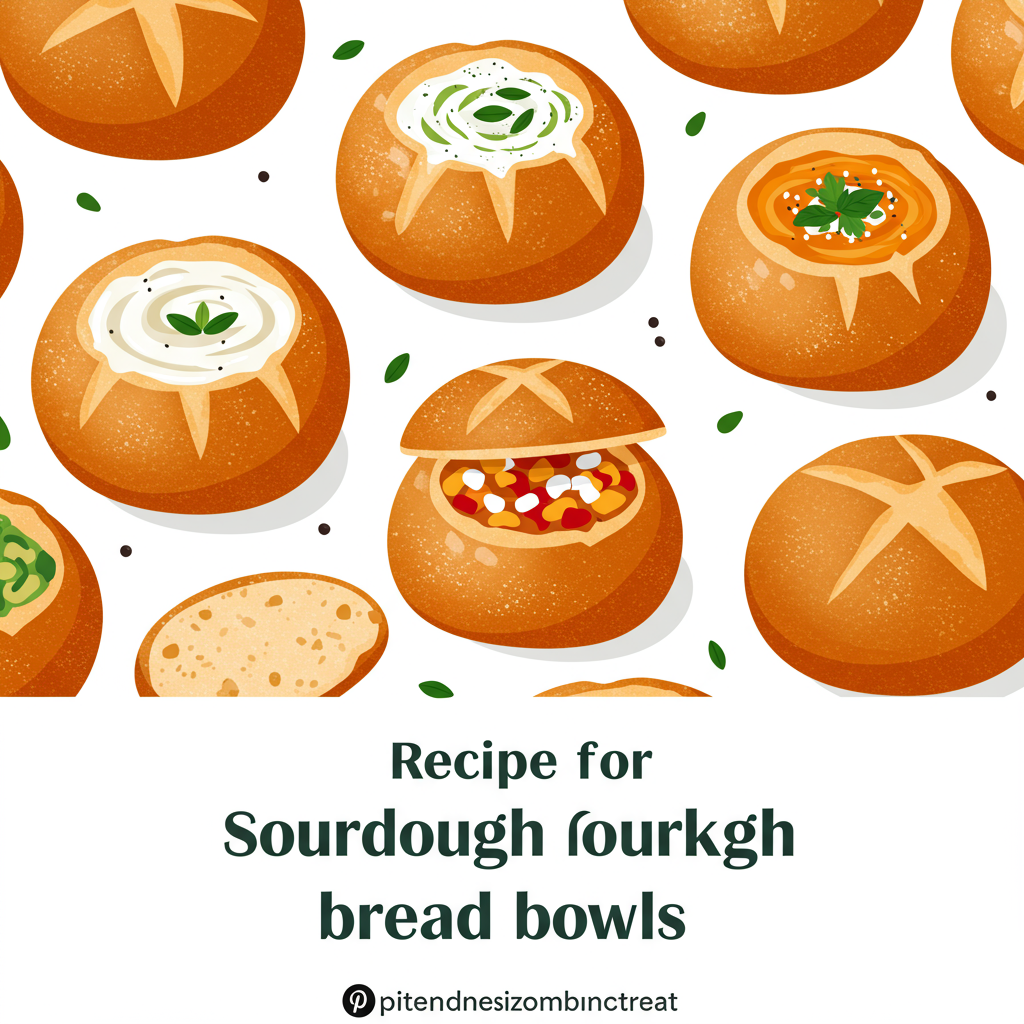
Welcome, fellow home bakers! Have you ever dreamt of serving a hearty soup or chili in a beautiful, edible bowl that you made yourself? There’s something truly magical about a warm, crusty sourdough bread bowl, and today, we’re going to make that dream a reality. This isn’t just any recipe; this is your comprehensive, beginner-friendly guide to mastering the art of Recipe For Sourdough Bread Bowls. Forget intimidating techniques; we’re breaking it all down with easy-to-follow steps and plenty of baking tips for beginners to ensure your success. Get ready to impress your family and friends with these rustic, delicious, and incredibly satisfying bread bowls!
Making sourdough might seem daunting, but with this detailed walkthrough, you’ll gain confidence and produce stunning results. We’ll cover everything from activating your starter to getting that perfect golden crust. So, roll up your sleeves, grab your apron, and let’s dive into one of the most rewarding easy baking recipes you’ll ever try!
Ingredients You’ll Need
Accuracy is key in sourdough baking, so using a kitchen scale for your measurements is highly recommended, especially for the flour and water. These quantities will yield approximately 4-6 medium-sized bread bowls, perfect for a cozy meal.
| Ingredient | Quantity | Unit |
|---|---|---|
| Active Sourdough Starter (fed & bubbly) | 150 | grams |
| Warm Water (approx. 90-95°F / 32-35°C) | 350 | grams |
| Bread Flour (high protein content) | 500 | grams |
| Fine Sea Salt | 10 | grams |
| Olive Oil (optional, for a richer crust) | 1 | tablespoon |
| Rice Flour (for dusting bannetons/bowls) | As needed |
Step-by-Step Instructions: Crafting Your Sourdough Bread Bowls
Follow these steps carefully, and remember, baking is a journey of learning. Don’t be afraid to get your hands a little messy!
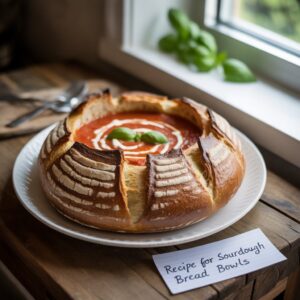
Step 1: Activate Your Sourdough Starter (The Night Before or Morning Of)
This is crucial! Your starter needs to be **active, bubbly, and strong** before you begin. Feed your starter 4-12 hours before you plan to mix your dough. It should have doubled or tripled in size, have many visible bubbles, and pass the “float test” (a small dollop floats in water). A weak starter will lead to dense bread.
- Tip for Beginners: If your starter isn’t consistently active, give it a few days of regular feeding (once or twice a day) before attempting this recipe. Patience here pays off!
Step 2: The Autolyse – Hydration and Rest (30-60 minutes)
Autolyse is a fancy word for simply mixing your flour and water and letting it rest. This step allows the flour to fully hydrate and enzymes to start breaking down starches, which helps develop gluten without much kneading.
- In a large mixing bowl, combine the bread flour and warm water.
- Mix with your hands or a sturdy spoon until just combined and no dry flour remains. It will look shaggy and not very smooth – that’s perfectly fine!
- Cover the bowl with a damp cloth or plastic wrap to prevent a skin from forming.
- Let it rest at room temperature for 30 to 60 minutes. During this time, the dough will become noticeably smoother and more pliable.
Step 3: Incorporate Starter and Salt (The Main Mix)
Now it’s time to bring everything together!
- Add your active sourdough starter directly on top of the autolysed dough.
- Gently dimple the starter into the dough with wet fingers.
- Add the fine sea salt over the dough. If using olive oil, add it now.
- Using your hand (wet it slightly to prevent sticking), mix everything thoroughly. You can use the Rubaud method: repeatedly scoop the dough from the bottom, lift it, and slap it back into the bowl. Continue for 5-10 minutes until all ingredients are well incorporated and the dough starts to show some elasticity.
- The dough will be sticky at this stage – don’t worry! Keep mixing until you feel the stickiness reduce slightly and the dough starts to come together.
Step 4: Bulk Fermentation & Stretch and Folds (3-5 hours, or until doubled)
This is where your dough develops flavor and strength. We’ll be doing a series of “stretch and folds” to build gluten structure.
- After the main mix, cover the bowl again and let it rest for 30 minutes.
- First Set of Stretch and Folds: Wet your hand, grab a portion of the dough from one side, gently stretch it upwards, and fold it over to the opposite side of the dough. Rotate the bowl a quarter turn and repeat this action 3-4 more times, until you’ve worked your way around the dough. The dough should feel like it’s tightening up.
- Cover and rest for another 30 minutes.
- Repeat the stretch and fold process 3-4 more times, with 30-minute rests in between each set. As you continue, you’ll notice the dough becoming much stronger, smoother, and more elastic. It should be able to hold its shape better.
- Checking for readiness: After your final stretch and fold, let the dough continue to ferment without disturbance. The bulk fermentation is complete when the dough has visibly increased in volume by about 50-75% (it won’t necessarily double for sourdough), has a domed top, and shows a few large bubbles on the surface. It should feel airy and jiggly. This can take anywhere from 3-5 hours depending on your kitchen temperature and starter strength.
- Common Mistake: Under-proofing (not enough time) results in a dense crumb. Over-proofing (too much time) makes the dough lose its structure and become difficult to shape. Pay attention to the visual cues!
Step 5: Divide and Pre-Shape (15-20 minutes)
This step prepares your dough for its final shape.
- Lightly flour your work surface.
- Gently turn the dough out onto the floured surface. Avoid degassing it too much.
- Using a dough scraper, divide the dough into 4-6 equal pieces, depending on your desired bread bowl size. For larger bowls, aim for 4; for smaller, 6.
- Gently pre-shape each piece into a loose round. Do this by cupping your hand around the dough and rotating it on the counter to create some surface tension. Don’t overwork it.
- Cover the pre-shaped rounds with a damp cloth or plastic wrap and let them rest for **15-20 minutes**. This allows the gluten to relax, making final shaping easier.
Step 6: Final Shaping for Bread Bowls
This is where we give them their characteristic round shape.
- Lightly flour your work surface again.
- Take one piece of dough. Flatten it gently into a rough circle.
- Fold the top edge down towards the center.
- Fold the left edge into the center, then the right edge.
- Fold the bottom edge up towards the center, then pull the top edge down to meet it, creating a seam.
- Flip the dough seam-side down. Using both hands, gently cup the dough and rotate it against the clean, unfloured part of your counter. This motion creates tension on the surface, forming a tight, smooth ball. This tension is critical for a good rise and crust.
- **Prepare your proofing vessels:** Lightly dust 4-6 round proofing baskets (bannetons) or small, clean bowls lined with floured kitchen towels with **rice flour**. Rice flour prevents sticking better than wheat flour.
- Place each shaped dough ball, **seam-side up**, into its prepared banneton or bowl.
Step 7: Cold Proofing (Overnight, 12-18 hours)
Cold proofing in the refrigerator slows down fermentation, allowing flavors to deepen and making the dough much easier to handle and score.
- Cover each banneton/bowl with plastic wrap or a shower cap to prevent drying out.
- Place them in the refrigerator for **at least 12 hours, up to 18 hours**.
- Why cold proof? It develops complex flavors, helps the dough hold its shape during baking, and makes scoring much easier.
Step 8: Preheat Oven & Baking Vessel (1 hour before baking)
High heat is essential for a great sourdough crust.
- About an hour before you plan to bake, place your Dutch oven (or a baking stone/heavy baking sheet) inside your oven.
- Preheat your oven to **475°F (245°C)**. Allow it to preheat for a full hour to ensure the Dutch oven or baking surface is thoroughly hot. This creates the initial burst of steam needed for a fantastic crust and oven spring.
Step 9: Score & Bake (The Grand Finale!)
This is the exciting part!
- Carefully remove the hot Dutch oven from the oven (use oven mitts!).
- Gently invert one of your cold-proofed dough balls from its banneton/bowl directly into the hot Dutch oven, **seam-side down**. It should fall out easily thanks to the rice flour.
- Using a very sharp knife or a bread lame, score the top of the dough. You can do a simple “X” or a circular pattern. This allows the bread to expand predictably.
- Carefully place the lid back on the Dutch oven.
- Bake with the lid on for **20 minutes**. The trapped steam creates an amazing crust.
- After 20 minutes, remove the lid. Reduce the oven temperature to **450°F (230°C)**.
- Continue baking with the lid off for another **25-30 minutes**, or until the crust is a deep golden brown and sounds hollow when tapped on the bottom. An internal thermometer should read around 200-210°F (93-99°C).
- Carefully remove the bread bowl from the Dutch oven and place it on a wire rack to cool.
- Repeat this process for your remaining dough balls, reheating the Dutch oven for 10-15 minutes between batches if needed.
Step 10: Cool Completely (Patience is Key!)
This is perhaps the hardest step, but vital for texture.
- Let your freshly baked bread bowls cool on a wire rack for at least **1-2 hours** before cutting into them. Cutting too early traps steam, resulting in a gummy interior.
Step 11: Hollow Out Your Bread Bowls (The Final Touch)
Once cooled, it’s time to transform them into actual bowls!
- Using a serrated knife, carefully cut a circle around the top of each bread bowl, about 1 inch in from the edge, creating a “lid.”
- Gently hollow out the soft interior crumb, leaving about a 1/2 to 3/4-inch thick wall. Don’t discard the removed bread – it’s perfect for dipping or making croutons!
- Your beautiful homemade sourdough bread bowls are now ready to be filled with your favorite soup, chili, or stew!
Tips & Tricks for Sourdough Bread Bowl Success
- Know Your Starter: An active, healthy starter is 80% of sourdough success. If it’s sluggish, feed it regularly for a few days before baking.
- Temperature Matters: Warm dough ferments faster, cold dough slower. Adjust bulk fermentation times based on your kitchen’s ambient temperature.
- Don’t Fear the Stick: Sourdough dough is often sticky. Keep a small bowl of water nearby to wet your hands when handling the dough; this prevents sticking. A dough scraper is also your best friend!
- Embrace the Scale: For consistent results, especially with flour and water, a digital kitchen scale is invaluable. Volume measurements can be imprecise.
- Practice Your Shaping: A tight final shape creates good surface tension, which helps the bread hold its form and rise beautifully in the oven. Watch videos online if you need visual guidance.
- Preheat Thoroughly: A scorching hot Dutch oven ensures a fantastic “oven spring” (the final rise) and a crispy crust. Don’t rush this step.
- Rice Flour for Non-Stick: Dust your bannetons or proofing bowls generously with rice flour. It prevents sticking much better than wheat flour.
- Listen to Your Dough: While times are given, always trust your dough’s visual and tactile cues over strict timings. Look for volume increase, jiggliness, and surface bubbles.
- Save the Crumb: The bread you hollow out isn’t waste! Toast it for croutons, blend it into breadcrumbs, or simply enjoy it with butter.
Essential Baking Tools
Having the right tools makes a world of difference in your baking journey.
- Large Mixing Bowl
- Digital Kitchen Scale
- Dough Scraper
- Banneton Proofing Baskets (or small bowls lined with floured towels)
- Dutch Oven (or a baking stone/heavy baking sheet)
- Bread Lame or Very Sharp Knife (for scoring)
- Wire Cooling Rack
- Oven Mitts
- Measuring Cups & Measuring Spoons (for less critical items)
Nutrition Information (Estimated Per Bread Bowl)
Please note: These are estimated values based on the ingredients used and assuming 4-6 servings per recipe. Actual nutritional content may vary based on exact portion size, flour type, and specific preparation.
| Nutritional Value | Per Serving (approx. 1 bowl) |
|---|---|
| Calories | 350-400 kcal |
| Carbohydrates | 70-80 g |
| Protein | 12-15 g |
| Fat | 2-4 g |
| Fiber | 3-5 g |
| Sugar | 0-1 g |
Frequently Asked Questions (FAQs) for Beginner Sourdough Bakers
Q1: My sourdough starter isn’t very active. Can I still make this recipe?
A: It’s highly recommended to wait until your starter is robust and active. A weak starter will lead to a dense, flat bread bowl. Feed your starter every 12 hours for 2-3 days until it consistently doubles or triples in size and passes the float test before attempting this recipe.
Q2: Can I use all-purpose flour instead of bread flour?
A: While you *can* use all-purpose flour, bread flour is preferred for sourdough because its higher protein content (around 12-14%) develops more gluten, which gives your bread bowls better structure, chewiness, and a more open crumb. All-purpose flour might result in a slightly denser loaf with less rise.
Q3: How do I know if my dough is proofed enough during bulk fermentation?
A: Look for visual cues: the dough should have increased in volume by about 50-75%, feel airy and jiggly, have a domed top, and show some bubbles on the surface. You can also do a “poke test”: gently poke the dough with a wet finger; if the indentation slowly springs back halfway, it’s generally ready. If it springs back immediately, it needs more time; if it collapses, it’s likely over-proofed.
Q4: My bread bowl crust isn’t crispy, what went wrong?
A: A common reason for a non-crispy crust is insufficient steam during the initial bake. Ensure your Dutch oven is thoroughly preheated and the lid is on tight for the first 20 minutes. Also, make sure you’re baking long enough without the lid to fully brown and crisp the crust. Cooling completely on a wire rack is also crucial to prevent a soggy bottom.
Q5: Can I prepare the dough ahead of time?
A: Yes, that’s exactly what the cold proofing step is for! You can shape your dough and place it in the refrigerator for 12-18 hours (or even up to 24 hours for some starters). This allows you to bake fresh bread bowls whenever you’re ready, fitting perfectly into a busy schedule.
Q6: What are the best fillings for sourdough bread bowls?
A: The possibilities are endless! Classic choices include creamy tomato soup, hearty beef chili, clam chowder, broccoli cheddar soup, or even a rich French onion soup. For something different, try a stew, a creamy pasta dish, or a warm dip like spinach artichoke!
Ready to Serve Your Sourdough Masterpiece?
Congratulations, home baker! You’ve just embarked on an incredible culinary journey and are now equipped to create your very own Sourdough Bread Bowls. There’s nothing quite like the aroma of freshly baked bread filling your home, and the satisfaction of pulling a golden, crusty loaf from the oven is unmatched. Don’t be discouraged if your first attempt isn’t perfect; every loaf is a learning experience, and each one brings you closer to mastering the craft.
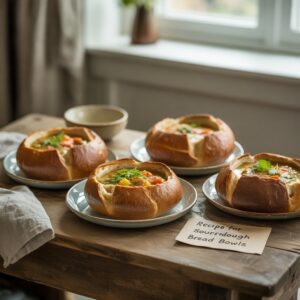
So go ahead, fill your beautiful homemade bowls with your favorite comfort food, gather your loved ones, and enjoy the fruits of your labor. Happy baking, and don’t forget to share your creations with us!