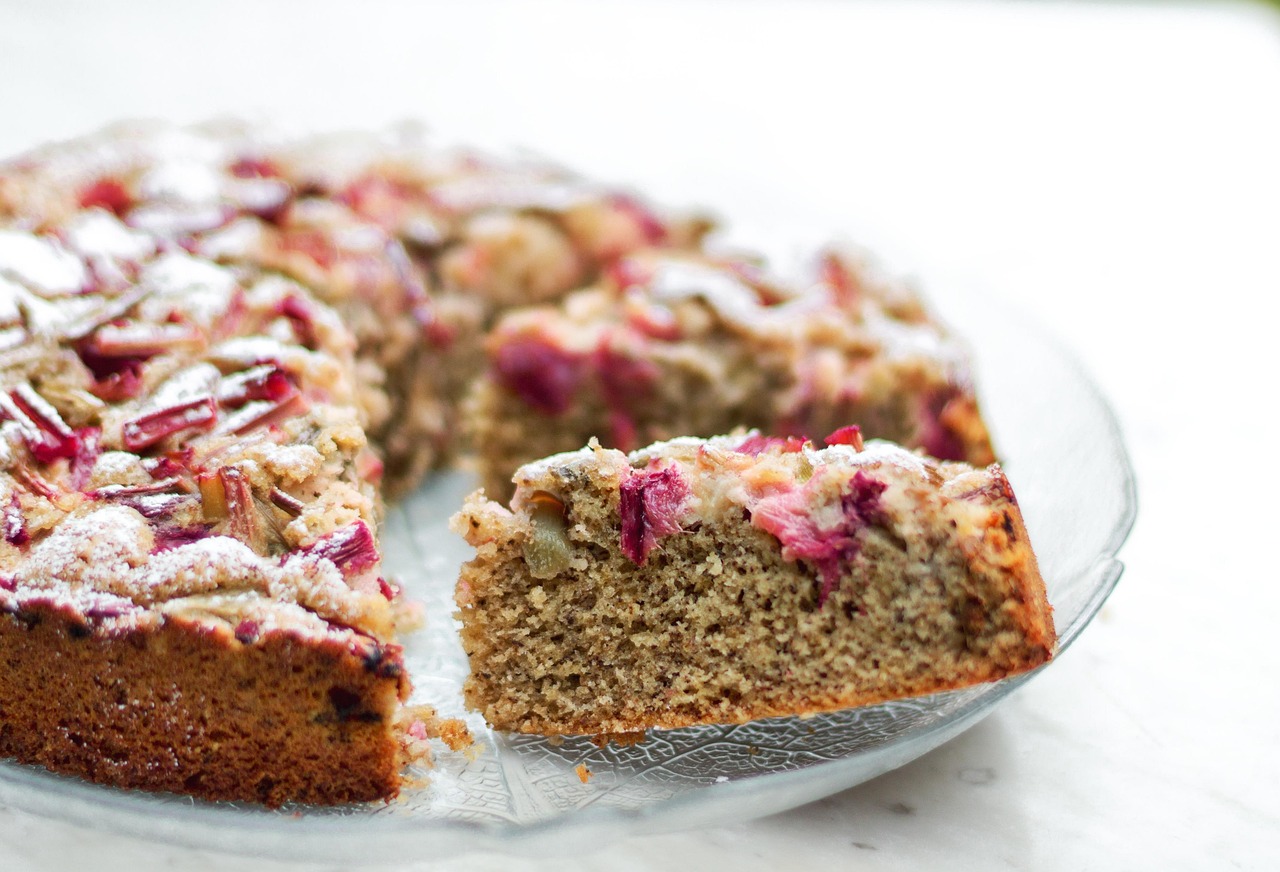
but it’s also designed with beginners in mind. We’ll walk you through every single step, offering valuable baking tips for beginners along the way to ensure your success. Imagine the vibrant pink and red hues of baked rhubarb caramelized on top of a moist, tender cake – it’s pure magic! So tie on your apron, gather your ingredients, and let’s create something truly special together.
Ingredients You’ll Need
Precision is key in baking, especially for beginners! Make sure to measure all your ingredients accurately before you start. We’ve divided them into two sections: for the beautiful topping and for the fluffy cake batter.
For the Rhubarb Topping:
| Quantity | Unit | Ingredient |
|---|---|---|
| 1/2 | cup | Unsalted Butter, melted |
| 1 | cup | Light Brown Sugar, packed |
| 3-4 | cups | Fresh Rhubarb, trimmed and cut into 1/2-inch pieces (about 1 lb) |
For the Cake Batter:
| Quantity | Unit | Ingredient |
|---|---|---|
| 2 | cups | All-Purpose Flour, leveled |
| 1 | cup | Granulated Sugar |
| 2 | teaspoons | Baking Powder |
| 1/2 | teaspoon | Salt |
| 1/2 | cup | Unsalted Butter, softened (1 stick) |
| 2 | large | Eggs, room temperature |
| 1 | cup | Whole Milk (or Buttermilk), room temperature |
| 1 | teaspoon | Vanilla Extract |
Step-by-Step Instructions: Baking Your Rhubarb Upside Down Cake
Follow these detailed steps carefully, and you’ll be a baking pro in no time! We’ve added extra tips to guide you through.
Step 1: Prepare Your Pan and Oven
- Preheat your oven: Set your oven to 350°F (175°C). This ensures the oven is at a consistent temperature when the cake goes in, which is crucial for even baking.
- Grease your baking pan: Take a 9-inch round cake pan. Generously butter the bottom and sides of the pan. You can also lightly flour it after buttering for extra non-stick insurance. Beginner Tip: Don’t skimp on the greasing! This is essential for the cake to release cleanly when you flip it later.
Step 2: Assemble the Rhubarb Topping
- Melt butter: In a small, microwave-safe bowl or saucepan, melt the 1/2 cup of unsalted butter.
- Combine with brown sugar: Pour the melted butter into your prepared cake pan. Sprinkle the 1 cup of packed light brown sugar evenly over the melted butter. This creates the wonderful caramel sauce for the topping.
- Arrange the rhubarb: Carefully arrange the 1/2-inch pieces of fresh rhubarb over the brown sugar and butter mixture in a single layer. You can make a pretty pattern or just spread them out evenly. Beginner Tip: Ensure the rhubarb is cut to similar sizes for even cooking. Discard any tough ends or leaves, as rhubarb leaves are poisonous.
Step 3: Prepare the Cake Batter
- Whisk dry ingredients: In a medium bowl, combine the 2 cups of all-purpose flour, 1 cup of granulated sugar, 2 teaspoons of baking powder, and 1/2 teaspoon of salt. Whisk them together until well combined. Beginner Tip: Whisking dry ingredients together helps to distribute the baking powder and salt evenly, preventing pockets of unmixed ingredients.
- Cream butter and sugar: In a large mixing bowl, using an electric mixer (or a sturdy whisk and some elbow grease!), beat the 1/2 cup of softened unsalted butter until creamy. Gradually add the 1 cup of granulated sugar and beat on medium-high speed until the mixture is light and fluffy, about 2-3 minutes. Scrape down the sides of the bowl as needed. Beginner Tip: Softened butter is key here! It should be pliable but not melted. Room temperature ingredients emulsify better, leading to a smoother, more uniform batter.
- Add eggs: Add the 2 large room temperature eggs one at a time, beating well after each addition until fully incorporated.
- Combine wet and dry ingredients: With the mixer on low speed, add about one-third of the dry ingredient mixture to the butter-egg mixture, mixing just until combined. Then, pour in half of the 1 cup of room temperature milk and mix until just incorporated. Repeat with another third of the dry ingredients, the remaining milk, and finally the last of the dry ingredients. Mix until just combined. Beginner Tip: Do not overmix! Overmixing develops the gluten in the flour too much, resulting in a tough, dense cake. Mix only until no streaks of flour remain.
- Stir in vanilla: Fold in the 1 teaspoon of vanilla extract.
Step 4: Bake Your Cake
- Pour batter over rhubarb: Carefully spoon the cake batter evenly over the rhubarb layer in your prepared pan. Gently spread it to the edges with a spatula, being careful not to disturb the rhubarb too much.
- Bake: Place the cake pan in the preheated oven. Bake for 40-50 minutes, or until a wooden skewer or toothpick inserted into the center of the cake comes out clean. Beginner Tip: Ovens can vary! Start checking around 35-40 minutes. If the top is browning too quickly, you can loosely tent it with aluminum foil.
Step 5: Cool and Flip!
- Cool in pan: Once baked, remove the cake from the oven and let it cool in the pan on a wire rack for 10-15 minutes. This cooling period is critical! It allows the caramel topping to set slightly and the cake to firm up, preventing it from breaking when flipped. Common Mistake: Flipping too soon! If you flip it immediately, the hot caramel can run everywhere, and the cake might tear.
- Flip the cake: After the cooling period, place a serving plate (one that is slightly larger than your cake pan) upside down over the cake pan. With oven mitts, firmly grasp both the plate and the pan together and quickly, but carefully, invert the cake onto the serving plate.
- Lift the pan: Gently lift the cake pan off. If any rhubarb pieces stick to the pan, carefully re-arrange them onto the cake with a small spatula.
- Serve: Allow the cake to cool completely, or serve it slightly warm with a scoop of vanilla ice cream or a dollop of whipped cream. Enjoy your beautiful creation!
Tips & Tricks for a Perfect Rhubarb Upside Down Cake
Baking is an art, but these practical tips will make you feel like a pro from your very first try!
- Room Temperature Ingredients are Your Best Friend: For the butter, eggs, and milk, bringing them to room temperature before baking ensures they emulsify smoothly into the batter. This creates a more uniform texture and a lighter, fluffier cake. Plan ahead by taking them out of the fridge about 30-60 minutes before you start.
- Measure Flour Correctly: Don’t scoop your measuring cup directly into the flour bag! This packs it too tightly. Instead, spoon the flour into your measuring cup and then level it off with the back of a knife. This prevents adding too much flour, which can lead to a dry, dense cake.
- Don’t Overmix the Batter: Once you add the dry ingredients to the wet, mix only until just combined. Overmixing develops the gluten in the flour, making your cake tough and chewy instead of tender and moist. A few lumps are okay!
- Patience is Key for Flipping: That 10-15 minute cooling period in the pan isn’t optional. It allows the cake to set and the caramel to firm up slightly, making for a clean release. Flipping too early is the most common reason for an upside-down cake disaster.
- Customize Your Fruit: While rhubarb is fantastic, this recipe framework works beautifully with other fruits too! Think sliced apples, pineapple rings, peaches, or even berries. Experiment once you’ve mastered the rhubarb version!
- Storage: Store leftover cake at room temperature, covered, for up to 2 days, or in the refrigerator for up to 4-5 days. It’s often even better the next day!
Essential Baking Tools
Having the right tools makes all the difference, especially when you’re starting out. Here are some basics that will serve you well for this recipe and many more to come!
- Mixing Bowl
- Whisk
- Baking Pan (9-inch round is ideal)
- Measuring Cups & Spoons
- Spatula (for scraping bowls and spreading batter)
- Electric Mixer (handheld or stand mixer for easier creaming)
- Wire Rack (for cooling)
Nutrition Information (Estimated Per Serving)
Please note that these are approximate values for one slice (assuming 12 servings per cake) and can vary based on specific ingredients and brands used.
| Nutrient | Amount |
|---|---|
| Calories | ~380-420 kcal |
| Carbohydrates | ~55-65 g |
| Protein | ~5-7 g |
| Fat | ~18-22 g |
| Fiber | ~1-2 g |
| Sugar | ~40-50 g |
Frequently Asked Questions (FAQs)
Q1: Can I use frozen rhubarb instead of fresh?
A: Yes, you can! If using frozen rhubarb, do not thaw it completely before arranging it in the pan. You might also want to toss it with a tablespoon of flour or cornstarch to absorb extra moisture, as frozen rhubarb tends to release more water. The baking time might also increase slightly.
Q2: How do I know when my cake is perfectly done?
A: The best way to check for doneness is to insert a wooden skewer or toothpick into the center of the cake. If it comes out clean with no wet batter attached, your cake is ready! The top should also be golden brown and spring back lightly when gently pressed.
Q3: My cake stuck to the pan when I tried to flip it. What went wrong?
A: This is a common issue! It’s usually due to not greasing the pan thoroughly enough, or not letting the cake cool for the recommended 10-15 minutes before flipping. The cooling time allows the caramel to set and the cake to firm up, making it less likely to stick. Make sure to generously butter and even flour your pan next time!
Q4: Can I make this Rhubarb Upside Down Cake ahead of time?
A: Absolutely! This cake actually tastes wonderful the next day as the flavors meld together. Once cooled, cover it loosely and store at room temperature for up to 2 days, or in the refrigerator for up to 4-5 days. You can gently warm individual slices before serving if you prefer.
Q5: What if I don’t have whole milk or buttermilk?
A: If you don’t have buttermilk, you can easily make a substitute! Add 1 tablespoon of lemon juice or white vinegar to a 1-cup measuring cup, then fill the rest with regular milk (whole milk works best). Let it sit for 5-10 minutes until it curdles slightly. This will mimic the acidity of buttermilk. Whole milk can be used directly, but buttermilk adds a nice tang and tenderness.
Q6: Why is my cake tough or dry?
A: A tough or dry cake is often a sign of overmixing the batter once the flour is added. Overmixing develops the gluten, leading to a chewy texture. It could also be due to too much flour (see tip on measuring flour correctly) or baking it for too long at too high a temperature.
Time to Enjoy Your Masterpiece!
Congratulations, baker! You’ve successfully created a truly spectacular Recipe Rhubarb Upside Down Cake that’s bursting with flavor and visual appeal. This recipe proves that even as a beginner, you can achieve fantastic results with a little patience and the right guidance. We hope you feel proud of your accomplishment and newfound baking tips for beginners.
Serve your beautiful creation warm with a scoop of vanilla bean ice cream or a dollop of freshly whipped cream for an unforgettable dessert experience. Don’t be shy about showing off your skills – snap a picture and share it with us! Happy baking, and we can’t wait to see what delicious treats you whip up next!