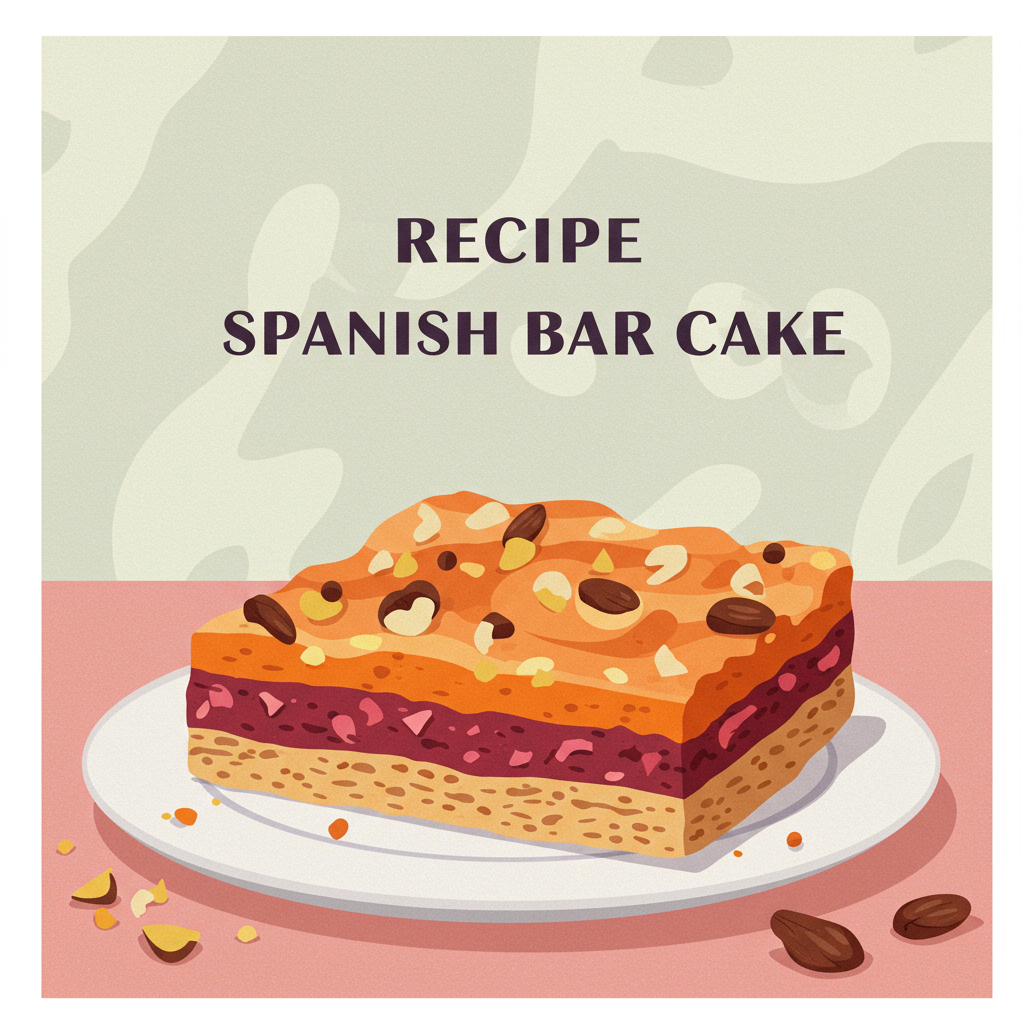
Are you ready to embark on a delightful baking adventure? Today, we’re diving into the wonderful world of the Recipe Spanish Bar Cake – a moist, flavorful, and incredibly satisfying treat that’s perfect for any occasion. Don’t let the name intimidate you; this cake is one of the most easy baking recipes out there, designed with beginners in mind.
Forget complex techniques and overwhelming instructions; we’re here to guide you every step of the way, providing all the essential baking tips for beginners you’ll need to achieve a perfect bake. Get ready to impress yourself and your loved ones with this simple yet sensational cake!
Ingredients List
Gathering your ingredients beforehand is a crucial step for a smooth baking process. Make sure everything is measured accurately!
| Ingredient | Quantity | Unit |
|---|---|---|
| For the Cake: | ||
| All-purpose flour | 2 | cups |
| Granulated sugar | 1 | cup |
| Light brown sugar, packed | 1/2 | cup |
| Baking powder | 1 | tablespoon |
| Baking soda | 1/2 | teaspoon |
| Salt | 1/2 | teaspoon |
| Ground cinnamon | 1 | teaspoon |
| Large eggs | 2 | |
| Whole milk | 1 | cup |
| Vegetable oil | 1/2 | cup |
| Vanilla extract | 1 | teaspoon |
| For the Simple Glaze: | ||
| Powdered sugar | 1.5 | cups |
| Milk (or orange juice for a citrus twist) | 2-3 | tablespoons |
| Vanilla extract (optional) | 1/2 | teaspoon |
Step-by-Step Instructions
Follow these steps carefully, and you’ll have a delicious Spanish Bar Cake in no time! Remember, baking is a science, so precision is key.
Step 1: Prepare Your Oven and Pan
- Preheat your oven to 350°F (175°C). This ensures your oven is at the correct temperature when the cake goes in, which is vital for even baking.
- Grease and flour a 9×13 inch baking pan (or a 9×9 inch pan for a thicker cake, adjusting baking time). To do this, rub a thin layer of butter or shortening all over the inside of the pan. Then, sprinkle a tablespoon of flour into the pan, tilting and tapping it to coat all the greased surfaces. Dump out any excess flour. This step prevents your cake from sticking!
Step 2: Combine Dry Ingredients
- In a large mixing bowl, whisk together the all-purpose flour, granulated sugar, light brown sugar, baking powder, baking soda, salt, and ground cinnamon.
- Beginner Tip: When measuring flour, spoon it lightly into your measuring cup and then level it off with a straight edge (like the back of a knife). Scooping directly from the bag can pack the flour, leading to a denser, drier cake.
- Whisking these ingredients thoroughly helps to evenly distribute the leavening agents (baking powder and soda) and spices, ensuring a consistent texture and flavor throughout your cake.
Step 3: Mix Wet Ingredients
- In a separate medium bowl, whisk together the eggs, whole milk, vegetable oil, and vanilla extract until well combined.
- Beginner Tip: Using room temperature eggs and milk can help your batter mix more smoothly and create a more uniform emulsion, leading to a lighter, more tender cake. If your ingredients are cold, you can warm the milk slightly and let the eggs sit in warm water for a few minutes.
Step 4: Combine Wet and Dry Mixtures
- Pour the wet ingredients into the bowl with the dry ingredients.
- Using a spatula or a whisk, mix until just combined. Be careful not to overmix!
- Common Mistake & Tip: Overmixing develops the gluten in the flour too much, which can result in a tough, chewy, and dense cake. Mix only until there are no visible streaks of dry flour. A few small lumps are perfectly fine and often preferred.
Step 5: Bake the Cake
- Pour the cake batter evenly into your prepared baking pan.
- Gently tap the pan on the counter a couple of times to release any large air bubbles.
- Bake for 25-30 minutes for a 9×13 inch pan, or 35-40 minutes for a 9×9 inch pan. Baking times can vary based on your oven, so keep an eye on it.
- How to Check for Doneness: The cake is done when a wooden skewer or toothpick inserted into the center comes out clean (without wet batter, a few moist crumbs are okay!). The top of the cake should also be golden brown and spring back lightly when gently pressed.
Step 6: Cool the Cake
- Once baked, remove the cake from the oven and let it cool in the pan on a wire rack for about 10-15 minutes. This allows the cake to set and prevents it from breaking when you remove it.
- After 10-15 minutes, carefully invert the cake onto the wire rack to cool completely. Cooling on a rack allows air to circulate around the entire cake, preventing condensation and sogginess.
- Important: Do not glaze a warm cake! The glaze will simply melt and run off. Ensure the cake is completely cool before proceeding to the next step. This usually takes at least 1-2 hours.
Step 7: Prepare and Apply the Glaze
- While the cake is cooling, prepare your simple glaze. In a small bowl, whisk together the powdered sugar, 2 tablespoons of milk (or orange juice), and optional vanilla extract until smooth and free of lumps.
- If the glaze is too thick, add more milk/juice, half a teaspoon at a time, until it reaches a pourable but still thick consistency. If it’s too thin, whisk in a bit more powdered sugar.
- Once the cake is completely cool, drizzle or pour the glaze evenly over the top. You can use the back of a spoon or an offset spatula to spread it if desired.
- Let the glaze set for about 15-20 minutes before slicing and serving. Enjoy your homemade Recipe Spanish Bar Cake!
Tips & Tricks for Baking Success
Baking can be incredibly rewarding, especially when you know a few secrets to success. Here are some actionable tips to ensure your Spanish Bar Cake turns out perfect every time:
- Room Temperature Ingredients: This is a game-changer! Eggs, milk, and butter (if using) at room temperature emulsify better, creating a smoother, more uniform batter and a finer crumb in your cake.
- Accurate Measuring: Baking is a science. Use proper measuring cups for dry ingredients (leveling with a straight edge) and liquid measuring cups for wet ingredients. Kitchen scales are even better for dry ingredients for ultimate precision.
- Don’t Overmix: We can’t stress this enough! Mix dry and wet ingredients just until combined. Overmixing develops gluten, leading to a tough, dry cake. Lumps are okay!
- Know Your Oven: Oven temperatures can vary. An oven thermometer can be a great investment to ensure your oven is truly preheated to the temperature you set.
- Pan Preparation is Key: Always grease and flour your pan thoroughly. This simple step prevents your cake from sticking and breaking when you try to remove it. You can also use parchment paper for extra insurance.
- Patience is a Virtue: Resist the urge to open the oven door frequently while baking, especially in the first two-thirds of the baking time, as this can cause the cake to sink. Also, allow your cake to cool completely before glazing – a warm cake will melt the glaze into a sticky mess!
Essential Baking Tools
Having the right tools makes baking much easier and more enjoyable. Here are some essentials for this recipe:
- Mixing Bowl (at least two: one large for dry, one medium for wet)
- Whisk (for combining ingredients smoothly)
- Baking Pan (9×13 inch or 9×9 inch)
- Measuring Cups and Measuring Spoons (for accurate measurements)
- Spatula (rubber or silicone for scraping bowls and mixing)
- Wire cooling rack
- Wooden skewer or toothpick (for checking doneness)
Nutrition Information (Estimated per serving, for 12 servings)
Please note: These are estimated values and may vary based on specific brands and precise measurements.
| Nutrient | Amount |
|---|---|
| Calories | 350-400 kcal |
| Carbohydrates | 60-70 g |
| Protein | 4-5 g |
| Fat | 12-15 g |
| Fiber | 1-2 g |
| Sugar | 40-50 g |
Frequently Asked Questions (FAQs)
Q1: Can I use a different size baking pan?
A: Yes, you can! If you use an 8×8 or 9×9 inch pan, your cake will be thicker, and you’ll need to increase the baking time (likely by 10-15 minutes). Always check for doneness with a toothpick. If you use a larger pan (e.g., a jelly roll pan), the cake will be thinner, and baking time will decrease.
Q2: My cake turned out dry. What went wrong?
A: A dry cake is usually due to overbaking or overmixing. Overbaking removes too much moisture, while overmixing develops gluten, making the cake tough and dry. Ensure you mix just until combined and remove the cake from the oven as soon as the toothpick comes out clean.
Q3: Can I substitute whole milk with another type of milk?
A: Yes, you can. Skim milk or 2% milk will work, but whole milk adds a bit more richness and moisture. Buttermilk can also be used for a slightly tangy flavor and even more tender crumb, but you might want to reduce the baking soda slightly (or just keep it as is, it often works fine). Non-dairy milks like almond or soy milk can also be used, though the texture might vary slightly.
Q4: How should I store the Spanish Bar Cake?
A: Store the cake covered at room temperature for up to 2-3 days. If you live in a very warm climate or want to extend its freshness, you can store it in an airtight container in the refrigerator for up to 5 days. Bring it to room temperature before serving for the best flavor and texture.
Q5: Can I add nuts or dried fruit to the cake batter?

A: Absolutely! Chopped walnuts, pecans, or even raisins would be a delicious addition. Aim for about 1/2 to 1 cup of additions. Toss them lightly in a tablespoon of flour before adding them to the batter; this helps prevent them from sinking to the bottom of the cake during baking.
Conclusion
And there you have it – your very own delicious Recipe Spanish Bar Cake, baked from scratch! We hope this detailed, beginner-friendly guide has given you the confidence and knowledge to create this wonderful dessert with ease. Remember, every baker starts somewhere, and practice makes perfect. Don’t be afraid to experiment, have fun, and most importantly, enjoy the fruits of your labor (or in this case, the cake!). Happy baking, and we can’t wait to hear about your successful Spanish Bar Cake creations!