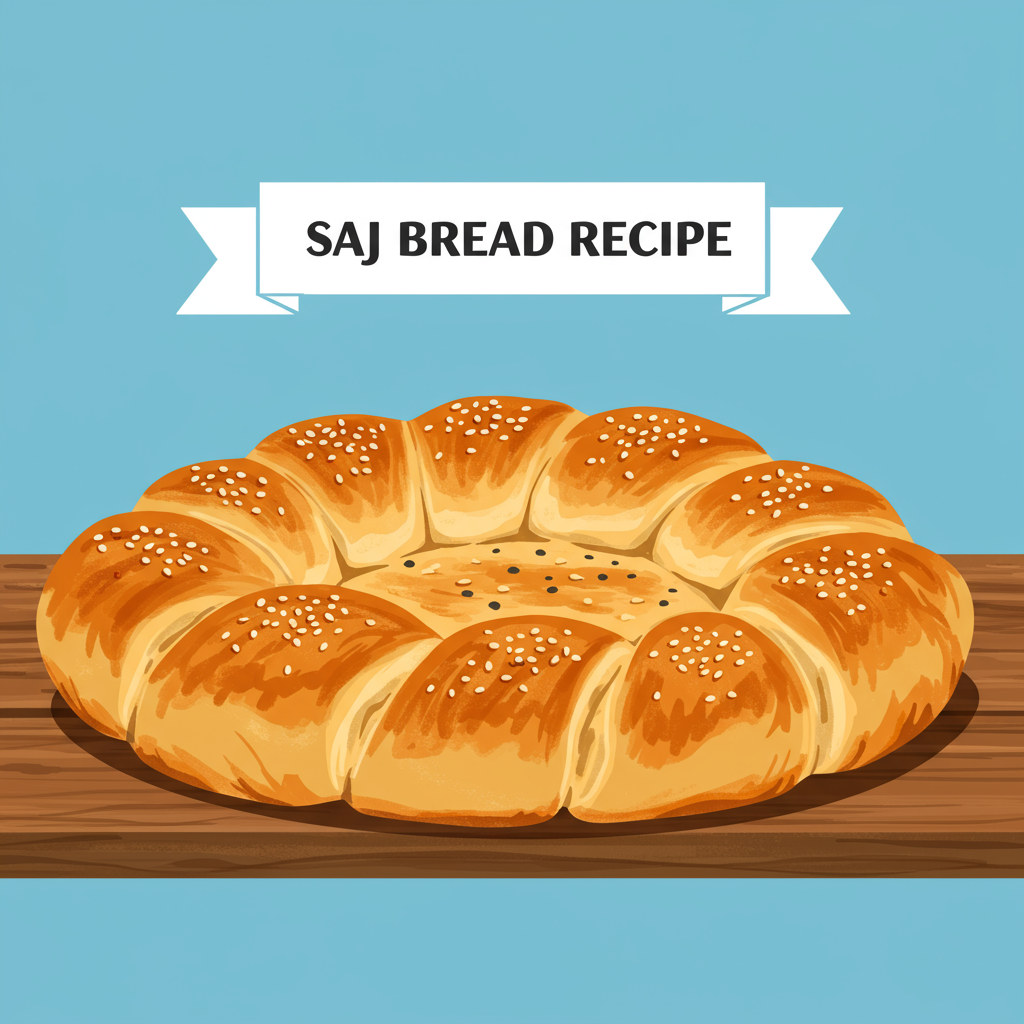
Unlock the Secret to Perfect Saj Bread at Home: Your Ultimate Beginner’s Guide!
Welcome, aspiring bakers! Are you ready to embark on a delicious journey that will fill your kitchen with the irresistible aroma of freshly baked bread? Today, we’re diving into the wonderful world of **Saj Bread Recipe**, a traditional Middle Eastern flatbread known for its incredibly thin, soft, and chewy texture. Often cooked on a convex griddle called a ‘Saj,’ this bread is surprisingly simple to make at home, even if you’re a complete novice.
Forget intimidating bakery recipes; this guide is designed to be one of the most **easy baking recipes** you’ll ever try. We’ll walk you through every step, from activating yeast to perfecting that signature thinness, providing all the **baking tips for beginners** you need to succeed. Get ready to impress yourself and your loved ones with this versatile bread, perfect for wraps, dips, or simply enjoying on its own. Let’s get baking!
Ingredients You’ll Need
Gather your simple ingredients. You likely have most of these in your pantry already!
| Ingredient | Quantity | Unit |
|---|---|---|
| All-purpose flour | 3 | cups |
| Warm water (105-115°F / 40-46°C) | 1 ¼ | cups |
| Active dry yeast | 1 | teaspoon |
| Granulated sugar | 1 | teaspoon |
| Salt | 1 | teaspoon |
| Olive oil | 1 | tablespoon |
| Extra flour | for dusting |
Step-by-Step Instructions: Your Path to Perfect Saj Bread
Follow these detailed steps carefully, and you’ll be enjoying homemade Saj bread in no time!
Step 1: Activate the Yeast (The Foundation of Great Bread!)
- In a small bowl, combine your **warm water** (it should feel like a warm bath, not hot!), **granulated sugar**, and **active dry yeast**. The sugar acts as food for the yeast, helping it wake up and become active.
- Give it a gentle stir and let it sit for about **5-10 minutes**. You’ll know your yeast is active and ready when it becomes foamy and bubbly on top. If it doesn’t foam, your water might have been too hot (killing the yeast) or too cold (keeping it dormant), or your yeast might be old. In this case, it’s best to start over with fresh yeast and properly warmed water.
Step 2: Combine Dry Ingredients
- In a large mixing bowl, whisk together the **all-purpose flour** and **salt**. It’s important to distribute the salt evenly so your bread has consistent flavor and the salt doesn’t interfere with the yeast in one concentrated spot.
- Make a well (a small dip) in the center of the flour mixture. This is where your wet ingredients will go.
Step 3: Mix Dough Ingredients
- Pour the activated yeast mixture and the **olive oil** into the well in your dry ingredients.
- Using a wooden spoon or your hands, gradually mix the wet and dry ingredients together. Start from the center and slowly incorporate the flour from the sides until a shaggy, somewhat sticky dough forms.
Step 4: Knead the Dough (Develop that Gluten!)
- Turn the shaggy dough out onto a lightly floured surface. **Don’t add too much flour at this stage**, as it can make your bread tough.
- For beginners: Kneading is crucial for developing gluten, which gives bread its structure and chewiness. Push the dough away from you with the heels of your hands, fold it back over, rotate, and repeat.
- Knead for **8-10 minutes** by hand, or about **5-7 minutes** if using a stand mixer with a dough hook on medium-low speed.
- **How to know when it’s ready?** The dough should become smooth, elastic, and less sticky. It should spring back slowly when gently poked with your finger. If it tears easily, keep kneading!
Step 5: First Rise (Bulk Fermentation)
- Lightly grease your mixing bowl with a little olive oil. Place the kneaded dough ball into the bowl, turning it once to coat all sides with oil. This prevents it from drying out.
- Cover the bowl tightly with plastic wrap or a clean damp kitchen towel.
- Let the dough rise in a warm, draft-free place for about **1 to 1.5 hours**, or until it has **doubled in size**. A slightly warm oven (turned off, with just the light on) or a sunny spot on your counter works well. Patience here is key for a light and airy texture!
Step 6: Divide and Pre-Shape
- Gently punch down the risen dough to release the air.
- Turn it out onto a lightly floured surface.
- Divide the dough into **6-8 equal pieces**. For consistency, you can use a kitchen scale (each piece should be roughly 80-100 grams).
- Roll each piece into a smooth, tight ball. This pre-shaping helps create an even surface for rolling later.
Step 7: Second Rise (Bench Rest)
- Cover the dough balls loosely with a damp cloth or plastic wrap to prevent them from drying out.
- Let them rest for **15-20 minutes**. This short rest allows the gluten to relax, making the dough much easier to roll out thinly. Don’t skip this step!
Step 8: Roll Out the Dough (The Signature Thinness!)
- Lightly flour your work surface and a rolling pin.
- Take one dough ball and flatten it slightly with your hand.
- Roll the dough out into a very thin circle, about **10-12 inches (25-30 cm)** in diameter. The thinner, the better for authentic Saj bread! It should be almost translucent.
- **Beginner Tip:** If the dough resists rolling, cover it and let it rest for another 5 minutes, then try again. This means the gluten needs to relax more. Use just enough flour to prevent sticking, but not so much that it dries out the dough.
Step 9: Cook the Saj Bread
- Traditional Saj Griddle (if you have one): Preheat your Saj griddle (a convex griddle) over medium-high heat.
- Home Alternative (inverted wok or large cast-iron skillet): Invert a large wok or a heavy-bottomed cast-iron skillet and place it on your stovetop burner. Heat it over medium-high heat until it’s very hot but not smoking. You can also use a flat griddle or a non-stick pan, but the curved surface helps achieve that traditional shape.
- Carefully drape one rolled-out dough circle over the hot surface.
- Cook for **30-60 seconds per side**. You’ll see bubbles form on the surface, and the bread will start to puff up slightly. Flip it once you see light golden-brown spots on the underside.
- Cook the second side until it also has light spots and is cooked through. The goal is soft and flexible, not crispy.
- **Common Mistake:** Overcooking will make the bread dry and brittle. Keep an eye on it!
Step 10: Keep Warm and Serve!
- As each bread is cooked, immediately transfer it to a plate and cover it with a clean kitchen towel. This traps the steam and keeps the bread soft and pliable.
- Repeat with the remaining dough balls.
- Serve your fresh Saj bread warm with hummus, labneh, za’atar and olive oil, or use it as a wrap for your favorite fillings!
Tips & Tricks for Saj Bread Success!
Baking can be an art, but with these actionable tips, you’ll master Saj bread in no time:
- The Right Water Temperature is Critical: For active dry yeast, aim for water between 105-115°F (40-46°C). Too hot, and you’ll kill the yeast; too cold, and it won’t activate properly. A kitchen thermometer is your best friend here!
- Don’t Be Afraid to Knead: Kneading is what develops the gluten, giving your bread its structure and elasticity. If your dough feels tough or tears when you roll it, it likely needs more kneading. Aim for a smooth, supple dough.
- Resting is Not Optional: Both the first rise and the bench rest (Step 7) are crucial. They allow the gluten to relax, making the dough much easier to roll out thinly without tearing, and contribute to a tender final product.
- Go Thin, But Not Too Thin: The hallmark of Saj bread is its thinness. Practice rolling it out as thin as possible, almost translucent, without creating holes. If you tear it, simply pinch the hole closed and continue rolling.
- Hot Surface, Quick Cook: Ensure your cooking surface is hot enough before placing the dough. This allows the bread to puff up quickly and cook evenly without drying out. But watch it closely – Saj bread cooks very fast!
- Keep it Covered: As soon as a piece of Saj bread comes off the heat, stack it and cover it with a clean towel. This traps steam and keeps the bread soft and pliable, which is essential for wraps and prevents it from becoming brittle.
- Experiment with Flour: While all-purpose flour works perfectly, you can try bread flour for a chewier texture, or even a small percentage of whole wheat flour for added nuttiness (though this might make it slightly harder to roll very thin).
- Practice Makes Perfect: Don’t get discouraged if your first few attempts aren’t perfectly round or thin. Each piece of bread you make is a step closer to perfection. Enjoy the process!
Essential Baking Tools
Having the right tools makes all the difference in your baking journey!
- Mixing Bowl
- Whisk
- Baking Pan (for rising, not baking Saj)
- Measuring Cups
- Spatula (or a thin turner for flipping)
- Rolling Pin (not in the list, but essential!)
- Kitchen Scale (optional, but great for consistency)
- Kitchen Thermometer (for water temperature)
Nutrition Information (Estimated per serving)
Here’s an approximate nutritional breakdown for one piece of Saj Bread (assuming 8 servings per recipe). Please note these are estimates and can vary based on exact ingredients and preparation.
| Nutrient | Per Serving (approx. 1 Saj Bread) |
|---|---|
| Calories | 180 kcal |
| Carbohydrates | 35 g |
| Protein | 5 g |
| Fat | 2 g |
| Fiber | 1 g |
| Sugar | 1 g |
Frequently Asked Questions (FAQs)
Q1: My dough isn’t rising. What went wrong?
A: The most common culprits are inactive yeast or incorrect water temperature. Ensure your water is between 105-115°F (40-46°C) – too hot kills yeast, too cold keeps it dormant. Always check your yeast’s expiration date. If your yeast didn’t foam in Step 1, it’s best to start over.
Q2: My Saj bread turned out tough and dry. How can I fix this?
A: This usually happens due to over-flouring during kneading/rolling, not enough kneading (which prevents gluten development), or overcooking. Try to use minimal flour while rolling, ensure your dough is smooth and elastic after kneading, and cook the bread just until you see light spots and puffing, then remove it quickly.
Q3: Can I make this recipe without a special Saj griddle?
A: Absolutely! The most common home alternative is to invert a large wok or a heavy cast-iron skillet on your stovetop burner. You can also use a flat cast-iron griddle or a heavy non-stick pan. The key is to get the surface very hot and cook quickly.
Q4: How do I store leftover Saj bread?
A: Once cooled, store your Saj bread in an airtight bag or container at room temperature for up to 2-3 days. For longer storage, you can freeze them for up to 2 months. Thaw at room temperature and warm gently in a pan or microwave before serving for best results.
Q5: Can I use whole wheat flour for this recipe?
A: Yes, you can! However, whole wheat flour absorbs more liquid and has less gluten-forming protein than all-purpose flour. You might need to add a tablespoon or two of extra water, and the dough might be slightly harder to roll as thin. It will also result in a denser texture.
Q6: Why is my dough too sticky and hard to handle?
A: A sticky dough usually means there’s too much water relative to flour, or it hasn’t been kneaded enough. Try adding a tiny bit more flour (a tablespoon at a time) during kneading until it reaches a smooth, elastic, and less sticky consistency. If using a stand mixer, extend the kneading time by a couple of minutes.
Conclusion: Your Delicious Saj Bread Awaits!
Congratulations, you’ve reached the end of your **Saj Bread Recipe** journey! We hope this detailed, beginner-friendly guide has demystified the process and empowered you to create this delightful flatbread in your own kitchen. There’s truly nothing quite like the taste and aroma of freshly baked bread, and Saj bread is a fantastic starting point for anyone looking to explore the joys of baking.
Don’t be afraid to get your hands a little floury and enjoy the process. Every batch is a learning experience, and with a little practice, you’ll be rolling out perfect, paper-thin Saj bread like a pro. Share your creations, experiment with different dips and fillings, and most importantly, savor every bite. Happy baking, and we can’t wait to hear about your Saj bread adventures!
“`