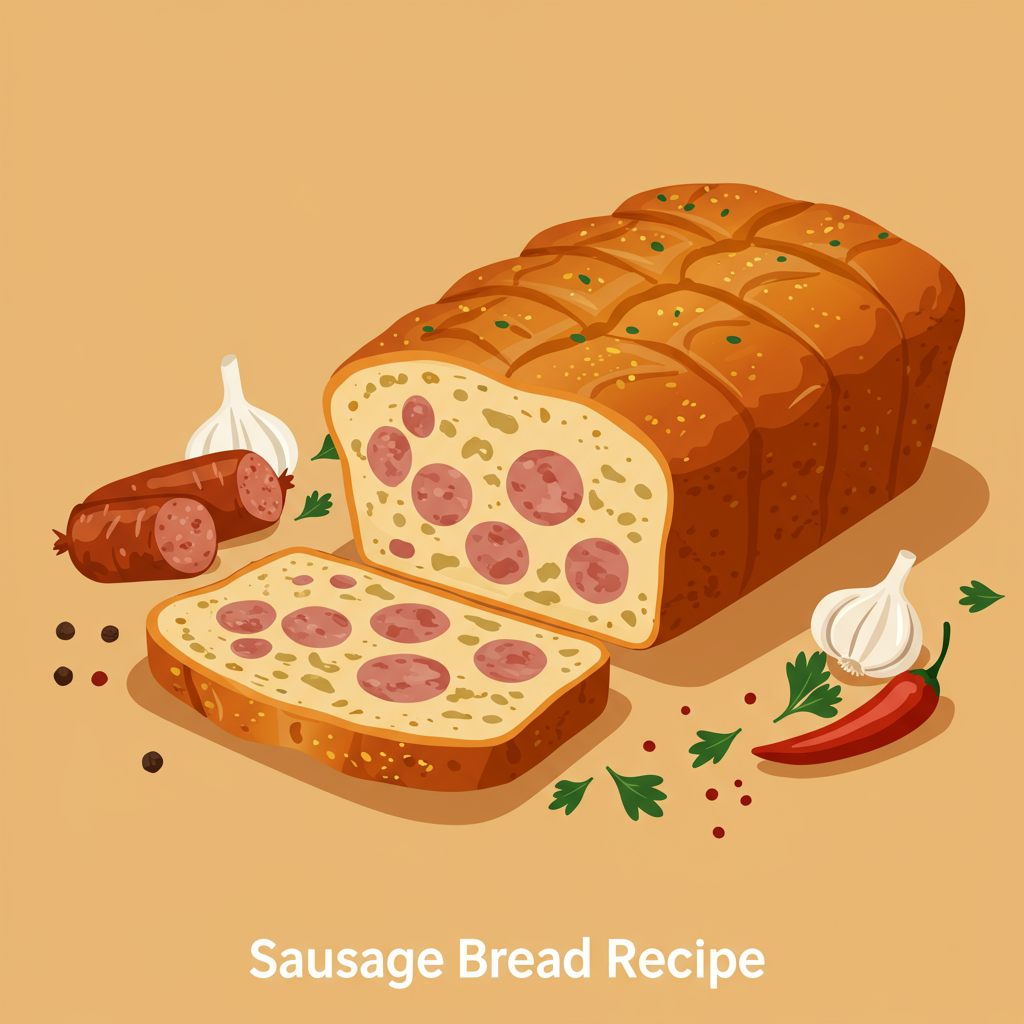
The Ultimate Easy Sausage Bread Recipe for Beginners!
Welcome, aspiring bakers! Are you ready to dive into the wonderful world of homemade bread? Today, we’re tackling a dish that’s incredibly satisfying, surprisingly simple, and utterly delicious: our **sausage bread recipe**. Forget those intimidating baking myths – this recipe is designed with **baking tips for beginners** in mind, guiding you step-by-step to a perfect loaf every time. It’s one of those **easy baking recipes** that looks impressive but requires no advanced skills. Imagine warm, soft bread generously filled with savory sausage and melted cheese – perfect for breakfast, brunch, a hearty snack, or even dinner! Get ready to fill your kitchen with the irresistible aroma of freshly baked goodness. Let’s make some magic!
Ingredients List
Gather your ingredients! Freshness is key for the best flavor, especially when it comes to yeast.
| Quantity | Unit | Ingredient |
|---|---|---|
| 2 ¼ | teaspoons | Active Dry Yeast (1 standard packet) |
| 1 | cup | Warm Water (105-115°F / 40-46°C) |
| 1 | teaspoon | Granulated Sugar (for yeast activation) |
| 3 | cups | All-Purpose Flour, plus more for dusting |
| 1 | teaspoon | Salt |
| 2 | tablespoons | Unsalted Butter, melted |
| 1 | pound | Ground Sausage (mild or hot Italian, or breakfast sausage) |
| 2 | cups | Shredded Mozzarella Cheese (or a blend like Italian mix) |
| ½ | teaspoon | Garlic Powder |
| ½ | teaspoon | Dried Oregano |
| ¼ | teaspoon | Black Pepper |
| 1 | large | Egg (for egg wash) |
| 1 | tablespoon | Water (for egg wash) |
Step-by-Step Instructions
Follow these detailed steps carefully for a delicious sausage bread. Don’t be afraid to take your time!
Step 1: Activate the Yeast (The Foundation of Your Bread!)
- In a large mixing bowl, combine the **warm water** (make sure it’s not too hot or too cold – think warm bath water, between 105-115°F or 40-46°C) and the **granulated sugar**. Stir gently to dissolve the sugar.
- Sprinkle the **active dry yeast** evenly over the surface of the water. Do not stir it in immediately.
- Let it sit undisturbed for 5-10 minutes. This is called “proofing” the yeast. What to look for: You should see a foamy, bubbly layer forming on the surface. This means your yeast is active and alive – congratulations, you’re off to a great start! If it doesn’t foam, your water might have been too hot or too cold, or your yeast might be old. In this case, it’s best to start over with fresh yeast and check your water temperature.
Step 2: Prepare the Dough (The Heart of Your Sausage Bread)
- Once your yeast is foamy, add the **melted butter**, **salt**, and 1 cup of the **all-purpose flour** to the yeast mixture in the bowl. Mix with a spoon until just combined.
- Gradually add the remaining 2 cups of flour, one cup at a time, mixing after each addition. The dough will start to come together and become shaggy.
- Kneading Time!
- By Hand: Turn the dough out onto a lightly floured surface. Knead the dough for about 8-10 minutes. This involves pushing the dough away from you with the heels of your hands, folding it back over, and rotating it. It might feel sticky at first, but resist the urge to add too much extra flour, as this can make your bread tough. Just a light dusting is fine. You’ll know it’s ready when it’s smooth, elastic, and springs back when gently poked.
- With a Stand Mixer: If you have a stand mixer with a dough hook, attach it and knead on medium-low speed for 6-8 minutes. The dough should pull away from the sides of the bowl and be smooth and elastic.
- Lightly grease a clean large bowl with a little oil (vegetable or olive oil works great). Place the kneaded dough into the bowl, turning it once to coat the top with oil. This prevents it from drying out.
- Cover the bowl with plastic wrap or a clean kitchen towel.
- First Rise (Proofing): Place the bowl in a warm, draft-free spot. This could be a slightly warm oven (turned off!), near a sunny window, or just on your kitchen counter if it’s warm enough. Let the dough rise for 1 to 1.5 hours, or until it has **doubled in size**. Beginner Tip: The rising time can vary based on your kitchen’s temperature. Patience is key here!
Step 3: Prepare the Savory Sausage Filling
- While your dough is rising, prepare the filling. In a large skillet, cook the **ground sausage** over medium heat, breaking it up with a spoon as it cooks, until it’s no longer pink.
- Crucial Step: Drain the Fat! This is very important to prevent your bread from becoming greasy and soggy. Use a slotted spoon to transfer the cooked sausage to a plate lined with paper towels, or carefully drain the fat from the skillet. Pat the sausage dry to remove excess grease.
- Let the sausage cool slightly. Once cooled, transfer it to a medium bowl.
- Add the **shredded mozzarella cheese**, **garlic powder**, **dried oregano**, and **black pepper** to the sausage. Mix everything together thoroughly until well combined.
Step 4: Assemble Your Sausage Bread
- Once your dough has doubled in size, gently punch it down to release the air.
- Lightly flour a clean surface. Turn the dough out onto the floured surface.
- Using a rolling pin, roll the dough into a large rectangle, approximately 12×16 inches and about ¼ inch thick. Try to make the edges as straight as possible.
- Evenly spread the sausage and cheese filling over the entire surface of the dough, leaving a small ½-inch border clear on all sides. This border helps in sealing the bread.
- Starting from one of the long sides, carefully and tightly roll up the dough into a log. The tighter you roll, the better the filling will stay in place.
- Seal the Seam: Pinch the seam of the dough firmly to seal it completely. Tuck the ends under the log to create a neat loaf shape. This prevents the filling from escaping during baking.
- Carefully transfer the rolled-up sausage bread to a baking sheet lined with parchment paper. Parchment paper is a beginner’s best friend for easy cleanup and preventing sticking!
Step 5: Second Rise & Bake!
- Cover the sausage bread loosely with plastic wrap or a clean kitchen towel.
- Second Rise: Let it rise again in a warm, draft-free spot for another 30-45 minutes, or until it looks visibly puffy. It won’t double in size quite as dramatically as the first rise, but it should look fuller.
- While the bread is undergoing its second rise, preheat your oven to **375°F (190°C)**.
- In a small bowl, whisk together the **egg** and **1 tablespoon of water** to create an egg wash. This gives your bread a beautiful golden, shiny crust.
- Once the second rise is complete, gently brush the entire surface of the sausage bread with the egg wash.
- Bake Time: Place the baking sheet in the preheated oven and bake for 25-35 minutes, or until the sausage bread is golden brown on top and sounds hollow when tapped on the bottom. If it starts to brown too quickly, you can loosely tent it with aluminum foil.
- Once baked, remove the sausage bread from the oven and transfer it to a wire rack to cool for at least 15-20 minutes before slicing. Why cool? Slicing hot bread can make it gummy and cause the filling to fall out. Cooling allows the internal structure to set properly.
- Slice, serve, and enjoy your delicious homemade sausage bread!
Tips & Tricks for Perfect Sausage Bread
Even for beginners, a few simple tips can elevate your baking game!
- Measure Accurately: Baking is a science! Use proper measuring cups and spoons, and for flour, spoon it into the measuring cup and level it off with a straight edge (like a knife) rather than scooping directly from the bag.
- Water Temperature is Key: For yeast, the water temperature is crucial. Too cold, and the yeast won’t activate; too hot, and it will kill the yeast. A kitchen thermometer is a great investment for consistent results.
- Don’t Rush the Rise: Patience is truly a virtue in bread making. Let your dough take its time to rise. A slow, steady rise often results in a better texture and flavor.
- Drain the Sausage Well: This can’t be stressed enough! Excess grease will lead to a soggy bottom and a less enjoyable bread.
- Experiment with Fillings: Once you’re comfortable with the basic recipe, try adding sautéed onions, bell peppers, spinach, different cheeses (provolone, cheddar, parmesan), or even a pinch of red pepper flakes for a spicy kick!
- Storing Leftovers: Sausage bread keeps well at room temperature for 1-2 days, tightly wrapped. For longer storage, refrigerate for up to 4 days, or freeze sliced portions for up to 3 months. Reheat in the oven or microwave.
- Oven Calibration: Ovens can vary. If your bread is browning too fast or slow, consider investing in an oven thermometer to ensure your oven’s temperature is accurate.
Essential Baking Tools
Having the right tools makes baking much easier and more enjoyable. Here are a few essentials:
- Mixing Bowl
- Whisk
- Baking Pan (Baking Sheet)
- Measuring Cups & Spoons
- Spatula
- Rolling Pin
- Parchment Paper
- Kitchen Thermometer (for water temperature)
Nutrition Information (Estimated per Serving)
Please note: This is an estimated nutritional value based on typical ingredients and assuming 12 servings per loaf. Actual values may vary based on specific brands and portion sizes.
| Nutrient | Amount |
|---|---|
| Calories | 320 kcal |
| Carbohydrates | 30 g |
| Protein | 18 g |
| Fat | 15 g |
| Fiber | 1 g |
| Sugar | 2 g |
Frequently Asked Questions
Q: Why didn’t my dough rise?
A: The most common reasons are inactive yeast or incorrect water temperature. Ensure your yeast is fresh and your water is between 105-115°F (40-46°C). Also, make sure your rising spot is warm and draft-free.
Q: Can I use different types of sausage or cheese?
A: Absolutely! This recipe is very versatile. Feel free to use spicy Italian sausage, breakfast sausage, or even turkey sausage for a lighter option. For cheese, provolone, sharp cheddar, or a mix of Italian cheeses would be delicious.
Q: My bread is getting too brown on top before it’s cooked through. What should I do?
A: If you notice the top browning too quickly, loosely tent the sausage bread with aluminum foil. This will protect the top from over-browning while the inside finishes baking.
Q: Can I prepare the dough ahead of time?
A: Yes! After the first rise, you can punch down the dough, place it in an airtight container, and refrigerate it for up to 24 hours. Let it come to room temperature for about 30-60 minutes before rolling it out and proceeding with the assembly and second rise.
Q: How do I know if the bread is fully baked?
A: The bread should be golden brown on the outside. You can also gently tap the bottom of the loaf; if it sounds hollow, it’s usually a good sign it’s done. An instant-read thermometer inserted into the center of the bread (avoiding the filling) should read around 200-210°F (93-99°C).
Happy Baking!
You did it! You’ve just created a mouth-watering, homemade sausage bread that’s sure to impress everyone (especially yourself!). Baking can seem daunting at first, but with a little patience and these detailed instructions, you’ve proven that anyone can create something truly special in the kitchen. Don’t be afraid to experiment with flavors or make this recipe your own. We hope this **sausage bread recipe** becomes a staple in your collection of **easy baking recipes**.
Enjoy the fruits of your labor, and keep on baking! We’d love to hear about your experience in the comments below.
“`