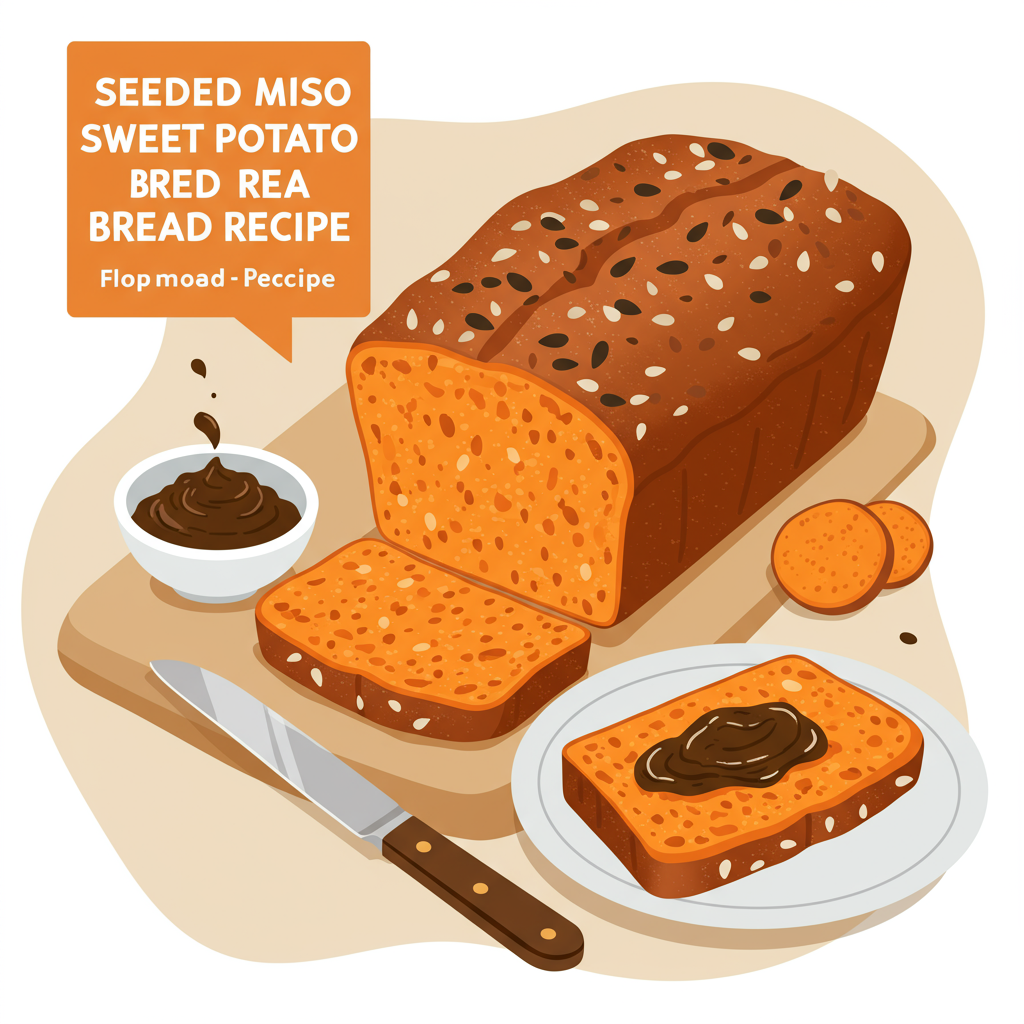
Ingredients List
Gather your ingredients! For the best results, we recommend using room temperature eggs and milk. This helps them incorporate more smoothly into the batter, leading to a more uniform texture in your final bread.
| Ingredient | Quantity | Unit |
|---|---|---|
| All-Purpose Flour | 2 | cups |
| Granulated Sugar | 1/2 | cup |
| Brown Sugar (packed) | 1/4 | cup |
| Baking Powder | 1 | teaspoon |
| Baking Soda | 1/2 | teaspoon |
| Ground Cinnamon | 1 | teaspoon |
| Salt | 1/2 | teaspoon |
| Large Eggs | 2 | |
| Vegetable Oil (or melted coconut oil) | 1/2 | cup |
| Milk (any kind) | 1/4 | cup |
| White Miso Paste | 2 | tablespoons |
| Vanilla Extract | 1 | teaspoon |
| Cooked & Mashed Sweet Potato | 1 | cup |
| Mixed Seeds (pumpkin, sunflower, sesame, flax) | 1/2 | cup |
Step-by-Step Instructions: Bake Your Best Bread Yet!
Follow these detailed steps carefully, and you’ll be enjoying a perfect loaf in no time. Don’t worry if it’s your first time baking; we’ve got you covered with plenty of tips!
Step 1: Prep Your Oven and Pan
Preheat your oven to 350°F (175°C). This is crucial because a properly preheated oven ensures even baking from the start. While it’s heating, grease and flour a 9×5 inch loaf pan. You can use butter or cooking spray to grease it, then dust with a little flour, tapping out any excess. This prevents your bread from sticking, making it easy to remove once baked. Alternatively, you can line the pan with parchment paper, leaving an overhang on the sides to lift the bread out later.
Step 2: Prepare the Sweet Potato
For the sweet potato, you’ll need 1 cup of cooked and mashed sweet potato. You can achieve this by baking, boiling, or microwaving a medium-sized sweet potato until very tender. Once cooked, allow it to cool slightly, then peel and mash it thoroughly with a fork or potato masher until smooth. Tip for beginners: Ensure there are no large lumps; a smooth mash will integrate better into your batter for an even texture.
Step 3: Combine the Dry Ingredients
In a large mixing bowl, whisk together the all-purpose flour, granulated sugar, brown sugar, baking powder, baking soda, ground cinnamon, and salt. Whisking isn’t just about mixing; it also aerates the flour and evenly distributes the leavening agents (baking powder and soda). This prevents pockets of unmixed ingredients and ensures your bread rises beautifully. Beginner’s tip: When measuring flour, spoon it into your measuring cup and then level it off with the back of a knife. Don’t pack it down or scoop directly from the bag, as this can lead to too much flour and a dry, dense bread.
Step 4: Whisk the Wet Ingredients
In a separate medium bowl, whisk together the eggs, vegetable oil, milk, white miso paste, and vanilla extract. Whisk until the miso paste is fully dissolved and the mixture is well combined. The miso paste might take a little effort to break down, but it’s worth it for that incredible savory depth! Using room temperature eggs and milk helps create a smooth emulsion and prevents the oil from solidifying, contributing to a more tender crumb.
Step 5: Combine Wet and Dry Mixtures
Now, pour the wet ingredients into the dry ingredients. Add the mashed sweet potato to the bowl as well. Using a spatula or a wooden spoon, gently fold the ingredients together until just combined. This is perhaps the most important tip for quick breads: DO NOT OVERMIX! Overmixing develops the gluten in the flour too much, resulting in a tough, chewy, and dry bread. A few lumps of flour are perfectly fine and will disappear during baking. Stop mixing as soon as you no longer see streaks of dry flour.
Step 6: Fold in the Seeds
Once your batter is just combined, gently fold in the mixed seeds. You can use any combination you like – pumpkin, sunflower, sesame, flax, or chia seeds all work wonderfully. This adds fantastic texture and extra nutrients. Save a small pinch of seeds to sprinkle on top of the loaf before baking for a pretty finish.
Step 7: Bake Your Bread
Pour the batter into your prepared loaf pan. If you saved some seeds, sprinkle them evenly over the top of the batter. Place the loaf pan into your preheated oven and bake for 50-65 minutes. Baking times can vary slightly depending on your oven, so keep an eye on it. Beginner’s tip for doneness: To check if your bread is fully baked, insert a wooden skewer or a toothpick into the center of the loaf. If it comes out clean or with a few moist crumbs attached (not wet batter), your bread is ready! If it comes out with wet batter, continue baking in 5-minute increments until done.
Step 8: Cool and Serve
Once baked, remove the loaf pan from the oven and let the bread cool in the pan for about 10-15 minutes. This allows the bread to set and makes it easier to remove without breaking. After 10-15 minutes, carefully invert the bread onto a wire rack and let it cool completely. Important cooling tip: While it’s tempting to slice into a warm loaf, cooling it completely on a wire rack ensures the internal structure sets properly and prevents the bread from becoming gummy. Once fully cooled, slice and enjoy!
Tips & Tricks for Baking Success
- Room Temperature Ingredients: Always aim for room temperature eggs and milk. They emulsify better with fats, creating a smoother, more uniform batter and a more tender final product.
- Don’t Overmix: This is the golden rule for quick breads! Mix dry and wet ingredients only until just combined. Overmixing develops gluten, leading to a tough, dense, and dry bread. A few lumps are fine!
- Accurate Measuring: Especially with flour, spoon it into your measuring cup and level it off with a straight edge. Packing flour can add too much, resulting in a dry loaf.
- Check Your Oven Temperature: Ovens can vary! If you find your baked goods are consistently under or overcooked, consider getting an oven thermometer.
- Sweet Potato Consistency: Ensure your mashed sweet potato is smooth. Any large chunks might not cook through evenly in the bread.
- Miso Matters: Use white (shiro) or yellow miso for a milder, sweeter flavor. Red miso might be too strong for this recipe.
- Customize Your Seeds: Feel free to adjust the seed mix to your liking. Chia seeds or even a sprinkle of poppy seeds would also be delicious additions.
- Storage: Store your cooled bread in an airtight container at room temperature for up to 3-4 days, or in the refrigerator for up to a week. It also freezes beautifully for up to 3 months; just wrap it tightly in plastic wrap and then foil.
- Enhance the Flavor: A pinch of nutmeg or allspice can complement the cinnamon and sweet potato beautifully.
Essential Baking Tools
Having the right tools makes baking a breeze! Here are some essentials you’ll need for this recipe:
- Mixing Bowl
- Whisk
- Baking Pan (9×5 inch loaf pan)
- Measuring Cups
- Measuring Spoons
- Spatula
- Wire Rack (for cooling)
Nutrition Info (Estimated per slice, 12 slices per loaf)
Please note that these are approximate values and can vary based on specific ingredients and brands used.
| Nutrient | Amount |
|---|---|
| Calories | 280 kcal |
| Carbohydrates | 42 g |
| Protein | 5 g |
| Fat | 11 g |
| Fiber | 2 g |
| Sugar | 20 g |
Frequently Asked Questions (FAQs)
Q1: Can I make this bread gluten-free?
A: Yes, you can! Substitute the all-purpose flour with a 1:1 gluten-free baking flour blend that contains xanthan gum. The texture might be slightly different, but it should still yield a delicious loaf.
Q2: What if I don’t have sweet potato? Can I use pumpkin puree?
A: Absolutely! Pumpkin puree is a fantastic substitute for mashed sweet potato in this recipe. Ensure it’s 100% pure pumpkin puree, not pumpkin pie filling, and drain any excess liquid if it seems very watery.
Q3: I don’t have miso paste. Can I just omit it?
A: While the miso adds a unique savory depth that balances the sweetness, you can certainly omit it. The bread will still be delicious, but it will have a more traditional sweet potato bread flavor profile. You might consider adding an extra pinch of salt to compensate for the missing savory element.
Q4: How do I know if my bread is overmixed?
A: Overmixed batter will appear very smooth and elastic, and when baked, the bread will be tough, chewy, and have tunnels or large air pockets. To avoid this, mix only until no streaks of dry flour remain – a few lumps are perfectly acceptable and even desirable for a tender quick bread.
Q5: Can I add nuts to this recipe?
A: Yes, chopped nuts like pecans or walnuts would be a wonderful addition! You can fold them in along with the seeds in Step 6. About 1/2 cup of chopped nuts would work well.
Q6: My bread is browning too quickly on top but isn’t done inside. What should I do?
A: This is a common issue! If your bread is browning too fast, loosely tent the top of the loaf pan with aluminum foil for the remaining baking time. This will protect the top from further browning while allowing the inside to finish cooking.
Conclusion
And there you have it – your very own Seeded Miso Sweet Potato Bread ! We hope you enjoyed this journey into the world of easy, flavorful baking. This recipe is a testament to how simple ingredients can come together to create something truly special and comforting.
Don’t be afraid to experiment and make it your own. Whether you’re sharing it with loved ones or savoring a slice with your morning coffee, this bread is sure to become a cherished part of your recipe repertoire. Happy baking, and remember: every successful loaf starts with a little courage and a lot of passion!
“`