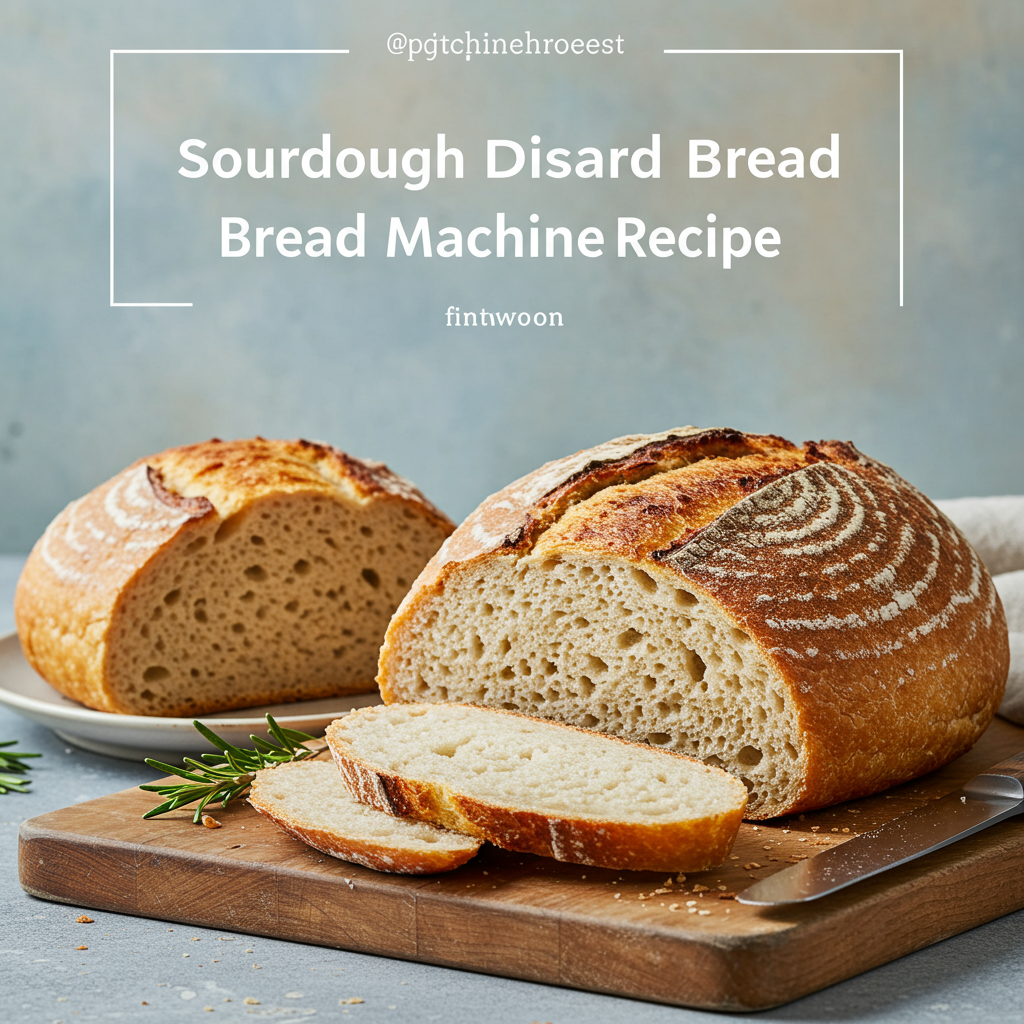
Are you a proud sourdough baker often wondering what to do with that leftover, unfed sourdough starter? You’re not alone! Many home bakers face the delicious dilemma of sourdough discard. But what if we told you there’s a super simple, hands-off way to turn that discard into a fantastic loaf of bread? Say hello to our Sourdough Discard Bread Machine Recipe! This recipe is one of the ultimate easy baking recipes for anyone looking to minimize waste and maximize flavor with minimal effort. Perfect for beginners, it combines the tangy goodness of sourdough with the convenience of your bread machine, offering a forgiving and utterly delicious result. Get ready for some fantastic baking tips for beginners as we guide you through creating a perfect, crusty, and tender loaf every time.
Ingredients List
Gathering your ingredients accurately is the first step to a successful bake. Here’s what you’ll need:
| Ingredient | Quantity | Unit |
|---|---|---|
| Sourdough Discard (unfed, 100% hydration) | 1 | cup |
| Warm Water (90-100°F / 32-38°C) | 1/4 – 1/2 | cup |
| Bread Flour | 3 | cups |
| Granulated Sugar | 2 | tablespoons |
| Salt | 1.5 | teaspoons |
| Olive Oil or Melted Butter | 2 | tablespoons |
| Active Dry Yeast | 2 | teaspoons |
Ingredient Notes for Beginners:
- Sourdough Discard: This is the unfed portion of your sourdough starter. It adds flavor but won’t be the primary leavener in this recipe, hence the added yeast. Ensure it’s 100% hydration (equal parts flour and water by weight) for best results.
- Warm Water: Crucial for activating the yeast. Too hot will kill it, too cold won’t wake it up. Think comfortably warm, not hot, when you test it.
- Bread Flour: Has higher protein content, which creates more gluten and results in a chewier, more structured bread. All-purpose flour can work in a pinch, but the texture might be slightly different.
- Sugar: Feeds the yeast, helping it activate and produce a better rise. It also contributes to browning and flavor.
- Salt: Essential for flavor and controlling yeast activity. Don’t skip it!
- Olive Oil/Melted Butter: Adds richness, moisture, and helps keep the bread soft.
- Active Dry Yeast: This is your primary leavener. Make sure it’s fresh! Old yeast is a common culprit for dense bread.
Step-by-Step Instructions
Follow these detailed steps to create a perfect loaf with your bread machine. Remember, precise measuring and following the order of ingredients are key for bread machine success!
Step 1: Prepare Your Bread Machine Pan
Most bread machine manufacturers recommend adding liquid ingredients first, followed by dry ingredients, with the yeast placed last on top. This order prevents the yeast from activating too early or coming into direct contact with salt, which can inhibit its activity.
- First, Add Liquids: Pour the sourdough discard into the bread machine pan. Then, add the warm water. The amount of water might need slight adjustment based on the consistency of your discard. If your discard is very thick (like a thick batter), you might need the full 1/2 cup of water. If it’s on the thinner side, start with 1/4 cup and be prepared to add more later if the dough seems too dry.
- Add Oil/Butter: Drizzle in the olive oil or melted butter.
Beginner Tip: Ensure your water is warm, not hot. Test it on your wrist – it should feel comfortably warm, like a baby’s bath. If it’s too hot, it can kill the yeast, and your bread won’t rise. If it’s too cold, the yeast will be sluggish.
Step 2: Add Dry Ingredients
Carefully layer the dry ingredients on top of the liquids. Try to keep them separate for now.
- Add Flour: Gently spoon the bread flour over the liquid ingredients. Level it off. Do not dump it in; this helps prevent the flour from mixing too early with the liquids.
- Create Wells for Sugar and Salt: Using your finger or a spoon, make a small indentation in the flour on one side of the pan and add the granulated sugar into it. On the opposite side, create another small well and add the salt. This careful separation helps keep the salt away from the yeast for as long as possible until the kneading cycle begins.
Beginner Tip: When measuring flour, spoon it into your measuring cup and then level it off with a straight edge (like a knife or the back of a spoon). Scooping directly from the bag can compact the flour, leading to too much flour and a dry, dense loaf. Precision matters here!
Step 3: Add the Yeast
This is the final ingredient to add to your pan.
- Place Yeast on Top: Make a small, final indentation in the center of the flour (away from where you placed the salt) and carefully sprinkle the active dry yeast into it.
Common Mistake & Fix: If your yeast touches the salt directly before mixing, the salt can dehydrate the yeast cells, reducing their activity. Layering ingredients in this specific order helps prevent this common issue and ensures your yeast can do its job effectively.
Step 4: Set Your Bread Machine
Place the pan securely back into your bread machine and close the lid.
- Select Program: Choose the “Basic,” “White Bread,” or “Normal” setting. These programs typically include appropriate kneading, rising, and baking times for a standard loaf.
- Select Loaf Size: Set the loaf size to 1.5 lbs (or 2 lbs if your machine only has that option and you’re comfortable with a slightly larger loaf – just be sure your machine can handle the volume).
- Select Crust Color: Choose “Medium” for a golden-brown crust. If you prefer a lighter or darker crust, you can adjust accordingly.
- Start the Machine: Press the start button. The machine will now take over the hard work!
Step 5: Monitor the Dough During the First Knead (Crucial for Beginners!)
This is where you can make small, but significant, adjustments to ensure perfect dough consistency. Don’t skip this step!
- Observe After 5-10 Minutes: About 5-10 minutes into the first kneading cycle, open the lid (briefly!) and observe the dough. It should be actively kneading and forming.
- Ideal Dough Consistency: The dough should be forming a smooth, elastic ball that cleans the sides of the pan. It should be slightly sticky to the touch but not wet or shaggy. It should move as one coherent mass.
- If Too Dry: If the dough looks dry, crumbly, and isn’t forming a cohesive ball, add water, 1 teaspoon at a time, until the desired consistency is reached. Allow it to mix for a minute after each addition before adding more.
- If Too Wet: If the dough is very sticky, soupy, and sticking excessively to the bottom and sides of the pan, add bread flour, 1 tablespoon at a time, until it forms a smooth ball. Allow it to mix for a minute after each addition before adding more.
- Scrape Down Sides: Occasionally, flour might stick to the corners of the pan, especially at the beginning of the knead. Use a rubber spatula to gently push any unmixed flour into the main dough ball.
Beginner Tip: Don’t panic! Adjusting dough consistency is a normal and important part of bread making, especially when using sourdough discard, which can vary in hydration. This small intervention can make all the difference between a perfect, airy loaf and a dense, heavy one. Trust your instincts and the visual cues.
Step 6: Let the Machine Do Its Work
Once you’ve adjusted the dough to the perfect consistency, close the lid and let the bread machine complete its cycle. This typically involves several kneading, rising, and baking phases.
- Resist the Urge to Open the Lid: After the initial dough check, avoid opening the lid during the rising cycles, as this can cause the dough to deflate due to temperature changes or drafts. Let the machine work its magic undisturbed.
Step 7: Remove and Cool the Bread
When the bread machine beeps to signal the end of the cycle:
- Remove Immediately: Carefully remove the bread pan from the machine using oven mitts. The pan will be very hot.
- Invert and Release: Invert the pan onto a wire cooling rack and gently shake or tap to release the loaf. If the kneading paddle is stuck in the bread, carefully remove it once the bread has cooled slightly (it’s easier to remove without damaging the bread when it’s not scorching hot).
- Cool Completely: This step is critical for optimal texture and flavor! Allow the bread to cool on the wire rack for at least 1-2 hours (or even longer) before slicing. Slicing hot bread can make it gummy and difficult to cut, as the internal structure is still setting and steam is escaping.
Beginner Tip: Cooling bread allows the internal structure to set, redistributes moisture, and allows excess steam to escape, resulting in a better texture, easier slicing, and improved flavor. Patience is a virtue here!
Tips & Tricks for Sourdough Discard Bread Machine Success
Even though the bread machine does most of the work, a few extra tips can elevate your loaf from good to absolutely fantastic:
- Use Fresh Yeast: This cannot be stressed enough. Old or expired yeast is the number one reason for bread not rising. Store yeast in an airtight container in the refrigerator or freezer to prolong its life and always check the expiration date.
- Ingredient Temperature Matters: Ensure your sourdough discard is at room temperature and your water is warm (not hot!). Cold ingredients can slow down yeast activity and result in a longer rise time or a less airy loaf.
- Don’t Be Afraid to Adjust: The “monitor the dough” step is your superpower. Sourdough discard can vary in hydration, and even humidity in your kitchen can affect dough consistency. A slight adjustment of a teaspoon of water or a tablespoon of flour makes a huge difference in the final texture.
- Experiment with Flours: While bread flour is recommended for its high protein content, you can try substituting up to 1/2 cup of whole wheat flour for some of the bread flour for added nutrition and a slightly nuttier flavor. Keep an eye on dough consistency if you do this, as whole wheat absorbs more liquid.
- Crust Customization: If your bread machine allows, experiment with light or dark crust settings to find your preference. For a slightly softer crust, you can rub a little butter on the loaf immediately after removing it from the pan.
- Store Properly: Once completely cooled, store your bread in an airtight container, a reusable bread bag, or wrapped in plastic wrap at room temperature for 3-4 days. For longer storage, slice the cooled loaf and freeze the slices in a freezer-safe bag for up to 3 months.
- Add-ins (After First Knead): If your bread machine has an “add-in” beeper (usually about 30-45 minutes into the cycle), you can add things like 1/2 cup of seeds (sunflower, sesame, flax), dried herbs, or even grated cheese during that cycle for extra flavor and texture.
Essential Baking Tools
While your bread machine does the heavy lifting, these basic tools will make your baking experience even smoother and more precise:
- Measuring Cups
- Measuring Spoons
- Rubber Spatula (for scraping down the pan during kneading)
- Wire Cooling Rack
- Digital Kitchen Scale (Highly recommended for accuracy, especially with sourdough discard, though this recipe uses volumetric measurements)
Nutrition Info (Estimated per slice, 16 slices per loaf)
Please note: These are estimated nutritional values and can vary based on specific ingredient brands, exact measurements, and the size of your slices. This estimation is for a 1.5 lb loaf, yielding approximately 16 standard slices.
| Nutrient | Amount (per slice) |
|---|---|
| Calories | ~110-130 kcal |
| Carbohydrates | ~20-25 g |
| Protein | ~4-5 g |
| Fat | ~1-2 g |
| Fiber | ~1 g |
| Sugar | ~1-2 g |
Frequently Asked Questions (FAQs)
Q1: Why do I need to add yeast if I’m using sourdough discard?
A: Your sourdough discard provides fantastic flavor and adds to the complex crumb structure, but it’s typically unfed and not active enough to provide a strong, reliable rise on its own within a bread machine’s set cycle time. The added active dry yeast ensures a consistent and successful rise, giving you a light and fluffy loaf every time.
Q2: Can I use whole wheat flour instead of bread flour?
A: Yes, you can! However, whole wheat flour absorbs more liquid than bread flour. You can substitute up to 1 cup of whole wheat flour for bread flour in this recipe. Be sure to closely monitor the dough during the first knead (Step 5) and be prepared to add an extra tablespoon or two of water if the dough seems too dry, or a little more flour if it’s too sticky.
Q3: My sourdough discard is very thick/thin. How does that affect the recipe?
A: Sourdough discard consistency can vary significantly. If your discard is very thick, you’ll likely need the full 1/2 cup of warm water to achieve the right dough consistency. If it’s quite thin, start with 1/4 cup of water and be ready to add a little more flour (1 tablespoon at a time) during the initial kneading phase if the dough is too sticky. The “monitor the dough” step is crucial for success here!
Q4: Do I need to activate the yeast before adding it to the bread machine?
A: No, for active dry yeast used in a bread machine, it’s typically added directly to the pan (last, on top of the flour). The warm liquids and the machine’s mixing and heating cycles will activate it. If you’re using instant yeast, you also add it directly, as it doesn’t require proofing.
Q5: How should I store my homemade sourdough discard bread?
A: Once completely cooled, store your bread in an airtight bread bag, wrapped tightly in plastic wrap, or in an airtight container at room temperature for 3-4 days. To keep it fresh longer, you can slice the cooled loaf and freeze the slices in a freezer-safe bag for up to 3 months. Thaw individual slices as needed, or pop them straight into a toaster!
Q6: Can I make this recipe without a bread machine?
A: While this recipe is optimized for the hands-off convenience of a bread machine, you could adapt it for traditional oven baking. You would need to knead the dough (by hand or stand mixer), allow for bulk fermentation and shaping, and then a final proof before baking in an oven. The timings and specific steps would be different, but the ingredients would be similar. This bread machine recipe is designed for maximum ease!
Conclusion
And there you have it! A truly effortless way to transform your sourdough discard into a delicious, homemade loaf of bread with the magic of your bread machine. This Sourdough Discard Bread Machine Recipe is a testament to how simple and rewarding baking can be, even for the most novice baker. No fancy techniques, no endless kneading – just simple steps leading to incredible results. Imagine waking up to the smell of freshly baked bread, knowing you made it yourself with minimal fuss.

We hope this detailed, beginner-friendly guide empowers you to bake with confidence. Don’t be afraid to experiment, and most importantly, enjoy the process! Happy baking, and we can’t wait to hear about your delicious sourdough discard bread machine creations. Share your results and any questions in the comments below!
1 thought on “Sourdough Discard Bread Machine Recipe – Best Ever Recipe”