Welcome, aspiring baker! Have you ever dreamt of diving into the world of sourdough but felt intimidated by complex recipes or the fear of failure? You’re in the perfect place! This comprehensive guide is specifically designed for beginners, focusing on Sourdough Starter Recipes Not Bread. We’re going to demystify the process of creating your very own vibrant, bubbly sourdough starter from scratch. Forget those daunting images of perfect loaves for a moment; our goal here is to nurture a living, breathing culture that will become the heart of all your future sourdough adventures. Get ready for one of the most rewarding and easy baking recipes you’ll ever undertake, packed with practical baking tips for beginners to ensure your success!
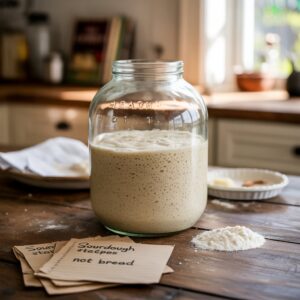
Creating a sourdough starter is less about precision and more about patience and observation. It’s a journey, not a sprint, and with a few simple ingredients and consistent care, you’ll soon have a thriving starter ready to transform into delicious breads, pancakes, crackers, and so much more. Let’s get started on cultivating your very own jar of bubbly magic!
Ingredients for Your Sourdough Starter
You only need two simple ingredients to begin this amazing journey. Quality matters here!
| Ingredient | Initial Mix Quantity | Daily Feeding Quantity (Approx.) | Unit |
|---|---|---|---|
| Unbleached All-Purpose Flour | 60 | 60 | grams |
| Filtered, Room Temperature Water | 60 | 60 | grams |
Note: We recommend using unbleached flour as it contains more of the natural microbes necessary for fermentation. Filtered water is crucial to avoid chlorine, which can inhibit yeast activity. Room temperature water helps activate the yeast more quickly.
Step-by-Step Instructions: Creating Your Sourdough Starter
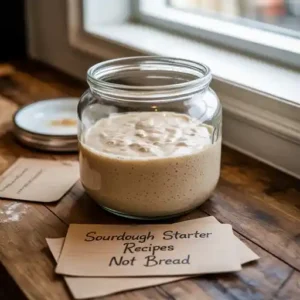
Embarking on your sourdough starter journey is an exciting process! Follow these detailed steps, and remember that patience is your best friend. The timeline can vary based on your kitchen’s temperature and flour type, so observe your starter closely.
Day 1: The Birth of Your Starter
- Prepare Your Container: Choose a clean, clear glass jar (a wide-mouth quart-sized jar works perfectly) or a non-reactive plastic container. Glass is ideal so you can observe the activity.
- Combine Ingredients: In your chosen jar, combine 60 grams of unbleached all-purpose flour and 60 grams of filtered, room temperature water.
- Mix Thoroughly: Stir the mixture vigorously with a spatula or spoon until there are no dry spots of flour left. The consistency should be like a thick pancake batter or a sticky paste. Ensure it’s well-combined to kickstart fermentation.
- Cover Loosely: Place a lid loosely on the jar, or cover it with plastic wrap/a clean kitchen towel secured with a rubber band. The goal is to keep out contaminants while allowing air to circulate. Do not seal it airtight.
- Find a Warm Spot: Place your jar in a warm spot, ideally between 70-78°F (21-26°C). A kitchen counter away from drafts is often perfect. Heat helps the wild yeast and bacteria become active.
- Wait: Now, we wait! Don’t touch it until Day 2.
Day 2: Rest and Observation
- No Feeding Today: Resist the urge to feed your starter today. We’re giving the initial microbes time to wake up and start their work.
- Observe: Take a peek! You might not see much activity yet, or you might notice a few tiny bubbles. The smell might be a bit sweet or even slightly funky. This is all normal.
- Maintain Temperature: Keep your starter in its warm spot. Consistency in temperature is key for steady development.
Day 3: The First Feeding
- Assess Activity: By now, you might see some small bubbles, and the mixture might have expanded slightly. There might be a faint sour or yeasty smell.
- Discard (the first time!): This is a crucial step. Gently stir your starter. Then, remove and discard all but 60 grams (about 1/4 cup) of your starter. You can measure this with a kitchen scale or eyeball it. Don’t worry, discarding is essential to control the acidity and provide enough food for the thriving microbes.
- Feed Your Starter: Add 60 grams of unbleached all-purpose flour and 60 grams of filtered, room temperature water to the remaining 60 grams of starter.
- Mix Well: Stir thoroughly until fully combined and smooth, just like on Day 1.
- Mark the Level: Use a rubber band or a marker on the outside of the jar to indicate the current level of your starter. This will help you track its growth.
- Cover & Return: Cover loosely and return it to its warm spot. Now, observe it for the next 12-24 hours. You should start seeing more significant activity!
Day 4-7 (and Beyond): Regular Feedings and Development
From Day 4 onward, you’ll typically feed your starter once every 24 hours, following the discard and feed routine. If your kitchen is very warm (above 78°F/26°C), you might need to feed every 12 hours. If it’s cooler (below 70°F/21°C), it might take longer to become active.
- Daily Feeding Routine: Each day, around the same time, repeat the feeding process:
- Discard: Stir your starter. Discard all but 60 grams of your active starter.
- Feed: Add 60 grams of fresh unbleached all-purpose flour and 60 grams of filtered, room temperature water.
- Mix & Mark: Stir thoroughly, mark the new level, and cover loosely.
- Observe: Keep an eye on its activity. You’re looking for consistent doubling in size.
- What to Look For:
- Bubbles: You should see many small and large bubbles throughout the mixture.
- Rise and Fall: After feeding, your starter should rise significantly (ideally doubling or even tripling) within 4-8 hours, then slowly fall back down. This “peak” activity is when it’s strongest and most ready to use for baking.
- Smell: It should develop a pleasant, tangy, slightly yeasty, or even fruity aroma, similar to yogurt or ripe fruit. It should NOT smell like nail polish remover or overly pungent (though a slight alcohol smell, known as ‘hooch’, is normal when it’s hungry).
- Consistency: It should still resemble a thick, bubbly pancake batter.
- The Float Test (When is it Ready?): By Day 7 (or sometimes sooner/later, depending on conditions), your starter should be consistently doubling in size within 4-8 hours after feeding. To check if it’s truly ready to bake with, perform the float test:
- Take a small spoonful of your starter at its peak (when it’s most bubbly and risen).
- Gently drop it into a glass of room temperature water.
- If it floats, your starter is active and ready to use! If it sinks, it needs more time and regular feeding to build strength. Don’t worry, just keep feeding it daily until it consistently floats.
Troubleshooting for Beginners: Common Sourdough Starter Hiccups
- No Activity/Slow Activity:
- Temperature: Your kitchen might be too cold. Try moving your starter to a warmer spot (e.g., on top of the fridge, in the oven with the light on, or in a proofing box if you have one). The ideal range is 70-78°F (21-26°C).
- Water Quality: Ensure you’re using filtered, unchlorinated water. Chlorine kills the beneficial microbes. If you only have tap water, let it sit out in an open container for 24 hours to allow the chlorine to evaporate.
- Flour Type: Unbleached flour is best. Bleached flour can hinder development. If using bleached, consider switching or adding a small amount of whole wheat flour for a few feedings to boost activity.
- Patience: Some starters take longer to get going. Don’t give up! Keep feeding consistently, and it will eventually activate.
- “Hooch” (Dark Liquid on Top):
- This is a normal sign that your starter is hungry and needs to be fed. It’s essentially alcohol produced by the yeast.
- If it’s a light amber color, just stir it back in before discarding and feeding.
- If it’s dark brown or black, it indicates extreme hunger. Pour it off, then discard and feed your starter as usual. You might want to feed it more frequently if this happens often.
- Mold:
- Mold is rare but can happen. If you see any fuzzy, colored spots (pink, orange, black, green), unfortunately, you must discard the entire starter and start over. Mold spores are deep-seated and cannot be simply scraped off.
- To prevent mold, always use clean jars and utensils, and keep the starter loosely covered to allow air circulation but prevent contamination.
- Inconsistent Consistency:
- If your starter is too thick (like dough), add a tiny bit more water at feeding to reach the right consistency.
- If it’s too thin (like milk), add a tiny bit more flour.
- Aim for a thick pancake batter consistency that’s easy to stir but still holds some shape.
Tips & Tricks for Sourdough Starter Success
Mastering your sourdough starter involves a bit of art and science. Here are some pro-tips to help you along the way:
- Use a Kitchen Scale: While measuring cups work, a kitchen scale provides far more accuracy, especially for the crucial 1:1:1 ratio (starter:flour:water). This consistency significantly improves your starter’s health and predictability.
- Temperature is Key: A consistent warm environment (70-78°F or 21-26°C) is ideal for active fermentation. Fluctuations can slow down or stall your starter’s development. Consider using an oven with the light on (turned off once warmed), or a proofing box.
- Don’t Be Afraid to Discard: It feels wasteful, but discarding ensures your starter has enough food to thrive and prevents it from becoming too acidic. Once your starter is established, you can save the discards for other delicious recipes (like crackers or pancakes!).
- Observe and Learn: Pay attention to how your starter behaves. Does it bubble more after certain feedings? Does it rise higher at a particular temperature? Learning its rhythm will make you a more intuitive sourdough baker.
- Label Your Jar: A simple rubber band around the jar at the level of your fresh starter after feeding will show you exactly how much it has risen. This visual cue is incredibly helpful for tracking progress.
- Patience, Patience, Patience: Sourdough doesn’t happen overnight. Some starters are active in 5 days, others take 10 or more. Don’t get discouraged if yours is slow to start. Consistency is more important than speed.
- Cleanliness Matters: Always use clean jars and utensils to prevent introducing unwanted bacteria or mold. A quick wash with hot, soapy water is usually sufficient.
Essential Baking Tools for Your Sourdough Journey
While you don’t need much to get started, having the right tools can make the process smoother and more enjoyable. These are some essentials we recommend:
- Mixing Bowl: Essential for combining ingredients, especially when you move on to using your starter for dough.
- Whisk: Excellent for thoroughly blending your flour and water into a smooth consistency.
- Measuring Cups: While a scale is preferred for precision, cups are handy for initial approximate measurements.
- Spatula: Perfect for scraping down the sides of your jar, mixing, and transferring starter.
- Baking Pan: (While not directly used for making the starter, this will be an essential tool when you move on to baking delicious bread or other treats with your active sourdough starter!)
- Glass Jar (Quart-sized): Crucial for observing your starter’s activity and growth. Look for one with a wide mouth for easy mixing and cleaning.
- Digital Kitchen Scale: Highly recommended for precise measurements (grams are ideal), leading to a healthier, more consistent and predictable starter.
Nutrition Information (Estimated per 100g of Active Sourdough Starter)
Please note: Sourdough starter is a raw, fermenting mixture and not typically consumed as a standalone food product. The nutritional values below are approximate, based on the flour and water content before fermentation, and will change as fermentation progresses and nutrients are consumed/transformed by the microbes. This information is provided for general reference.
| Nutrient | Amount |
|---|---|
| Calories | 180-200 kcal |
| Carbohydrates | 35-40 g |
| Protein | 5-7 g |
| Fat | ~1 g |
| Fiber | 1-2 g |
| Sugar | ~0 g (most sugars in the flour are consumed by yeast/bacteria during fermentation) |
Frequently Asked Questions About Sourdough Starter
Q: My starter isn’t bubbling. What am I doing wrong?
A: Don’t panic! Lack of bubbles is common for new starters. The most likely culprits are temperature (it might be too cold), chlorinated water (use filtered!), or bleached flour. Ensure your starter is in a warm spot (70-78°F), use filtered water, and switch to unbleached flour if you aren’t already. Give it time and consistent feeding. Sometimes, it just needs a few more days to get going.
Q: What is “hooch” and should I be worried?
A: Hooch is the dark liquid that sometimes forms on top of your starter. It’s a natural byproduct of fermentation, essentially alcohol, and it means your starter is hungry! A clear or light amber hooch is normal; just stir it back in or pour it off before feeding. Darker hooch indicates severe hunger, so pour it off and consider feeding more frequently.
Q: How often do I need to feed my sourdough starter?
A: When kept at room temperature (actively developing or in use), you should feed your starter once every 12-24 hours. Once your starter is established and active (consistently passes the float test), you can store it in the refrigerator. In the fridge, it only needs to be fed once a week. Remember to take it out, feed it, and let it become active at room temperature for a few hours before using it for baking.
Q: How do I know when my sourdough starter is ready to use?
A: Your starter is ready when it consistently doubles (or even triples) in size within 4-8 hours after feeding, has a bubbly texture, and smells pleasantly sour/yeasty. The best test is the “float test”: take a small spoonful of starter at its peak (most risen) and gently drop it into a glass of room temperature water. If it floats, it’s ready! If it sinks, it needs more time and strength.
Q: Can I use whole wheat flour for my starter?
A: Yes, absolutely! Many people start their sourdough with whole wheat or rye flour because these flours contain more natural nutrients and microbes, which can kickstart fermentation faster. However, whole wheat starters can be very active and require more frequent feeding. You can also transition a whole wheat starter to an all-purpose one over a few feedings if you prefer a milder flavor.
Q: What should I do with the discarded starter?
A: Once your starter is established and active (typically after Day 7-10), you can save your discards! Don’t throw them away. Discarded starter can be used in a variety of delicious recipes that don’t require a leavening agent, such as sourdough crackers, pancakes, waffles, quick breads, or even savory fritters. Search for “sourdough discard recipes” for inspiration!
Your Sourdough Adventure Begins Now!
Congratulations! You’ve just taken the first exciting step into the wonderful world of sourdough. Creating your own starter is not just about making a baking ingredient; it’s about connecting with a timeless culinary tradition and fostering a living culture in your own kitchen. Remember, every sourdough journey is unique, and while there might