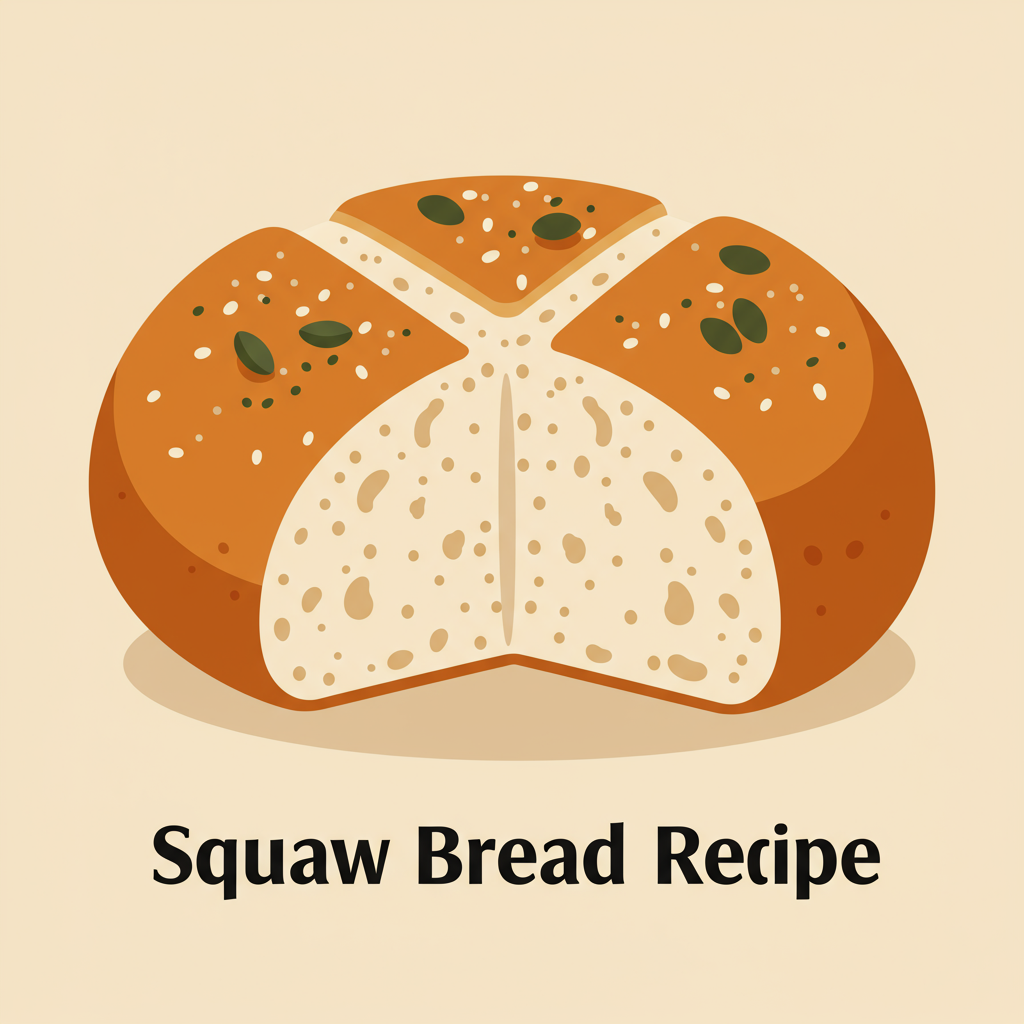
Squaw Bread Recipe: Your Guide to a Delicious Homemade Loaf
Welcome, aspiring bakers! Are you ready to embark on a delightful journey into the world of bread making? Today, we’re diving into a classic and deeply flavorful bread that’s surprisingly approachable for anyone new to the kitchen: the Squaw Bread Recipe. This unique loaf, known for its rich color, slightly sweet taste, and hearty texture, is an absolute comfort food. Don’t be intimidated by the idea of baking bread from scratch; with our easy baking recipes approach and comprehensive baking tips for beginners, you’ll be pulling a warm, aromatic loaf from your oven in no time. Get ready to fill your home with the incredible smell of freshly baked bread and impress everyone with your newfound skills!
Ingredients List
Gathering your ingredients is the first step to success. Ensure you have everything measured out before you begin – this is called “mise en place” and it makes the baking process much smoother!
| Ingredient | Quantity | Unit |
|---|---|---|
| Warm Water (105-115°F / 40-46°C) | 1.5 | cups |
| Active Dry Yeast | 2.25 | teaspoons (1 standard packet) |
| Granulated Sugar | 1 | teaspoon |
| All-Purpose Flour | 2 | cups |
| Dark Rye Flour | 1 | cup |
| Whole Wheat Flour | 1 | cup |
| Unsweetened Cocoa Powder | 2 | tablespoons |
| Salt | 1.5 | teaspoons |
| Molasses (dark, unsulphured) | 1/4 | cup |
| Honey | 1/4 | cup |
| Vegetable Oil (or other neutral oil) | 2 | tablespoons |
| Cornmeal (for dusting pan) | 1 | tablespoon |
Step-by-Step Instructions: Mastering Your Squaw Bread
Follow these detailed steps carefully, and you’ll be a bread-baking pro in no time! Remember, baking is a science, but it also benefits from a little patience and love.
1. Activate the Yeast (The Wake-Up Call)
- In a large mixing bowl (or the bowl of your stand mixer), combine the warm water (ensure it’s between 105-115°F / 40-46°C – it should feel like a warm bath, not hot!), the granulated sugar, and the active dry yeast.
- Beginner Tip: Water that’s too hot will kill the yeast, and water that’s too cold won’t activate it. Use a kitchen thermometer if you’re unsure!
- Stir gently and let it sit for about 5-10 minutes. You should see a foamy layer form on top – this means your yeast is active and ready to work its magic! If it doesn’t foam, your yeast might be old or the water temperature was off. Start again with fresh yeast.
2. Combine Wet Ingredients
- Once the yeast is foamy, add the molasses, honey, and vegetable oil to the yeast mixture. Stir until well combined. The mixture will be dark and fragrant.
- Alternative: If you don’t have molasses, you can use an equal amount of honey or maple syrup, but the flavor profile will be slightly different. Molasses gives this bread its characteristic depth and color.
3. Mix Dry Ingredients (The Flavor Base)
- In a separate, medium-sized bowl, whisk together the all-purpose flour, dark rye flour, whole wheat flour, unsweetened cocoa powder, and salt.
- Why Cocoa Powder? It’s not for chocolate flavor! The cocoa powder contributes to the bread’s beautiful dark color, mimicking the appearance of traditional Squaw Bread without adding a strong chocolate taste.
- Whisking ensures all dry ingredients are evenly distributed, preventing pockets of unmixed salt or cocoa.
4. Combine Wet and Dry (Bringing it All Together)
- Gradually add the dry ingredient mixture to the wet mixture in the large bowl, mixing with a sturdy spoon or using the dough hook attachment of your stand mixer on low speed.
- Start by adding about half of the dry ingredients, mix until just combined, then add the rest.
- Continue mixing until a shaggy, sticky dough forms.
- Common Mistake: Don’t add all the flour at once! Adding gradually helps prevent lumps and allows the liquids to absorb properly.
5. Knead the Dough (Building Strength)
Using a Stand Mixer:
- Attach the dough hook and knead on medium-low speed for 8-10 minutes. The dough should become smooth, elastic, and pull away from the sides of the bowl.
- Beginner Tip: The dough should be soft but not overly sticky. If it’s too sticky, add a tablespoon of all-purpose flour at a time. If it’s too dry, add a teaspoon of warm water at a time.
Kneading by Hand:
- Lightly flour a clean work surface. Turn the dough out onto the floured surface.
- Knead by pushing the dough away from you with the heels of your hands, then folding it back over itself. Rotate the dough a quarter turn and repeat.
- Continue kneading for 10-15 minutes. The dough should transform from sticky and shaggy to smooth, elastic, and resilient.
- How to tell if it’s kneaded enough? The “windowpane test”: Pinch off a small piece of dough and gently stretch it. If you can stretch it thin enough to see light through it without tearing, it’s ready!
6. First Rise (The Bulk Fermentation)
- Lightly grease a clean large bowl with a little vegetable oil. Place the kneaded dough in the bowl, turning it once to coat the entire surface with oil.
- Cover the bowl tightly with plastic wrap or a clean kitchen towel.
- Place the bowl in a warm, draft-free spot. An unheated oven with the light on, or near a warm window, works well.
- Let the dough rise for 1 to 1.5 hours, or until it has doubled in size.
- Patience is Key: Don’t rush this step! The first rise develops flavor and texture. If your kitchen is cool, it might take longer.
7. Shape the Loaf (Forming Your Masterpiece)
- Lightly grease a 9×5 inch loaf pan and dust it generously with cornmeal. The cornmeal prevents sticking and adds a nice texture to the crust.
- Gently punch down the risen dough to release the air.
- Turn the dough out onto a lightly floured surface. Gently shape it into a rectangular loaf that fits your pan. You can do this by flattening it into a rectangle, then rolling it tightly from one end to the other, pinching the seam closed at the bottom.
- Place the shaped loaf, seam-side down, into the prepared loaf pan.
8. Second Rise (The Final Proof)
- Cover the loaf pan loosely with plastic wrap or a clean kitchen towel.
- Return it to a warm, draft-free spot for another 45-60 minutes, or until the loaf has nearly doubled in size and looks puffy.
- Don’t Over-Proof: If it rises too much, it might collapse in the oven. It should look noticeably larger but still have some structure.
9. Bake the Bread (The Grand Finale)
- Preheat your oven to 375°F (190°C) about 15-20 minutes before the second rise is complete.
- Once the oven is preheated, carefully place the loaf pan into the center of the preheated oven.
- Bake for 30-40 minutes.
- How to know it’s done? The crust should be deep golden brown, and when tapped on the bottom, it should sound hollow. For ultimate accuracy, use an instant-read thermometer – the internal temperature should be between 190-200°F (88-93°C).
- If the top is browning too quickly, you can loosely tent it with aluminum foil.
10. Cool (The Essential Resting Period)
- Once baked, immediately remove the bread from the loaf pan and place it on a wire cooling rack.
- Let it cool completely for at least 1-2 hours before slicing.
- Why cool? Slicing hot bread can lead to a gummy texture. Cooling allows the internal structure to set and steam to escape, resulting in a perfect crumb.
Tips & Tricks for Perfect Squaw Bread Every Time
Even with a detailed recipe, a few extra pointers can make all the difference, especially for baking tips for beginners.
- Accurate Measuring: Always spoon flour into your measuring cup and then level it off with a straight edge (like a knife). Don’t scoop directly from the bag, as this compacts the flour and you’ll end up with too much.
- Water Temperature is Crucial: As mentioned, invest in a kitchen thermometer. It’s inexpensive and will save you from dead yeast and flat bread.
- Embrace the Stickiness (to a point): Yeast doughs can be a bit sticky. Resist the urge to add too much extra flour during kneading, as this can make your bread dense and dry. A lightly floured surface is usually enough.
- Know Your Oven: Ovens can vary wildly in temperature. Consider purchasing an oven thermometer to ensure your oven is actually at the temperature you set.
- Don’t Rush the Rise: Bread making is about patience. Rushing the proofing stages will result in a less flavorful and denser loaf. Let the dough take its time.
- Listen to Your Dough: Feel it, touch it. Is it soft and pliable? Is it resisting too much? Learning to read your dough’s texture comes with practice.
- Storage: Once completely cooled, store your bread in an airtight container or bread bag at room temperature for up to 3-4 days. For longer storage, slice and freeze for up to 3 months.
- Experiment with Add-ins: Feel free to add 1/2 cup of chopped walnuts, pecans, or sunflower seeds during the kneading stage for extra texture and flavor!
Essential Baking Tools
Having the right tools makes baking a joy. Here are a few essentials that will make your Squaw Bread baking experience smooth and successful:
- Mixing Bowl (large for dough, medium for dry ingredients)
- Whisk (for dry ingredients)
- 9×5 Inch Loaf Pan
- Measuring Cups and Measuring Spoons
- Rubber Spatula (or sturdy spoon for mixing)
- Kitchen thermometer (for water temperature and internal bread temp)
- Wire cooling rack
Nutrition Information (Estimated per slice, 12 slices per loaf)
Please note that these are approximate values and can vary based on specific ingredients and preparation methods.
| Nutrient | Per Slice (Estimated) |
|---|---|
| Calories | 180 kcal |
| Carbohydrates | 35 g |
| Protein | 6 g |
| Fat | 2.5 g |
| Fiber | 3 g |
| Sugar | 8 g |
Frequently Asked Questions for Beginner Bakers
Q1: My dough isn’t rising. What went wrong?
A1: The most common culprits are either the water temperature was too hot (killed the yeast) or too cold (didn’t activate it), or your yeast is old/inactive. Always check the expiration date on your yeast and ensure your water is in the 105-115°F range. A cold room can also slow down the rise; try finding a warmer spot.
Q2: How do I know if my bread is fully baked?
A2: The bread should have a deep golden-brown crust and, when you tap the bottom of the loaf, it should sound hollow. For the most accurate measure, use an instant-read thermometer inserted into the center of the loaf – it should read between 190-200°F (88-93°C).
Q3: Can I use different types of flour?
A3: While this recipe uses a specific blend for its unique texture and flavor, you can experiment. Substituting some of the whole wheat or rye flour for more all-purpose flour will result in a lighter loaf. However, changing the flour ratios too much can alter the dough’s hydration and texture, so start with small adjustments.
Q4: How should I store this homemade bread?
A4: Once completely cooled, store your Squaw Bread in an airtight container, a bread box, or a sealed plastic bag at room temperature. It will stay fresh for 3-4 days. For longer storage, slice the cooled bread and freeze it in a freezer-safe bag for up to 3 months. You can toast slices directly from frozen!
Q5: What if I don’t have a stand mixer?
A5: No problem at all! This recipe includes detailed instructions for kneading by hand. It takes a bit more elbow grease and time (about 10-15 minutes of active kneading), but it’s a wonderfully tactile experience and produces equally fantastic results. Just ensure your surface is lightly floured to prevent sticking.
Q6: Can I add other ingredients to this bread?
A6: Absolutely! Once the dough is mostly kneaded, you can incorporate additions. Good choices include 1/2 cup of chopped nuts (walnuts, pecans), sunflower seeds, or even a handful of dried cranberries for a touch of fruitiness. Just fold them in during the last minute or two of kneading.
Your Delicious Homemade Squaw Bread Awaits!
There you have it! A comprehensive guide to baking your very own, incredibly delicious Squaw Bread. We hope this easy baking recipe has demystified bread making and given you the confidence to try it yourself. There’s truly nothing quite like the aroma and taste of fresh, homemade bread straight from your oven. It’s a rewarding experience that fills your home with warmth and your belly with goodness.
Don’t be afraid to get your hands a little messy, and remember that every loaf is a learning experience. Even if your first attempt isn’t perfect, it will still be delicious! So go ahead, gather your ingredients, follow these baking tips for beginners, and create something wonderful. We can’t wait to hear about your baking adventures!
“`