
Welcome, fellow baking enthusiasts (and aspiring bakers)! Are you ready to dive into the delightful world of simple, yet incredibly satisfying, home baking? Today, we’re sharing our absolute favorite Swedish Nut Cake Recipe, a true classic that’s surprisingly easy to master. Forget complicated techniques or obscure ingredients; this recipe is designed to be one of those go-to easy baking recipes that even total novices can confidently tackle. With just a few basic ingredients and our comprehensive baking tips for beginners, you’ll be pulling a warm, fragrant, and utterly delicious nut cake out of your oven in no time. Get ready to impress your family and friends (or just treat yourself!) with this moist, nutty, and wonderfully comforting cake. Let’s get baking!
Ingredients List
Gather your ingredients! Using good quality ingredients makes all the difference in the final taste and texture of your cake.
| Ingredient | Quantity | Unit |
|---|---|---|
| All-Purpose Flour | 1 ½ | cups |
| Baking Powder | 1 ½ | teaspoons |
| Salt | ¼ | teaspoon |
| Unsalted Butter, softened | ½ | cup (1 stick) |
| Granulated Sugar | 1 | cup |
| Large Eggs, room temperature | 2 | |
| Vanilla Extract | 1 | teaspoon |
| Milk, room temperature | ½ | cup |
| Chopped Nuts (walnuts, almonds, or pecans) | 1 | cup |
| Powdered Sugar (for dusting/glaze) | ½ – 1 | cup (optional) |
| Milk or Water (for glaze) | 1-2 | tablespoons (optional) |
Step-by-Step Instructions: Bake Your Perfect Swedish Nut Cake
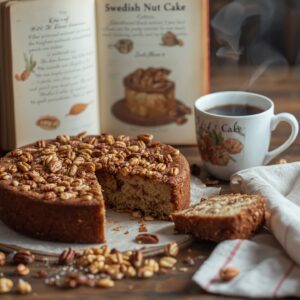
Follow these detailed steps carefully, and you’ll be a Swedish Nut Cake master in no time! Remember, baking is a science, but it’s also a lot of fun.
-
Prepare Your Workspace & Oven:
Start by preheating your oven to 350°F (175°C). This ensures your oven is at the correct temperature when the cake goes in, which is crucial for even baking. Next, generously grease and flour a 9-inch round baking pan, or an 8×8 inch square pan. For extra easy release, you can also line the bottom with parchment paper after greasing, then grease the paper and the sides of the pan. This step is a game-changer for preventing sticking!
-
Combine Dry Ingredients:
In a medium bowl, whisk together the all-purpose flour, baking powder, and salt. Whisking ensures these ingredients are evenly distributed, especially the baking powder, which is essential for your cake’s rise. If you have a sifter, you can sift them together for an even lighter texture, but a good whisking will do the trick.
-
Cream Butter and Sugar:
In a large mixing bowl, using an electric mixer (handheld or stand mixer) or a sturdy whisk, beat the softened unsalted butter and granulated sugar together until the mixture is light, pale, and fluffy. This process, known as “creaming,” incorporates air into the butter and sugar, which contributes to the cake’s tender texture. Scrape down the sides of the bowl often to ensure everything is well combined. This usually takes 3-5 minutes.
-
Add Eggs and Vanilla:
Crack your eggs into a separate small bowl first – this way, if one egg is bad, it doesn’t ruin your whole mixture! Add the eggs to the butter-sugar mixture one at a time, beating well after each addition. Don’t rush this step! Beat until each egg is fully incorporated before adding the next. Finally, stir in the vanilla extract. The mixture might look a little curdled at this point, but don’t worry, it will come together.
-
Alternate Dry and Wet Ingredients:
Now, it’s time to bring everything together! With the mixer on low speed (or by hand with a spatula), gradually add the dry ingredients to the wet ingredients, alternating with the milk. Start and end with the dry ingredients. For example: add about one-third of the flour mixture, mix until just combined, then add half of the milk, mix, then another third of the flour, the rest of the milk, and finally the last third of the flour. Do not overmix! Overmixing develops the gluten in the flour too much, leading to a tough, dense cake. Mix only until no streaks of flour remain.
Beginner Tip: Overmixing is one of the most common mistakes. As soon as you see the last bit of flour disappear, stop mixing! A few small lumps are better than a tough cake. -
Fold in the Nuts:
Gently fold in your chopped nuts using a spatula. You want to distribute them evenly throughout the batter without crushing them or overworking the mixture. Walnuts, almonds, or pecans all work wonderfully here – choose your favorite, or a mix!
-
Bake Your Cake:
Pour the batter into your prepared baking pan and spread it evenly with a spatula. Place the pan in the center rack of your preheated oven. Bake for 30-35 minutes, or until a wooden skewer or toothpick inserted into the center of the cake comes out clean. If it comes out with wet batter, bake for a few more minutes and test again. If it has moist crumbs attached, it’s perfectly done!
Common Mistake: Opening the oven door too early or too often can cause the cake to sink. Resist the urge to peek until at least 25 minutes have passed! -
Cooling Process:
Once baked, remove the cake from the oven and let it cool in the pan on a wire rack for about 10-15 minutes. This allows the cake to set and firm up before you attempt to remove it. After this initial cooling, carefully invert the cake onto the wire rack to cool completely. Cooling on a wire rack ensures air circulates all around the cake, preventing the bottom from becoming soggy.
-
Optional Glaze or Dusting:
For an extra touch of sweetness and elegance, you can dust the cooled cake with powdered sugar using a fine-mesh sieve. Or, make a simple glaze by whisking ½ cup powdered sugar with 1-2 tablespoons of milk or water until smooth. Drizzle it over the cooled cake. This adds a lovely finish!
Tips & Tricks for Swedish Nut Cake Success
Mastering any recipe gets easier with a few insider tips. Here’s how to make your Swedish Nut Cake truly shine:
- Room Temperature Ingredients are Key: This is perhaps the most important tip! Softened butter, room temperature eggs, and milk emulsify better, creating a smoother batter and a finer-textured cake. If your eggs are cold, place them in a bowl of warm water for 5-10 minutes.
- Measure Accurately: Baking is a science! Use proper measuring cups and spoons, and for flour, spoon it into your measuring cup and level it off with a straight edge (like a knife) rather than scooping directly from the bag. This prevents compacting the flour and adding too much.
- Don’t Overmix: We can’t stress this enough. Overmixing develops gluten, leading to a tough, chewy cake. Mix only until the ingredients are just combined.
- Know Your Oven: Ovens can vary wildly in temperature. Consider getting an oven thermometer to ensure your oven is truly at the temperature you set. This can prevent over or under-baking.
- Prep Your Pan Properly: Greasing and flouring (or using parchment paper) thoroughly prevents sticking, which is the worst! Nothing ruins a beautiful cake like it breaking apart when you try to remove it.
- Storage: Store your cooled Swedish Nut Cake in an airtight container at room temperature for up to 3-4 days. For longer storage, you can freeze individual slices (or the whole cake) tightly wrapped in plastic wrap and then foil for up to 2-3 months.
- Customization: Feel free to experiment! Add a pinch of cinnamon or cardamom for a warmer spice note, or a tablespoon of orange or lemon zest for a bright, citrusy twist.
Essential Baking Tools You’ll Need
Having the right tools makes baking a breeze. Here are some essentials for this recipe:
- Mixing Bowl
- Whisk
- Baking Pan (9-inch round or 8×8 inch square)
- Measuring Cups & Measuring Spoons
- Spatula
- Electric Mixer (handheld or stand mixer, optional but highly recommended)
- Wire Rack (for cooling)
Nutrition Information (Estimated per slice, 12 servings)
Please note: These are approximate values and can vary based on specific ingredients and portion sizes.
| Nutrient | Amount |
|---|---|
| Calories | 320-380 kcal |
| Carbohydrates | 35-45 g |
| Protein | 4-6 g |
| Fat | 18-25 g |
| Fiber | 1-2 g |
| Sugar | 20-30 g |
Frequently Asked Questions (FAQs)
Q1: Can I use different types of nuts?
Absolutely! While walnuts are traditional, almonds, pecans, or even a mix of your favorite nuts will work beautifully. Just make sure they are roughly chopped.
Q2: How do I know if my cake is fully baked?
The best way is to insert a wooden skewer or toothpick into the very center of the cake. If it comes out clean (no wet batter), your cake is done. A few moist crumbs are fine, but wet batter means it needs more time.
Q3: My cake came out dry. What went wrong?
A dry cake is often due to overbaking or using too much flour. Ensure you’re measuring your flour correctly (spoon and level!) and always check for doneness with a toothpick before adding extra baking time.
Q4: Can I make this cake ahead of time?
Yes, this cake stores very well! You can bake it a day or two in advance. Store it in an airtight container at room temperature. If you plan to glaze it, do so closer to serving for the freshest look.
Q5: Do I have to sift the flour?
Sifting flour helps to aerate it and remove any lumps, resulting in a lighter, more tender cake. However, if you don’t have a sifter, a good whisking of the dry ingredients together will usually suffice for this recipe, preventing dense spots.
Q6: Can I add fruit to this recipe?
While not traditional, you could certainly experiment! A small amount of finely chopped dried fruit like cranberries or apricots, or even some fresh berries, could be folded in with the nuts. Just be mindful that fresh fruit adds moisture, which might slightly alter baking time.
Time to Enjoy Your Masterpiece!
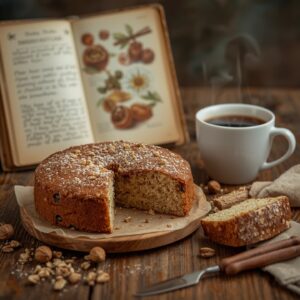
And there you have it! Your very own delicious Swedish Nut Cake, baked from scratch. We hope this detailed guide and all our baking tips for beginners have empowered you to create something truly wonderful. This cake is more than just a dessert; it’s a taste of comfort, perfect for fika (Swedish coffee break) or any special occasion. Don’t be afraid to make it your own, and most importantly, enjoy the process! Happy baking, and we can’t wait to hear how your cake turned out!